
For Roberto Cavalli Designer, Dreams Come in All Black

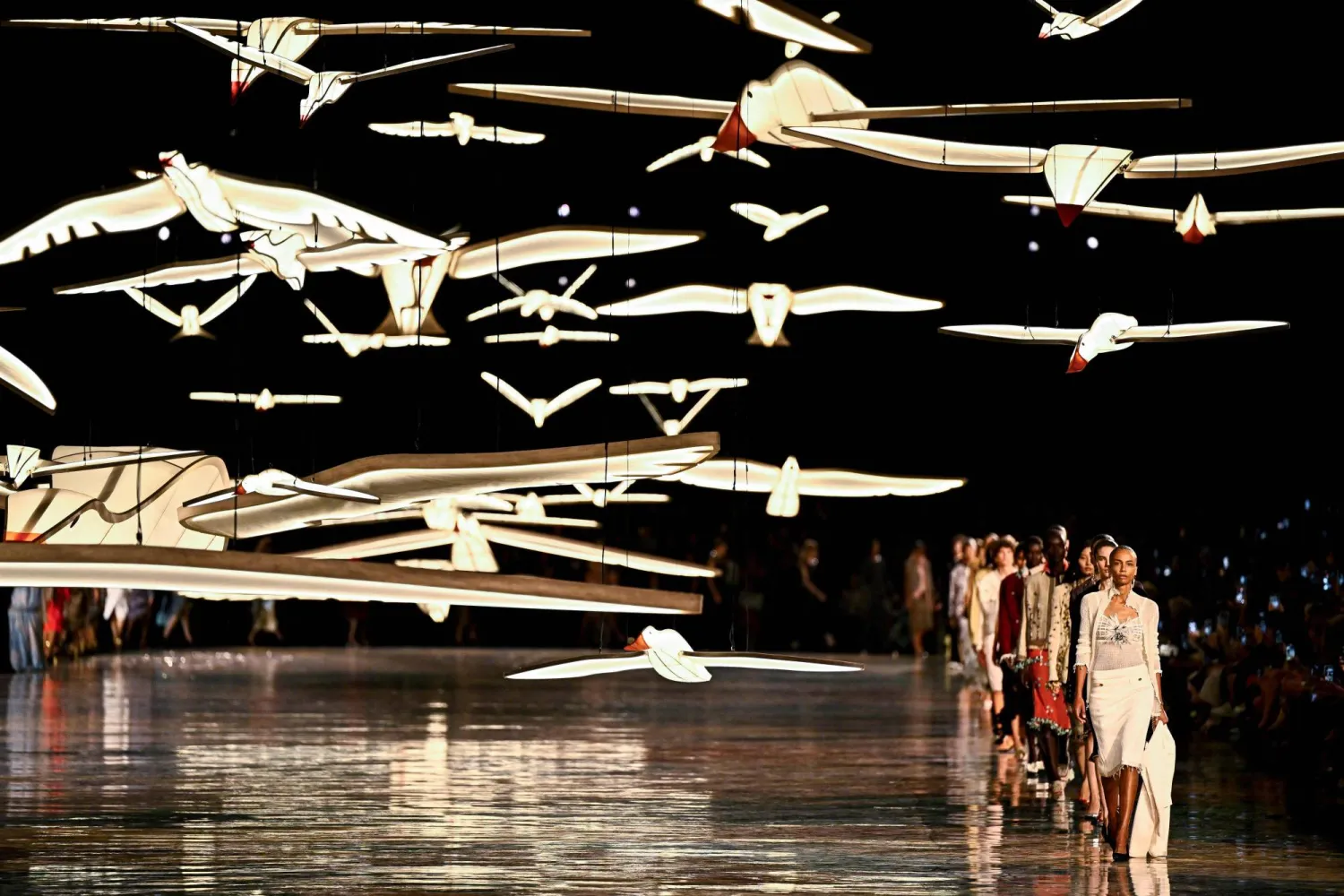
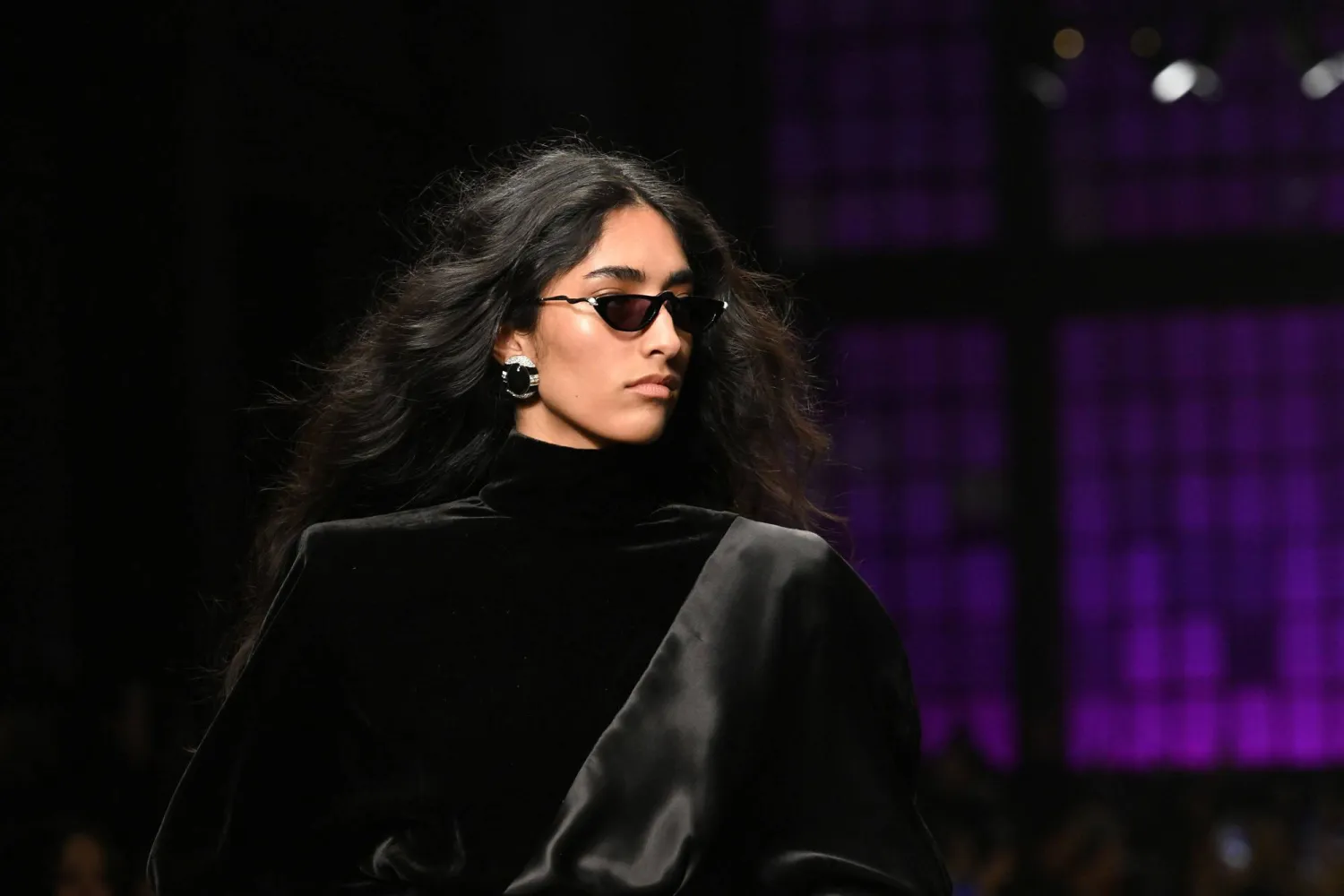
 A model presents a creation by Cavalli during a fashion show as part of the Milan Fashion Week Women's collection Fall-Winter 2026-2027 in Milan on February 26, 2025. (AFP)
A model presents a creation by Cavalli during a fashion show as part of the Milan Fashion Week Women's collection Fall-Winter 2026-2027 in Milan on February 26, 2025. (AFP)
TT

For Roberto Cavalli Designer, Dreams Come in All Black

 A model presents a creation by Cavalli during a fashion show as part of the Milan Fashion Week Women's collection Fall-Winter 2026-2027 in Milan on February 26, 2025. (AFP)
A model presents a creation by Cavalli during a fashion show as part of the Milan Fashion Week Women's collection Fall-Winter 2026-2027 in Milan on February 26, 2025. (AFP)

Black may have been the color chosen by Roberto Cavalli's creative director for the new women's collection at Milan Fashion Week, but Fausto Puglisi is hardly feeling negative.

The nearly all-black palette -- accentuated with romantic jolts of lilac and plum -- used by Puglisi Thursday night at Milan Fashion Week was instead a defiant statement for the label known for its bold, often aggressive colors and animal prints.

"I wanted the collection to be black because I still have my dreams," Puglisi told AFP backstage after the show, where a version of the Eurythmics' 1980s pop classic "Sweet Dreams (Are Made of This)" accompanied the models down the catwalk.

Stiff embossed black leather on cropped jackets or skirts jutted out dramatically like mushroom caps while slouchy, low-slung trousers sewn from black vinyl shimmered like black liquid.

The dark collection nevertheless celebrated lightness and texture, with a strong dose of see-through black lace -- on tight sleeves, barely there slip dresses or paired with black velvet.

Persian lamb -- faux, of course -- had its moment, on trousers, coats, jackets and intermixed with black velvet to form the ruffles of a long skirt paired with lace-up boots.

"It's fake," enthused Puglisi proudly of the glossy, tightly curled Persian lamb.

"I love animals, I would never use real fur."

- 'Continue to dream' -

Puglisi recreated the look of fur, its wispiness and color variations, by printing it on flowing fabric, while a long black form-fitting tunic used sheer cut-outs to reproduce the stripes of a zebra.

A mood board backstage showed Old Master floral still lifes, Roman centurion breastplates and leather strips worn as armor, as well as black-and-white photographs of goth-like images and other inspirations.

Did Puglisi find it hard to be working in fashion in the current state of the world?

"I think it's important to create beauty. Always. It's like telling a director to stop, it's the same thing," he said, calling fashion, films and music "escapism".

"I think it's very important to keep creating with the vision of a child, with naivety and freshness," he added.

"I will not allow any dictator to stop my creativity. I continue to create and I continue to dream," he said.

To that effect, the last look of the night was a showstopper.

Its high necked top mixed lace, cut-outs and ruffles while its skirt looked like it had been sewn from a million black faux feathers.

All the better for Puglisi's dreams to take flight.



Lululemon Slides as Bleak Forecasts Deepen Turnaround Worries

FILE PHOTO: A logo is displayed inside a Lululemon outlet retail store at Bicester Village in Oxfordshire, Britain, August 21, 2024. REUTERS/Hollie Adams/File Photo
TT

Lululemon Slides as Bleak Forecasts Deepen Turnaround Worries

FILE PHOTO: A logo is displayed inside a Lululemon outlet retail store at Bicester Village in Oxfordshire, Britain, August 21, 2024. REUTERS/Hollie Adams/File Photo

Lululemon Athletica shares dropped 12% in ‌premarket trade on Friday after bleak quarterly and annual profit outlooks deepened concerns over the yoga apparel maker's turnaround amid slowing US demand, competition and tariff costs.

The stock is on track to lose more than $1.7 billion from its market value of $14.44 billion if losses hold.

The weak forecasts intensified pressure on the stock, which has lost nearly 63% of its value in the last 12 months, as investors question how quickly Lululemon can revive product momentum in its ‌key US market, ‌while competing with newcomers like Alo Yoga ‌and ⁠Vuori.

"Lulu has just ⁠entered the 'trap' phase, where fundamentals are deteriorating as competition in all categories remains stiff and pricing power is fleeting for its core franchises," Barclays analysts said.

Lululemon, known for its pricey leggings and athleisure wear, has joined peers in feeling the pinch from muted spending on higher-margin products. Waning brand ⁠appeal in North America, design missteps and a ‌lack of fresh styles ‌have also added to the pressure amid a leadership transition.

Investors are ‌watching whether incoming CEO Heidi O'Neill, a former executive ‌at struggling Nike, can revive sales after she takes over in September, a task eased by the May resolution of a months-long proxy fight with founder Chip Wilson that had weighed on ‌the stock.

"A full strategic reset under the new CEO is required," Jefferies analysts said.

NEGATIVE BRAND ⁠BUZZ ADDS ⁠WORRIES

Meghan Frank, interim co-CEO and chief financial officer, said its yoga campaign rolled out to win back shoppers "hasn't had the expected halo effect on other areas of our assortment" and cited "negative commentary" as a headwind.

The spike in negative brand sentiment across media and social channels was evident in key markets, Barclays said, including the United States and China, and was primarily related to recent concerns about material composition and product safety.

The company's forward price-to-earnings multiple is 10.06, compared with 22.85 for Nike and 15.10 for Adidas , according to LSEG data.


Designer Gabriela Hearst Still Believes in 'Brilliance of Humanity' Despite AI

Uruguayan-US fashion designer Gabriela Hearst gestures during an interview after presenting the official suits for Uruguay's national football team ahead of the 2026 FIFA World Cup at the Centenario Stadium in Montevideo, on June 2, 2026. (Photo by Eitan ABRAMOVICH / AFP)
TT

Designer Gabriela Hearst Still Believes in 'Brilliance of Humanity' Despite AI

Uruguayan-US fashion designer Gabriela Hearst gestures during an interview after presenting the official suits for Uruguay's national football team ahead of the 2026 FIFA World Cup at the Centenario Stadium in Montevideo, on June 2, 2026. (Photo by Eitan ABRAMOVICH / AFP)

The "brilliance of humanity" will matter more, not less, in an AI world, Uruguayan designer Gabriela Hearst told AFP in an interview.

Natural materials and handmade craftsmanship are the hallmarks of Hearst's luxury brand, whose commitment to environmentally friendly fashion has secured her status as a sustainable style icon.

With celebrities including Kate Middleton, Julia Roberts and former US first lady Jill Biden wearing her personal brand, Hearst was also the first Latin American woman to lead the French fashion house Chloe from 2020 to 2023.

In a world threatened by climate crisis and the emergence of artificial intelligence, "there will be a genuine need for handmade creation," Hearst told AFP during a recent trip to Montevideo to present World Cup uniforms to the Uruguayan team.

"The human part, the part of our brain that is unique to us, the part that represents the brilliance of humanity, is going to matter more and more," she said.

The designer on the cusp of 50 prizes quality over quantity, and obstinately opposes fast fashion fads.

"There are so many clothes in the world," she said. "There's always a way to have a small amount, but of good quality."

Now based in New York, Hearst said she owes her intimate knowledge of quality, sustainability and "true beauty" to her native Uruguay.

"When I was little, I wanted to go travel, to see the world," she said.

"After traveling," she continued, "I was able to appreciate what it means to grow up with those star-filled skies, the nature, eating food from the land, the quality, the natural luxury that surrounded me."

"Clothes were passed down" in Hearst's community, she said, recalling picking through her mother's wardrobe filled with garments made by the family seamstress.

In her native country of 3.4 million people, hundreds of weavers work for Manos del Uruguay, a network of cooperatives that produces handcrafted garments for Hearst's brand.

The finished products end up on runways, Vogue magazine covers and even on-screen in "Sex and the City" movie sequel, where a multi-colored blanket designed by Hearst appears draped over Sarah Jessica Parker's legs.

"It's incredible that our craftsmanship reaches so far," said 60-year-old weaver Mabel Bargas, who works in one of the Manos del Uruguay workshops.

Hearst wants to leave a legacy of positive social impact by creating jobs and doing her bit for the environment.

"We can't afford to lose our human connection," she said, adding that people with privilege "have a responsibility to help others."


France Hits Shein with 22 Mn Euros in New Fines Over Consumer Violations

FILE PHOTO: Clothes from fast-fashion brand Shein hang at their office in Sao Paulo, Brazil, December 15, 2025. REUTERS/Jorge Silva/File Photo
TT

France Hits Shein with 22 Mn Euros in New Fines Over Consumer Violations

FILE PHOTO: Clothes from fast-fashion brand Shein hang at their office in Sao Paulo, Brazil, December 15, 2025. REUTERS/Jorge Silva/File Photo

French authorities said Wednesday that they had imposed two fines on Shein totaling more than 22 million euros ($25.5 million), citing problems with product traceability, environmental labelling and delivery times.

The new penalties bring the total fines imposed by France against the Asian fashion giant to more than 210 million euros, AFP reported.

The latest fines were imposed by the government's consumer protection agency DGCCRF following a wide-ranging investigation targeting several e-commerce platforms, primarily based outside Europe, including Shein.

The first fine of 5.77 million euros targets Infinite Style Ecommerce Co Ltd (ISEL), which handles sales for Shein.

The DGCCRF accuses Shein of failing to comply with a 14-day period required for consumers to be able to reconsider certain purchases.

The watchdog also accuses the company of omitting mandatory traceability information, such as the countries where its clothing is woven, dyed and manufactured, and of failing to disclose the presence of microplastics in its fabrics.

Microplastics, primarily found in polyester, are released into the water with every machine wash, posing a serious environmental threat.

In addition, the agency imposed a fine of 16.73 million euros on Shein's subsidiary ISSL (Infinite Styles Services Limited), accusing it of violations of consumer law.

Shein has been under fire since it established operations in France.

It is widely criticized by campaign groups and politicians for generating environmental pollution, practicing unfair competition, selling goods that fail to comply with basic regulations and imposing poor working conditions in its Chinese factories.