


Nike to Tighten Online Sales in China Amid ‘Fragmented’ Marketplace

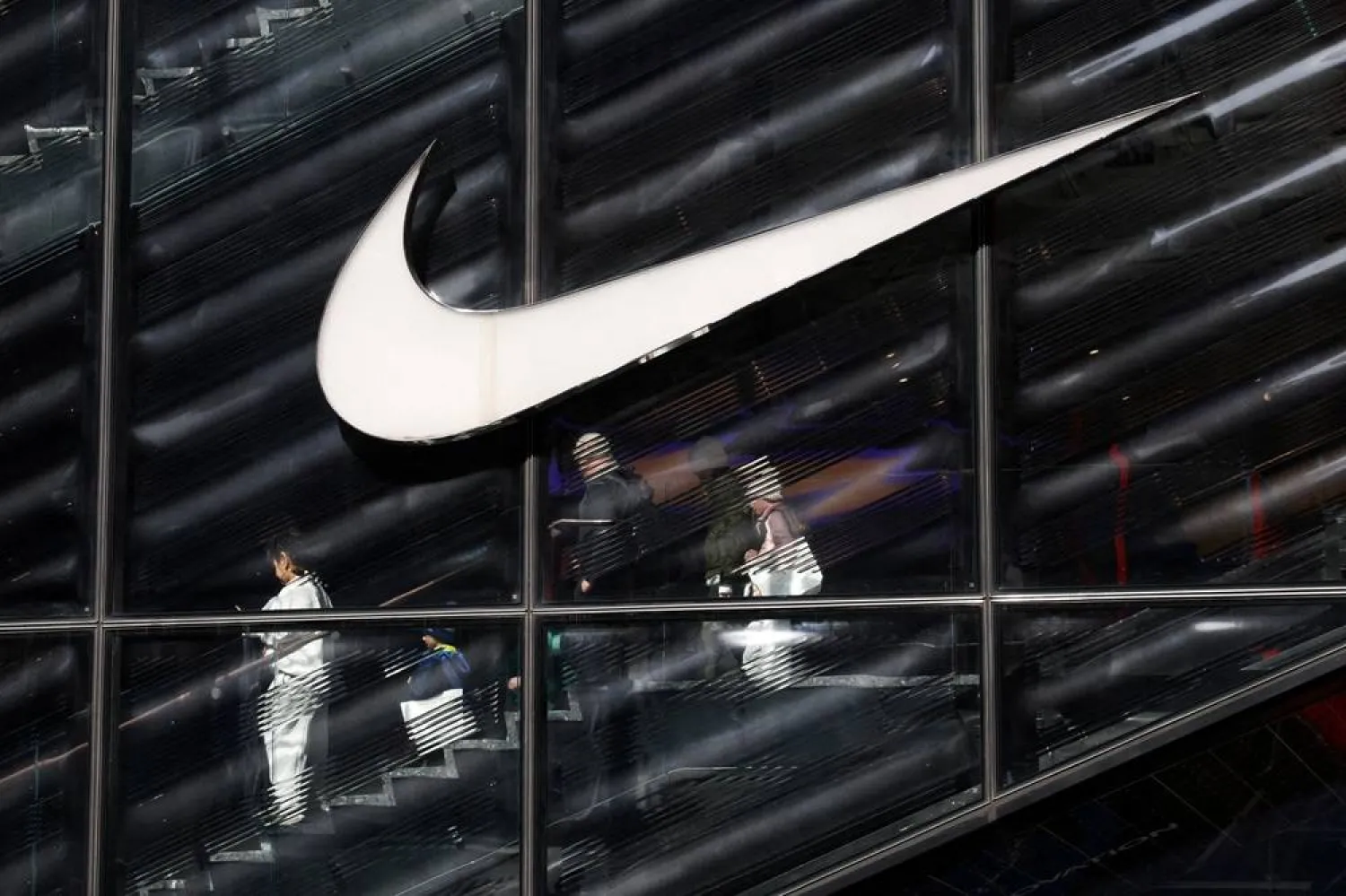
People descend stairs inside a Nike store in New York City, US, April 2, 2025. (Reuters)
TT

Nike to Tighten Online Sales in China Amid ‘Fragmented’ Marketplace

People descend stairs inside a Nike store in New York City, US, April 2, 2025. (Reuters)

Nike is trying to lure back shoppers in China by controlling how its products are sold online, directing consumers to official Nike channels as the American sportswear giant continues to lose ground to domestic rivals.

By restricting wholesale distributors' online sales, the company aims to rebuild trust with Chinese shoppers and sell its products at full price, said Cathy Sparks, vice president and general manager of Greater China.

Starting in January, key sportswear retailers in China will stop selling Nike's clothing and shoes online and will instead pivot to in-store sales, Sparks told Reuters.

Online, the company's products will be sold through new Nike-branded digital storefronts on the popular Chinese e-commerce platforms Tmall, JD.com and Douyin, along with ‌Nike's website and ‌app.

"Our marketplace has become so fragmented and cluttered," said Sparks, a 25-year ‌company ⁠veteran who was ⁠appointed to oversee Chinese operations earlier this year.

"What consumers want is an experience that's premium, true to the brand, trustworthy, and certainly connected between digital and physical."

The move runs counter to what most other major sports brands have done in China in recent years, expanding both online and in-store distribution to reach more customers in a market that has struggled for growth.

Chinese consumers have spent less amid a broader economic slowdown, leading to more discounts from brands across the consumer spectrum seeking to prop up sales.

CHINA SALES DECLINE PERSISTS

China, Nike's third-largest market, remains a key source ⁠of concern for the world's biggest sportswear brand. The e-commerce shift is part of ‌a broader effort to revive growth.

Sales in Greater China fell ‌17% on a constant-currency basis in the fourth quarter, the company reported last month, steepening from a 10% decline in ‌the previous quarter. Fast-rising domestic rivals Anta and Li Ning have chipped away at Nike's market share, while ‌foreign brands like On and Hoka have also surged.

Nike's China woes have reinforced for investors that CEO Elliott Hill's turnaround strategy still faces significant obstacles. In his nearly two years at the helm of the company, Hill has pushed to refocus on sports, rebuild wholesale relationships in North America and introduce new products.

The majority of Nike's 16 store partners in ‌China, which own and manage thousands of Nike stores, will stop selling online, a Nike spokesperson said.

Major Chinese sportswear retailers Topsports and Pou Sheng both fell ⁠in early trading after ⁠the announcement, with Pou Sheng shares down 10% and Topsports shares falling a record 23%, wiping around HK$3 billion ($382.70 million) from the firm's market capitalization.

Topsports, which generates 22% of its revenue from online sales of Nike products, said in an exchange filing on Wednesday it expects "significant" short-term negative impact. In its own filing, Pou Sheng said online sales of Nike’s products accounted for approximately 15% of its revenue.

Both firms said they remain committed to continue working closely with Nike.

Following local news reports about the potential e-commerce change in June, BNP Paribas senior analyst Laurent Vasilescu said the move would be a "strategic misstep" and would hand opportunities to competitors.

"Nike doesn't have a distribution problem in China and elsewhere. It has a product problem," Vasilescu said in a research note in which he estimated the move could cost Nike $500 million to $1 billion in sales.

Releasing products that are more relevant to Chinese consumers is also among Nike's priorities, Sparks said. The company has appointed a vice president of local product creation in Greater China, she added.



Sources: Shein Aims to IPO on September 1

FILE PHOTO: Packs of clothing are displayed at a garment factory for Shein in Panyu District, Guangzhou, Guangdong province, China, July 27, 2026. REUTERS/Go Nakamura/File Photo
TT

Sources: Shein Aims to IPO on September 1

FILE PHOTO: Packs of clothing are displayed at a garment factory for Shein in Panyu District, Guangzhou, Guangdong province, China, July 27, 2026. REUTERS/Go Nakamura/File Photo

Shein aims to launch its Hong Kong initial public offering on Monday, according to a source familiar with the matter, and is targeting a listing on September 1, two other sources said, slightly later than previously planned.

While September 1 is the target date, the listing could happen a few days later, one ⁠of the sources ⁠said. Reuters reported last week that Shein had been aiming to list on August 28.

The delay, first reported by the South China Morning Post, comes as slower growth and rising costs have dampened investor appetite for Shein.

The online fast-fashion retailer was ⁠seen just a few years ago as a disruptive challenger to established retailers such as H&M and Zara, thanks to its rapid supply chain and ultra-low prices.

Among cornerstone investors in the IPO is the asset management arm of UBS Group, which would be investing in Shein for the first time, according to a fourth source with direct knowledge of the matter.

A spokesperson for the Swiss bank declined to comment.

Cornerstone investors ⁠agree to ⁠buy a set amount of shares before an IPO, and sign up to a lockup period of six months.

Shein is targeting a valuation of $26 billion to $27 billion, the fourth source said, down sharply from the $100 billion valuation it achieved in a private fundraising in 2022.

The company had previously sought an IPO valuation of $30 billion to $40 billion when investor meetings ahead of the IPO first kicked off.

Shein did not respond to a Reuters request for comment.


France Fines UK Fashion Site Boohoo Over Fake Discounts

FILE PHOTO: A woman poses with a smartphone showing the Boohoo app in front of the Boohoo logo on display in this illustration taken September 30, 2020. REUTERS/Dado Ruvic/Illustration/File Photo
TT

France Fines UK Fashion Site Boohoo Over Fake Discounts

FILE PHOTO: A woman poses with a smartphone showing the Boohoo app in front of the Boohoo logo on display in this illustration taken September 30, 2020. REUTERS/Dado Ruvic/Illustration/File Photo

French regulators said Thursday that they had fined the UK fast-fashion site Boohoo 2.33 million euros ($2.7 million) after finding "deceptive trade practices" including fake sale prices.

An inquiry by France's anti-fraud and consumer watchdog DGCCRF found that clothes and other items were often promoted as discounts, when in fact they were not, or at misleading sale prices.

Other ads described items as leather or suede that were actually made of synthetic materials.

"The use of discounted pricing and permanent sales gave clients the impression they were getting very good deals, and were likely to influence their purchases," AFP quoted the fraud agency as saying.

It found that among the hundreds of items it checked, 40 percent in fact were not actually on sale, seven percent had reduced prices that did not match the discount advertised, and 48 percent were actually more expensive than originally.

"In total 95 percent of the ads were not compliant," the DGCCRF said.

Online retailer Boohoo is part of Debenhams Group. In 2021, Boohoo bought the British department store brand out of bankruptcy and took on its name.

Debenhams also now owns the brands Karen Millen, boohooMAN and PLT.


Estee Lauder Forecasts Annual Profit Above Estimates on Strong China Demand

An Estee Lauder cosmetics counter is seen in Los Angeles, California, US, August 19, 2019. (Reuters)
TT

Estee Lauder Forecasts Annual Profit Above Estimates on Strong China Demand

An Estee Lauder cosmetics counter is seen in Los Angeles, California, US, August 19, 2019. (Reuters)

Estee ‌Lauder forecast annual profit above Wall Street estimates on Wednesday, betting on sustained spending on premium fragrances and strong performance in key markets such as China, reflecting persistent gains from its CEO's turnaround strategy.

Resilient spending by affluent ‌and younger ‌customers, especially on trendy ‌items, ⁠has helped boost ⁠demand for the cosmetics maker's luxury fragrances and skincare products such as Le Labo and Balmain Beauty.

To sustain that momentum, Estee ⁠has accelerated premium product launches, ‌streamlined ‌supply chain and ramped up investments in ‌innovation and marketing under ‌CEO Stephane de La Faverie's "Beauty Reimagined" strategy.

The Clinique and M.A.C owner, whose merger conversations with Jean ‌Paul Gaultier-owner Puig collapsed in May, expects 2027 adjusted ⁠earnings ⁠per share in the range of $3.10 to $3.35, with its midpoint above analysts' average estimate of $3.18 per share, according to data compiled by LSEG.

The company's quarterly sales of $3.63 billion were also ahead of the estimate of $3.54 billion.