
How the Deadliest Attack on Russian Soil in Years Unfolded over the Weekend

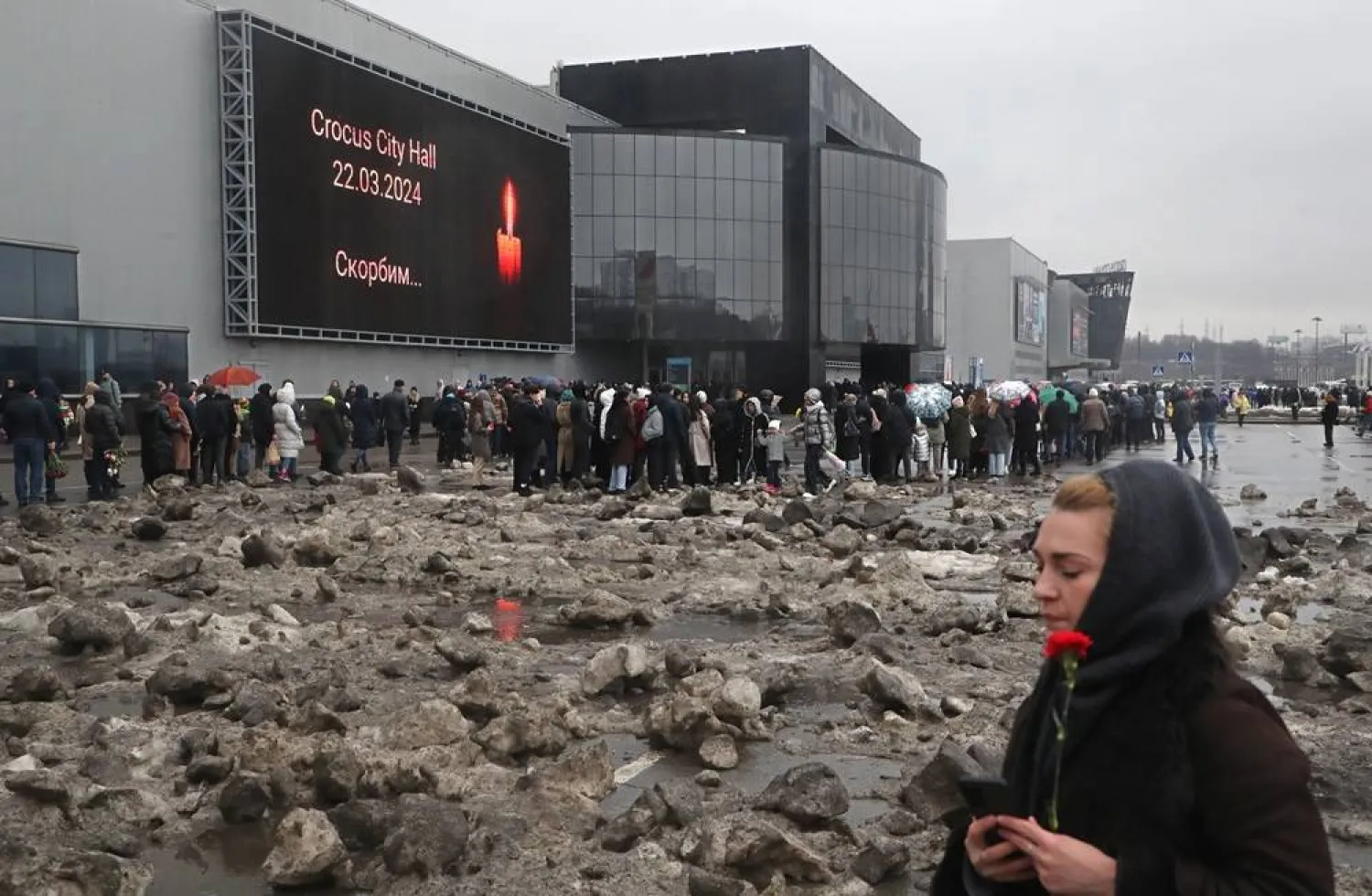
People mourn at the Crocus City Hall concert venue following a terrorist attack in Krasnogorsk, outside Moscow, Russia, 24 March 2024. (EPA)
TT

How the Deadliest Attack on Russian Soil in Years Unfolded over the Weekend

People mourn at the Crocus City Hall concert venue following a terrorist attack in Krasnogorsk, outside Moscow, Russia, 24 March 2024. (EPA)

The auditorium at Crocus City Hall was about three-quarters full, with the crowd waiting to see Picnic, a band popular since the Soviet days of the early 1980s. But the concert was sold out in the 6,200-seat hall, so some of the audience was still likely getting food or were shedding their heavy coats in the cloakroom.

It was 7-10 minutes before the start of the show, scheduled for 8 p.m., said concertgoer Dave Primov.

Then came the popping sounds.

“Initially I thought: fireworks or something like that...” Primov told The Associated Press. “I looked at my colleague, and he also said: ‘Fireworks, probably.’”

But it wasn’t pyrotechnics. At least four khaki-clad men with automatic weapons were in the building, firing incessantly. Then they set the concert hall on fire.

It was the start of the deadliest attack on Russian soil in years that left 137 people dead and more than 180 more injured in what President Vladimir Putin called “a bloody, barbaric terrorist act.” Although he sought to tie Ukraine to it, an affiliate of the ISIS group claimed responsibility — which US intelligence officials confirmed. Kyiv denied any involvement.

Four suspects were arrested in Russia's Bryansk region. Identified in Russian media as Tajik nationals, they were charged with carrying out a terrorist act and face a life sentence. They appeared before a Moscow court on Sunday night showing signs of severe beatings.

FRIDAY NIGHT Crocus City Hall is a large entertainment and shopping complex in Krasnogorsk, a suburb on the northwestern edge of Moscow. It was built by Azerbaijan-born billionaire and property developer Aras Agalarov, who had ties to Donald Trump before he became US president. While Trump was a co-owner of the Miss Universe beauty pageant, he signed an agreement with Agalarov to hold the event at Crocus in 2013.

On Friday night, its vast hallways became a scene of slaughter as the gunmen entered and made their way to the auditorium, firing at anyone nearby, sometimes at point-blank range.

Videos taken by those in the hallways and in the auditorium showed people screaming and trying to flee as the gunmen continued firing shots. Some hid behind the dark-red seats and tried to crawl toward the exits, according to footage and accounts of survivors reported in the media.

In one video, a young man says into the camera, with gunshots ringing out, “They set the auditorium on fire. The auditorium is on fire.” For a moment, flames could be seen in a corner of the theater.

Primov and others were able to leave the auditorium before the gunmen got to it, he told AP. It took him about 25 minutes to leave the building altogether.

He described the scene as complete chaos: The panic-stricken people tried to find exits, with gunmen still roaming through it and firing; people fell and collided with each other as they ran; men broke down locked doors, hoping they led to safety.

“We don’t know what’s ahead. We don’t know what is behind this door. We don’t know what is going on outside, maybe we’re encircled (by the attackers), maybe someone is waiting there,” Primov said.

Another survivor who identified herself only as Maria, echoed Primov: "This uncertainty, where to go, what to do, it scared (us) the most as every person there had no idea what was happening.”

The musicians of Picnic never made it onstage and left the building shortly after the attack began, its representative Yury Chernyshevsky told AP by phone shortly after news of the shooting broke. Asked if the band was safe, he responded: “How much safety can there be at this point? We hope we’re safe.”

By 8:30 p.m., a massive fire raged inside the building, with thick, black smoke billowing from the roof that later collapsed. Russian media reported explosions inside, and it wasn’t clear whether they were triggered by the gunmen or were caused by the blaze.

Outside, the building was bathed in neon blue from the blinking lights of dozens of ambulances, police and firetrucks. Helicopters dumped water into the blaze.

A special force of the Russian National Guard arrived and searched for the gunmen. Authorities announced the attack resulted in deaths and injuries, without giving numbers, and said they were investigating it as a terrorist act.

Various officials – from Moscow regional Gov. Andrei Vorobyov to Interior Minister Vladimir Kolokoltsev – arrived on the scene.

Elsewhere in Russia, authorities tightened security and canceled big events scheduled for the weekend. In the second-largest city of St. Petersburg, two malls were evacuated, according to media reports.

Putin made no statements Friday night.

About 11 p.m., the Kremlin issued a terse statement saying Putin was informed “within minutes” of the shooting, was “constantly receiving” updates from government agencies, and issued the necessary orders, according to spokesman Dmitry Peskov, who did not elaborate.

SATURDAY The death toll rose overnight and throughout Saturday as more bodies were discovered at Crocus City Hall, including some found in stairwells and a restroom.

Putin, who on March 17 secured a fifth term in office in an election with no real competition, addressed the nation on Saturday afternoon.

Throughout the night, in Russia and abroad, discussions swirled about who was responsible for the brazen attack. Authorities in Ukraine, invaded by Russia more than two years ago, swiftly and vehemently denied any involvement. The denials were quickly backed by US officials, drawing a sharp reaction from Russian officials.

“On what grounds officials in Washington in the middle of a tragedy are making conclusions about someone’s non-complicity?” Russian Foreign Ministry spokeswoman Maria Zakharova said in an online statement. “If the US has or had reliable information about it, they should immediately pass it on to the Russian side. If they don’t, then the White House has no right to hand out absolution.”

Several hours after the attack began, an affiliate of the ISIS group claimed responsibility, but some Russian state media personalities denounced it as fake.

“So far, it looks like an attempt to create a false trail,” state TV journalist Andrei Medvedev wrote on Telegram.

On Saturday, Russian authorities sought to tie Ukraine to the attack. The Federal Security Service, or FSB, reported arresting four gunmen in the border region of Bryansk, saying they were headed for Ukraine and had unspecified “contacts on the Ukrainian side.” It didn't reveal any details of the manhunt but praised various law enforcement and security agencies for “acting in concert,” and saying that 11 people in total were arrested.

In his afternoon address, Putin called the attack “a bloody, barbaric terrorist act.”

He also reiterated the narrative, saying without evidence that “a window” was prepared for the assailants to cross into Ukraine. He stopped short, however, of blaming Kyiv for orchestrating the attack. He did not mention the claim of responsibility by the ISIS affiliate.

He also stopped short of announcing any drastic measures in the wake of the attack, such as lifting a moratorium on capital punishment, starting another wave of mobilization into the army or even escalating hostilities in Ukraine -– something Kremlin critics have suggested might be in store.

Moscow’s Department of Health said identifying the bodies of the dead will take at least two weeks.

SUNDAY Sunday was declared a day of national mourning. Events were canceled and flags were lowered to half-staff.

At the burned-out and smoldering Crocus City Hall, a steady stream of people came to lay flowers at a makeshift memorial.

Throughout the day, a heavy police presence was seen at Basmanny District Court in Moscow for the anticipated arrival of the four suspects. Russia's Investigative Committee released photos of them at its headquarters in Moscow.

Shortly before 11 p.m. — about 51 hours after the shooting began — the suspects, one by one, appeared in court for their pretrial hearings.

Bruises were visible on their faces; one had a bandaged ear; another was in a wheelchair and hospital gown. According to independent news outlet Mediazona, whose reporters attended the hearings, he was brought in from intensive care.

How he was hurt wasn't immediately clear. Unconfirmed Russian media reports suggested he was wounded during the manhunt.

The court said two of the suspects admitted guilt, though the men’s conditions raised questions about whether they did so freely.

The suspects, identified in Russian media as Tajik nationals, were charged with carrying out a terrorist act and face a life sentence.

A Lesson from 1915 … Why the Strait of Hormuz Can’t be Taken by Force

FILE PHOTO: Strait of Hormuz map is seen in this illustration taken April 15, 2026. REUTERS/Dado Ruvic/Illustration/File Photo
TT

A Lesson from 1915 … Why the Strait of Hormuz Can’t be Taken by Force

FILE PHOTO: Strait of Hormuz map is seen in this illustration taken April 15, 2026. REUTERS/Dado Ruvic/Illustration/File Photo

The debate over reopening the Strait of Hormuz represents one of the most sensitive issues in politics and security. As questions continue to grow about why US President Donald Trump did not take practical steps to remove the obstacles blocking the vital passageway, this discussion sheds light on the nature of the military challenges that make any attempt to open it by force extremely dangerous, especially given the presence of non traditional threats such as naval mines and warfare.

The answer as to why nothing has been done to reopen the Strait of Hormuz is simple, according to The Independent.

As his advisers will have told Trump before he attacked Iran, it is almost impossible to clear a passage through a minefield when the shoreline is held by the enemy, without being prepared to take significant casualties. And this, it seems, the US is not prepared to do.

It is one thing to bomb a less technologically sophisticated enemy from the air, but quite another to get involved in a real fight at sea level with an opponent who has been planning this form of asymmetric warfare for a very long time.

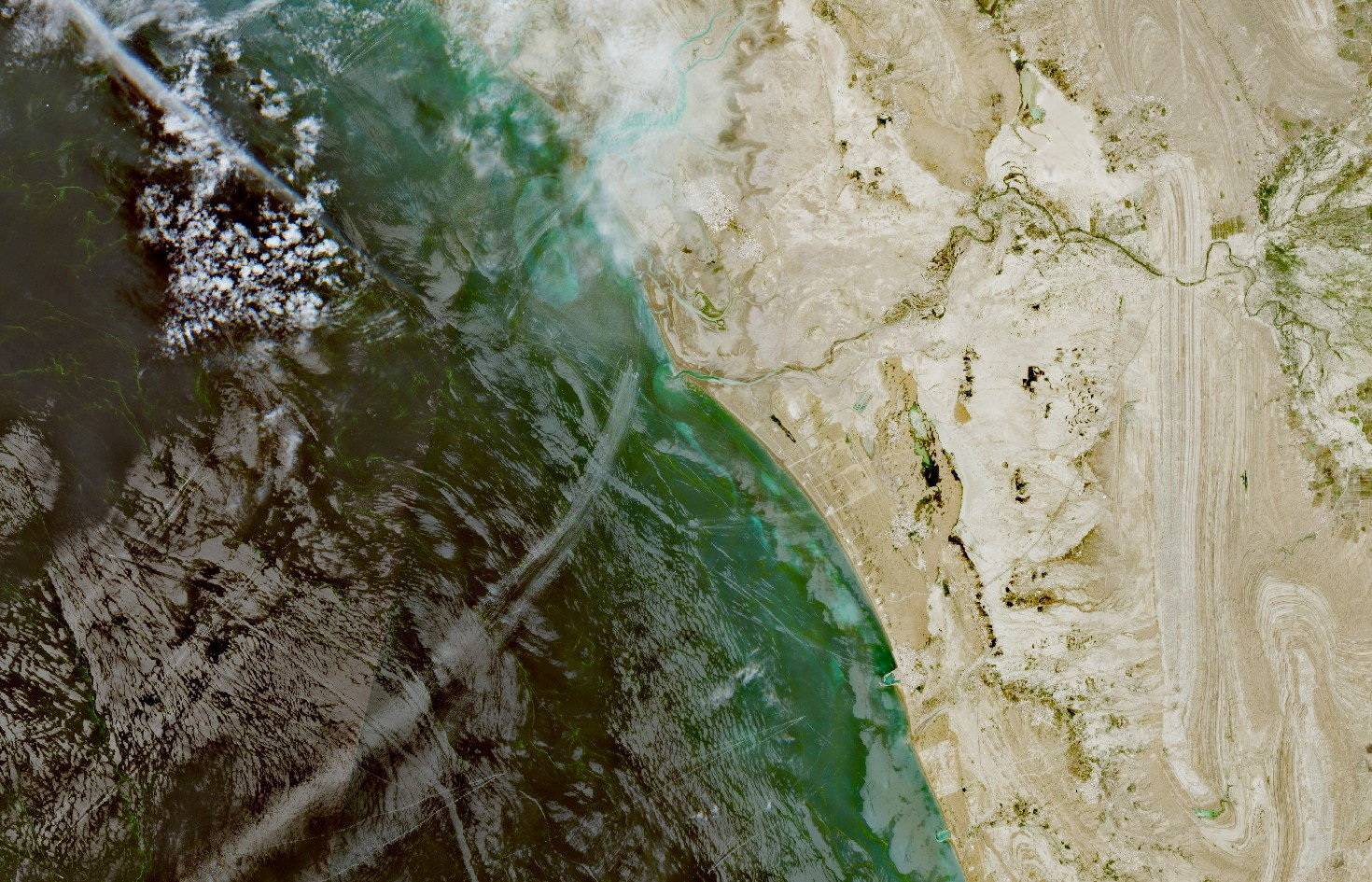
A satellite image shows a fleet of small boats at sea, north of the Strait of Hormuz near the Kargan coast, Iran, April 22, 2026. European Union/Copernicus Sentinel-2/Handout via REUTERS

According to the British newspaper, history gives a stark lesson on why America needs to tread warily – a page from the First World War.

It was March 1915. The “straits” concerned were the Dardanelles – the narrow passage linking the Mediterranean to the Black Sea and giving access to Istanbul. The Turks were the defenders, the British and the French the attackers.

They were in the middle of a shooting war. A vital waterway, which would normally be open for the world’s commerce, was closed because of the actions of Turkey, the bordering power. The coastline was heavily defended, and there was a high probability that mines had been laid to block the channel.

A decision was made by the British and French that the straits were to be reopened by force – and a very considerable force was assembled for that purpose.

It comprised no fewer than 14 “capital” ships (in those days “battleships” and “battlecruisers”) supported by escorts and a large force of minesweepers.

The plan was a good one. The capital ships would stand off in clear water and bombard the shore defenses. When these had been silenced, the minesweepers would go ahead and sweep another clear area.

The capital ships would then move forward again into swept water and recommence their bombardment – successive waves of big ships moving up, but always into water which had been swept for mines. In this way, the whole channel would be cleared, and the straits reopened.

The big push commenced on 18 March 1915. To start with, it all went well. Four capital ships – HM ships Queen Elizabeth, Agamemnon, Lord Nelson and Inflexible – formed the first attacking line.

The second line was composed of four French ships, Gaulois, Charlemagne, Bouvet and Suffren. They, in turn, were to be supported by six more British ships – HM ships Ocean, Irresistible, Albion, Vengeance, Swiftsure and Majestic – which would form a third line to pass through and relieve the French in line two.

The bombardment was started by the RN ships in line one at 11am. By 12.20pm, the French ships of line two had steamed through the first line to take up their advanced positions.

By 1.45pm, the fire from the shore batteries had slackened under the onslaught of the guns of the eight capital ships, and it was deemed safe enough to send in the minesweepers for the next phase. The third line of six ships was also called up to move the force forward.

However, 15 minutes later, everything started to go wrong. FS Bouvet hit a mine, and in a matter of minutes, she capsized and sank. There were only 75 survivors out of a ship’s company of 718.

The action continued. HMS Irresistible of the third wave was bombarding the forts when she, in turn, struck a mine at 3.14pm. She developed a severe list but continued with the action until she hit another mine, and her main engines were put out of action completely.

An attempt was made to take her in tow, but the situation was hopeless, and the order was given to abandon ship. More than 600 men were taken to safety.

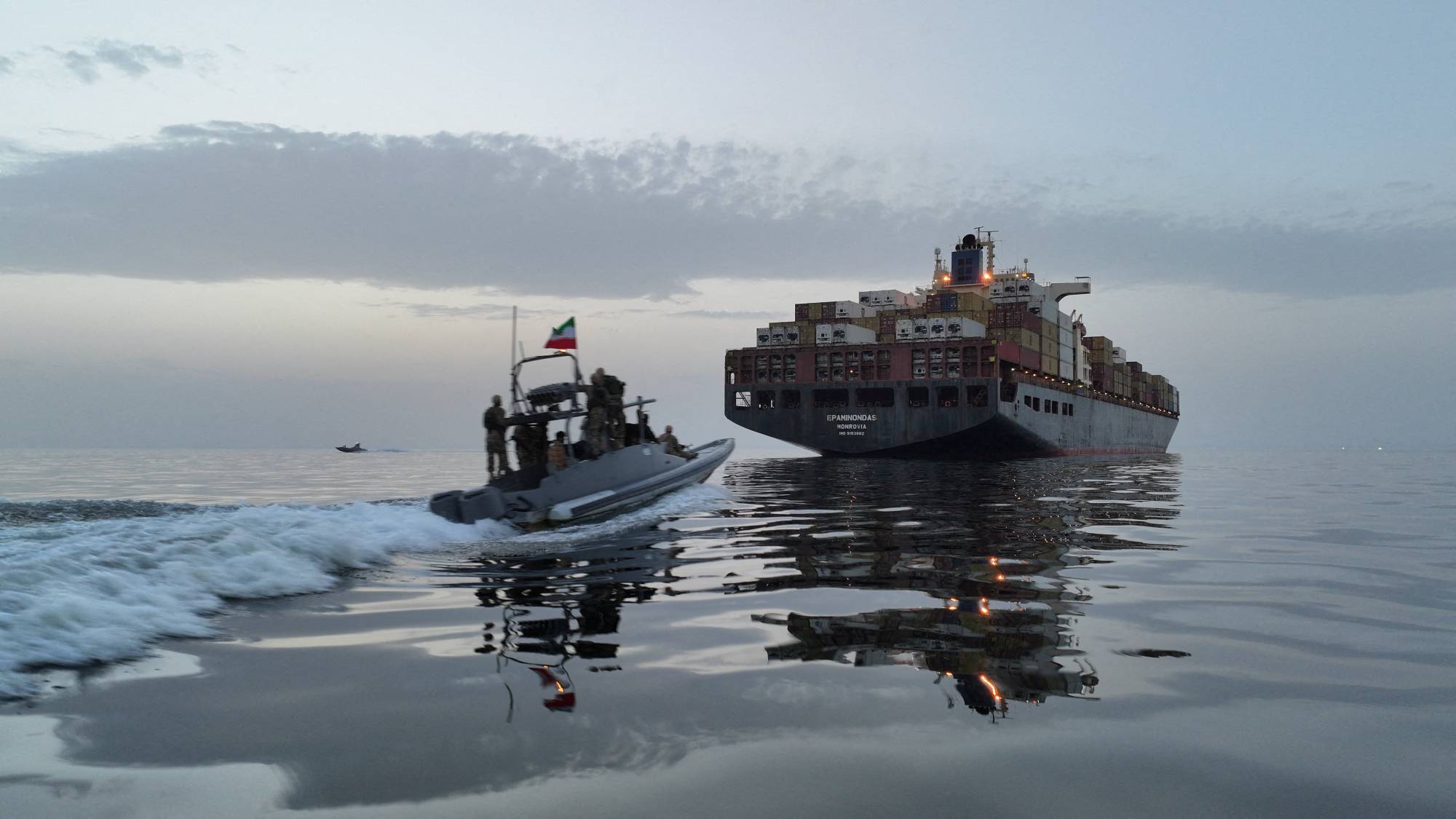
The Epaminondas ship is seen during seizure by the Revolutionary Guard Corps in the Strait of Hormuz, Iran, in this image obtained by Reuters on April 24, 2026. Meysam Mirzadeh/Tasnim/WANA (West Asia News Agency) via REUTERS

Meanwhile, shortly after 4pm, HMS Inflexible struck a mine. She remained capable of steaming slowly and was ordered to withdraw. However, she had a 30ft x 26ft hole below the waterline and had to be beached to save her from sinking. She was later towed to Malta for repairs and was out of action for three months.

After these disasters, Vice-Admiral John de Robeck, the British admiral in charge of the Allied naval forces during the crucial stages of the campaign, finally decided that the waters which had been considered to be safe and swept of mines were anything but.

Accordingly, at 5.50pm, less than seven hours into the operation, he signalled a “General Recall” to withdraw the ships and return to the safe waters outside the straits.

Fifteen minutes later, at 6.05pm, HMS Ocean struck another mine, developed a major list and was deemed not to be capable of being saved. The ship’s company were taken off and she was left to her fate. Both Irresistible and Ocean later sank.

Fourteen major warships had attempted to force the straits. Within four hours, three of them had been sunk and one had been so badly damaged that she was out of action.

This one day of disaster was the end of trying to take the Dardanelles passage by solely naval means. The attempt was never repeated.


Trump Keeps Talking About Iran’s ‘Nuclear Dust.’ What Is It?

A satellite imagery taken on February 1, 2026, shows a new roof over a previously destroyed building at Isfahan nuclear site, Iran. 2026 (PLANET LABS PBC/Handout via Reuters/ File photo)
TT

Trump Keeps Talking About Iran’s ‘Nuclear Dust.’ What Is It?

A satellite imagery taken on February 1, 2026, shows a new roof over a previously destroyed building at Isfahan nuclear site, Iran. 2026 (PLANET LABS PBC/Handout via Reuters/ File photo)

Luke Broadwater, David E. Sanger*

In recent weeks, US President Donald Trump has been talking about a substance he says is key to ending the United States’ war against Iran: “nuclear dust.”

In the president’s telling, Iran’s nuclear program was so badly damaged by US bombs last year that all that remains under the rubble is a sort of powdery aftermath.

The phrase “nuclear dust” seemed designed to diminish the importance of what Trump is actually talking about — Iran’s stockpile of near-bomb-grade uranium, which is stored in canisters about the size of large scuba tanks.

The material is not, in fact, “dust.” It is typically a gas when stored inside the canisters, though it becomes a solid at room temperature. It is a volatile and highly toxic substance if it comes into contact with moisture and, if mishandled, can trigger a nuclear reaction.

Trump’s phrase oversimplifies the complex tasks of enriching uranium, to say nothing of negotiating an end to the war. It’s also a phrase nuclear experts say they’ve never heard before.

“I just interpreted it as Trump’s kind of colorful way of talking,” said Matthew Kroenig, the senior director of the Atlantic Council’s Scowcroft Center for Strategy and Security, according to the New York Times.

Here’s a closer look at what Trump means when he talks about “nuclear dust,” and why it’s important for an end to the conflict.

What is ‘nuclear dust’?

Trump is referring chiefly to the uranium Iran has enriched to 60%, near the 90% purity normally used to make a bomb. There is no use for fuel enriched to that level for, say, producing nuclear power.

So it is a warning sign to the international community that Iran could quickly convert the fuel to bomb-grade, even though there would still be many steps to then build a nuclear bomb.

The United States struck three key nuclear sites in June 2025, including a complex outside Isfahan, where much of the near-bomb grade material was believed to be stored.

“It’s not yet bomb-grade, but it’s on the way there, and it was being stored on the nuclear facility at Isfahan,” Kroenig said.

“And so when Isfahan was bombed, that material was presumably entombed there,” he added.

American intelligence officials believe that the Iranians dug down to gain access to the material, though there is no evidence any of it has been moved.

Uranium contains a rare radioactive isotope, called U-235, that can be used to power nuclear reactors at low enrichment levels and to fuel nuclear bombs at much higher levels.

The goal of uranium enrichment is to raise the percentage levels of U-235, which is often done by running it through gas centrifuges, machines that spin at supersonic speeds to increase the purity of the fuel.

Why is it important to ending the war?

Trump has said that Iran had agreed to turn over its nuclear materials to the United States, though Tehran has denied that claim.

“The US will get all nuclear dust,” Trump told a crowd in Arizona last week. “You know what the nuclear dust is? That was that white powdery substance created by our B-2 bombers.”

Iranian enrichment levels have been rising since Trump withdrew the United States from the Obama-era nuclear deal, known as the Joint Comprehensive Plan of Action, or JCPOA, saying the agreement wasn’t tough enough.

Trump then imposed several rounds of American sanctions on Iran. In response, Tehran repeatedly moved beyond the strict limits that the agreement had placed on its uranium enrichment, and began to resume production of nuclear material.

“They were enriching at very low levels before Trump administration withdrew the United States from the JCPOA,” said Justin Logan, the director of defense and foreign policy studies at the Cato Institute, a libertarian-leaning think tank. “So what he is calling ‘nuclear dust’ did not exist inside Iran after the signing or the first several months of the JCPOA”

Can the material be removed during wartime?

Trump acknowledges removing Iran’s enriched uranium would be difficult. On Truth Social, he said this week that “digging it out will be a long and difficult process.”

It could be almost impossible without Iranian agreement.

“This would be a mission that would take a lot of time, and there would be a lot of nerds that aren’t good at killing people that would need to be involved here,” Logan said. “So the idea of doing this while we have our swords drawn strikes me as crazy.”

He said it would be similarly difficult for the Iranians to extract the material during the war.

“Trump is correct to say that we have eyes over the target pretty much all the time, and the Iranians couldn’t just swoop in the middle of the night and spirit it out; it’s an extremely volatile substance,” he said.

“We don’t know the conditions of the underground storage. Those tanks in which it has been stored might not be in great condition. It’s going to require a lot of nerds on the ground. And that’s true for the Iranians as much as it is true for us,” Logan added.

*The New York Times


Khartoum Mines Pose Hidden Threat to Returning Residents

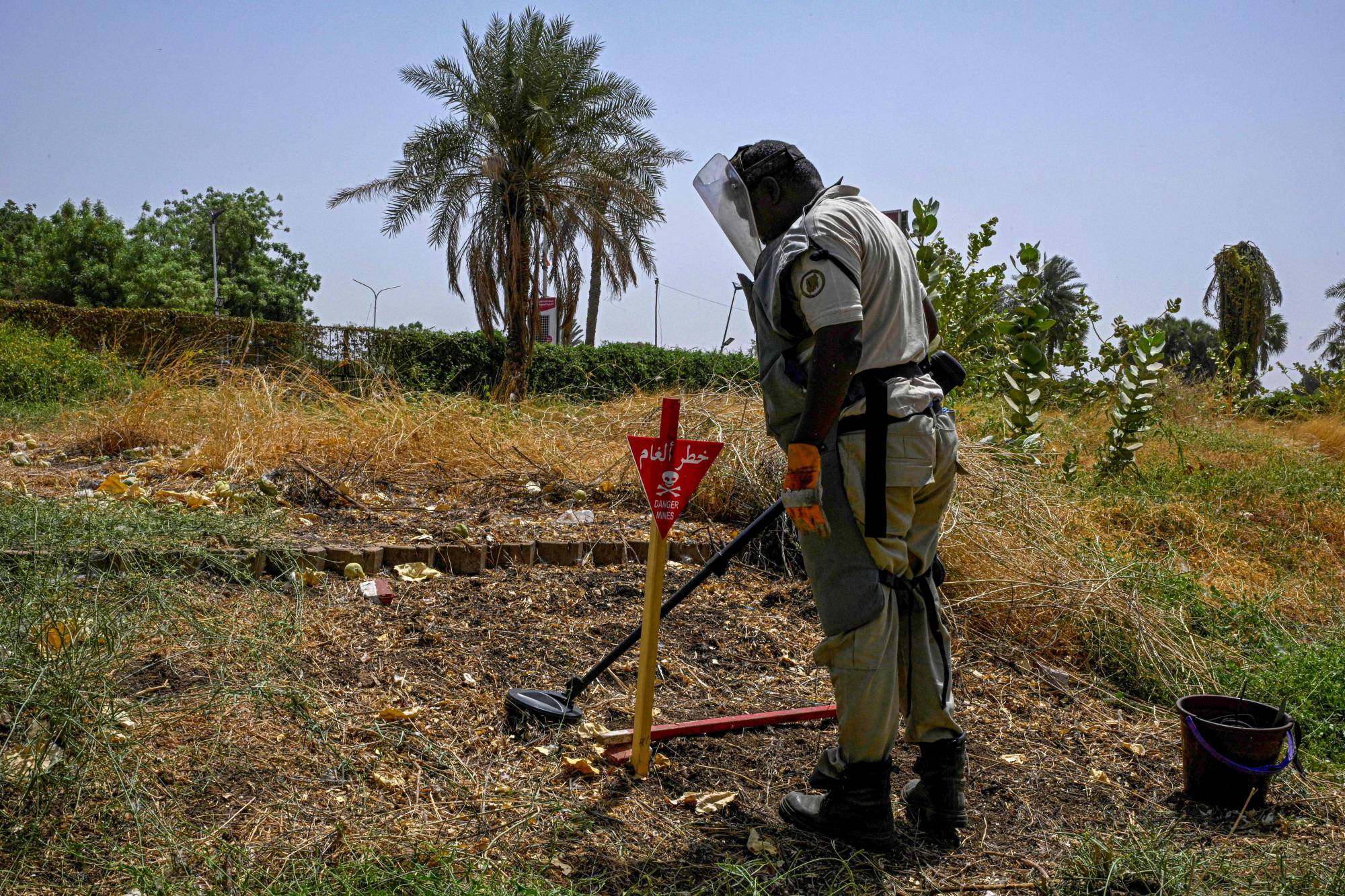
A member of the Danish Refugee Council and Jasmar Human Security Organization uses a metal probe as he searches for land mines in Al-Mogran Park in Khartoum on April 19, 2026. (AFP)
TT

Khartoum Mines Pose Hidden Threat to Returning Residents

A member of the Danish Refugee Council and Jasmar Human Security Organization uses a metal probe as he searches for land mines in Al-Mogran Park in Khartoum on April 19, 2026. (AFP)

Specialized Sudanese army teams are clearing landmines and unexploded ordnance across Khartoum, amid suspicions the Rapid Support Forces had planted explosives in residential neighborhoods when they held large parts of the capital.

The work comes as authorities seek to stabilize security and as more residents return home.

An Asharq Al-Awsat correspondent accompanied a National Mine Action Center team in Al-Mogran, in central Khartoum to observe operations to detect and remove buried explosives.

The center considers Al-Mogran among the most dangerous areas in the capital. Teams began work after the army retook Khartoum in May 2025, uncovering thousands of mines and unexploded remnants.

Field supervisor Jumaa Ibrahim Abu Anja said the team is clearing about 45,000 square meters in Al-Mogran, an area that saw some of the fiercest fighting between the army and RSF.

He said indicators suggest the group planted thousands of mines across central Khartoum, particularly in streets and residential areas.

“We have found more than 300 hazardous items, including mines fitted with smaller charges and highly explosive materials, designed to inflict the highest possible number of casualties upon detonation,” Abu Anja said.

He added that the aim was to slow the army’s advance and inflict losses. Teams have removed multiple types of mines, including anti-vehicle and anti-personnel devices.

A member of the Danish Refugee Council and Jasmar Human Security Organization sweeps a metal detector as he searches for land mines in Al-Mogran Park in Khartoum on April 19, 2026. (AFP)

The team advances along a line marked with white indicators, moving in measured steps before stopping at a point. A member sweeps the ground with a detector to scan for buried objects.

The team halts again at a triangular area known as the “hot line,” signaling a potential minefield. Work pauses to ensure strict safety checks. Before entering the site, all members must wear armored vests, with journalists kept at a safe distance.

A sharp signal breaks the silence. It may indicate a mine or unexploded ordnance, though it may also be only scrap metal. Every alert is treated as a threat. Once confirmed, the team extracts the device with slow, precise steps to avoid detonation. Photos are taken only from a designated safe zone, with no approach allowed during removal.

Teams mark hazards clearly, placing red signs reading “Danger Mines” to warn residents. When a device is located, a green wooden marker is placed to identify the spot before disposal.

Anti-personnel mines are destroyed the same day under controlled procedures.

Alongside fieldwork, the National Mine Action Center runs awareness campaigns, sending text messages urging residents to report suspicious objects and to avoid them. Authorities also warn against burning waste in neighborhoods due to the risk of hidden explosives.

Abu Anja said about 80 percent of Al-Mogran and other parts of Khartoum have been cleared, but risks remain, especially as residents return.

Progress is slowed by limited funding, affecting the pace of clearance and disposal. Abu Anja warned that delays raise the danger, noting that dozens of civilians have been killed or injured by mines and war remnants.