
Iran Helicopter Crash Shows Tehran’s Reliance on an Aging Fleet

Iranian military investigators have released two statements on the crash, largely ruling out possibilities rather than offering a suspected cause. - The AP
TT

Iran Helicopter Crash Shows Tehran’s Reliance on an Aging Fleet

Iranian military investigators have released two statements on the crash, largely ruling out possibilities rather than offering a suspected cause. - The AP

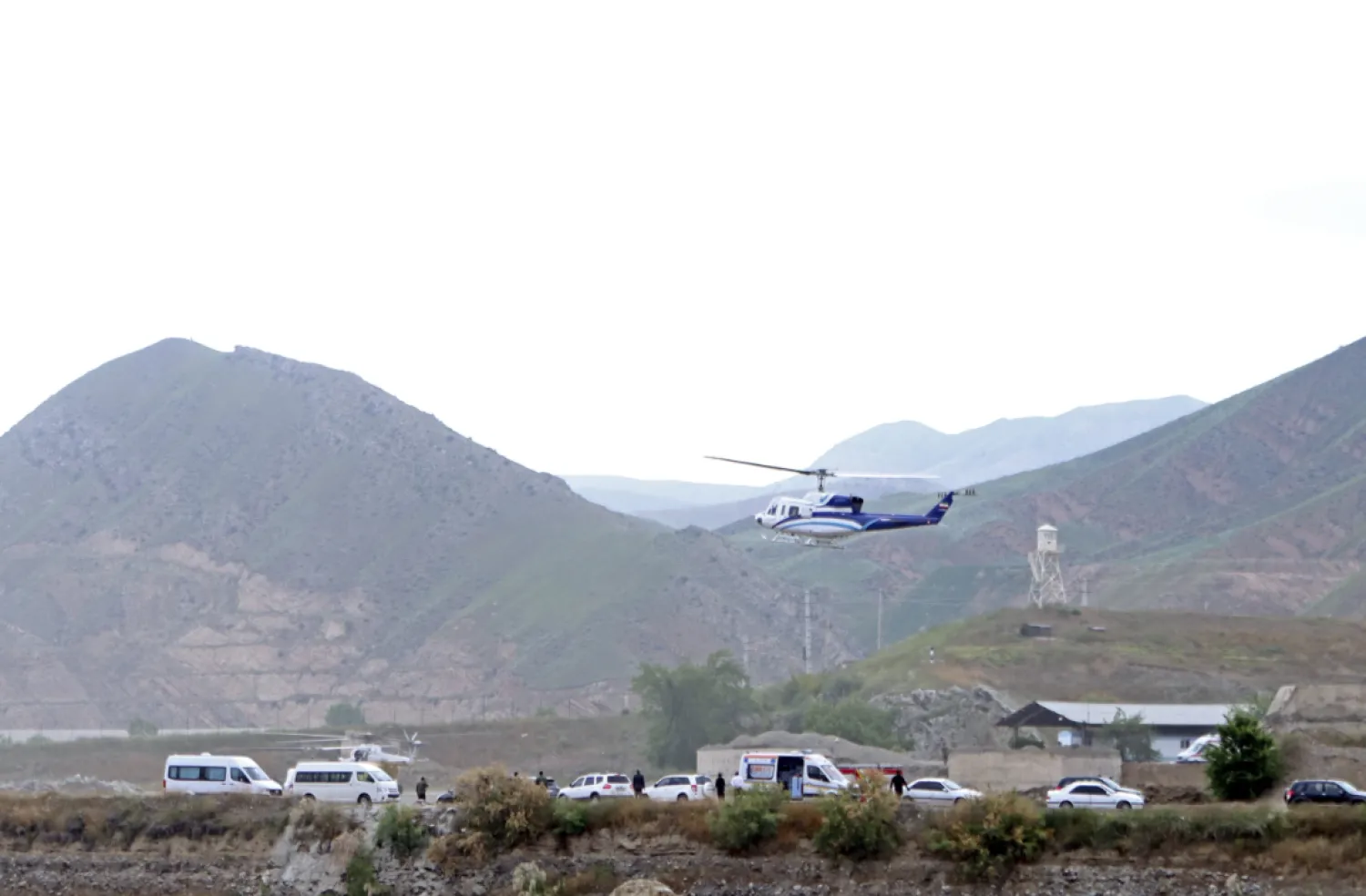
By the time Iranian President Ebrahim Raisi boarded his window seat on a helicopter ferrying him, the foreign minister and six others, thick clouds already had begun forming around the mountaintops along the Azerbaijan-Iran border. Despite the worsening weather, the helicopter lifted off for a trip about 145 kilometers (90 miles) southwest to a new oil pipeline near Tabriz.

Within an hour, the Bell 212 helicopter had crashed into a cloud-covered mountainside.

The Iranian military investigators probing the crash have previously faced international criticism over their report on troops shooting down a Ukrainian airliner in 2020. The hourslong desperate rescue attempt after the helicopter crash saw Tehran even reach out to the United States for help, just weeks after launching an unprecedented attack on Israel and as it enriches uranium closer than ever to weapons-grade levels. Even the type of helicopter that crashed links back to Iranian history, both before and after the country's 1979 Islamic Revolution.

“Iran is a culture of dualities,” said Farzin Nadimi, a senior fellow at the Washington Institute for Near-East Policy who studies Iran's military. “Some aspects, they seem so good and well-managed, well-oiled and very capable. ... In many levels, it's quite lacking,” The AP reported.

Iranian military investigators have released two statements on the crash, largely ruling out possibilities rather than offering a suspected cause. They've rejected the possibility of an onboard “explosion caused by sabotage" or a “cyberattack” targeting the Bell 212, a two-blade, twin-engine helicopter more widely known as the Huey for its use by the US military in the Vietnam War.

“The recorded conversations between the flight crew show that the last contact with the pilots up to the time of the incident and when they stopped responding lasted 69 seconds,” the investigators said, according to the state-run IRNA news agency. “No emergency declaration was recorded during that time.”

In conspiracy-minded Iran, some officials still insist foul play could have caused the crash. However, some other officials have begun to ask why the helicopter took off from the site of the new Giz Galasi Dam when the weather had started to turn.

Mostafa Mirsalim, a member of the country's Expediency Council, wrote on the social platform X that he had asked prosecutors to “address the mistakes that led to the loss of the president and his delegation,” without elaborating.

Abbas Abdi, a prominent journalist, also wrote on X that the flight path taken by Raisi's helicopter suggested the pilot didn't follow a standard Iranian practice of shadowing main roads in rural areas. That can both help navigation and provide a safe landing area in an emergency. Former Iranian Presidents Mahmoud Ahmadinejad and Abolhassan Banisadr both survived helicopter crashes while in office.

The helicopter involved in the crash, nearly 30 years old, came directly from a Bell manufacturing plant in Montreal, Canada, to the Iranian air force, according to data from the firm Cirium. It counts 12 Bell 212 aircraft registered in Iran that are still in service.

Bell Textron Inc., based in Fort Worth, Texas, said it "does not conduct any business in Iran or support their helicopter fleet, and we do not have knowledge about the active state of the helicopter involved in this accident.”

But despite being decades old, the Bell 212 and its military counterpart the Huey still are flown around the world. In the United States, Hueys still fly as part of America's nuclear forces to support its silos and for some VIP missions, said Roger D. Connor, an aeronautics curator at the Smithsonian’s National Air and Space Museum in Washington. Over 440 still fly worldwide, according to Cirium.

“It’s a simple aircraft to fly by medium helicopter standards. It doesn’t typically have much automation which can have both positive and negative implications for operators,” Connor said. “More automation means more opportunities for pilot confusion in certain circumstances, but also better capabilities in low-visibility conditions.”

Iran's use of the Bell 212 remains pervasive, in part due to the late Shah Mohammad Reza Pahlavi, who struck deals to purchase hundreds of the helicopters and had plans to build a local variant, Nadimi said. Those already in the country at the time of the Islamic Revolution ended up being a key component of Iran's bloody war against Iraq in the 1980s.

But as Western sanctions dried up the supply of parts, fewer of the aircraft were airworthy, despite efforts to locally overhaul them. That saw Iran engage in covert means to secure parts, sparking several US criminal cases for those involved, who sought everything from safety equipment to full engines and night-vision goggles for the aircraft.

Former Iranian Foreign Minister Mohammad Javad Zarif sought to blame sanctions for the crash. US State Department spokesperson Matthew Miller responded by saying America was “not going to apologize for our sanctions regime at all” as Iran has used aircraft to “transport equipment to support terrorism.”

“Ultimately, it’s the Iranian government that is responsible for the decision to fly a ... helicopter in what was described as poor weather conditions, not any other actor,” Miller said.

Meanwhile, questions remain over why Iran couldn't find the helicopter for hours, even though one of the victims reportedly talked by cellphone with officials. Such calls, in theory, can be triangulated by security services. Also, it remains unclear if the helicopter had any emergency tracker, which are common on aircraft.

While the investigation continues, Nadimi said he believed that the Bell 212 that flew Raisi did not have advanced avionics that could have been useful for low-visibility flight. However, he stressed that the major issue in the crash likely involves who allowed the flight to take off as the weather turned poor and whether the pilot faced pressure from his VIP passengers to make the journey no matter what.

“Pilot error, human error might be to blame, but there was a chain of events that caused this crash, not just pilot error," Nadimi said. “That helicopter should have been able to clear that terrain and fly safely to its destination. They should not have been dispatched for flying.”
Securing Iran’s Enriched Uranium by Force Would Be Risky and Complex, Experts Say

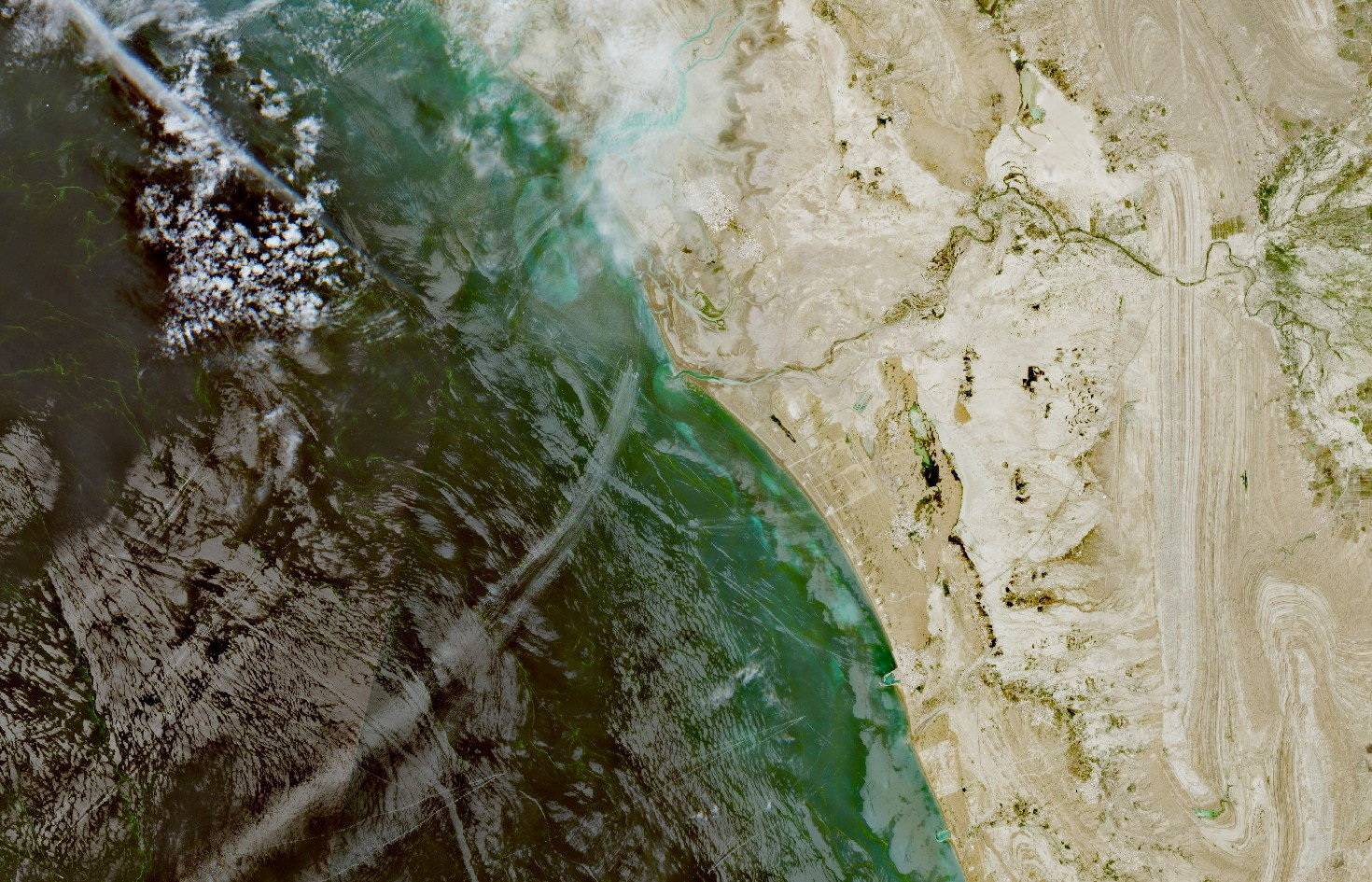
 This image from an Airbus Defense and Space's Pléiades Neo satellite shows a truck in the upper left-hand corner that analysts believe was carrying highly enriched uranium to a tunnel in the compound of the Isfahan Nuclear Technology Center, in Isfahan, Iran, June 9, 2025. (Airbus Defense and Space© via AP)
This image from an Airbus Defense and Space's Pléiades Neo satellite shows a truck in the upper left-hand corner that analysts believe was carrying highly enriched uranium to a tunnel in the compound of the Isfahan Nuclear Technology Center, in Isfahan, Iran, June 9, 2025. (Airbus Defense and Space© via AP)
TT

Securing Iran’s Enriched Uranium by Force Would Be Risky and Complex, Experts Say

 This image from an Airbus Defense and Space's Pléiades Neo satellite shows a truck in the upper left-hand corner that analysts believe was carrying highly enriched uranium to a tunnel in the compound of the Isfahan Nuclear Technology Center, in Isfahan, Iran, June 9, 2025. (Airbus Defense and Space© via AP)
This image from an Airbus Defense and Space's Pléiades Neo satellite shows a truck in the upper left-hand corner that analysts believe was carrying highly enriched uranium to a tunnel in the compound of the Isfahan Nuclear Technology Center, in Isfahan, Iran, June 9, 2025. (Airbus Defense and Space© via AP)

Should the US decide to send in military forces to secure Iran’s uranium stockpile, it would be a complex, risky and lengthy operation, fraught with radiation and chemical dangers, according to experts and former government officials.

US President Donald Trump has offered shifting reasons for the war in Iran but has consistently said a primary objective is ensuring the country will "never have a nuclear weapon." Less clear is how far he is willing to go to seize Iran’s nuclear material.

Given the risks of inserting as many as 1,000 specially trained forces into a war zone to remove the stockpile, another option would be a negotiated settlement with Iran that would allow the material to be surrendered and secured without using force.

Iran has 440.9 kilograms (972 pounds) of uranium that is enriched up to 60% purity, a short, technical step from weapons-grade levels of 90%, according to the International Atomic Energy Agency, the UN's nuclear watchdog agency.

That stockpile could allow Iran to build as many as 10 nuclear bombs, should it decide to weaponize its program, IAEA Director General Rafael Grossi told The Associated Press last year. He added it doesn’t mean Iran has such a weapon.

Iran long has insisted its program is peaceful, but the IAEA and Western nations say Tehran had an organized nuclear weapons program up until 2003.

Nuclear material is probably stored in tunnels

IAEA inspectors have not been able to verify the near weapons-grade uranium since June 2025, when Israeli and American strikes greatly weakened Iran’s air defenses, military leadership and nuclear program. The lack of inspections has made it difficult to know exactly where it is located.

Grossi has said that the IAEA believes a stockpile of roughly 200 kilograms (about 440 pounds) of highly enriched uranium is stored in tunnels at Iran’s nuclear complex outside of Isfahan. The site was mainly known for producing the uranium gas that is fed into centrifuges to be spun and purified.

Additional quantities are believed to be at the Natanz nuclear site and lesser amounts may be stored at a facility in Fordo, he has said.

It's unclear whether additional quantities could be elsewhere.

US Director of National Intelligence Tulsi Gabbard told a House hearing March 19 that the US intelligence community has "high confidence" that it knows the location of Iran’s highly enriched uranium stockpiles.

Radiation and chemical risks

Iran’s stockpile of highly enriched uranium fits into canisters each weighing about 50 kilograms (110 pounds) when full. The material is in the form of uranium hexafluoride gas. Estimates on the number of canisters range from 26 to about twice that number, depending on how full each cylinder is.

The canisters carrying the highly enriched uranium are "pretty robust" and are designed for storage and transport, said David Albright, a former nuclear weapons inspector in Iraq and founder of the nonprofit Institute for Science and International Security in Washington.

But he warned that "safety issues become paramount" should the canisters be damaged — for example, due to airstrikes — allowing moisture to get inside.

In such a scenario, there would be a hazard from fluorine, a highly toxic chemical that is corrosive to skin, eyes and lungs. Anyone entering the tunnels seeking to retrieve the canisters "would have to wear hazmat suits," Albright said.

It also would be necessary to maintain distance between the various canisters in order to avoid a self-sustaining critical nuclear reaction that would lead to "a large amount of radiation," he said.

To avoid such a radiological accident, the canisters would have to be placed in containers that create space between them during transport, he said.

Albright said that the preferred option for dealing with the uranium would be to remove it from Iran in special military planes and then "downblend" it — mix it with lower-enriched materials to bring it to levels suitable for civilian use.

Downblending the material inside Iran probably is not feasible, given that the infrastructure needed for the process may not be intact due to the war, he added.

Darya Dolzikova, senior research fellow at the Royal United Services Institute, agreed.

Downblending the material inside Iran is "probably not the most likely option just because it’s a very complicated and long process that requires specialized equipment," she said.

Risks for ground forces

Securing Iran's nuclear material with ground troops would be a "very complex and high-risk military operation," said Christine E. Wormuth, who was secretary of the Army under former US President Joe Biden.

That's because the material is probably at multiple sites and the undertaking would "probably take casualties," added Wormuth, now president and CEO of the Washington-based Nuclear Threat Initiative.

The scale and scope of an operation at Isfahan alone would easily require 1,000 military personnel, she said.

Given that tunnel entrances are probably buried under rubble, it would be necessary for helicopters to fly in heavy equipment, such as excavators, and US forces might even have to build an airstrip nearby to land all the equipment and troops, Wormuth said.

She said special forces, including perhaps the 75th Ranger Regiment, would have to work "in tandem" with nuclear experts who would look underground for the canisters, adding that the special forces would likely set up a security perimeter in case of potential attacks.

Wormuth said the Nuclear Disablement Teams under the 20th Chemical, Biological, Radiological, Nuclear, Explosives Command would be one possible unit that could be employed in such an operation.

"The Iranians have thought this through, I’m sure, and are going to try to make it as difficult as possible to do this in an expeditious way," she said. "So I would imagine it will be a pretty painstaking effort to go underground, get oriented, try to discern ... which ones are the real canisters, which ones may be decoys, to try to avoid booby traps."

A negotiated solution

The best option would be "to have an agreement with the (Iranian) government to remove all of that material," said Scott Roecker, former director of the Office of Nuclear Material Removal at the National Nuclear Security Administration, a semiautonomous agency within the US Department of Energy.

A similar mission occurred in 1994 when the US, in partnership with the government of Kazakhstan, secretly transported 600 kilograms (about 1,322 pounds) of weapons-grade uranium from the former Soviet republic in an operation dubbed "Project Sapphire." The material was left over from the USSR's nuclear program.

Roecker, now vice president for the Nuclear Materials Security Program at the Nuclear Threat Initiative, said the Department of Energy's Mobile Packaging Unit was built from the experience in Kazakhstan. It has safely removed nuclear material from several countries, including from Georgia in 1998 and from Iraq in 2004, 2007 and 2008.

The unit consists of technical experts and specialized equipment that can be deployed anywhere to safely remove nuclear material, and Roecker said it would be ideally positioned to remove the uranium under a negotiated deal with Iran. Tehran remains suspicious of Washington, which under Trump withdrew from a nuclear agreement and has twice attacked during high-level negotiations.

Under a negotiated solution, IAEA inspectors also could be part of a mission. "We are considering these options, of course," the IAEA's Grossi said March 22 on CBS' "Face the Nation" when asked about such a scenario.

Iran has "a contractual obligation to allow inspectors in," he added. "Of course, there’s common sense. Nothing can happen while bombs are falling."


Lebanese Displaced by War Fill Beirut’s Streets, Upending City Life

 Members of a family who fled Israeli shelling in southern Lebanon warm themselves by a bonfire next to tents used as shelters in Beirut, Lebanon, Tuesday, March 31, 2026. (AP)
Members of a family who fled Israeli shelling in southern Lebanon warm themselves by a bonfire next to tents used as shelters in Beirut, Lebanon, Tuesday, March 31, 2026. (AP)
TT

Lebanese Displaced by War Fill Beirut’s Streets, Upending City Life

 Members of a family who fled Israeli shelling in southern Lebanon warm themselves by a bonfire next to tents used as shelters in Beirut, Lebanon, Tuesday, March 31, 2026. (AP)
Members of a family who fled Israeli shelling in southern Lebanon warm themselves by a bonfire next to tents used as shelters in Beirut, Lebanon, Tuesday, March 31, 2026. (AP)

Beirut is bursting.

It's been a month since Hezbollah fired rockets into Israel after the US-Israeli attack on its patron, Iran, triggering Israeli bombardment of Lebanon and a ground invasion. Since then, more than 1 million people from southern and eastern Lebanon and Beirut's southern suburbs have fled. Many have crammed into the ever-tighter spaces of the country's capital where the bombs have not yet fallen.

Israel's attacks and evacuation orders — unprecedented in scope, covering what humanitarian agencies estimate to be 15% of this tiny country — have emptied villages in south Lebanon and pushed almost the entire population of the southern suburbs into Beirut, shifting the city's center of gravity, reshaping its geography and stirring fears about its future.

A huge tent encampment has sprouted up in the grassy field between a yacht club and nightlife venue, transforming the Beirut waterfront. Some families squat in storefronts, live in mosques and sleep in the cars they drove here, double- and triple-parking convoys on thoroughfares. Others huddle in tents pulled together from sheets of tarp along the curving coastal corniche or around Horsh Beirut, a park of pine trees on the outskirts of an area of the southern suburbs known as Dahieh.

"It's horrid because we feel this tension, that we're not wanted here," said Nour Hussein, who settled at the waterfront in early March after fleeing the first Israeli airstrikes on Dahieh. She watched a stream of well-to-do joggers navigate a maze of tents and soiled mattresses, her three youngest children clambering onto her lap.

"We don’t want to be here," she said. "We have nothing here and nowhere to go."

Experts say this displacement is unprecedented

Waves of displacement have upended this city before, most recently during the 2024 Israel-Hezbollah war. But experts struggle to recall such a dramatic exodus — about 20% of the country’s population, according to government statements — hitting Beirut so fast.

"The scale and intensity of this is just unprecedented," said Dalal Harb, the spokesperson for the United Nations refugee agency in Lebanon. She said the figure of 1 million displaced is almost certainly an undercount because it misses anyone who has not formally registered as displaced with the Ministry of Social Affairs.

The government has converted hundreds of public schools into shelters and pitched tents for displaced families beneath the bleachers of the city's main sports stadium. Charities have scrambled to help, with one refashioning an abandoned slaughterhouse destroyed in Beirut's 2020 port explosion into a dormitory for almost 1,000 displaced people.

But urban researchers note a staggering number of people on the streets compared with past conflicts, making it difficult for ordinary residents to block out the war and the misery it has wrought.

"This is relatively new, that you have so many people spending time in these open spaces, who are very vulnerable, living in very precarious conditions," said Mona Harb, a professor of urban studies at the American University of Beirut. "You have to confront this visually when you’re coming and going to work, to school ... and there are strong, mixed feelings associated with this presence that’s unregulated."

Families say they’ve struggled to find space at government-run shelters in Beirut and would rather brave the elements than travel north to cities where they might find better accommodations but where they have no relatives or connections.

"The further away we go, the more we'll lose hope about finding our way back," said Hawraa Balha, 42, when asked why her family of four was squeezing into the small car they drove from the devastated southern border village of Duhaira rather than sleeping in an available shelter further north. "We don't want to move again."

Residents of the suburbs of Dahieh have largely opted to remain in Beirut. That way, every so often, they can retrieve belongings and check whether their homes are still standing, albeit in furtive dashes under the threat of bombardment. Hussein said her kids grew so desperate for a shower after nearly a month without a bathroom that they rushed home to wash up last week despite the incessant buzz of Israeli drones.

Lebanon's sectarian balance is at risk

The prospect of hundreds of thousands of Shiites on the move has inflamed Lebanese sensitivities about the country’s fragile sectarian balance. Ever since its bloody 15-year civil war, Lebanon has relied on a power-sharing agreement to accommodate the interests of Christians, Shiite Muslims and Sunni Muslims, the country's largest religious groups, which make up roughly equal shares of the population.

"It's generating anxieties in Beirut, where the bulk of the displacement is, that this may cause a significant transformation in the demographic balance within the country, or within certain spaces and cities," said Maha Yahya, director of the Beirut-based Carnegie Middle East Center.

Each day that passes, more tents appear at the waterfront settlement. Children have started to complain of skin rashes. Heavy rainfall recently flooded the grassy lot and seeped into tents, leaving a trail of soggy clothes and sore throats. A fight broke out last week as volunteers arrived to distribute donations.

"We're not used to living like this — we had a house, we had normal lives," said Lina Shamis, 51, warming herself by a fire at the foot of a billboard advertising luxury watches. She, her three adult daughters and their small children set up camp here after heeding Israeli evacuation orders for Dahieh in a panic, carrying almost nothing with them.

"Now the kids are out of school and hungry, and our neighborhood is gone," she said. "All I feel is despair."

With Israel thrusting deeper into Lebanon and threatening to seize Lebanese territory as far as the Litani, a river 20 miles (30 kilometers) north of the Israeli border, the situation of displaced people in Beirut "will be even worse than what we’re seeing now," warned Harb, from the UN refugee agency.

"The needs will continue to increase," she said. "It's an imminent humanitarian catastrophe."


Siege of Balad Base May Prelude ‘Doomsday’ Scenario in Iraq

A US military handout image shows the Balad Air Base in Iraq in 2011.
TT

Siege of Balad Base May Prelude ‘Doomsday’ Scenario in Iraq

A US military handout image shows the Balad Air Base in Iraq in 2011.

An American contractor responsible for operating Iraq’s F-16 fighter jets has withdrawn its staff from an Iraqi air base after attacks by Iran-aligned factions, leaving Baghdad racing to find replacements before its most advanced aircraft risks becoming “scrap,” officials and sources said.

The attacks cap years of what sources describe as “infiltration and espionage attempts” targeting US technology acquired by Iraq about a decade ago, culminating in what they called a “doomsday scenario” to seize Iraqi military assets.

The Iraqi government had tried to persuade staff from V2X to remain at Balad Air Base despite repeated strikes. A senior Iraqi official said that although the attacks caused no major damage, “the company’s employees insisted on leaving for their own safety.”

According to a foreign contractor, security personnel and employees, the evacuation followed an intense wave of drone attacks and was carried out during a temporary truce to secure what one source described as a “high-risk flight.”

Since the outbreak of war involving the US-Israeli war on Iran, the Balad Air Base has come under attack from three directions, most of which failed to cause significant damage, sources said.

During the first term of President Donald Trump, Iran-aligned groups forced a previous American contractor to leave the same base after the US strike that killed Qassem Soleimani in January 2020.

Dozens of staff from Sallyport were reported to have departed after deadly attacks.

The pattern now appears to be repeating with V2X during Trump’s second term, but in a broader regional war.

Drone attacks strain operations

The first attack in the current escalation occurred on March 2, the third day of the war. Subsequent strikes followed a pattern, often between midnight and early dawn, sometimes involving paired drones.

Local residents filmed smoke rising near the base. A nearby farmer told Asharq Al-Awsat that most drones fell within or just outside the perimeter, close to the security fence.

A security source said around 10 attacks were recorded in the first month of the war, causing no casualties or damage, including to the F-16 fleet.

But the attacks disrupted daily operations. “We had to stay in fortified rooms for hours,” one contractor said, adding that foreign staff feared a repeat of the 2012 US consulate attack in Libya.

Iraqi staff downplayed the threat, saying operations continued as normal.

Evacuation under truce

Baghdad’s efforts to retain the American team failed. The official said the logistical support program for the F-16s was essential to keeping Iraq’s fighter squadron operational, but the staff chose to leave.

Sources said dozens of foreign personnel were evacuated overnight aboard a military C-130 aircraft to a neighboring country, in coordination with the US military. The operation was timed with a brief truce in the final week of March.

Some advisers had already withdrawn in late February, citing early warnings of rising risks.

V2X did not respond to requests for comment. A New York Stock Exchange filing shows its contract was renewed in June 2025 with an initial value of $118 million.

The base now lacks a specialized team to operate Iraq’s F-16s, and the government lacks the funds to maintain them, the Iraqi official said.

Aircraft at risk

Retired Colonel Salam Asaad said the aircraft would likely become inoperable without American expertise. “Local crews lack the experience to manage such a strategic system,” he said.

He added that the jets delivered to Iraq had been modified, with the United States removing some systems and not equipping them with long-range missiles.

Even during the war against ISIS, Iraqi F-16s relied on coalition aircraft to strike targets, he said.

Although the US Central Command has pointed to improved Iraqi self-sufficiency in recent years, the combination of technical dependence and sustained attacks has exposed vulnerabilities.

The attacks on Balad are part of a broader campaign since early March targeting US and Iraqi facilities. A source close to armed factions said the initial goal was to pressure US forces, but “when they withdrew, the targets expanded.”

The source said Iran’s Revolutionary Guards sought to isolate adversaries from the F-16 fleet and prevent its use during the conflict.

A former Iraqi official involved in procurement said Iran-aligned groups had long shown a strong interest in the aircraft, suggesting Tehran was uneasy with Iraq possessing such capabilities because it would view it as a threat.

‘Doomsday scenario’

An Iraqi official said a prolonged intelligence struggle had taken place between the US and Iranian sides over access to the aircraft’s systems, with armed groups repeatedly attempting to gather sensitive information.

Figures within Iraq’s ruling pro-Iran Coordination Framework warned of a potential “coup against what remains of the state.”

One figure said that after the war, factions could move toward a “doomsday scenario,” consolidating control over state military assets with political backing and institutional presence.

On March 30, head of the IRGC’s Quds Force Esmail Qaani said the “resistance’s joint operations room” had contributed to shaping a new regional order.

A former Iraqi official said earlier attempts by armed groups to penetrate military infrastructure had failed, but could now be seen as “a long rehearsal,” with Iraq being exposed to the Iranians during the war.