


Israel’s Bombs Flatten Swaths of Lebanon Village amid Fears of Wider War

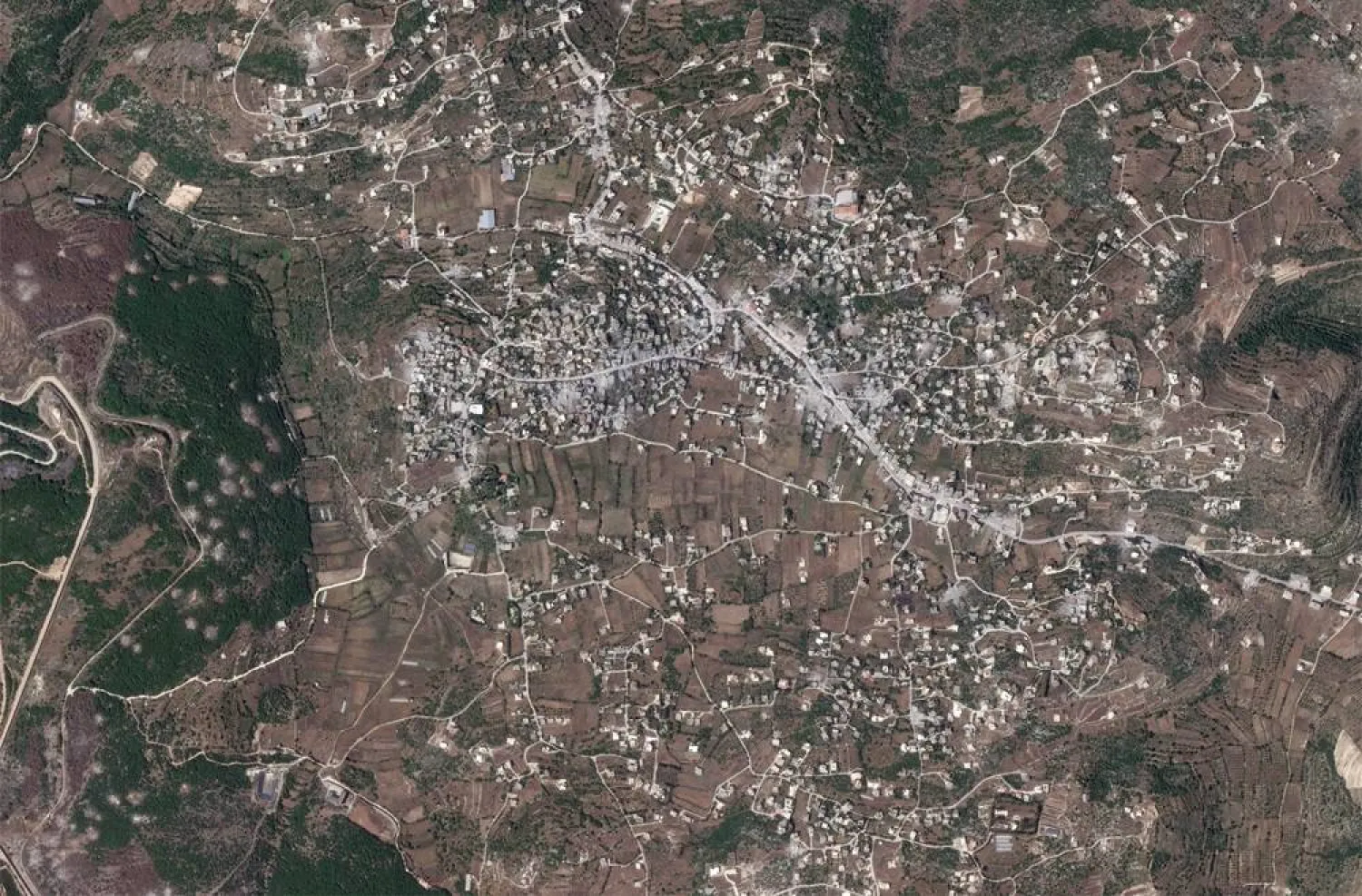
A satellite image shows damage in the Lebanese village of Aita al-Shaab near the Israeli border, following months of ongoing cross-border hostilities between Hezbollah and Israeli forces, Lebanon June 5, 2024. 2024 Planet Labs Inc/Handout via Reuters
TT

Israel’s Bombs Flatten Swaths of Lebanon Village amid Fears of Wider War

A satellite image shows damage in the Lebanese village of Aita al-Shaab near the Israeli border, following months of ongoing cross-border hostilities between Hezbollah and Israeli forces, Lebanon June 5, 2024. 2024 Planet Labs Inc/Handout via Reuters

Satellite images showing much of the Lebanese village of Aita al-Shaab in ruins after months of Israeli air strikes offer a glimpse of the scale of damage in one of Hezbollah's main bastions in south Lebanon.

The images from private satellite operator Planet Labs PBC, taken on June 5 and analyzed by Reuters, show at least 64 destroyed sites in Aita al-Shaab. Several of the sites contain more than one building.

Located in southern Lebanon where Hezbollah enjoys strong backing from many Shiites, Aita al-Shaab was a frontline in 2006 when its fighters successfully repelled Israeli attacks during the full-scale, 34-day war.

While the current fighting between Israel and the Iran-backed Shiite movement is still relatively contained, it marks their worst confrontation in 18 years, with widespread damage to buildings and farmland in south Lebanon and northern Israel.

The sides have been trading fire since the Gaza war erupted in October. The hostilities have largely depopulated the border zone on both sides, with tens of thousands of people fleeing their homes.

The destruction in Aita al-Shaab is comparable to the damage done in 2006, a dozen people familiar with the damage said, at a time when escalation has prompted growing concern of another all out war between the heavily-armed adversaries.

Reuters does not have satellite images from 2006 to compare the two periods.

Israel says fire from Lebanon has killed 18 soldiers and 10 civilians. Israeli attacks have killed more than 300 Hezbollah fighters and 87 civilians, according to Reuters tallies.

At least 10 of Hezbollah's dead came from Aita al-Shaab, and dozens more from the surrounding area, according to Hezbollah death notices reviewed by Reuters. Six civilians have been killed in the village, a security source said.

The village, just 1 km (0.6 miles) from the border, is among the most heavily bombarded by Israel, Hashem Haidar, the head of the government's regional development agency the Council for South Lebanon told Reuters.

"There is a lot of destruction in the village center, not just the buildings they hit and destroyed, but those around them" which are beyond repair, said Aita al-Shaab mayor Mohamed Srour.

Most of the village's 13,500 residents fled in October, when Israel began striking buildings and woodland nearby, he added.

The bombing campaign has made a swath of the border area in Lebanon "unfit for living," Haidar said.

The Israeli military has said it has hit Hezbollah targets in the Aita al-Shaab area during the conflict.

In response to Reuters questions, Israeli military spokesperson Nir Dinar said Israel was acting in self-defense.

Hezbollah had made the area "unlivable" by hiding in civilian buildings and launching unprovoked attacks that made "ghost towns" of Israeli villages, Dinar said.

"Israel is striking military targets, the fact that they're hiding inside civilian infrastructures is Hezbollah's decision," Dinar said.

The military did not give further details of the nature of its targets in the village. It said Hezbollah was escalating attacks, firing over 4,800 rockets into northern Israel, "killing civilians and displacing tens of thousands."

Hezbollah's media office did not immediately respond to requests for comment.

Hezbollah has said that displacing so many Israelis has been an accomplishment of its campaign.

'CONTINUING THREAT'

The current conflict began a day after the Oct. 7 Hamas attacks on Israel, when Hezbollah opened fire in solidarity with its Palestinian ally. Hezbollah has said it will stop when the Israeli assault on Gaza ends.

Aita al-Shaab is perched on a hilltop looking into Israel and is one of many Shiite villages experts say are Hezbollah's first line of defense against Israel.

The 2006 war started when Hezbollah fighters infiltrated Israel from an area near Aita al-Shaab, capturing two Israeli soldiers.

A source familiar with Hezbollah's operations said the village had played a strategic role in 2006 and would do so again in any new war. The source did not give more details of the group's activities there.

Hezbollah fighters held out in the village for the entire 2006 war. An Israeli-government appointed inquiry found that Israeli forces failed to capture it as ordered, despite encircling the village and dealing a serious blow to Hezbollah. Anti-tank missiles were still being fired from the village five days before the war ended, it said.

Seth G. Jones, senior vice president at the Center for Strategic and International Studies in Washington, said the area was militarily important in several ways, allowing Hezbollah to fire its shorter-range rockets into Israel.

"If there was a ground incursion, these would be frontline locations for Hezbollah to defend, or to try to attrite" Israeli forces, he said.

Hezbollah, far stronger than in 2006, has announced attacks on targets directly across the border from Aita al-Shaab during the current hostilities, including in the Israeli village of Shtula 1.9 km (1.18 miles) away and nearby areas.

Satellite images of Shtula and nearby Israeli villages taken on June 5 do not show visible damage to buildings. Israel's Defense Ministry said 60 homes in Shutla had been damaged including 11 severely damaged, according to a May report by newspaper Calcalist. The ministry did not respond to Reuters requests for data.

Throughout northern Israel, around 2,000 buildings have been damaged, the country's tax authority said. Across the border, some 2,700 homes have been completely destroyed and 22,000 more damaged, significantly below the 2006 conflict, the Council for South Lebanon said, though these numbers were preliminary.

Fires sparked by the fighting have affected hundreds of hectares of farmland and forest either side of the border, authorities said.

HEAVY ORDNANCE

Andreas Krieg of King's College in London said the structural damage in Aita al-Shaab was in keeping with wide-impact-area ordnance dropped by fighter jets or drones. Images of strikes indicated bombs of up to 2,000 lbs (900 kg) had been dropped, he said.

Hezbollah, which frequently announces its own strikes, has occasionally used the short-range Burkan, with a warhead of up to 500 kgs (1,100 pounds). Many of the attacks it has announced have used weapons with far smaller warheads, such as guided anti-tank rockets that typically carry warheads of less than 10 kg.

"Hezbollah does have much ... heavier warheads on their ballistic missiles that have not been used yet," Krieg said.

Israel's military and Hezbollah did not respond to questions about ordnance.

Hezbollah's goal, Krieg said, was to drive out Israeli civilians.

"For that, Hezbollah doesn't need to cause massive structural damage to civilian areas or civilian buildings."



US-Iran Deal Leaves Major Lebanon Questions Unresolved

Displaced families drive past a man holding the Hezbollah party flag as they drive along the highway through the area of Jiyyeh as they return to their home villages in southern Lebanon on June 15, 2026. (AFP)
TT

US-Iran Deal Leaves Major Lebanon Questions Unresolved

Displaced families drive past a man holding the Hezbollah party flag as they drive along the highway through the area of Jiyyeh as they return to their home villages in southern Lebanon on June 15, 2026. (AFP)

A deal between Washington and Tehran that ends the Israel-Hezbollah war leaves many issues in Lebanon unresolved, failing to mention Israel withdrawing from the country or an end to Tehran's support for the armed group.

Under US pressure, Lebanese officials have been holding direct talks with Israel aimed at reaching a separate agreement on ending the hostilities, but Beirut appeared to have been sidelined with the overnight announcement on the regional conflict.

AFP looks at the deal and the questions it raises in Lebanon.

- What does the deal involve? -

Details of the agreement to end the Middle East war on all fronts have not been made public, but Iran and mediator Pakistan have both said it includes Lebanon.

Hezbollah drew the country into the Middle East war on March 2 with rocket fire at Israel to avenge the killing of Iran's supreme leader in US-Israeli strikes.

Israel responded with airstrikes and a ground invasion that Lebanon says have killed more than 3,700 people and displaced more than one million others.

An official source told AFP that "Lebanon was not informed of the terms of the agreement or the time of the ceasefire".

Influential Lebanese parliament Speaker Nabih Berri, a Hezbollah ally and intermediary for the group, thanked Washington and Tehran for their "insistence on including... an essential and binding clause on halting the Israeli aggression on all of Lebanon".

Hezbollah on Monday had so far not claimed any fresh attacks on Israeli targets.

- Israeli withdrawal? -

Information circulating about the deal does not mention any Israeli withdrawal from south Lebanon, and Israeli Defense Minister Israel Katz on Monday said forces would remain in the country indefinitely.

Karim Bitar, a lecturer in Middle East Studies at the Sciences Po University in Paris, said that "the deal does not seem to involve Israel, which immediately meant that it wasn't a party to it... So it's very unlikely that there will be an Israeli withdrawal from south Lebanon."

Israeli forces control a strip of Lebanese territory running along the entire border.

A Western military source told AFP that Israeli forces had crossed the Litani River at several points, referring to the waterway running about 30 kilometers (20 miles) from the frontier but closer in some areas.

"Tens of thousands of Israeli soldiers" are in south Lebanon where they hold some established positions, the source said, adding that Hezbollah still had a presence there.

"It's the biggest invasion since their withdrawal in 2000," the source said, referring to Israel's previous pullout after some two decades of occupation.

Hezbollah says it sent reinforcements south of the Litani after the latest war erupted.

Under a 2024 ceasefire that followed a previous round of hostilities, Hezbollah fighters were supposed to withdraw from the area.

- What future for Hezbollah? -

Washington has pressured Lebanese authorities to disarm Hezbollah for months, but the accord makes no mention of the group.

"Iran doesn't seem to have committed to ending its support and financing for Hezbollah," Bitar said.

Military expert Riad Kahwaji said that "Hezbollah will not agree to give up arms... and this crisis will be protracted."

He said this could lead to political instability and even unrest, "especially now Hezbollah believes that through Iran it has emerged victorious from this agreement, and therefore is going to try and dictate its terms on who rules."

- Lebanon-Israel negotiations? -

Lebanon and Israel have been holding direct talks in Washington since April, seeking to end the hostilities and to separate Lebanon from the regional war.

A new round is scheduled for later this month.

Lebanese Prime Minister Nawaf Salam said Monday that "we will redouble our efforts" through the Washington negotiations "to secure a full Israeli withdrawal."

But after the Iran-US announcement, some cast doubt on the effectiveness of the bilateral negotiations.

Bitar said that "Lebanon could find itself once again as a scapegoat that pays the price both of American amateurism, Iranian cynicism, Israeli hubris and... the lack of a clear strategy from its own political class."


Lebanese Mourn Homes, Livelihoods Destroyed by Israel in Southern City

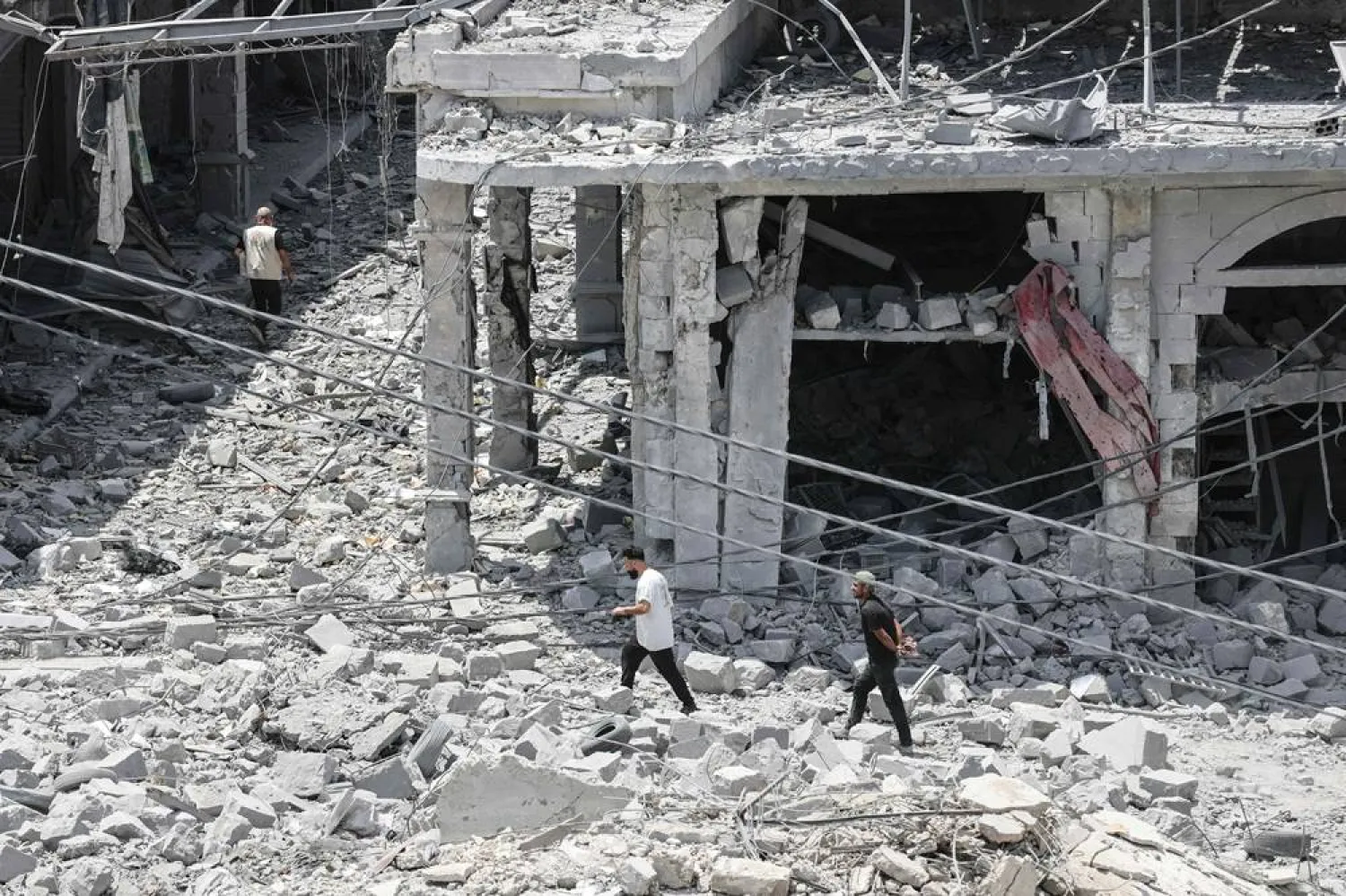
 People make their way through the rubble of a destroyed building as residents displaced by fighting return to Nabatieh in southern Lebanon on June 15, 2026. (AFP)
People make their way through the rubble of a destroyed building as residents displaced by fighting return to Nabatieh in southern Lebanon on June 15, 2026. (AFP)
TT

Lebanese Mourn Homes, Livelihoods Destroyed by Israel in Southern City

 People make their way through the rubble of a destroyed building as residents displaced by fighting return to Nabatieh in southern Lebanon on June 15, 2026. (AFP)
People make their way through the rubble of a destroyed building as residents displaced by fighting return to Nabatieh in southern Lebanon on June 15, 2026. (AFP)

When Kamal Kamal heard a ceasefire deal had been agreed between Iran and the United States, he rushed back to the southern city of Nabatieh only to find an Israeli strike had reduced his life's work to rubble.

The city, usually home to some 90,000 people before the latest war between Israel and Hezbollah erupted on March 2, was largely deserted as Israel pressed its military offensive in the area in recent days.

Kamal fought back tears as he stared stunned at the pile of rubble that used to be his roastery and warehouse for coffee and other products, after Israel pummeled the region with strikes and issued sweeping evacuation orders.

"When I opened it in the seventies, I was still a young man... now nothing is left," he said, leaning heavily on a walking stick and surveying the vast destruction.

"How my life has been spent in vain here!"

The war in Lebanon has been included in the framework deal to end the broader Middle East war.

But Lebanon's army on Monday urged displaced residents to delay their return to southern border villages, citing the "risk of Israeli violations and attacks".

Iran-backed group Hezbollah issued a similar warning.

Yet residents who have cautiously returned to Nabatieh have expressed dismay at the huge damage Israel inflicted on the city's neighborhoods and its famed market, where the roofing had collapsed and shops were devastated.

An AFP photographer also saw destruction to homes and businesses in the city, which has served as a hub of economic, social and services activity.

- 'Sorrow and grief' -

The city's municipality said in a statement that it had asked residents not to return "at the present time under any circumstances", citing the security situation.

The Lebanese army had set up a checkpoint at the entrance to the city, advising locals about the roads that they could take as intermittent artillery shelling rang out and smoke rose up.

The flow of residents to Nabatieh picked up later in the day, with people inspecting their homes and properties as heavy machinery worked to remove rubble and clear roads.

In one heavily damaged neighborhood, Rana Nasrallah surveyed her destroyed home, the rubble strewn with clothes, furniture and pot plants.

The 45-year-old had fled with her family to the coastal city of Sidon during the war.

"We grew up in this neighborhood. We used to play here as children. And here's where the older women used to sit and chat, the historic Nabatieh market before us... the landmarks that they perhaps wanted to erase," she said.

"As soon as the ceasefire was declared and before any official (Lebanese) announcement... we got going and came here. We couldn't wait any longer.

"We came to breathe in the scent of our land... even if there are no homes to shelter us and there is no work, still it's a relief for our souls."

In the face of the huge damage in Nabatieh and other south Lebanon towns and villages, including where Israeli forces have carried out sweeping demolitions, Nasrallah still expressed hope of returning permanently.

"Despite the sorrow and grief at seeing the city destroyed... we are filled with hope that we will rebuild," she said.

"Not once did we feel defeated or that we would not triumph, or that we would not return to rebuild Nabatieh."


Ghalibaf: Ambitious ‘Public Face’ of Post-Ali Khamenei Iran

Iran’s Parliament Speaker Mohammad Bagher Ghalibaf (R) meets with Pakistan’s Army Chief Syed Asim Munir in Tehran, Iran, May 23, 2026. (AFP)
TT

Ghalibaf: Ambitious ‘Public Face’ of Post-Ali Khamenei Iran

Iran’s Parliament Speaker Mohammad Bagher Ghalibaf (R) meets with Pakistan’s Army Chief Syed Asim Munir in Tehran, Iran, May 23, 2026. (AFP)

Iranian parliament speaker Mohammad Bagher Ghalibaf has emerged as the key negotiator and one of the most high-profile figures in the epublic's leadership as it enters a new phase after the US-Israeli war.

A pillar of the Iranian establishment for some three decades and one of its most prominent non-clerical figures, Ghalibaf, 64, had spearheaded the war effort and led the high-stakes negotiating process that culminated with an agreement announced Monday to halt the hostilities.

Ghalibaf survived more than five weeks of US-Israeli attacks on Iran that killed supreme leader Ali Khamenei, top security official Ali Larijani and a host of other key figures.

He came into public view for the first time in weeks in April to lead the Iranian delegation in talks in Islamabad with the United States, meeting Vice President JD Vance, the highest-level contact between the two foes since before the 1979 revolution.

An image published on social media by Iranian embassies abroad put Ghalibaf center stage in the Iranian negotiating team, looking animated and gesturing with his hand, as Foreign Minister Abbas Araghchi busied himself with teacups.

The workings of the Iranian leadership without Khamenei, who dominated it for nearly four decades, remain unclear.

Khamenei's son Mojtaba was named as his successor but has yet to appear publicly after he was reportedly wounded in an airstrike.

"Following Larijani's assassination, Ghalibaf has emerged as the new public face of the regime's war effort and diplomacy," said Farzan Sabet, a managing researcher at the Geneva Graduate Institute.

"But we shouldn't overstate the extent to which he's in the driver's seat: He still answers to higher powers in Tehran," he added.

These include Mojtaba Khamenei and the Revolutionary Guards, the ideological arm of Iran's military, where Ghalibaf was a key figure as aerospace forces commander, Sabet said.

- 'Professional bargainer' -

While the trip to Islamabad was Ghalibaf's first appearance in public since before the war, he has kept a high profile online with almost daily social media posts, mixing commentary on recent developments and the negotiations with threats of harsh retaliation should the fighting resume.

His posts on X in idiomatic American English have garnered wide attention and raised questions over who is actually writing them, given Ghalibaf is not known to be a fluent English speaker.

Referring to threats of a ground invasion, a post on Ghalibaf's X account said on April 1: "You come for our home... you're gonna meet the whole family. Locked, loaded and standing tall. Bring it on."

The IranWire news site has said the posts appeared to have been written by a former adviser based in the United States, but this has not been confirmed.

While the Islamabad talks failed, The Washington Post reported that Ghalibaf left a striking impression on the US delegation after years when Washington never dealt directly with key Iranian decision makers.

Ghalibaf "impressed the American team as a refined and professional bargainer -- and potential leader of a new Iran", said the Post.

In a sign of his expanding sway, he was appointed in May to oversee Iran's vital relationship with China, the biggest buyer of Iranian oil.

- 'Ambitious and opportunistic' -

Ghalibaf's varied experience, which spans military and civilian life, has seen him work as a commander in the Revolutionary Guards, Tehran police chief, Tehran mayor and now speaker of parliament.

It is unclear if he is fully trusted by the new hardline hierarchy of the Guards.

Known to be fiercely ambitious, he has stood for the Iranian presidency on multiple occasions but has never been successful, most notably in 2005 when ultra-conservative Mahmoud Ahmadinejad, little-known at the time, took the job.

A qualified pilot, Ghalibaf is known for boasting that he is able to captain jumbo jets.

Human rights groups have accused Ghalibaf, in his various functions, of playing a key role in suppressing protests, from the 1999 student demonstrations to the 2009 Green movement that erupted after a disputed election, right up to the nationwide protests that peaked in January 2026, just before the latest war.

"As a politician, he's shown himself to be ambitious and opportunistic, but also cautious, a trait that has helped him advance his career to the top of the country's power structure without getting purged like so many others have been," said Sabet.