


Syrian Faction Expansion Raises Concerns Among Neighboring Countries

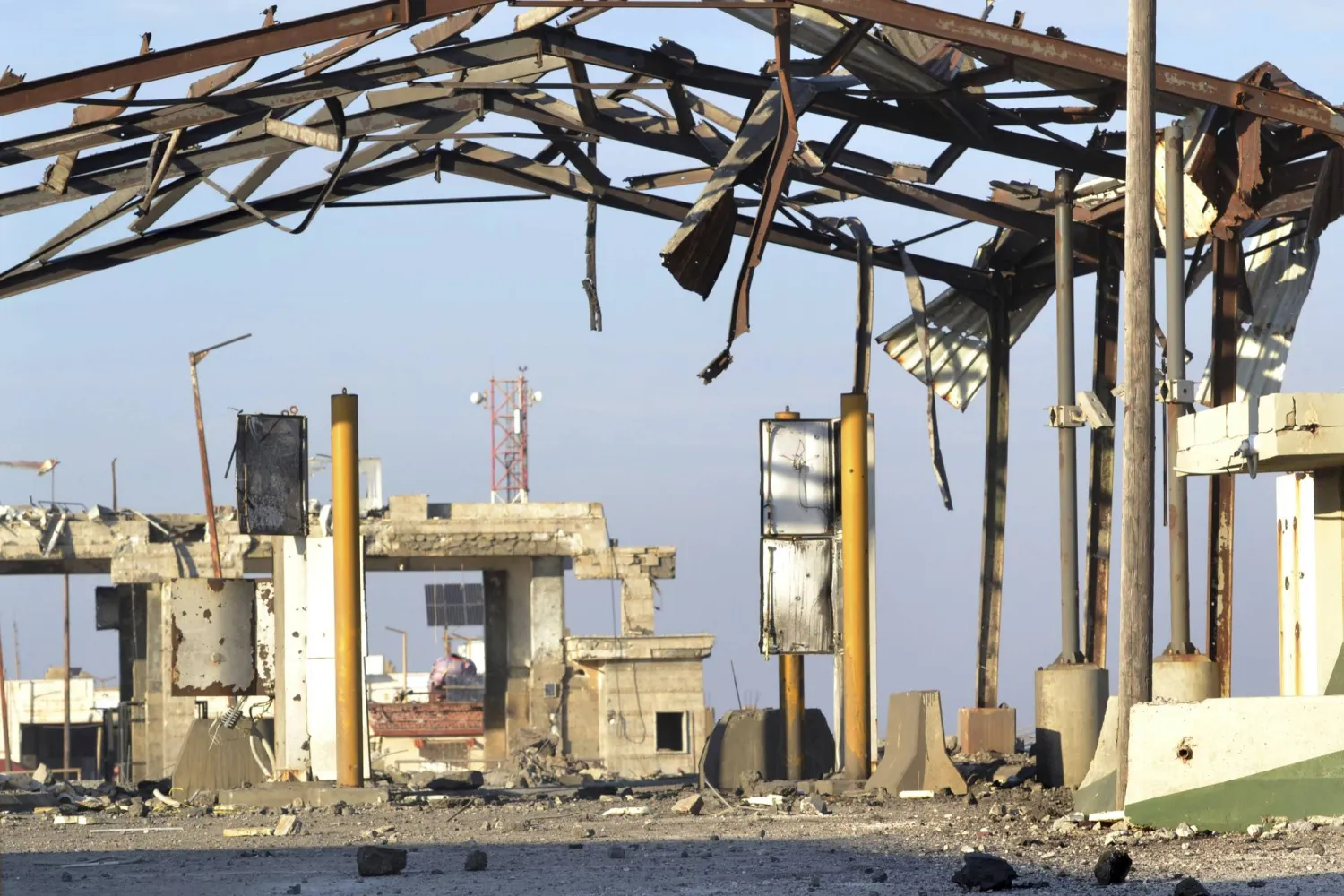
The destroyed crossing border point between Lebanon and Syria hit by an Israeli airstrike is shown, in Arida, north Lebanon, Friday, Dec. 6, 2024. (AP Photo)
TT

Syrian Faction Expansion Raises Concerns Among Neighboring Countries

The destroyed crossing border point between Lebanon and Syria hit by an Israeli airstrike is shown, in Arida, north Lebanon, Friday, Dec. 6, 2024. (AP Photo)

Syria is witnessing its most significant shift in power since 2011, as fighters from Hayat Tahrir al-Sham (HTS), supported by other armed groups, advance rapidly from Aleppo toward Damascus.

Their recent gains through Hama and possibly Homs threaten to upend the balance of power, which has remained stable since 2020.

These advances could bring major changes within Syria, as the factions aim to overthrow the government. But the impact extends beyond Syria's borders.

Neighboring countries are growing uneasy about the march toward Damascus — except for Türkiye, which has long backed Syrian opposition groups and sees the gains as an opportunity to further its own interests in Syria.

How will these developments affect Syria’s neighbors?

Türkiye has distanced itself from the HTS offensive on Aleppo, blaming the Assad government for failing to negotiate with the opposition.

While Ankara denies direct involvement, critics argue it could have stopped HTS, as the group has operated under Türkiye’s military protection in northwest Syria since 2020.

HTS has since rebuilt its forces, dominated rival factions, and rebranded itself as a local Syrian group, cutting ties with al-Qaeda. Its leader, Abu Mohammed al-Golani, has sought to soften his image, visiting minority areas in Idlib and promising not to use his territories for external attacks.

Golani has also sidelined hardliners and brought foreign fighters, including Uyghurs and Chechens, under his control.

HTS has targeted ISIS cells in Idlib, but attacks persist, including one that killed ex-HTS commander Abu Maria al-Qahtani, who had fallen out with Golani over his stance on dissolving al-Qaeda.

While HTS consolidates power, questions remain about Türkiye’s role and the broader impact on Syria’s conflict.

Iraq is closely watching the situation in Syria, torn between past fears of Syrian factions and the need to build new relationships as these groups send reassurances to Baghdad.

Iraqi Shiite factions, once key in supporting President Bashar al-Assad, have used Syria’s Deir Ezzor province as a base for Iran’s supply route to Hezbollah. Now, these groups seem unable to intervene as they did before.

Some factions may want to aid Assad militarily, but US opposition complicates their plans. Recent American airstrikes targeted Iraqi groups allegedly heading from eastern Syria to assist Assad’s forces, signaling Washington’s resistance to their involvement.

Iraq now faces the challenge of balancing its concerns with future cooperation.

Moreover, Lebanon is deeply affected by Syria’s conflict.

During the war, its eastern border saw battles with ISIS and al-Nusra Front fighters, who were expelled in the 2017 “Battle of Arsal.”

Hezbollah also played a key role, sending forces to support Assad and helping prevent his government’s collapse before Russia’s intervention in 2015.

Now, Hezbollah faces mounting challenges. Recent Israeli airstrikes have targeted its leaders, fighters, and weapons in Lebanon and Syria, including its key base in Qusayr, Homs.

After reports of Hezbollah moving fighters into Syria overnight, Israel launched strikes on border crossings, citing “weapon-smuggling routes and terrorist infrastructure.”

Hezbollah also risks retaliation from Syrian factions it fought during the war.

This tension could spill into Lebanon, where past conflicts saw armed groups supporting Assad’s opposition.

While Lebanese authorities dismantled many of these groups, Hezbollah’s weakened position and Assad’s struggles might encourage their resurgence.

Meanwhile, Jordan has avoided military involvement in Syria’s conflict but remains concerned about shifts along its northern border. Previously, its focus was on smuggling, including Captagon drugs, and the presence of Iran-backed factions.

Now, the concern is that hardline groups could replace these factions near its frontier.

Jordan has a history of fighting militant cells linked to al-Qaeda and may rely on its strong ties with southern Syrian tribes to manage risks.

Meanwhile, the al-Tanf area, hosting US and allied forces, and the nearby Rukban refugee camp add to the uncertainty along Jordan’s border.



Russia's Growing Energy Ties with China since the Ukraine War

Flags of China and Russia are displayed in this illustration picture taken March 24, 2022. REUTERS/Florence Lo/Illustration Purchase Licensing Rights
TT

Russia's Growing Energy Ties with China since the Ukraine War

Flags of China and Russia are displayed in this illustration picture taken March 24, 2022. REUTERS/Florence Lo/Illustration Purchase Licensing Rights

China has increased purchases of Russian oil and gas since ‌the start of the conflict with Ukraine in 2022, with Moscow and Beijing declaring a "no limits" partnership just days before the war began. The energy relationship between the two countries is expected to be an important topic when presidents Vladimir Putin and Xi Jinping meet in Beijing on Wednesday.

Here are some facts about the energy ties between the two countries:

GAS

Russia's energy giant Gazprom supplies natural gas to China through a 3,000-km (1,865 mile) pipeline called Power of Siberia under a 30-year, $400 billion deal launched at the end of 2019.

In 2025, exports jumped by around a quarter to 38.8 billion cubic meters (bcm), exceeding the pipeline's planned annual capacity of 38 bcm.

During Putin's visit to China in September, the countries agreed to increase annual volumes on the route by an additional 6 bcm, to 44 bcm, a year. In February 2022, China also agreed to buy up to 10 bcm of gas annually ‌by 2027 via ‌a pipeline from Sakhalin Island in Russia's Far East. The countries later ‌agreed ⁠to raise the ⁠volumes to 12 bcm.

Russia's gas exports to China are still a small fraction of the record 177 bcm it delivered to Europe in 2018-19 annually.

Russia's share in European Union gas imports has shrunk during the Ukraine war, particularly in pipeline flows. Russia remained the EU's second-largest liquefied natural gas supplier last year with a 16% share but the gap with the EU's main LNG partner, the United States, widened considerably. Russia and China are still in talks about a new Power of Siberia 2 pipeline capable of delivering 50 bcm of gas per year ⁠from Russia to China via Mongolia.

Gazprom began a feasibility study for the ‌pipeline in 2020, but the project has gained urgency as Russia ‌turns to China to replace Europe as its major gas customer. Gazprom CEO Alexei Miller said in September that the ‌countries signed a "legally binding memorandum" on the pipeline, but a firm contract is still elusive.

Russia's liquefied natural ‌gas exports to China rose last year by 18.2% to 9.79 million metric tons, according to China's customs data, cited by TASS news agency.

Russia was, after Australia and Qatar, the third-largest supplier of LNG to China, which is the world's largest buyer of seaborne gas.

OIL China is Moscow's top client for oil shipments via the sea and pipelines. Exports have been ‌high amid Western sanctions on Russia over the war in Ukraine. China's imports from Russia were at 2.01 million barrels per day (bpd) in 2025 (or 100.72 ⁠million metric tons in ⁠total), a decline of 7.1%, according to China's General Administration of Customs. That represented 20% of China's total imported oil by volume.

Yury Ushakov, Putin's foreign policy aide, said Russian oil exports to China grew by 35% in the first quarter of 2026 to 31 million tons.

China, which is the world's top oil importer, primarily buys Eastern Siberia-Pacific Ocean (ESPO) crude exported via the Skovorodino-Mohe spur of the 4,070-km (2,540-mile) ESPO pipeline, which connects Russian oil fields to refineries in China and from the Russian Far East port of Kozmino. Russia's oil pipeline operator Transneft has said it was expanding the ESPO pipeline to increase exports via Kozmino, seeking to complete the expansion work in 2029. China also imports oil from the Pacific island of Sakhalin, taking Sakhalin Blend and Sokol oil grades. The availability of ESPO Blend oil has remained high since July 2025, when exports had been expanded to 1 million barrels per day. Transneft has kept exports via Kozmino at around this level.

Russia has also agreed to raise its oil exports to China via Kazakhstan through the Atasu-Alashankou pipeline by 2.5 million tons per year to 12.5 million tons.


Mohammed Awda Emerges as New Qassam Brigades Chief after Killing of Al-Haddad

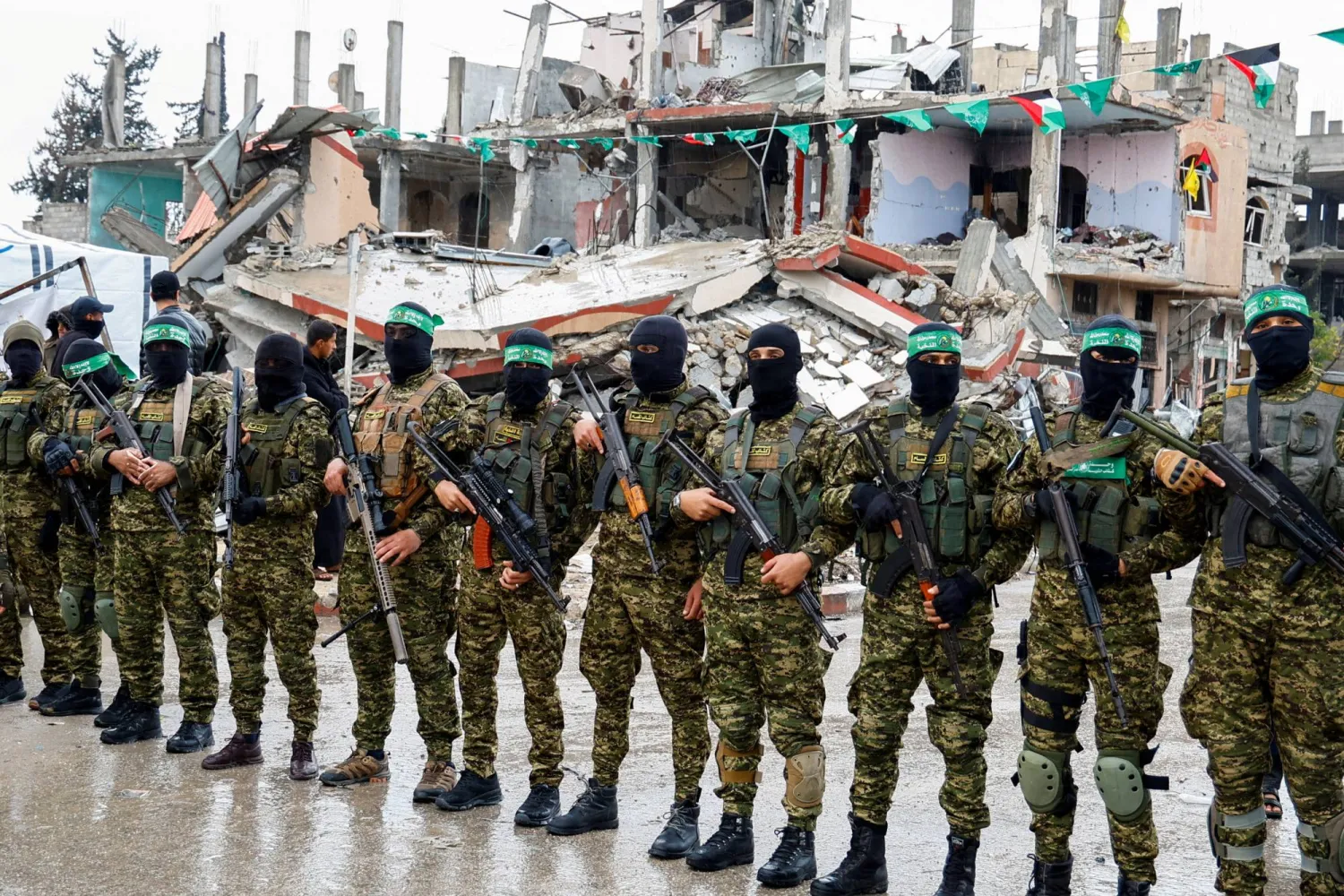
Palestinian Hamas fighters stand guard on the day of the handover of hostages held in Gaza since the deadly October 7 2023 attack, as part of a ceasefire and a hostages-prisoners swap deal between Hamas and Israel, in Rafah in the southern Gaza Strip, February 22, 2025. (Reuters)
TT

Mohammed Awda Emerges as New Qassam Brigades Chief after Killing of Al-Haddad

Palestinian Hamas fighters stand guard on the day of the handover of hostages held in Gaza since the deadly October 7 2023 attack, as part of a ceasefire and a hostages-prisoners swap deal between Hamas and Israel, in Rafah in the southern Gaza Strip, February 22, 2025. (Reuters)

Multiple Hamas sources in the Gaza Strip revealed that the movement’s armed wing, the Ezzedine al-Qassam Brigades, is now led by Mohammed Awda, succeeding Ezzedine al-Haddad, who was killed by Israel last Friday after decades of pursuit.

Three Hamas sources in Gaza told Asharq Al-Awsat that Awda had effectively been selected to command the Qassam.

He was close to al-Haddad and remained in regular contact with him, particularly over plans to “rebuild the organizational structure” after the killings of former Qassam commanders Mohammed Deif and Mohammed Sinwar, they added.

Since the Oct. 7, 2023 attack, Israel has eliminated a series of Qassam commanders and key figures involved in planning and directing Hamas’s attack on Israeli communities near Gaza during nearly two years of war in the enclave.

One source said Awda, who headed military intelligence within the Qassam at the time of the Oct. 7 attack, had been offered leadership of the armed wing after the killing of Mohammed Sinwar in May 2025, but declined, leading the role to pass to al-Haddad.

The two other sources said they could not independently verify that account.

Awda appears to face no serious rival for the position as he remains one of the core members of the movement’s military council. The only other surviving member of the original council is home front commander Imad Aqel, whom Hamas sources said did not play a direct role in planning or supervising the Oct. 7 operation, unlike “other commanders who were not informed of the full details or even the zero hour.”

Military intelligence role

Awda previously oversaw military intelligence operations in Gaza, including gathering information on Israeli military positions around the enclave.

Sources said he also supervised the exploitation of surveillance equipment uncovered after an Israeli undercover unit infiltrated Gaza and remained there for an extended period before being exposed in November 2018. Hamas officials at the time described the information recovered from the devices as an “intelligence treasure.”

The military intelligence branch under Awda concentrated heavily on identifying vulnerabilities in the Israeli army’s Gaza Division.

According to the sources, Awda later assumed responsibility for the northern sector after al-Haddad became commander of the Qassam Brigades. In that role, he coordinated with newly appointed commanders in Gaza City and northern Gaza while continuing to oversee intelligence operations.

Early Hamas ties

Sources said Awda’s relationship with Hamas dates back to the first Palestinian intifada, which erupted in 1987. He also spent time in the “Majd” security apparatus established by slain Hamas leader Yahya Sinwar to pursue Palestinians accused of collaborating with Israel.

Believed to be in his late forties or early fifties, Awda ranked among the early members of the Qassam Brigades during the second intifada, which began in late 2000.

He is originally from the Khulafaa al-Rashideen area of Jabalia refugee camp in northern Gaza.

For years, the area functioned as a military hub for the Qassam Brigades. Mohammed Deif and several senior commanders were based there, and it became an early meeting point between Deif and a generation of future Qassam leaders, including Awda.

Although Awda’s career has been closely associated with intelligence and security operations, he also advanced through field command positions.

He served for several years as commander of the central Jabalia battalion, worked in military manufacturing and later headed the “northern brigade” between 2017 and 2019.

During his tenure as northern brigade commander, Awda hosted Mohammed Sinwar, then responsible for overseeing the Brigades’ military and strategic operations.

Hamas sources credit Awda with playing a major role in transforming the military intelligence branch into one of the most influential divisions in the Qassam.

“Awda has always preferred intelligence work and avoided direct field operations,” one Hamas source said. “He also avoids relying on personal guards or drivers, preferring to move alone because of his strict security precautions.”

Awda has reportedly survived several assassination attempts, both before and during the Gaza war. After the ceasefire of Oct. 10, 2025, his father’s home in Jabalia refugee camp was bombed, killing his eldest son, Amr.


In War‑Scarred Gaza, Brides Turn to Refurbished Wedding Dresses

 Palestinians attend a mass wedding for 50 couples organized by the IHH Humanitarian Relief Foundation in Gaza City, May 11, 2026. (Reuters)
Palestinians attend a mass wedding for 50 couples organized by the IHH Humanitarian Relief Foundation in Gaza City, May 11, 2026. (Reuters)
TT

In War‑Scarred Gaza, Brides Turn to Refurbished Wedding Dresses

 Palestinians attend a mass wedding for 50 couples organized by the IHH Humanitarian Relief Foundation in Gaza City, May 11, 2026. (Reuters)
Palestinians attend a mass wedding for 50 couples organized by the IHH Humanitarian Relief Foundation in Gaza City, May 11, 2026. (Reuters)

In a small sewing workshop in southern Gaza, Nisreen Al-Rantisi pulls fabric from a pile and reshapes worn wedding dresses, trying to keep a fading tradition alive amid war and soaring costs.

Families said they have been struggling to find new wedding dresses and many search instead for places that refurbish gowns and other kinds of clothes for their children.

Importers cite delays, high shipping costs, and restrictions on materials, such as the crystals encrusted into the elaborate wedding dresses, as key factors behind the shortages ‌and price hikes.

Many workshops ‌have also been damaged during the conflict.

“We try ‌to ⁠reuse the old ⁠gowns that we have, produce them by fixing them a bit, work on them, wash them, arrange them, shape them,” said Rantisi, adding that work initially relied on a bicycle-powered sewing machine due to electricity shortages.

Rantisi said she used to buy the fabric for about 120 to 150 shekels ($41 to $51) before the war, but now pays around 500 shekels ($171).

“This has caused a big rise ⁠in the cost of bridal dresses and children’s gowns. We ‌are living in a vicious circle ‌from the war that affected us,” she added.

COGAT, the Israeli military agency that controls ‌access to Gaza, did not immediately respond to a request for comment.

Most ‌of Gaza's more than 2 million people have been displaced, many now living in bombed-out homes and makeshift tents pitched on open ground, roadsides, or atop the ruins of destroyed buildings after two years of war with Israel.

HIGH PRICES BEYOND REACH ‌FOR MOST IN GAZA

Despite the hardships, some couples still find ways to celebrate, with mass weddings held in ⁠Gaza offering a ⁠rare moment of joy amid the devastation.

Shop workers say the war has driven prices beyond reach.

“Before the war, prices were reasonable for everyone,” said Rawan Shalouf, an employee at a bridal shop.

“But now, given the circumstances we’re in, the price of a dress is ridiculous.”

Across Gaza, brides and families are struggling to afford even basic wedding needs. Shahed Fayez, 21, is due to marry in about four days but has been searching in vain for a dress.

“I don’t care about its style, what’s important is that it's new,” she added.

“The cheapest dress is $1,000 or more, that's the minimum, and all we have is less than $200. The entire dowry does not cover the price of a dress.”