‘Caesar’s’ Partner ‘Sami’: I Wept at First When I Saw Pictures, Then Became Emotionally Numb

Syrians gather outside a prison in Damascus the day after Assad’s fall, hoping to uncover the fate of their missing loved ones (AFP)
TT

‘Caesar’s’ Partner ‘Sami’: I Wept at First When I Saw Pictures, Then Became Emotionally Numb

Syrians gather outside a prison in Damascus the day after Assad’s fall, hoping to uncover the fate of their missing loved ones (AFP)

In the final installment of his interview with Asharq Al-Awsat, Osama Othman, the man who smuggled the “Caesar Files” documenting Syrian torture victims, described how the photos became a haunting part of his life.
“I lived with these images for years until the victims felt like friends,” he said.
Othman recalled his early emotional struggles.
“At first, I cried whenever I saw the photos,” he said.
“But over time, my feelings went numb. When I cried, I felt human. But when I started looking at the pictures coldly, just searching for specific ones, I felt like a stranger to myself. Bashar al-Assad disfigured the victims physically and destroyed us emotionally.”
For 11 years, Othman was known only by his codename “Sami” until he revealed his identity through Asharq Al-Awsat.
He shared one of the most heartbreaking moments: “Hearing a mother or wife recognize a loved one in the photos and say, ‘Thank God they’re dead. At least the waiting is over.’ It’s a pain that breaks your heart.”
Among the nearly 27,000 photos, some left a lasting impression on Othman. He mentioned victims with large tattoos of Assad on their chests and security officers smiling next to mutilated bodies, as if posing for a tourist photo.
The following is the text of the interview:
How did you handle seeing so many torture photos?
“The first images I got from ‘Caesar’ were devastating. You can’t imagine,” said Othman. “It’s one thing to see someone killed in a battle or a crime—you can understand it. But when you see photos of victims with burn marks all over their chests, it’s beyond comprehension.”
Othman shared how he coped.
“I saw these victims as my family—my brother, my father. That made it hurt even more. I felt their pain as if it was my own. What kind of person tortures someone like this? If they were going to die in prison, just kill them. Why subject them to such barbaric torture?”
“No regime in history has gone to such lengths to detain and torture its own people in ways no sane mind can comprehend. The cruelty is unimaginable,” he added.
Did you suffer from sleepless nights and tears?
“In the beginning, I couldn’t stop crying,” said Othman.
“These victims aren’t just numbers. They had mothers waiting for them, children, siblings, and lives. Assad turned them into photos with numbers. Even now, 10 years later, we have thousands of images with no names. We hoped to access records linking these numbers to identities when the regime fell, but that hasn’t happened.”
Othman and the Caesar Files for Justice organization are now working on a solution.
“We’re creating an app to match missing persons’ photos from families with our files, using forensic methods like skull measurements and other details beyond what the eye can see.”
Over time, Othman’s emotions changed.
“After looking at thousands of photos, certain details stick with you. For example, Branch 227 reminds me of victims with eyes gouged out, while Branch 215 committed over half of the recorded violations. These numbers and images are burned into my memory. I’ve seen so many that I can often tell which branch they came from at a glance.”
“These victims felt like my friends,” said Osama Othman.
“In some photos, you could see a victim screaming in their final moments, their mouth frozen open. That silent scream, heard only by God, reached us through the images. I felt as if they were entrusting me with a responsibility.”
Over time, Othman’s emotions dulled.
“At first, I cried and knew I was still human. But later, as I searched through the photos without feeling, I felt like a stranger to myself. Assad didn’t just destroy the victims physically—he broke us emotionally too.”
Were doctors involved in torture?
“There were reports of killings in hospitals,” confirmed Othman.
“We had photos of victims with medical tubes still in their arms and bandages on their bodies. It’s unclear what happened—were they arrested and taken to the hospital, or detained directly from there? I don’t know.”
Othman emphasized the lack of evidence.
“Without proof, I can’t confirm these claims. Some doctors have faced trials in Germany for alleged abuses against detainees, but many stories circulating publicly lack the legal backing to hold up in court.”
“Unfortunately,” he added, “any claims of torture or killings without solid evidence can’t withstand scrutiny in any court.”
The pictures uncovered the fate of some missing people, did the relatives of those missing contact you and how did you feel about them?
Othman frequently received photos from families of the missing, hoping to find their loved ones among the Caesar Files.
“Relatives would send me images, asking if their loved ones were in the files,” Othman said.
“I would compare these photos with thousands in the Caesar Files, searching for similarities.”
Othman explained that the process was slow and painstaking.
“It took a lot of time, but often I was able to find a match.”
Othman described the emotional toll of working with the Caesar Files.
“Often, when we send full-body images of victims to their families, it’s not their loved one. But sometimes, it is. What’s most heartbreaking is hearing them say ‘Thank God, thank God.’ Why? Because they’re relieved their loved one has died. A mother or wife says this in agony, grateful that their suffering has ended. This makes you wonder—how could a mother see her son tortured and dead, yet say ‘thank God’?”
Othman also recalled disturbing images.
“We have photos of victims who lost their eyes. One photo shows a man with a tattoo of Bashar al-Assad’s face, and the words ‘Syria, Assad’ under it. This man was tortured to death in the Air Force Intelligence branch in Damascus.”
One image, Othman said, still haunts him.
“In another, there are many bodies in a cart, from different branches, not just one. Some bodies are piled up outside a garage, decaying. What’s chilling is a soldier smiling in the background. It makes you question—why is he smiling? Is it happiness, or has he lost all sense of feeling in the face of such cruelty?”
Othman described a disturbing photo of hospital staff smiling, seemingly unaware of the horror around them.
“In the background, you can see bodies wrapped in plastic, others on tables, and some limbs visible. Hospital corridors were used to wrap up the bodies,” he said.
Othman also pointed to detailed images of victims’ eyes, which forensic experts can use to assess injuries and decay caused by insects.
He emphasized the pain of sharing these images.
“I don’t want to show more—it’s too painful for viewers and the victims’ families. But our message has reached the world. After 10 years, the Caesar Files exposed the regime’s crimes, and today, institutions and former prisoners are revealing even more about these atrocities.”
How did you feel about Russian President Vladimir Putin’s asylum offer to Assad?
Othman expressed his reaction to Russian President Vladimir Putin granting Assad asylum.
“Since Russia’s intervention in Syria in 2015, the Russian regime has been a partner in the Syrian regime’s crimes,” Othman said.
“We viewed the Russian officials as true partners in these atrocities, and they likely bear greater responsibility than the Syrian regime itself.”
Othman was not surprised by Assad seeking refuge in Russia.
“I don’t think this asylum will last long. We are committed to working tirelessly to bring Assad back to Syria, recover the stolen funds, and ensure he is prosecuted in Damascus.”
Othman shared his hopes for justice in Syria, expressing his desire to see Assad in the defendant’s cage.
“I pray I live long enough to witness that moment, just as I lived to hear the news of Assad's fall and the liberation of Damascus,” he said.
Asked whether Assad knew about the atrocities taking place in Syrian prisons, Othman was firm.
“In Syria, nothing happens without the president knowing. This is a repressive, security-driven regime led by Assad, or previously by his father, Hafez al-Assad. No security official under this regime would act without the president’s approval.”
Othman acknowledged that while they lack direct evidence linking Assad to specific crimes, the responsibility falls on the heads of the security agencies.
“Legally, the blame lies directly with the heads of security agencies, as the chain of command flows from them. But in Syria, everyone knows that even the smallest actions in any security branch or prison are part of a systematic plan known and approved by the regime's top leadership.”
On whether the victims in the Caesar Files were from specific regions or sects, Othman clarified, “The victims in the Caesar Files are Syrians, and we defend all Syrians. Since the victims are identified by numbers, not names, I can’t determine if they belong to a particular sect or group.”
However, he noted signs of certain affiliations.
“Some victims have tattoos on their bodies. You might be surprised to learn that several victims have a large tattoo of Bashar al-Assad on their chests. You could assume these men were Assad supporters. I don’t know their sects, but someone who tattoos Bashar al-Assad on their body surely has strong support for him.”
Othman pointed out that some tattoos found on victims might provide clues about their identity, but not with certainty.
“A tattoo of Palestine, for example, isn’t unique to Palestinians. We all support Palestine. But it’s likely this person was Palestinian, especially from the Palestinian community in Syria,” he said.
He emphasized that tattoos could hint at political beliefs or nationalities, but he wouldn't make assumptions.
“These tattoos may suggest political views or connections to certain countries, but I can't say for sure if the victims belonged to a specific sect or group.”
Othman added that once names are linked to numbers, he may be able to provide more concrete answers.
“When we can match names to numbers, I'll be able to say if many of these victims came from a particular sect.”
Do you believe that Syria is on its way to a rebirth?
Othman shared cautious hope for Syria’s future.
“God willing, a new Syria will be born,” he said, but added a note of caution.
“I don’t want to be pessimistic, but the real fight for Syria's rebuilding began on December 8, 2024, with Assad’s fall and Damascus’ liberation. Everything before that was just about toppling the regime and removing its leader.”
When will you return to Syria?
Othman said he is eager to return to Syria but faces administrative hurdles.
“I’m waiting for the right moment, but there are still many bureaucratic obstacles,” he explained.
“If it were possible, I would have gone back earlier.”
Regarding his fears due to his involvement in the Caesar Files, Othman admitted the risks remain.
“The fear is still there. We hid our identities to protect ourselves and our families, and that need still exists,” he said.
“The risks are greater now because we are pushing for accountability. This puts us in conflict with many people. I know the dangers, but I’m committed to this path and prepared for whatever comes. If I could do more from hiding, I would, but now it's important to be visible and move the case forward.”



Report: Netanyahu Relegated from Partner to Passenger in Trump's War on Iran

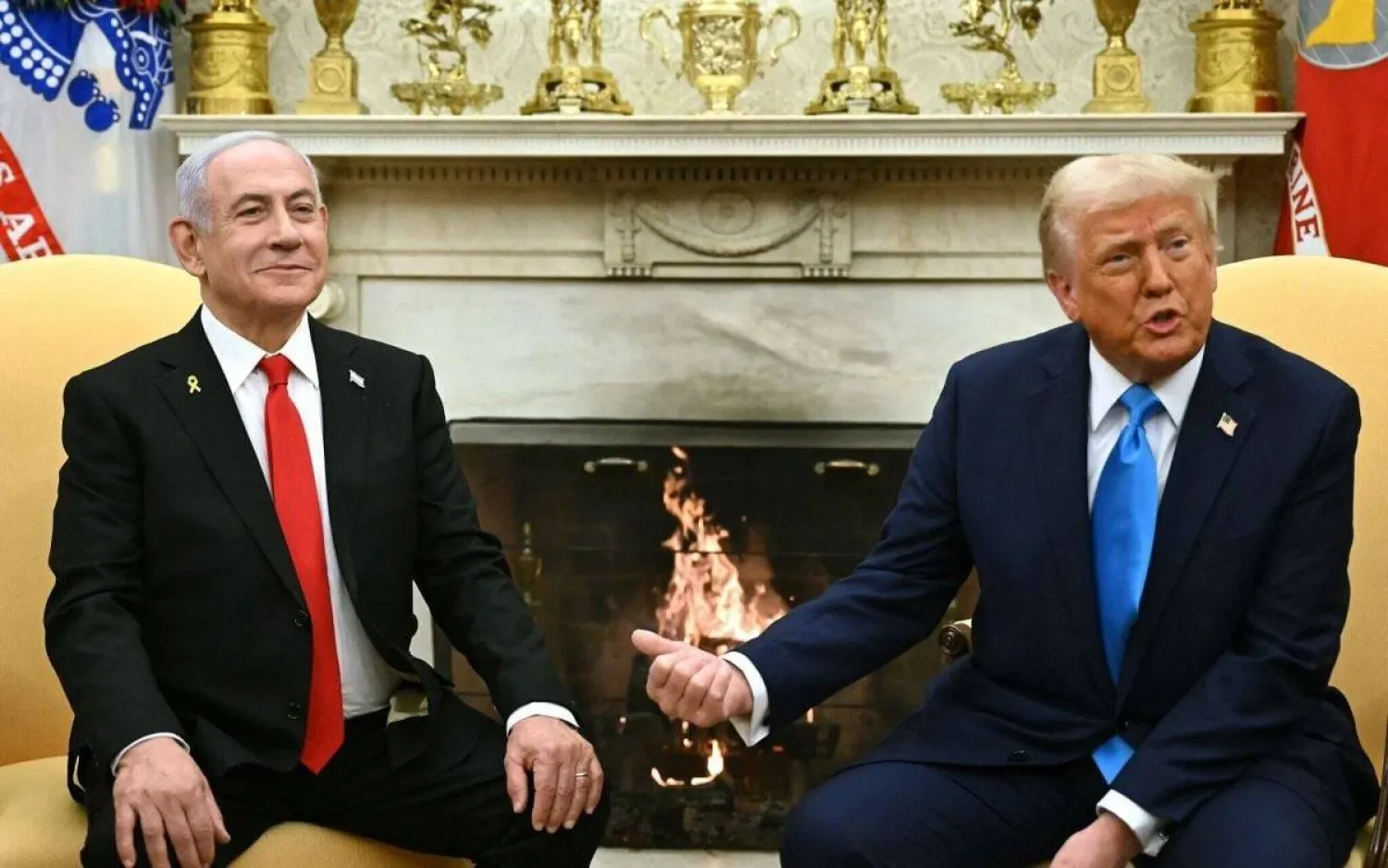
 US President Donald Trump, right, meets with Prime Minister Benjamin Netanyahu in the Oval Office of the White House, in Washington, Feb. 4, 2025. (AFP)
US President Donald Trump, right, meets with Prime Minister Benjamin Netanyahu in the Oval Office of the White House, in Washington, Feb. 4, 2025. (AFP)
TT

Report: Netanyahu Relegated from Partner to Passenger in Trump's War on Iran

 US President Donald Trump, right, meets with Prime Minister Benjamin Netanyahu in the Oval Office of the White House, in Washington, Feb. 4, 2025. (AFP)
US President Donald Trump, right, meets with Prime Minister Benjamin Netanyahu in the Oval Office of the White House, in Washington, Feb. 4, 2025. (AFP)

In the run-up to the February 28 attack on Iran, Prime Minister Benjamin Netanyahu of Israel was not only in the Situation Room with President Trump, he was leading the discussion, predicting that a joint US-Israeli strike could very well lead to the demise of the regime in Iran.

“Just a few weeks later, after those sanguine assurances proved inaccurate, the picture was starkly different. Israel was so thoroughly sidelined by the Trump administration, two Israeli defense officials said, that its leaders were cut almost entirely out of the loop on truce talks between the United States and Iran,” said a New York Times report on Saturday.

“Starved of information from their closest ally, the Israelis have been forced to pick up what they can about the back-and-forth between Washington and Tehran through their connections with leaders and diplomats in the region as well as their own surveillance from inside the Iranian regime,” said the two officials, who spoke on the condition of anonymity to discuss sensitive matters.

“The banishment from the cockpit to economy class has potentially significant consequences for Israel, and especially for the prime minister, who faces an uphill re-election battle this year.”

“Netanyahu has long sold himself to Israeli voters as a kind of Trump whisperer,” uniquely capable of enlisting and retaining the president’s support. In a televised speech early in the war, he portrayed himself as the president’s peer, assuring Israelis that he talked to Trump “almost every day,” exchanging ideas and advice, “and deciding together.”

“He had led Israel to war in February with grand visions of achieving a goal he has pursued for decades: stopping Iran’s push for nuclear weapons once and for all. As the war began with a stunning decapitation of much of the government in Tehran, it seemed as though an even more grandiose dream might come true: the toppling of the regime.”

“But many in Trump’s inner circle had always viewed the idea of regime change as absurd. And it wasn’t long before American and Israeli priorities began to diverge more, especially after Iran closed the Strait of Hormuz, sending oil prices soaring and pressuring Trump into agreeing to a ceasefire.”

Far from vanquished, Tehran has behaved as though it won the war, merely by surviving it. Israel, by contrast, has seen its biggest objectives for the war elude its grasp.

Netanyahu set three goals at the start of the war: toppling the regime, destroying Iran’s nuclear program and eliminating its missile program. None have been realized.

Instead of burying Iran’s nuclear ambitions, a recent American proposal called for a 20-year suspension of, or moratorium on, Iranian nuclear activity and that time frame may have gotten smaller in subsequent proposals. That raises the prospect that an eventual deal could resemble the Obama administration’s 2015 nuclear accord, which Netanyahu fought against at the time and Trump exited from three years later.

With the Trump administration excluding Israel from the negotiations, Iran’s arsenal of ballistic missiles may have been left off the table, as far as Israeli officials know. In that respect, any deal would fail to improve on the 2015 agreement, which Netanyahu assailed in part because it did not address Iran’s missiles.

It would also be a dismaying setback for the Israeli public, for whom life largely ground to a halt as the nation was bombarded by Iranian missiles in March and April.

There are other concerns for Israel about the possible contours of a US-Iran agreement, including a lifting of economic sanctions against Tehran. Doing so could amount to an economic lifeline, flooding Iran with billions of dollars that it could then use to rearm and to help its proxy forces, like Hezbollah, replenish their own arsenals with weapons to use against Israel.

While little is certain yet about the shape of an eventual deal — and any agreement could still be postponed by a renewal of fighting — what seems clear is that Israel’s partnership with the United States has come at a steep price. A country that for generations prided itself on “defending ourselves by ourselves,” and whose leaders exasperated a succession of American presidents with their hardheaded recalcitrance, is now making little secret of its need, and willingness, to submit to Trump’s demands.

As Defense Minister Israel Katz said on April 23, as Trump threatened to resume the war and bomb Iran back to the “Stone Age”: “We are only waiting for the green light from the US.”

“That admission was a humbling climbdown from the heady first days of the war, when the two countries achieved air supremacy and were so confident of success that they urged the Iranian people to topple the regime and secure their future,” said the NYT.

Within two weeks, it became clear that the war would not produce instant victory, as Trump had hoped. The White House, and some Israeli leaders, put aside their hopes for regime change, and Trump turned his attention toward ending the fighting.

“He had viewed Netanyahu as a war ally, but not as a close partner when it came to negotiating with the Iranians,” American officials familiar with his thinking said; in fact, he considered Netanyahu someone “who needed to be restrained when it comes to resolving conflicts.”

Israel soon found itself demoted from “equal partner” to something more akin to a “subcontractor” to the US military.

Israel would often clear plans with the United States, only to have the Trump administration throw it under the bus after those plans were executed, such as when Israel struck the South Pars natural gas field and oil facilities along the Gulf in southern Iran.

Trump even pressured Israel to bring a premature halt to its campaign against Hezbollah in Lebanon within days after the ceasefire on April 8, forcing Israel to accept restraints on its fighting with a hostile adversary right on its border.

“The sidelining is particularly hard to take for some Israeli officials, who, speaking on condition of anonymity, noted that the country willingly shouldered some of the war’s more controversial assignments.”

For Netanyahu, it has meant repeatedly recalibrating his rhetoric, and even adjusting his description of Israel’s war objectives, in response to Trump’s frequent vacillations.

After initially telling his citizens that Israel’s goals were to “remove” the existential threats of an Iranian nuclear weapon and of its ballistic missile arsenal, by March 12 Netanyahu was articulating a new idea. This one downplayed the fact that those threats had not been removed, and instead exalted Israel’s close partnership with the United States.

“Threats come and threats go, but when we become a regional power, and in certain fields a global power, we have the strength to push dangers away from us and secure our future,” he said. What gave Israel such newfound strength in the eyes of its adversaries, Netanyahu asserted, was his alliance with Trump — “an alliance like no other.”


*David M. Halbfinger and Ronen Bergman for The New York Times


A Grieving Father Buries His 6-Year-Old After a Land Mine Kills 3 Children in Syria’s Idlib

Idris Al-Ridah, center, weeps as he prays during the funeral of his son Mohammed, who was killed in an explosion caused by war remnants while playing with other children in the village of Abu Habbah in eastern Idlib countryside, in Abu Habbah, Syria, Thursday, May 21, 2026. (AP)
TT

A Grieving Father Buries His 6-Year-Old After a Land Mine Kills 3 Children in Syria’s Idlib

Idris Al-Ridah, center, weeps as he prays during the funeral of his son Mohammed, who was killed in an explosion caused by war remnants while playing with other children in the village of Abu Habbah in eastern Idlib countryside, in Abu Habbah, Syria, Thursday, May 21, 2026. (AP)

Idris al-Ridah wept as he carried the lifeless body of his 6-year-old son Amir, wrapped in a yellow and brown blanket, in northwest Syria.

The father collapsed to the ground as he laid his son to rest, his small body lowered into a grave next to two other young children who were siblings, Aya al-Fankih, 4, and Rayan al-Fankih, 6.

The three children were killed on Thursday in the village of Abu Habbah, in the countryside in the northwestern province of Idlib, when a land mine left behind from Syria's war exploded while they were playing near a well.

The deaths are the latest reminder of the dangers posed by unexploded war remnants scattered across the country years after the conflict began.

Mines and booby traps have killed and maimed hundreds of Syrians since Syria’s conflict began in March 2011, leaving about half a million people dead.

The Syrian Civil Defense said four other children who were near the well were also wounded in the blast.

"We heard a very loud explosion next to our house,” one resident, Mahmoud al-Aleiwi. He added that “when we got to the location there were a number of children’s bodies thrown around the well.”

He said one of the children was thrown 300 meters (984 feet) away by the explosion and was found on the roof of a house.

At a nearby hospital, wounded children cried as family members tended to them. One child had shrapnel wounds across his face and body, his legs wrapped in bandages. Another lay in bed with blood visible through bandages wrapped around his head.

Ten-year-old Ibrahim al-Suwadi was injured last month in a separate explosion caused by unexploded ordnance inside a damaged school in the town of al-Habit in Idlib’s southern countryside.

Sitting beside his father inside their home, al-Suwadi described how he was playing with his friends at the school when they went inside a room and found the mine.

“Two brothers picked it up and took it to the bathroom,” the boy said. “We thought it was an exploded mine so we started throwing rocks at it. All of a sudden, an older boy grabbed my hand and we ran, the mine exploded and I lost consciousness then I don’t remember anything.”

His father said the family had fled their village in 2013 during fighting and spent years living in displacement camps before returning after the fall of Bashar Assad’s government in December 2024.

Humanitarian organizations say unexploded ordnance remains one of the deadliest legacies of Syria’s war.

“Syria has ranked among the top contaminated countries around the world over the past years,” said Jakub Valenta, head of humanitarian disarmament and peace building for the Danish Refugee Council in Syria. He added that according to the data from the United Nations, around 14.3 million people are in danger of explosive ordnance in the country.

Valenta said the explosive hazards include anti-personnel mines, anti-tank mines and other unexploded devices left behind in residential and agricultural areas.

“We’re estimating that around 1,200 people and probably more have been affected by explosive ordnance accidents directly,” he said. “Out of those 1,200 people there were around 740 fatal casualties. The vast majority of these people are men and children.”

According to the Danish Refugee Council, around 60% of contaminated areas in Syria are agricultural lands, complicating efforts by displaced families to return home and rebuild livelihoods.

In Damascus’ southern suburb of Kisweh earlier this month, Syrian trainees working with Danish Refugee Council teams carefully removed and destroyed unexploded ordnance during training exercises aimed at expanding local demining capacity.

The organization says it has recruited and trained new Syrian explosive ordnance disposal teams to help clear contaminated areas and educate communities about the risks.

“The number of the casualties is among the highest worldwide in terms of explosive accidents and victims,” Valenta said.

“These people suffer lifelong injuries, physical like losing a limb or their vision and suffer mental health problems," he said. “These people also lose their jobs and livelihoods."


Archives Interrupted: Vintage Pics Show Gaza 'We No Longer Know'

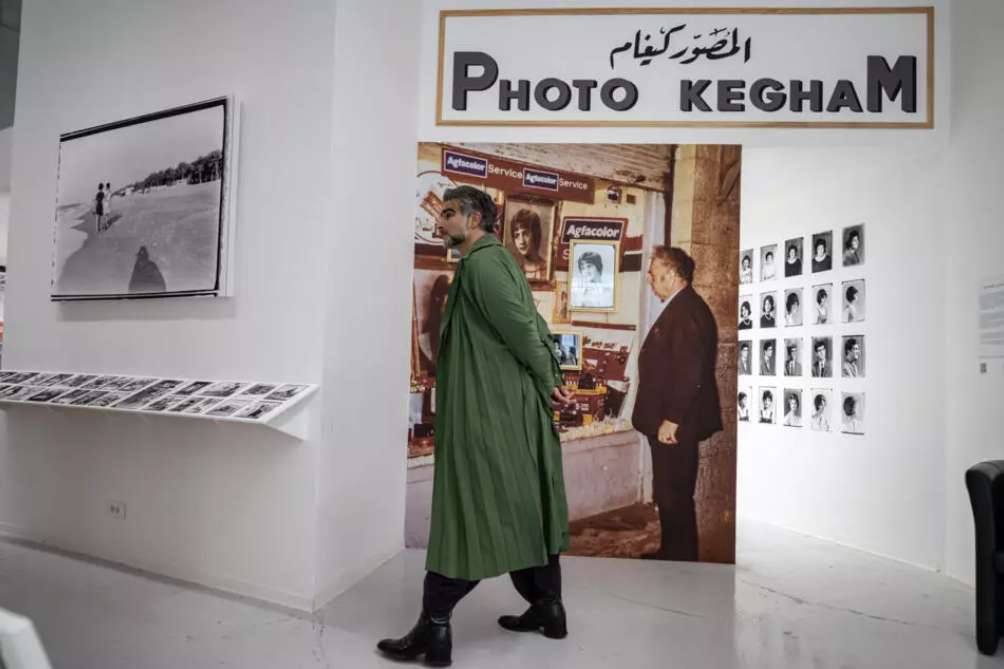
Kegham Djeghalian, whose work is on display in the French city of Marseille, opened Gaza's first ever photo studio in 1944 © MIGUEL MEDINA / AFP
TT

Archives Interrupted: Vintage Pics Show Gaza 'We No Longer Know'

Kegham Djeghalian, whose work is on display in the French city of Marseille, opened Gaza's first ever photo studio in 1944 © MIGUEL MEDINA / AFP

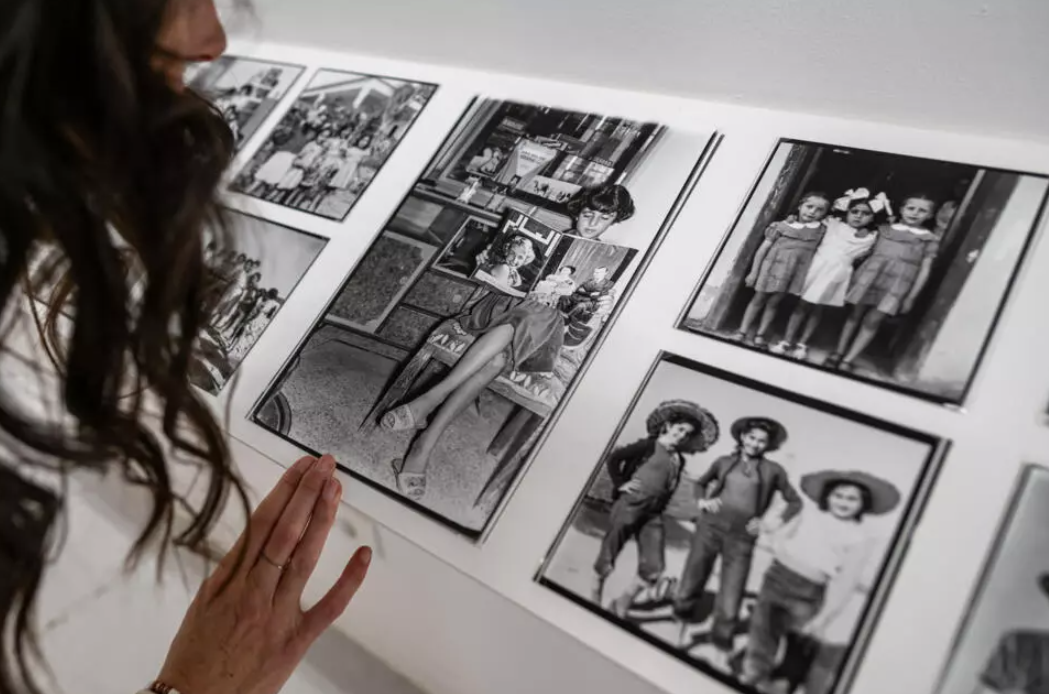
When Kegham Djeghalian photographed daily life in Gaza last century, the Palestinian territory was synonymous with Hollywood-inspired brides, fancy dress parties and excursions to smoke a hookah at the beach.

They are images from a time far removed from the rubble and tent cities of the now war-ravaged Gaza Strip.

"It's a Gaza we no longer know. A joyful Gaza, one full of hope, connected to the world, with trains and an airport," said his grandson, who has curated a show of his work in France's southern city of Marseille.

Djeghalian survived the Armenian genocide of 1915 -- a term strongly denied by Türkiye -- then settled in Gaza, opening the city's first ever photo studio in 1944.

He refused to leave, despite the recurring conflicts hitting the small territory wedged between Egypt and what became Israel in 1948, spending four decades capturing images of the Palestinian society that had adopted him, up until his death in 1981.

Some 300 of his surviving photographs are on show in Marseille until September.

'Photo Kegham of Gaza: Unboxing' is to travel to Bristol in the United Kingdom in October © MIGUEL MEDINA / AFP

- 'Diverse society' -

In one image, children have clambered onto each other to form a human pyramid in the courtyard of a school for Palestinian refugees displaced after the creation of Israel.

In another, women with voluminous hair blowouts pose smiling next to a sewing machine.

In a third, French philosophers Jean-Paul Sartre and Simone de Beauvoir have just stepped off a small propeller plane.

The photograph has no caption, but the pair visited the Gaza Strip in March 1967 shortly before Israel seized the coastal territory in the Six-Day war.

"I grew up with family stories about Kegham, the Gazan photographer who survived the Armenian genocide," the curator, who inherited the same name as his grandfather and calls himself Kegham Jr, told AFP.

The 41-year-old professor of visual culture, who spent part of his childhood in Egypt, says his father discovered over 1,000 photo negatives "by chance" in 2018 in three red boxes at the back of a cupboard in the family's Cairo apartment.

They included studio portraits and family photos, images of children on balconies and at the beach, and crowds in the streets.

"We see a diverse society: Armenians, Greeks, Palestinians, Bedouins. But also those displaced in 1948," said Kegham Jr.

Today two-thirds of Gaza's population are descendants of Palestinian refugees, according to the United Nations.

Efforts to complete the photo archive were interrupted by the Gaa war, its curator said © MIGUEL MEDINA / AFP

- 'Unfinished' -

Kegham Jr said he did not want any captions or context to the pictures in the exhibition titled "Photo Kegham of Gaza: Unboxing", which is to travel to Bristol in the United Kingdom in October.

The "interrupted and unfinished" archives thus illustrate "a rupture of histories, shattered by war, by genocide, by occupation", he said.

Kegham Jr was unable to visit Gaza, with the territory under blockade since Hamas seized control in 2007, and then a devastating war ravaging the territory after the Palestinian Islamist militant group attacked Israel in October 2023.

To complete his photo collections, the grandson reached out to a Palestinian called Marwan al-Tarazi who held part of the archives after his brother inherited the studio.

A part of the exhibition dubbed "Zoom call" shows screenshots of their conversation in 2021.

The collaboration was interrupted when, in October 2023, Israeli strikes killed Tarazi, his wife and grandchild, he said.

In front of the images at the Marseille Photography Centre, Houri Varjabedian, a 70-year-old Marseille resident hailing from an Armenian family in Lebanon, said it felt like looking into a family album.

Her maternal grandfather, a dentist in the Ottoman army, had himself been photographed in Gaza, she said.

She said it was heartbreaking to see "those wonderful palm trees, that beach".

"It's a bit terrible given the current events," she added.