Iran is allowing rival Shi’ite factions in Iraq to battle it out in a wide-open political arena ahead of the country’s November 2025 elections, adopting a hands-off approach as its regional influence wanes.
But officials and analysts say Tehran is quietly preparing a “Plan B” from a distance, wary of internal Shi’ite conflict and the potential return of populist cleric Moqtada al-Sadr.
While Iran remains largely absent from the backrooms where election alliances are typically shaped, insiders say it is still keeping close watch — ready to step in to prevent infighting among its allies, particularly as it seeks to stay out of the spotlight of US President Donald Trump’s administration in Baghdad.
Since Iraq’s Coordination Framework – a coalition of Iran-aligned Shi’ite parties – announced plans to run on separate lists, the race for Shi’ite votes has narrowed to two main figures: incumbent Prime Minister Mohammed Shia al-Sudani and former premier Nouri al-Maliki.
A senior leader in al-Maliki’s Islamic Dawa Party warned the contest could spiral beyond control.
Strategists working in the campaign teams of major Shi’ite factions say Tehran’s influence has notably waned.
“For the first time, we don’t feel Iran’s pressure in forming alliances,” said one operative. “But they’re still there, in case a political storm threatens to uproot the whole process.”
This marks a turning point in Iran’s role in Iraq. Rumors circulating in Baghdad suggest Tehran is willing to make sacrifices — potentially even among its Iraqi proxies — to safeguard the broader regional order, especially as its Houthi allies in Yemen face setbacks.
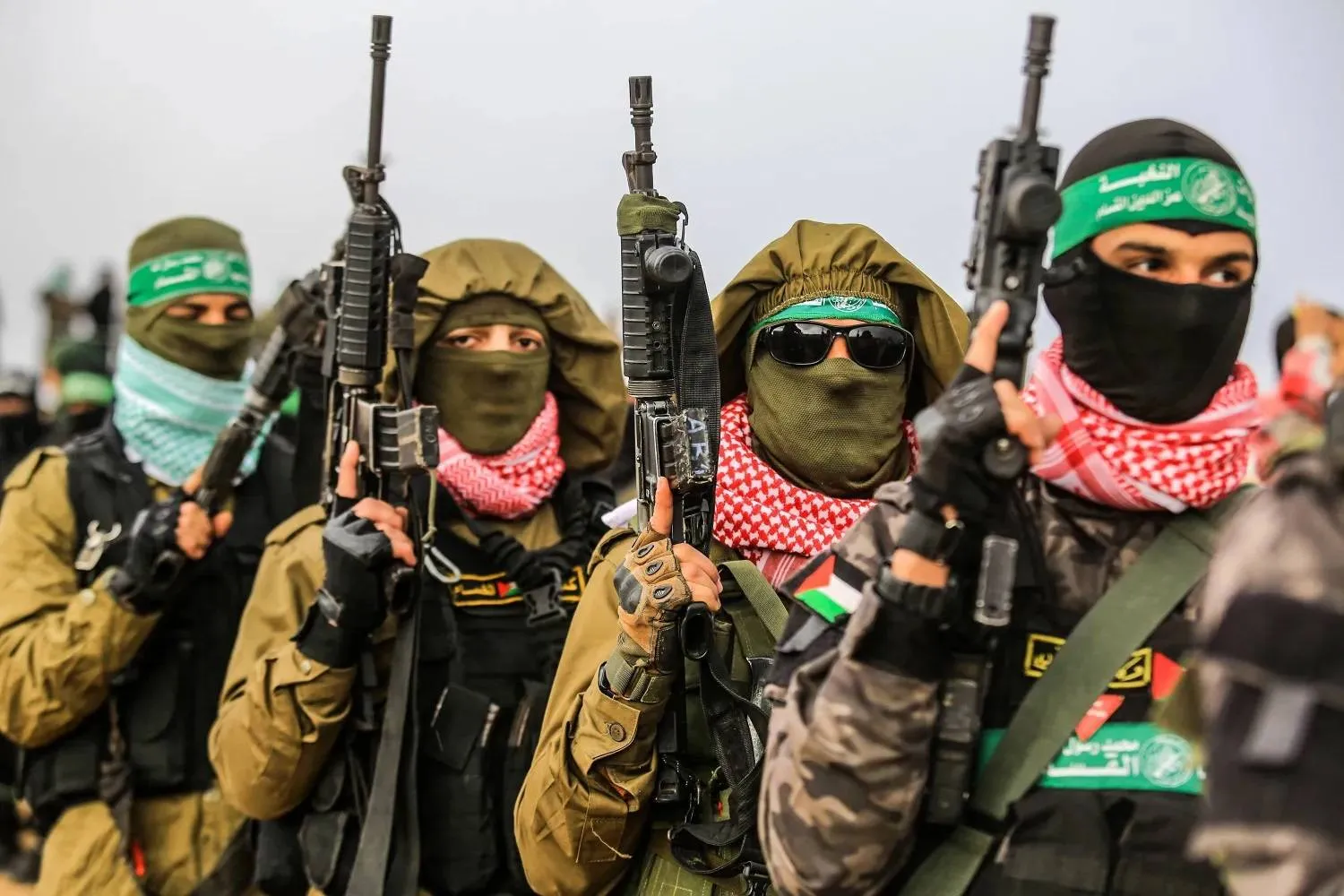
At the same time, Iranian-linked groups in Iraq have conveyed to Tehran a desire to integrate further into state institutions — even if that means laying down their arms temporarily.
Tensions between Baghdad and Tehran remain muted but persistent, particularly over how Iraq’s election dynamics might impact Iran’s stalled nuclear negotiations. Yet both sides appear to agree that the current political turbulence is temporary and necessary.
On April 25, 2025, Iran’s Supreme Leader Ali Khamenei described the talks with the United States as “a temporary situation,” telling mourners at a ceremony in Tehran that “the dominance of hypocrisy is not eternal, but a temporary divine test.”
Earlier, Iraqi sources told Asharq al-Awsat that Iranian-backed factions in Iraq had received religious authorization from Khamenei to engage in tactical maneuvers in response to pressure from Trump’s administration.
Recent interviews conducted by Asharq al-Awsat with Iraqi politicians paint a picture of near-chaotic freedom in the political arena — likened to “freestyle wrestling” — that could again spiral into street violence.
Some fear a repeat of the September 2022 clashes, when Sadr’s supporters stormed Baghdad’s fortified Green Zone to protest their exclusion from forming a majority government.
“Iran may have stepped out of the election kitchen,” said one political figure. “But it’s still very much inside the house.”
Fluid alliances
A fluid and shifting map of alliances is taking shape in Iraq’s Shi’ite political landscape ahead of the November 2025 parliamentary elections, as Iran adopts an unusually low profile, leaving its allies to grapple with strategy and rivalry on their own.
On April 10, 2025, Asharq al-Awsat revealed that Esmail Qaani, the commander of Iran’s Quds Force, had quietly left behind a small team in Baghdad to oversee political files, including preparations by Shi’ite factions for the elections.
But within two weeks, Iraq’s Iran-aligned Coordination Framework announced it would run as separate lists – a familiar tactic under Iraq’s electoral law, which divides the country into multiple constituencies and often amplifies internal rivalries.
Despite the presence of Qaani’s operatives, Iranian influence appears largely absent from the coordination rooms of the Shi’ite bloc.
“Tehran is going through a delicate moment,” said a senior leader in the Islamic Dawa Party. “It’s focused on defending its own political system and legacy, which explains why its presence in Baghdad is barely visible.”
That vacuum, according to the official, has allowed greater freedom among Shi’ite parties to explore alliances independently — though not without risk. “Operating without supervision has its dangers,” they added.
Over the past two weeks, a flurry of negotiations among Shi’ite parties has yielded little consensus, with many attempts to build joint electoral lists stalling amid shifting loyalties and strategic feints.
The result is what observers describe as a “liquid map” — alliances that form and dissolve without resolution.
Deputy Speaker of Parliament Mohsen al-Mandalawi drifted toward former Prime Minister Nouri al-Maliki’s State of Law Coalition before backing away. Likewise, Hadi al-Amiri, head of the Badr Organization, drew close to Prime Minister Mohammed Shia al-Sudani, only for the two to part ways after a brief convergence — a pattern that could easily repeat.
Hisham Dawood, a researcher at the French National Center for Scientific Research, says Iraq’s Shi’ite political community has been fracturing since 2009, when al-Maliki chose to run independently to assert his leadership, triggering tensions that were only later resolved under Iranian pressure amid the rising challenge from the secular Iraqiya bloc led by Ayad Allawi.
Today’s fragmentation of the Coordination Framework, Dawood argues, is part of a broader regional unraveling.
“The Gaza war, Hezbollah’s setbacks in Lebanon, the collapse of Assad’s regime in Syria, and the intensified strikes on the Houthis in Yemen — all point to a shifting Middle East,” he said.
These changes are forcing Iran to re-evaluate its strategy in Iraq. “How does it preserve its strategic gains?” Dawood asked. A senior Dawa figure close to al-Maliki suggested Iran may be deliberately signaling non-interference, focusing instead on internal stability and recalibrating its foreign policy.
“Iran might be letting its allies clash now, confident they will come back to it in the end,” said another senior Shi’ite leader. “Only Iran knows how to tie the final knots.”
Iraq seen as Iran’s potential ‘Sacrifice’ amid regional retreat
A senior figure in Iraq’s Dawa Party believes Iran may be prepared to let Iraq become the next “sacrifice” in a string of strategic retreats, following Syria, Lebanon, and Yemen — all in a bid to protect Tehran’s political system from collapse.
“To avert a major threat, Tehran could even offer up Iraq,” the politician told Asharq al-Awsat. “But the Iranians never truly change. They will never accept pulling back from the region. They will return — it’s only a matter of time.”
Despite Iran’s subdued profile in Iraq’s pre-election landscape, many within the Shi’ite-dominated Coordination Framework remain unconvinced that Tehran has really stepped away.
“There are key interests here that require a watchful eye,” one member of the alliance said, speaking on condition of anonymity. “And Iran’s network is far from absent,” they added.
According to insiders, multiple power centers within Iran are involved in the Iraq file — including the Quds Force, the Iranian Revolutionary Guard Corps (IRGC), Iranian intelligence, the office of Supreme Leader Ali Khamenei, and even individuals within his family.
“Each has its own preferences and interests when it comes to Iraq’s elections,” one official said.
Dawood underscored Iraq’s strategic weight for Tehran: “Iraq is not Syria, and not even Lebanon. It is Iran’s largest commercial market and a vital land bridge to the Mediterranean.”
Indeed, while Iran’s presence may no longer dominate Baghdad’s political scene, Qaani’s team has held discreet meetings with key Shi’ite figures to ensure “everything remains under control.”
Negotiators working on election alliances say Tehran is still involved — but from a distance.
“They have two clear priorities,” one strategist said. “Reducing the number of competing lists to avoid fragmentation, and ensuring that major armed factions are integrated into broad alliances.”
When Asharq al-Awsat asked leaders of armed groups whether they planned to participate in the elections, most said they had not yet decided — or that the vote was not their concern.
Kazem al-Fartousi, a leader in the Kata'ib Sayyid al-Shuhada Brigades, acknowledged the tension: “We don’t readily accept participating in the elections, even if we’re convinced that they are the foundation of Iraq’s political system.”
‘The kids have grown’
Iran’s waning influence in Iraq is not only the result of a weakening “Axis of Resistance” across the region — it’s also because “the kids have grown up,” says Dawood, referring to Iraq’s powerful Iran-backed militias and factions.
“These groups now have their own patronage networks and strong local interests inside Iraq,” Dawood told Asharq al-Awsat. “They can no longer be controlled through blind loyalty to Tehran.”
Until recently, Iran-aligned factions were more responsive to pressure from Tehran, Dawood explained. “At the time, their interests aligned closely with Iran’s. These factions lacked a social base, funding, and military experience — they were reliant on Iranian backing.”
Today, many of those same groups form the core of al-Sudani’s government — “no longer operating on the sidelines, but from within,” Dawood said. The evolution presents what he calls a “structural crossroads” for Iraq’s armed groups.
“They now face a stark choice,” he said. “Either preserve their strategic gains by dismantling their armed wings and integrating their fighters into state institutions, or risk mounting regional and international threats — particularly after the political earthquakes in Syria.”
This growing assertiveness is already visible within the Coordination Framework, where Shi’ite parties are increasingly engaging in open political competition with fewer restraints. According to senior Shi’ite officials, these intra-Shi’ite rivalries continue to play out under “remote Iranian monitoring,” but with far less direct interference than in the past.
Power struggle between Maliki and Sudani
A simmering rift within Iraq’s ruling Shi’ite coalition has spilled into public view, as al-Sudani and al-Maliki clash over control of the government and the future of the Coordination Framework ahead of the 2025 elections.
In early January, Ammar al-Hakim, leader of the Shi’ite “National Wisdom Movement,” broke the silence over tensions brewing inside the coalition. He pointedly reminded allies that al-Sudani, who once held a lone parliamentary seat, owes his rise to the premiership to the Coordination Framework — and should not attempt to chart his own course.
“Some coalition leaders are asking: why empower someone who now seeks to outgrow us?” Hakim said, framing al-Sudani’s independence as a betrayal.
According to a political advisor who served in previous Iraqi cabinets, the coalition is grappling with what he calls “the Prime Minister complex” — the tendency among Shi’ite leaders to resist any premier who gains too much personal influence. al-Maliki, who held office from 2006 to 2014, is among those alarmed by al-Sudani’s growing stature and regional outreach.
“Al-Sudani is replicating al-Maliki’s first term,” the advisor told Asharq al-Awsat, “leveraging a strong central state and public sector to cultivate loyalty.”
That strategy, however, has triggered anxiety inside the Framework. A senior figure in al-Maliki’s Dawa Party said al-Maliki is uneasy with how al-Sudani manages the cabinet and bypasses consensus mechanisms. “We are now dealing with a prime minister with unchecked authority,” he said.
The tensions reached new heights when al-Sudani traveled to Qatar and met Syrian President Ahmed al-Sharaa without coordinating with his political allies — moves seen by some as an attempt to position himself as a regional powerbroker.
The Dawa official warned that “landmines are planted in al-Sudani’s path,” and he will need “considerable strength” to navigate them ahead of the vote.
Iraq’s political arena is no stranger to explosive conflicts, but al-Sudani is testing these waters for the first time — and with competing agendas in his head, according to a veteran political figure. “He’s trying to manage opposing plans simultaneously,” the source said.
Despite Tehran’s reduced visibility, Iranian actors continue to wield influence, often behind the scenes. One source said Iran has pressured al-Sudani to include certain armed factions in his circle as a means of securing his position and protecting Tehran’s interests. “Iran sees al-Sudani as a difficult but valuable figure — not someone to discard easily.”
Members of al-Sudani’s Furatain Bloc declined to comment on his election strategy. However, sources close to coalition talks confirmed that al-Sudani has clashed with Badr Organization leader Hadi al-Amiri over the leadership of a joint electoral list.
According to these sources, al-Sudani demanded to head the alliance and called for a pledge supporting his bid for a second term — conditions viewed as excessive by Amiri’s camp.
Political analysts say al-Sudani is seeking to break free from the shadow of the Coordination Framework’s first-generation leadership, especially those associated with hardline regional agendas such as the “Al-Aqsa Flood” rhetoric. Yet, aware of the political landmines ahead, he is carefully courting allies who can shield him from the fallout.
“Color of the cat doesn’t matter”: Iran adapts its Iraq strategy amid shifting regional dynamics
Iran appears to have recalibrated its approach to Iraq, learning from past overreach and embracing a more pragmatic stance that reflects regional shifts and American influence, analysts and political insiders say.
Tehran’s introspection dates back to the tenure of former Iraqi Prime Minister Adel Abdul Mahdi (2018–2019), a period viewed by Iraqi protesters and civil movements as “tragic.”
At the time, Iran was emboldened by what it saw as the decline of US influence in West Asia and pushed to consolidate its hold over Iraq, according to a former Iraqi government advisor.
Abdul Mahdi, a seasoned figure with roots in the Tehran-founded Islamic Supreme Council of Iraq, oversaw a period during which pro-Iran factions expanded their parallel state structures. But the October 2019 protest movement disrupted that momentum, triggering a political realignment — despite the deaths of over 600 demonstrators.
“Tehran realized it had overplayed its hand,” the former advisor told Asharq al-Awsat. “Since then, it’s returned to a more measured formula.”
Dawood said Iran has spent the past two decades convincing — or compelling — Washington to share responsibility for Iraq’s political management. “This dual oversight between the US and Iran often drives the reconfigurations we see in Iraqi politics,” he said.
The former advisor likened Iran’s flexibility to Deng Xiaoping’s famous adage: “It doesn’t matter what color the cat is, as long as it catches mice.” Iran, he said, demonstrated this mindset during the war against ISIS, and even earlier.
He recalled how, before the 2003 US-led invasion of Iraq, Iran issued religious rulings allowing Shi’ite factions to cooperate with the United States — despite Tehran’s official position branding it the “Great Satan.” That green light cleared the way for opposition figures to travel to Washington in preparation for the Gulf War.
On the other side of Iraq’s fractured Shi’ite landscape, secular-leaning politicians see an opportunity. One such figure, who spoke to Asharq al-Awsat on condition of anonymity, said he had visited Washington twice — before and after Trump’s inauguration in January 2025.
“The next elections must reflect the transformations sweeping the region,” he said. “If they don’t, Iraq risks being left behind in the emerging Middle East order.”
Iran’s ‘plan B’: quiet calculations in Iraq ahead of 2025 elections
Iran is recalibrating its presence in Iraq, balancing public restraint with behind-the-scenes maneuvering as it braces for a pivotal election season. While Tehran’s footprint appears subdued, political sources say its operatives are quietly managing a fallback strategy — “Plan B” — from the shadows.
Two competing narratives dominate assessments of Iran’s current posture. One holds that Tehran is intentionally keeping a low profile in Baghdad to avoid provoking Washington and to demonstrate its commitment to ongoing negotiations. The other suggests Iran is overstretched at home but will inevitably return to assert itself more forcefully.
But behind the scenes, commanders aligned with Esmail Qaani, head of Iran’s Quds Force, are actively adjusting political calculations in Baghdad, according to Shi’ite political insiders.
Leaked details from high-level meetings in the Iraqi capital indicate that Tehran is seeking to secure three key objectives before the November 2025 elections: prevent the emergence of a Shi’ite faction that could challenge its influence in the future, preserve a carefully curated balance of electoral competition among Iraq’s Shi’ite parties, and keep both al-Sudani and al-Maliki politically viable — even if they remain rivals.
"Al-Sudani could be Tehran’s strategic bet if talks with Washington succeed, while al-Maliki may prove crucial if they fail," a senior figure in Iraq’s Dawa Party told Asharq al-Awsat.
Iran is currently working to keep Shi’ite political rivalries from escalating into violence, but the same Dawa official warned that “Plan B” would see Tehran decisively back one faction — particularly if the powerful Sadrist movement reenters the political fray.
Sources familiar with the thinking inside the Sadrist camp said the bloc is deliberately delaying any announcement on whether it will contest the elections, hoping to catch its rivals off-guard and reduce their ability to mobilize against it.
A business of politics
Iraqi elections increasingly resemble a high-stakes entrepreneurial summit, where political newcomers and veterans alike jockey to raise their stakes in power.
“Everyone is in it to boost their influence,” said a former Shi’ite candidate who ran in Iraq’s first two post-2003 elections. “For many newcomers, this is their shot at entering the club of political elites.”
The retired candidate, now observing from the sidelines, said Tehran is grappling with a generation of loyalists who have matured into power brokers.
“Some of them now have access to state contracts and resources. They’re strong enough to donate to the Revolutionary Guard — not the other way around.”
This complex and shifting power dynamic alarms researchers like Dawood, who warned that two decades of Shi’ite rule have delivered disappointing outcomes.
“What we’ve seen is a rentier economy entirely dependent on oil, a complete absence of economic vision, and little understanding of how to govern a complex society,” Dawood said. “Add to that a lack of market knowledge, limited regional or global connectivity, and a systemic fusion of diplomacy with ideology — plus entrenched corruption.”
As Iraq approaches its next election, Dawood sees two parallel tracks hurtling toward November 2025: the failure to build a rational state model, and intensifying regional and international pressure.