


What is the Two-state Solution to the Israel-Palestinian Conflict?

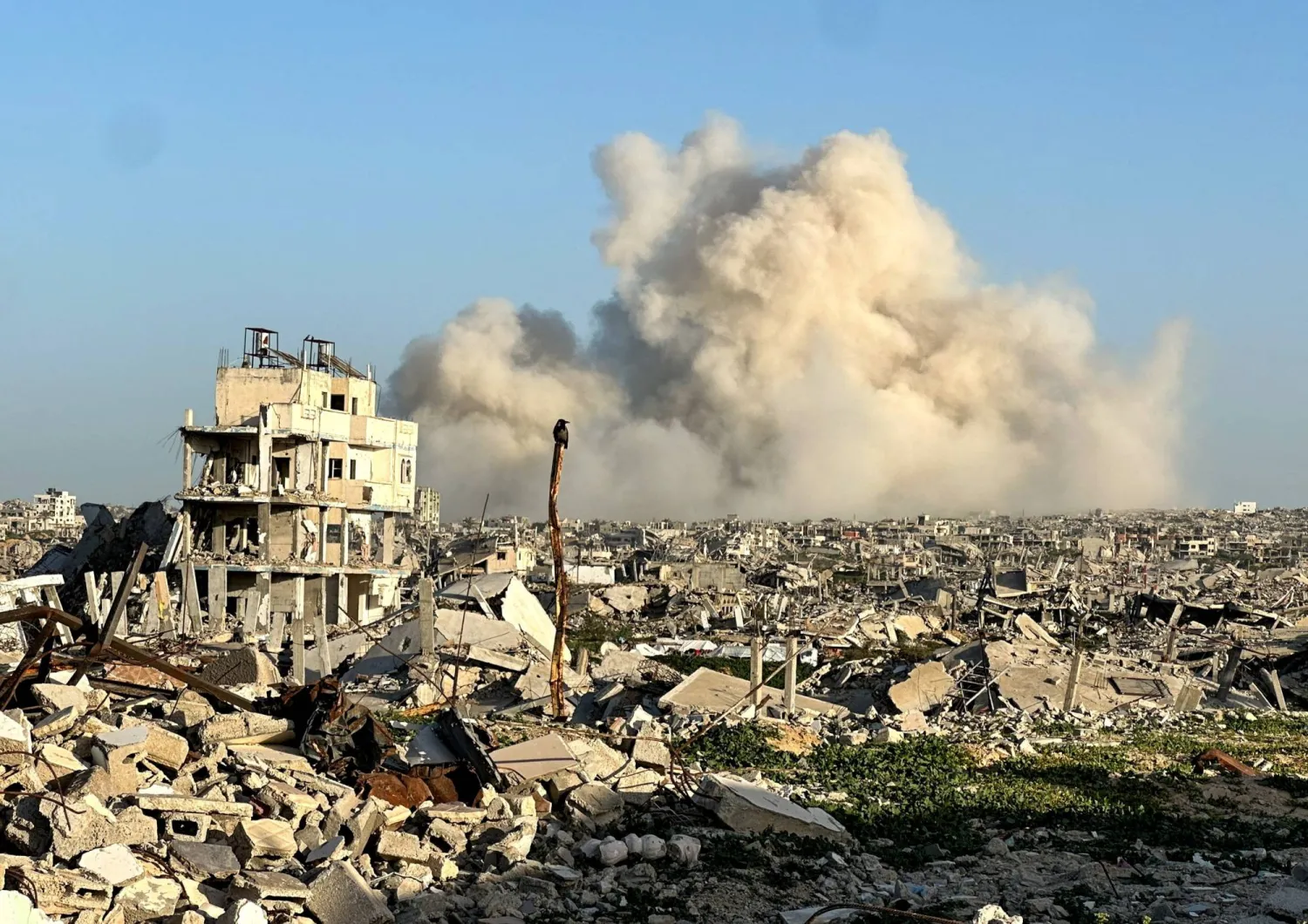
FILE PHOTO: Smoke rises following an explosion, within the "yellow line" zone, which is controlled by Israel, in Khan Younis in the southern Gaza Strip, February 10, 2026. Picture taken with a phone. REUTERS/Haseeb Alwazeer/File Photo
TT

What is the Two-state Solution to the Israel-Palestinian Conflict?

FILE PHOTO: Smoke rises following an explosion, within the "yellow line" zone, which is controlled by Israel, in Khan Younis in the southern Gaza Strip, February 10, 2026. Picture taken with a phone. REUTERS/Haseeb Alwazeer/File Photo

Israel has taken steps ‌to help settlers acquire land in the occupied West Bank and widen its powers in parts of the territory where Palestinians have some self-rule - measures they said aimed to undermine the two-state solution.

It marks the latest blow to the idea of establishing a Palestinian state co-existing peacefully alongside Israel in territory Israel captured in the 1967 Middle East war. Long backed by world powers, this vision formed the bedrock of the US-backed peace process ushered in by the 1993 Oslo Accords.

But the obstacles have only grown with time. They include accelerating Jewish settlement on occupied land and uncompromising positions on core issues including borders, the fate of Palestinian refugees and the status of Jerusalem.

WHAT ARE ISRAEL'S NEW DECISIONS?

They would expedite settler land purchases by making public previously confidential West Bank land registries, and also repeal a Jordanian law governing land purchases in the West Bank, which was controlled by Jordan from 1948 until 1967.

Further, Israel would expand "monitoring and enforcement actions" to parts of the West Bank known as areas A and B, specifically "regarding water offences, damage to archaeological sites and environmental hazards that pollute the entire region", a statement by the finance and defense ministers said.

The West Bank was split into Areas A, B and C under the Oslo Accords. The Palestinian Authority has full administrative and security control in Area A - 18% of the territory. In Area B, around 22%, ‌the PA runs civil ‌affairs with security in Israeli hands. Most Palestinians in the West Bank live in areas A and B.

Israel ‌has ⁠full control over ⁠the remaining 60% - Area C, including the border with Jordan.

Palestinian President Mahmoud Abbas said the measures violate international law and aim to undermine Palestinian institutions and a future two-state solution.

Ultranationalist Israeli Finance Minister Bezalel Smotrich called the decision a "real revolution" and said, "We will continue to kill the idea of a Palestinian state."

WHAT ARE TWO-STATE SOLUTION'S ORIGINS?

Conflict ignited in British-ruled Palestine between Arabs and Jews who had migrated there, seeking a national home as they fled antisemitic persecution in Europe and citing biblical ties to the land throughout centuries in exile.

In 1947, the United Nations agreed on a plan partitioning Palestine into Arab and Jewish states with international rule over Jerusalem. Jewish leaders accepted the plan, which gave them 56% of the land. The Arab League rejected it.

The state of Israel was declared on May 14, 1948. A day later, five Arab states attacked. The war ended with ⁠Israel controlling 77% of the territory.

Some 700,000 Palestinians fled or were driven from their homes, ending up in Jordan, Lebanon ‌and Syria as well as in the Gaza Strip, the West Bank and East Jerusalem.

In the 1967 ‌war, Israel captured the West Bank, including East Jerusalem, from Jordan and Gaza from Egypt.

Although 157 of the 193 UN member states already recognize Palestine as a state, it is ‌not itself a UN member, meaning most Palestinians are not recognized by the world body as citizens of any state. About nine million live as ‌refugees in Syria, Lebanon, Jordan and territories captured by Israel in 1967. Another 2 million live in Israel as Israeli citizens.

HAS A DEAL EVER BEEN CLOSE?

The Oslo Accords, signed by Israeli Prime Minister Yizhak Rabin and Palestine Liberation Organization Chairman Yasser Arafat, led the PLO to recognize Israel's right to exist and renounce violence. Palestinians hoped this would be a step towards independence, with East Jerusalem as their capital.

The process suffered multiple reverses on both sides.

Hamas killed more than 330 Israelis in suicide attacks from 1994 to 2005, according ‌to Israel's government. In 2007, the group seized Gaza from the PA in a brief civil war. Hamas' 1988 charter advocates Israel's demise, though in recent years it has said it would accept a Palestinian state along 1967 borders. ⁠Israel says that stance is a ⁠ruse.

In 1995, Rabin was assassinated by an ultranationalist Jew seeking to derail any land-for-peace deal.

In 2000, US President Bill Clinton brought Arafat and Israeli Prime Minister Ehud Barak to Camp David to clinch a deal, but it failed, with the future of Jerusalem, deemed by Israel as its "eternal and indivisible" capital, the main obstacle.

The conflict escalated with a second Palestinian intifada (uprising) in 2000 to 2005. US administrations sought to revive peacemaking, to no avail, with the last bid collapsing in 2014.

HOW BIG ARE THE OBSTACLES TODAY?

While Israel withdrew settlers and soldiers from Gaza in 2005, settlements expanded in the West Bank and East Jerusalem, their population rising from 250,000 in 1993 to 700,000 three decades later, according to Israeli organization Peace Now. Palestinians say this undermines the basis of a viable state.

Jewish settlement in the West Bank accelerated sharply after the 2023 start of the Gaza war.

During the Second Intifada two decades ago, Israel also constructed a barrier in the West Bank it said was intended to stop Palestinian suicide bombers from entering its cities. Palestinians call the move a land grab.

The PA led by President Mahmoud Abbas administers islands of West Bank land surrounded by a zone of Israeli control comprising 60% of the territory, including the Jordanian border and the settlements, arrangements set out in the Oslo Accords.

Prime Minister Benjamin Netanyahu's government is the most right-wing in Israeli history and includes religious nationalists who draw support from settlers. Smotrich has said there is no such thing as a Palestinian people.

Hamas and Israel have fought repeated wars over the past two decades, culminating in the attacks on communities in southern Israel on October 7, 2023, that ignited the Gaza war.


Iran Bets on Long War to Wear Down Trump’s US, Say Experts

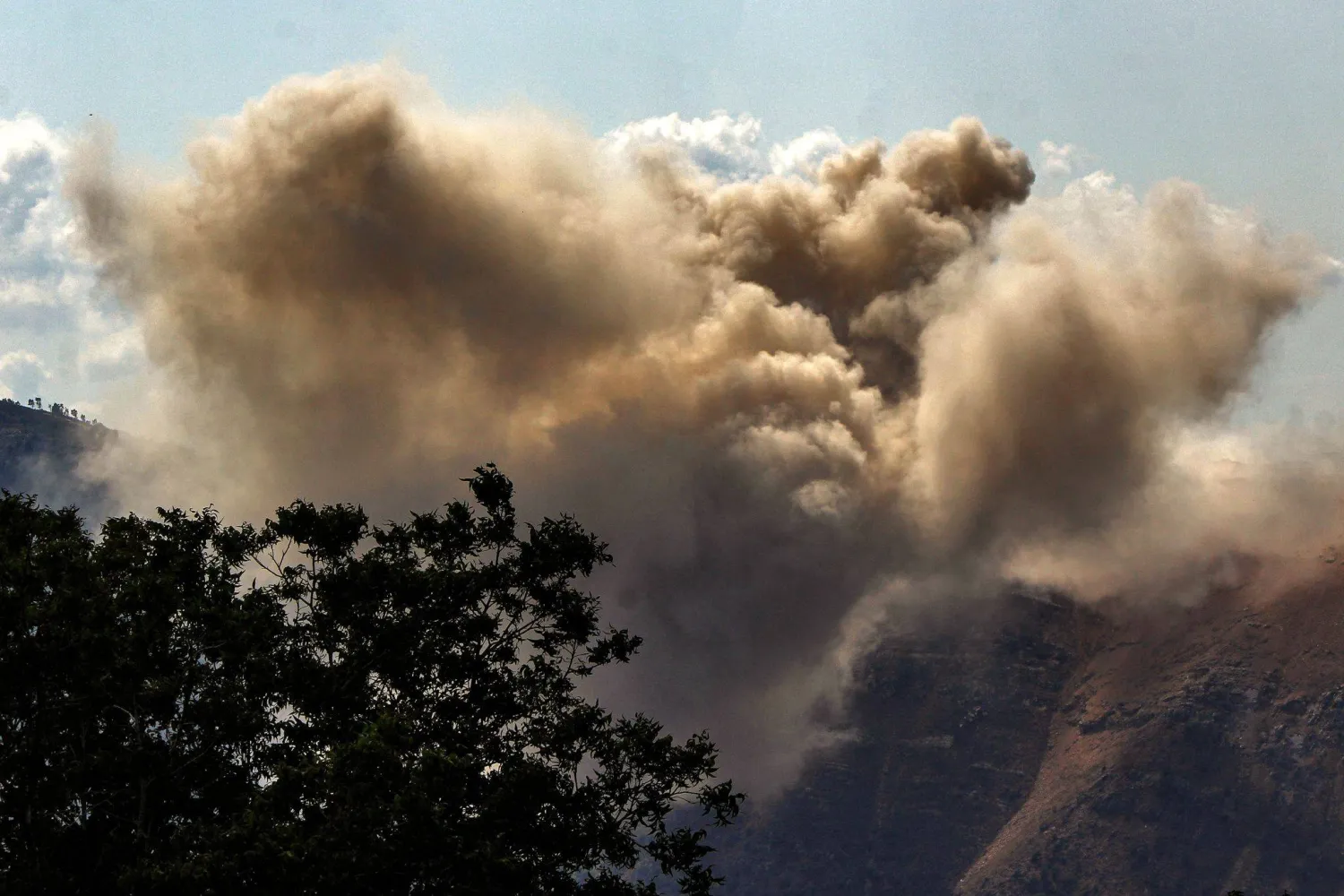
Smoke rises after an air strike in central Tehran, Iran, 10 March 2026. (EPA)
TT

Iran Bets on Long War to Wear Down Trump’s US, Say Experts

Smoke rises after an air strike in central Tehran, Iran, 10 March 2026. (EPA)

Outgunned by the United States, Iran's rulers have been lashing out on multiple fronts -- but experts say what looks like a chaotic reaction is actually a time-tested strategy to outlast a stronger enemy in a fight to survive.

To some, Iran's response since US and Israeli strikes killed supreme leader Ali Khamenei on the war's first day look like those of a decapitated and directionless power.

Why is Iran targeting Gulf countries, Türkiye and Azerbaijan with air strikes? Why not seek those countries' support, or at least keep them neutral?

But various analysts see a well-honed strategy of asymmetric warfare in Iran's retaliatory offensive: resist the onslaught, and make the enemy pay a price so heavy they have to give up.

"Iran's strategy is to create pressure on Washington, DC by angering the Gulf and by creating upward trends in the price of oil, gas and other commodities," said Burcu Ozcelik, a Middle East security expert at Britain's Royal United Services Institute.

Although Iran's leadership was badly shaken by the strikes that killed Khamenei -- now replaced by his son Mojtaba as supreme leader -- and other top figures, the system is holding so far.

And Tehran is digging in for an all-or-nothing fight, against a United States that has less at stake.

- 'Exit ramp' -

Tehran has little chance of defeating the US military.

But it can hope to outlast the current campaign, which is limited to air strikes. US President Donald Trump will meanwhile have to think hard about the potential political costs before sending in ground troops.

"Tehran is trying to raise the cost of escalation until Washington starts looking for an exit ramp," said Ali Vaez, an Iran expert at the International Crisis Group.

It is a page straight out of the textbook on asymmetric warfare.

In a classic 1975 paper, "Why Big Nations Lose Small Wars", the late professor Andrew Mack unpacked the reasons for outcomes such as the US defeat in Vietnam.

He underlined how weaker powers can exploit the gradual diminishing of a stronger adversary's political capacity to wage war.

Since the Iranians "don't have unlimited supplies of missiles and drones, we see them trying to use their firepower carefully, to make the conflict last long enough that Trump eventually says, 'That's enough'", said Agnes Levallois, head of the Middle East-focused think tank iReMMo.

"The longer the conflict lasts, the more Tehran believes the strategic balance -- psychologically and politically -- begins to shift" in its favor, said Danny Citrinowicz, of Israel's Institute for National Security Studies.

And the Iranian toolkit goes deeper.

"Tehran, cognizant of its inability to win a conventional war against the US, relies on irregular tactics to drag out the war, primarily through economic coercion and cost asymmetry," said a briefing by the US research center Soufan.

That includes sowing chaos in the Middle East, bombing neighboring countries and sending global oil and gas prices skywards by effectively shutting the crucial Strait of Hormuz.

- War of attrition -

If Trump comes under enough pressure from Gulf allies and energy inflation, he may have to fold.

"Market impacts, Hormuz disruptions and oil prices are all variables that will weigh heavily on Washington's thinking," said analyst Emily Stromquist of US advisory firm Teneo.

The strategy relies on the assumption that Gulf countries will have more pull on Trump than key US ally Israel, which is gunning for regime change in Iran.

If the Islamic Republic survives, it may pay a heavy price.

"The regime in Iran will have to make some deep concessions" in any end-game, said Ozcelik.

The Gulf states "will want to have some influence" in any ceasefire agreement, and Iran's relations with the rest of the region will be badly damaged, she said.

But none of that likely matters to Tehran, said Citrinowicz.

"From Iran's perspective, the goal of this war is to maximize its gains and 'imprint' in the minds of its adversaries the costs of fighting Iran in the future," he said.


What Safe Havens Remain for the Islamic Jihad?

The late Iranian Supreme Leader Ali Khamenei receives the late «Hamas» leader Ismail Haniyeh and the leader of the «Jihad» movement, Ziad al-Nakhala, in Tehran, July 2024 (AFP)
TT

What Safe Havens Remain for the Islamic Jihad?

The late Iranian Supreme Leader Ali Khamenei receives the late «Hamas» leader Ismail Haniyeh and the leader of the «Jihad» movement, Ziad al-Nakhala, in Tehran, July 2024 (AFP)

The US-Israeli war against Iran has reshaped the landscape for Palestinian factions aligned with Tehran, with the Palestinian Islamic Jihad among the most affected. The group has faced financial and security setbacks in both Syria and Lebanon, even as fighting continues in the Gaza Strip.

Sources in the movement told Asharq Al-Awsat that the regional security changes and the war against Iran have further complicated the organization’s remaining safe havens.

While Hamas maintains close ties with Tehran, Islamic Jihad’s relationship with Iran runs deeper. The connection dates back to the group’s founding in the 1980s by Fathi Shaqaqi.

For decades, Islamic Jihad maintained a military and human presence in both Syria and Lebanon, gaining additional protection as Iranian influence expanded in the two countries over the past ten years.

However, the assassination of Ismail Haniyeh, the head of Hamas’ political bureau, in Tehran in July 2024, followed by an attempted attack on Hamas leaders in Doha in September, served as a major warning to Palestinian faction leaders, particularly Islamic Jihad.

Three countries

According to sources in the group, Secretary-General Ziad al-Nakhalah has sharply reduced his visits to Iran, traveling there only three times since Haniyeh’s assassination. One visit involved a joint delegation from Islamic Jihad and Hamas and lasted several days, while the other two were brief.

Previously, Nakhalah and several senior figures — particularly Akram al-Ajouri, who oversees the group’s armed wing, the Al-Quds Brigades — considered Iran a key safe haven, along with other capitals, such as Beirut. In recent years, however, the group has also expanded its contacts with Qatar and strengthened ties with Egypt.

A source close to Nakhalah said the leader has recently been moving between Doha and Cairo, staying for extended periods, especially in Doha, where his deputy Mohammed al-Hindi is based almost permanently.

Hindi also travels between Qatar, Egypt and Türkiye, with his role in Egypt largely focused on Gaza-related discussions with Egyptian intelligence officials.

Sources declined to confirm whether Ajouri, who had been based in Beirut’s southern suburbs in recent years, has left the area because of security concerns.

Israel recently killed Adham al-Othman, a commander in the Al-Quds Brigades in Lebanon, in a strike on an apartment used by Hezbollah in Beirut’s southern suburbs. He was known to be close to Ajouri.

Pressure in Syria

Israel had already tightened pressure on the Islamic Jihad in Syria before the fall of Bashar al-Assad’s government. A November 2024 airstrike on a group facility in Damascus killed senior figures Abdul Aziz al-Minawi and Rasmi Abu Issa, along with other members.

After the regime’s collapse in December 2024, the pressure intensified. Syria’s new authorities arrested the Islamic Jihad’s representative in the country, Khaled Khaled, and his deputy Abu Ali Yasser in April 2025, holding them for several months.

Movement sources say many of its members in Syria were detained and later released, with interrogations focusing on their weapons and where they were stored.

Some Israeli strikes in recent months have also targeted senior operatives, including field commanders in the Al-Quds Brigades who had previously been wounded in Gaza and remained in Damascus for treatment.

Facing continued Israeli pressure, some Islamic Jihad activists have relocated from Syria to Lebanon or Türkiye. Others have joined Hezbollah fighters in southern Lebanon.

All of this comes as the Islamic Jihad faces a severe financial crisis. Iranian support has largely stopped, affecting salary payments for fighters and limiting the group’s operational budgets both inside Gaza and abroad.


Syrians on Alert to Prevent Accommodation of Displaced Hezbollah Supporters from Lebanon

 Syrians living in Lebanon wait outside the Ministry of Interior Immigration and Passports Department, at the Syrian-Lebanese border, as they return to Syria due to ongoing hostilities between Hezbollah and Israeli forces, amid the US-Israeli conflict with Iran, in Jdaydet Yabous, Syria, March 3, 2026. (Reuters)
Syrians living in Lebanon wait outside the Ministry of Interior Immigration and Passports Department, at the Syrian-Lebanese border, as they return to Syria due to ongoing hostilities between Hezbollah and Israeli forces, amid the US-Israeli conflict with Iran, in Jdaydet Yabous, Syria, March 3, 2026. (Reuters)
TT

Syrians on Alert to Prevent Accommodation of Displaced Hezbollah Supporters from Lebanon

 Syrians living in Lebanon wait outside the Ministry of Interior Immigration and Passports Department, at the Syrian-Lebanese border, as they return to Syria due to ongoing hostilities between Hezbollah and Israeli forces, amid the US-Israeli conflict with Iran, in Jdaydet Yabous, Syria, March 3, 2026. (Reuters)
Syrians living in Lebanon wait outside the Ministry of Interior Immigration and Passports Department, at the Syrian-Lebanese border, as they return to Syria due to ongoing hostilities between Hezbollah and Israeli forces, amid the US-Israeli conflict with Iran, in Jdaydet Yabous, Syria, March 3, 2026. (Reuters)

Syrians in Damascus, its countryside, and western Homs countryside are on alert to prevent displaced Lebanese supporters of Hezbollah from entering Syrian territory or being hosted by locals.

The stance marks a sharp departure from previous Israeli wars on Lebanon, when Syrian cities received tens of thousands of Lebanese fleeing the fighting.

As Israel broadened its strikes in the region to include Hezbollah, not just Iran, displacement from southern Lebanon and Beirut's southern suburbs has resumed. This time, however, those fleeing include not only Lebanese but also Syrians who had been living as refugees in Lebanon.

The scene in and around Damascus appears markedly different from past years. No private cars carrying Lebanese displaced people have been seen in the capital Damascus and its outskirts, unlike during earlier Israeli wars on southern Lebanon under the rule of ousted leader Bashar al-Assad.

In previous waves of displacement, tens of thousands of Lebanese fled to Damascus. Some stayed in hotels, others rented apartments, while a small number were housed in shelters.

The same pattern now applies to Eastern Ghouta. Hezbollah and Iran had turned the area into a strategic rear base while fighting alongside Assad's government during the years of the Syrian uprising.

Hezbollah also housed large numbers of fighters' families there during its war with Israel.

Omar Mohammad Safi, known as Abu Firas, from the town of Beit Sahm in Eastern Ghouta, said the town has not seen the arrival of any Lebanese during the current war, whether Hezbollah supporters or others.

“When Israel attacked Hezbollah the last time, large numbers of fighters' families came and stayed in homes the party had seized in Ghouta, Sayeda Zeinab and elsewhere, but in this war, we have not seen any of them at all in any town,” he told Asharq al-Awsat.

Over the past two days, activists circulated a statement purportedly issued by residents of Damascus and its countryside, especially Eastern Ghouta, warning against renting property to or hosting strangers from southern Lebanon, or Lebanese individuals or families, particularly those linked to Hezbollah.

The statement said Hezbollah, during its support for the former regime, had “committed crimes and massacres,” adding: “We will not forget the massacres of Eastern Ghouta and the chemical massacre.

“Whoever dared to kill us and gloat over us will have no place among us, and we will expel him from the area immediately, along with anyone who shelters him, by all means,” it warned.

During the war in Syria, Hezbollah turned the western Qalamoun area in the Damascus countryside, adjacent to Lebanon's Bekaa region, into a strategic regional rear base.

During the previous war with Israel, the area also hosted tens of thousands of displaced people from Beirut's southern suburbs and southern Lebanon, with facilitation from Assad's government.

But Mahmoud Qusaibiya, known as Abu Alaa, from the town of Jarjir in western Qalamoun, said the town has not seen the arrival of any displaced Lebanese Hezbollah supporters.

“A warning was circulated by elders and prominent figures telling residents not to receive anyone from Hezbollah or their families, because we supported the revolution and they stood with the former government and its remnants,” he told Asharq al-Awsat.

The clearest development has been in the city of Qusayr in western Homs countryside, which Hezbollah seized during the Syrina war.

Rashid Jammoul, known as Abu Mohammad, who comes from the city, said Syrians at the border with Lebanon around Qusayr were on high alert to prevent Hezbollah members, their families, or people linked to them from entering Syrian territory.

“There have been some attempts, but there is an alert by the army and by residents at all legal and illegal crossings,” the man in his sixties told Asharq al-Awsat.

“We will not allow any of them or anyone linked to them to enter or be received after they committed massacres against us, destroyed our villages, and burned our homes.”

Since Israel launched its new war on southern Lebanon, more than 25,000 Syrians have returned to their country.

Syria’s General Authority for Ports and Customs denied that families of Hezbollah members were among those arriving from Lebanon.

Mazen Alloush, director of relations at the authority, said two days ago that since the first day families began fleeing from Lebanon to Syria, social media had been flooded with rumors claiming that families of Hezbollah fighters and supporters were entering Syrian territory through border crossings.

As the rumors spread, some buses leaving the Jousieh border crossing were stopped by young men in the city of Qusayr and attacked on that pretext.

Seeking to clarify the situation, Alloush said all the passengers on those buses were Syrians who had been living in Lebanon and who came from different Syrian provinces.

He said they had entered the country legally.
