Doctors and Moms Say Babies in Gaza May Die without More Formula, Blame Israel’s Blockade

 Seham Fawzy Khodeir watches her son, Hisham, who is just days old and was born prematurely, lying in an incubator at the neonatal intensive care unit of Nasser Hospital in Khan Younis, southern Gaza Strip, Thursday, June 19, 2025. (AP)
Seham Fawzy Khodeir watches her son, Hisham, who is just days old and was born prematurely, lying in an incubator at the neonatal intensive care unit of Nasser Hospital in Khan Younis, southern Gaza Strip, Thursday, June 19, 2025. (AP)
TT

Doctors and Moms Say Babies in Gaza May Die without More Formula, Blame Israel’s Blockade

 Seham Fawzy Khodeir watches her son, Hisham, who is just days old and was born prematurely, lying in an incubator at the neonatal intensive care unit of Nasser Hospital in Khan Younis, southern Gaza Strip, Thursday, June 19, 2025. (AP)
Seham Fawzy Khodeir watches her son, Hisham, who is just days old and was born prematurely, lying in an incubator at the neonatal intensive care unit of Nasser Hospital in Khan Younis, southern Gaza Strip, Thursday, June 19, 2025. (AP)

Seham Fawzy Khodeir watches as her son lies inside a dilapidated incubator and listens to his faint cry, mixed with the muted sound of the equipment.

The mother of six is increasingly concerned about the survival of Hisham al-Lahham, who was just days old, breathing with the help of equipment and being fed through a tube in his tiny nose.

Most alarming is that the medical-grade formula he needs to survive is running out.

"There is no milk," the 24-year-old mother told The Associated Press. He needs it to "to get better, to live and to see life."

Hisham is among 580 premature babies at risk of death from starvation across the war-battered Gaza Strip, according to the Gaza Health Ministry. Khodeir and others blame Israel’s blockade for the plight of their children. Doctors say that although some formula has been delivered, the situation is dire. Their desperation comes as the war in Gaza has been overshadowed by the Israel-Iran war.

"These babies have no time ... and no voice," said Dr. Ahmed al-Farah, head of the pediatrics and obstetrics department at Nasser Hospital, the main medical facility still partially functional in southern Gaza.

'An avoidable disaster'

Khodeir's son is one of 10 babies in incubators at Nasser's neonatal intensive care unit. Last week, al-Farah rang the alarm, saying the hospital’s stock of medical-grade formula was "completely depleted."

He said the tiny babies who relied on it would face "an avoidable disaster" in two to three days.

His pleas were answered, in part, by the delivery of 20 boxes of formula sent over the weekend by a US aid group, Rahma Worldwide. The new delivery is enough to cover the needs for the 10 infants for up to two weeks, al-Farah said.

Al-Farah, however, expressed concern about future deliveries, saying that it wasn’t guaranteed that more formula would be allowed into Gaza.

"This is not enough at all," he said. "It solved the problem temporarily, but what we need is a permeant solution: Lift the siege."

Meanwhile, fortified formula required for newborns is already out of stock at Al-Rantisi Hospital in Gaza City, its director, Dr. Jamil Suliman, said.

"Many mothers are unable to breastfeed due to severe malnutrition," he said, warning of a looming crisis.

Infants are among the hardest hit by Israel’s blockade, which started on March 2 with the complete ban of any food, water, shelter or medication.

Under mounting international pressure and repeated warnings of famine from the United Nations, Israel began allowing what Prime Minister Benjamin Netanyahu called "minimal" aid, starting May 19.

Since then, more than 1,000 tons of baby food, including formula, have entered Gaza, according to COGAT, the Israeli defense agency in charge of aid coordination in the Palestinian territory.

"Food for babies is certainly entering (the Gaza Strip), as the organizations are requesting it, we are approving it, and there is no withholding of food for babies," a COGAT spokesperson said.

But Gaza’s health officials say that for these babies, that aid hasn't included enough critical medicine, formula, medical equipment, and spare parts to keep the existing equipment operational.

The Palestinian Center for Human Rights said in a report Monday that fortified infant formula was nearly depleted from local markets, with several types already completely out of stock.

"Any limited quantities available in some pharmacies are being sold at skyrocketing prices, far beyond the purchasing power of most families," it said.

COGAT said the baby food is being distributed mostly through international organizations — not via the Gaza Humanitarian Foundation, an Israeli-backed private contractor that has drawn criticism from other groups. Palestinian witnesses and health officials say Israeli forces have opened fire on crowds heading to GHF sites. The Israeli military says it has fired warning shots.

Israel has defended its blockade

Israel has said the blockade aims to pressure Hamas into releasing the 50 hostages it still holds from its Oct. 7, 2023, attack on southern Israel that sparked the war. Fewer than half are still believed to be alive.

Israel has accused Hamas of siphoning aid, without providing evidence. The United Nations says there's been no significant diversion of aid.

Gunmen killed around 1,200 people, mostly civilians, and took 251 hostage on Oct. 7. Most of the hostages have been released by ceasefire agreements.

The war has unleashed unrelenting destruction, with more than 56,000 Palestinians killed and more than 131,00 wounded in Israel's offensive, according to Gaza health officials. The officials don't distinguish between combatants and civilians but say more than half the casualties are women and children.

The war and the blockade have sparked a humanitarian crisis, creating shortages of the most basic necessities and pushing Gaza’s health care system to the brink of collapse.

Seventeen of the enclave's 36 hospitals remain partially functioning, providing health care to more than 2 million people amid bombings, rising malnutrition rates and dwindling medical supplies.

"Starvation is increasing," said Jonathan Whittall, head of the UN's humanitarian affairs office for the occupied Palestinian territories. More than 110 children have been admitted for treatment for malnutrition every day since the start of this year, he said.

"Our warehouses stand empty while Israel restricts shipments to minimal quantities of mainly medical supplies and food," Whittall added.

A crisis at Gaza's hospitals

Human Rights Watch said in a recent report that all medical facilities in Gaza are operating in unsanitary and overcrowded conditions and have serious shortages of essential health care goods, including medicine and vaccines.

"Since the start of the hostilities in Gaza, women and girls are going through pregnancy lacking basic health care, sanitation, water, and food," said Belkis Wille, associate crisis, conflict and arms director at Human Rights Watch. "They and their newborns are at constant risk of preventable death."

The Health Ministry has repeatedly warned that medical supplies and fuel were running out at hospitals, which use fuel-powered generators amid crippling power outages.

Whittall said hospitals were forced to ration the little fuel they have "to prevent a complete shutdown of more life-saving services."

"Unless the total blockade on fuel entering Gaza is lifted, we will face more senseless and preventable death," he said.

Nasser Hospital was forced to cut off electricity for some departments, despite the nonstop flow of patients, as part of a plan to save fuel, said Ismail Abu-Nimer, head of engineering and maintenance.

Supplies have been running out amid the influx of wounded people, many coming from areas close to aid distribution centers, said Dr. Mohammad Saqer, Nasser's director of nursing.

"The situation here is terrifying, immoral, and inhumane," he said.


Israel Planning to Exploit Druze File to Weaken Sharaa’s Rule in Syria

Head of the Military Council, Tareq al-Shoufi, is seen with his fighters.
TT

Israel Planning to Exploit Druze File to Weaken Sharaa’s Rule in Syria

Head of the Military Council, Tareq al-Shoufi, is seen with his fighters.

After the ouster of former president Bashar al-Assad, Israel supported Druze fighters in the south, in an effort to weaken Syria’s new government under the rule of President Ahmed Al-Sharaa and thus complicate his efforts to unify the country after its long civil war, according to a Washington Post report on Tuesday.

Current and former Israeli officials said this policy was not an immediate reaction to developments, but rather the result of a pre-planning that began months before the collapse of the Assad regime.

Since 2024, Druze leaders in Israel sought out a Syrian Druze counterpart who could help lead the 700,000 Druze in Syria in case the Assad regime collapsed, two former Israeli officials directly involved in the effort said.

Tareq al-Shoufi

Israeli officials told the Washington Post that Israel turned to Tareq al-Shoufi, a former colonel in Assad’s army.

A former Israeli official recalled tapping “20 men with military experience, dishing out ranks and tasks, and beginning to work on what was called the ‘Military Council’” in the Druze stronghold of Sweida province in southern Syria.

At the time, the Military Council, led by Shoufi, enjoyed the support of Sheikh Hikmat al-Hijri, a fiery, 60-year-old Venezuelan-born Druze cleric who has called for the establishment of a self-governing Druze state backed by Israel, a founding member of the council said.

One the former Israeli officials said that to help Shoufi renovate an old building as a command center and buy uniforms and basic equipment, Druze members of the Israeli security establishment funneled him $24,000 via the Syrian Democratic Forces (SDF).

The official added that the money was meant to tide over the Council until the Assad regime fell.

SDF role

The Post revealed that the SDF played a pivotal role in supporting Druze fighters.

The former Israeli official and two Druze commanders in Syria said up to half-million dollars were separately sent by the SDF to Hijri’s forces.

The SDF also trained Druze fighters, including women, in Kurdish-controlled areas in northern Syria, with that training reportedly continuing to this day, according to a senior Kurdish official.

Arms confiscated from Hezbollah, Hamas

The Washington Post report said when the Assad regime fell on December 8, 2024, Israel sprang directly into action.

Weapons supplied to the Druze by Israel included arms previously seized by fighters from Hezbollah and Hamas. A Druze commander told the Post that they also received sniper rifles, night vision equipment and machine gun ammunition.

Israelis are also providing monthly payments between $100 to $200 to about 3,000 Druze fighters from Hijri’s forces, two Druze officials said, further demonstrating that it continues to maintain a counterweight to the central Syrian government.

‘Fluid’ situation

The report also revealed that Israel provided Druze fighters with anti-tank missiles and satellite imagery that were used during battles against Syrian government forces, giving them a clear field advantage.

Today, Israeli officials and others briefed on their thinking say the situation in Syria — and Israel’s policy toward the Druze — remain fluid, according to the Washington Post report.

Backing an independent state would create a situation where “Israel needs to now defend a population that’s 100 kilometers away from the border,” an Israeli adviser said. “If we have an interest here, it’s not to create an independent Druzistan.”

Israeli officials have also grown wary of the internal power struggles that emerged among the Syrian Druze.

In August, Hijri sought to be recognized as the sole legitimate military authority among the Syrian Druze, and the “National Guard,” a new militia led by Hijri and his son Suleiman, replaced the Military Council as the recipient of weapons from Israel, according to a Syrian Druze commanders and the two former Israeli officials directly involved.

The move led to schisms among Druze commanders.

After US President Donald Trump first shook hands with Sharaa in May, Israel in August halted the flow of weapons to the Druze, Israeli and Druze officials revealed.

Therefore, Israel’s support for the Druze is carefully calibrated.

Israeli analysts warned that propping up an autonomous Druze state or proxy militia would represent a far different mandate than cooperating with them to secure Israel’s border.

One government adviser noted that Israel did not have a “good experience in south Lebanon,” where it supported a pro-Israel militia called the South Lebanon Army for two decades before the group crumbled in the face of Hezbollah advances in 2000.

Druze state stretching to Iraq

A Western official told the Post that Hijri prepared maps of a proposed future Druze state stretching all the way to Iraq and pitched it to at least one major Western government in early 2025.

The newspaper revealed that Israel is using the Druze paper in South Syria to undermine Sharaa’s ability to centralize power.

It said Israel is practicing a “shadow” policy in Syria: planned support for minorities, limited military intervention and tactical openness to negotiation, without a clear commitment to a final political path.

The report shows that the future of Israel’s policy towards Druze in south Syria remains dependent on the ability of Sharaa’s government to consolidate its power over the entire territory, and how willing Washington is to balance its bets on Sharaa to restore stability in Syria and respond to Israeli security concerns.


‘No Male Visitors’: Gaza Rents Soar Under Tight Restrictions

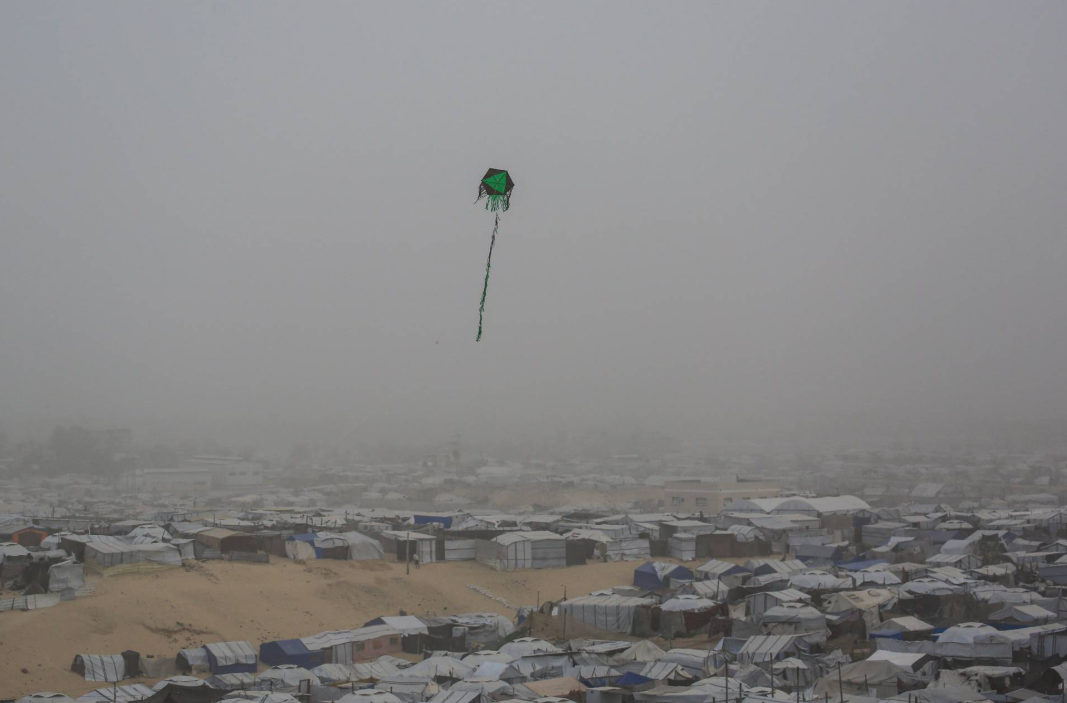
A woman sits next to her tent on an alley of a makeshift tent camp for displaced Palestinians in Deir al-Balah, central Gaza Strip, Tuesday, Dec. 23, 2025. (AP)
TT

‘No Male Visitors’: Gaza Rents Soar Under Tight Restrictions

A woman sits next to her tent on an alley of a makeshift tent camp for displaced Palestinians in Deir al-Balah, central Gaza Strip, Tuesday, Dec. 23, 2025. (AP)

For weeks, Nafez al-Ghorani has moved from one lead to another, spending long, punishing days searching for an apartment to rent, clinging to the hope of finding a roof for his family until they can return to their own home in Gaza.

A resident of Sheikh Radwan in the city’s north, al-Ghorani is now displaced in Khan Younis in the south, where his search has collided with a stark reality, as widespread destruction has left most homes and residential buildings uninhabitable.

Finding an apartment was not the only challenge facing al-Ghorani and hundreds of others each day. More difficult still are the complex conditions imposed by landlords when someone is fortunate enough to find a vacant unit.

Al-Ghorani, who currently lives in a tent in Khan Younis, told Asharq Al-Awsat that whenever he finds an apartment suitable for rent, the owner asks for a copy of his identity card to conduct background checks, either in his original neighborhood before his home was destroyed or through other parties, before approving the lease.

He said his requests were rejected several times for reasons he could not understand.

In one instance, after agreeing on rent with a landlord, al-Ghorani was surprised by a condition barring him from receiving any male visitors in the apartment, even his brothers, over fears that one of them might belong to a Palestinian faction, which could expose the building to an Israeli strike.

Al-Ghorani said he rejected the condition, and the landlord, in turn, refused to rent the apartment.

Al-Ghorani said that finding an apartment for rent, even at exorbitant prices, has become nearly impossible amid the complications imposed by homeowners who fear for their properties and their own safety.

While he considers such concerns a legitimate right, he pointed to what he described as excessive and sometimes unjustified conditions, including those that prevented him from renting despite the fact that neither he nor any of his five children belongs to any faction.

Forced choices

With only a small number of homes and apartments left standing in Gaza after widespread destruction across large parts of the enclave, residents fear being targeted by Israeli strikes as ceasefire violations continue following the truce that took effect on Oct. 10.

In a report published early this year, the United Nations Office for the Coordination of Humanitarian Affairs said 92 percent of housing units in Gaza have been destroyed or damaged.

The office said 436,000 housing units were affected by the war, with 160,000 completely destroyed and 276,000 partially damaged, some severely.

The report stated that more than 1.8 million people are in urgent need of emergency shelter and basic household essentials.

Fadl al-Shanti, who owns a six-story residential building in western Gaza City, said he cannot rent to anyone without first inquiring about them, calling it a fundamental right to protect his building and the lives of his family members who live in one of its apartments.

Speaking to Asharq Al-Awsat, he said Israel does not wait for permission when it decides to strike a suspected militant and has committed dozens of massacres against entire families and buildings to kill a single person.

“The lives of my family and those living in the building are a trust I carry as part of my responsibilities,” he said.

He added that as a building owner, he is not against his own people, whether they belong to a Palestinian faction or not, but said there are compelling circumstances and harsh conditions that cannot be ignored.

“I cannot sacrifice the lives of several families for one person who can find an alternative place,” he said.

Al-Shanti acknowledged that some landlords have sharply raised rents, yet demand among those forced to seek housing remains high. He said he personally raised the rent from prewar levels to about $800 from $500 previously, while most landlords now demand between $1,000 and $1,500 for apartments ranging from 130 to 170 square meters.

Before the war, rents ranged from $200 to $500, while furnished apartments rented for up to $700 per month.

A citizen without a homeland

Conditions imposed by landlords do not stop there. Some landlords refuse to rent to families with more than six members or impose conditions related to water, such as requiring tenants to share the landlord’s limited water allocation due to severe shortages.

It has also been noted that most apartment owners refuse to rent to people working in certain professions, such as journalists, medical staff and university professors, due to their repeated targeting by Israel during the war.

Haitham Omar, who was also searching for an apartment, said he was shocked by the excessive price hikes and the onerous conditions, in addition to payments demanded by brokers and intermediaries who market the apartments.

Speaking to Asharq Al-Awsat, he stated that a landlord demanded $1,300 per month for a two-room apartment with a kitchen and living room.

“I am a simple citizen working in a private sector company, and all I earn monthly is $550,” he said.

Even damaged units have not escaped high rents. Omar said the owner of a damaged apartment demanded about $600 a month, even though parts of it were covered with tarpaulins, describing the situation as unjust.

With bitterness in his voice, he added, “They were right to say that a home is a homeland, and today we are without a homeland.”

Even women are barred from visiting

Iman al-Attar, a young woman who works as an online intermediary between landlords and tenants, noted that some conditions are viewed by many as normal, adding that apartment owners fear that tenants may host displaced relatives in the same unit, which can affect building services.

She recounted an incident in which a landlord imposed a condition banning the tenant from receiving any guests, men or women, claiming that Israel had struck women because their husbands were faction members. She said the tenant rejected the condition outright.

As for banning male visitors, al-Attar said it has become a frequent practice and is now often included as a clause in rental contracts.

She did not deny that most apartment owners are exploiting the current situation, with no clear vision for reconstruction or a definitive end to the war, to impose their conditions and raise rents to excessive levels.


Global Nuclear Arms Control under Pressure in 2026 

Russian Yars ICBMs travel through central Moscow, Russia, May 3, 2025. (AFP)
TT

Global Nuclear Arms Control under Pressure in 2026 

Russian Yars ICBMs travel through central Moscow, Russia, May 3, 2025. (AFP)

The fragile global legal framework for nuclear weapons control faces further setbacks in 2026, eroding guardrails to avoid a nuclear crisis.

The first half of the year will see two key events: the US-Russia bilateral treaty, New START, expires on February 5, and in April, New York hosts the Review Conference (RevCon) of the Treaty on the Non-Proliferation of Nuclear Weapons (NPT) -- the cornerstone of global nuclear security frameworks.

The RevCon, held every four to five years, is meant to keep the NPT alive. But during the last two sessions, the 191 signatory states failed to agree on a final document, and experts expect the same outcome in April.

"I think this is going to be a difficult RevCon," said Alexandra Bell, head of US-based global security nonprofit the Bulletin of the Atomic Scientists, at a UN-hosted online conference in early December.

"In terms of the current state and near future prospects of nuclear arms control architecture, things are bleak," she added.

Anton Khlopkov, director of Russian think-tank the Center for Energy and Security Studies (CENESS), took an even starker point of view, saying at the same event that "we are at the point of almost complete dismantlement of arms control architecture".

"We should be realistic in the current circumstances. At best, I think we should try to preserve what we have," he said.

- 'Crumbling' safeguards -

From US strikes on Iranian nuclear sites to Russia's test of the new Burevestnik nuclear-powered cruise missile and US President Donald Trump's remarks about possibly resuming nuclear tests -- the international nuclear landscape darkened in 2025.

At the same time, "the arms control architecture is crumbling", Emmanuelle Maitre of France's Foundation for Strategic Research (FRS) told AFP.

A key challenge hinges on a shift in global relations.

Nuclear control had been built over decades around a Moscow-Washington axis, but China's growing power and rapid technological advances have shifted the international playing field, which is simultaneously increasingly strained.

"The growing interlinkage between nuclear and conventional forces and the emergence of disruptive technologies (such as the US Golden Dome defense system and new hypersonic weapons) have transformed traditional nuclear deterrence into a multi-domain concept, especially in a multipolar world," said Peking University's Hua Han.

"This trilateral configuration introduces complexities far beyond the Cold War-era bilateral model. Increasing China-Russia cooperation further complicates deterrence calculations, particularly in the two main theaters of concern: Europe and the Asia-Pacific," she added, according to the minutes of an April event held by Pakistan's Center for International Strategic Studies.

A likely result of the changing landscape is the lapse of New START, which sets weapon limits and includes inspection systems.

"The entire inspection component is no longer functioning, the notifications when a missile is moved, etc, all of that has vanished. What remains is only the voluntary commitment to stay within the limits," said Maitre.

- 'Collective solutions' -

But allowing New START to lapse is "in American interest", according to Robert Peters of the influential Heritage Foundation, reflecting the stance of much of the US strategic community to avoid tying Washington's hands to Moscow alone.

Beijing, which currently has fewer weapons, has so far refused to engage in trilateral disarmament talks.

"China is the fastest growing nuclear power on the planet. It's building 100 new warheads a year and now has more ICBM (intercontinental ballistic missile) silos than the US has active Minuteman III silos," Peters said at a recent online International Institute for Strategic Studies event.

"New START does nothing to address" that issue, he added.

However, Maitre said, a New START lapse doesn't mean the world should expect serious consequences as early as February 6.

In both Washington and Moscow, "there is a small margin to bring some weapons back into service, but the numbers cannot be very significant. There are bottlenecks" that will slow any buildup, she said.

Nor will the lack of a final document from the RevCon cause "immediate or damaging consequences" to the NPT, she said.

But, she warned, fewer safeguards risks leaving the world without diplomatic tools to resolve tensions.

"The less functional the NPT becomes, the harder it is to forge collective solutions in the event of a crisis."