


As Netanyahu Expands Gaza War, Some Reservists Grow More Disillusioned

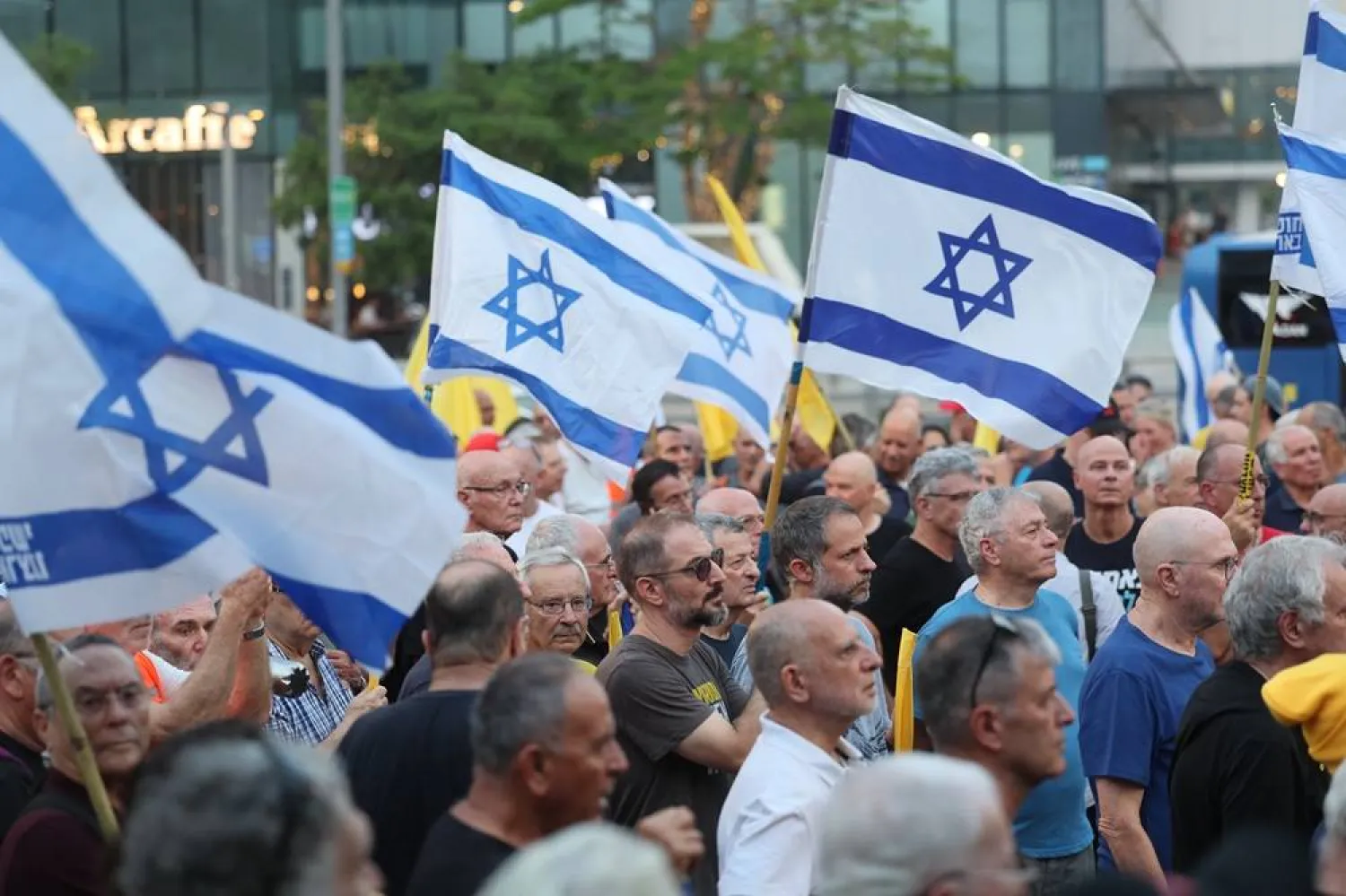
Reservists and former pilots from the Israel Air Force take part in a protest outside the Kirya military headquarters in Tel Aviv, Israel, 12 August 2025. (EPA)
TT

As Netanyahu Expands Gaza War, Some Reservists Grow More Disillusioned

Reservists and former pilots from the Israel Air Force take part in a protest outside the Kirya military headquarters in Tel Aviv, Israel, 12 August 2025. (EPA)

As Israel seeks to expand its offensive in Gaza, a measure of how the country's mood has changed in the nearly two-year-old conflict is the discontent evident among some reservists being called up to serve once again.

Shortly after the October 7, 2023 attack on southern Israel by Palestinian group Hamas, Israelis dropped everything -- honeymoons, studies and new lives abroad -- to rush home and fight.

Now, some voice disillusionment with political leaders sending them back into battle, as the military prepares to take control of Gaza City, the enclave's biggest urban center.

According to a study conducted by Agam Labs at the Hebrew University which measured sentiment about the new campaign among more than 300 people serving in the current war, 25.7% of reservists said their motivation had decreased significantly compared with the start of the campaign.

Another 10% said their motivation slightly decreased.

Asked to describe their feelings about the campaign, the biggest group -- 47% -- of responders expressed negative emotions towards the government and its handling of the war and hostage negotiations.

In March, before the latest offensive was announced, the Israeli news outlet Ynet reported that the amount of reservists reporting for duty was 30 percent below the number requested by military commanders.

Prime Minister Benjamin Netanyahu vowed to destroy Hamas after it attacked Israel in Oct. 7, 2023 in the bloodiest single day for Jews since the Holocaust, killing 1,200 people and taking 251 hostages to Gaza, according to Israeli tallies.

But the war has dragged on, with Hamas still putting up a fight and Israelis condemning their prime minister for failing to reach a deal with the group to win the release of hostages despite many mediation efforts.

'THIS WAR IS ENTIRELY POLITICAL'

Reservists were among thousands of Israelis who took part in a nationwide strike on Sunday, one of the biggest protests in support of families of hostages, calling on Netanyahu to reach an agreement with Hamas to end the war and release the remaining captives.

One of those angry protesters was Roni Zehavi, a reservist pilot who stopped serving out of principle after more than 200 days of service when the last ceasefire fell through.

He said that when reservists were enlisted, they did everything required without saying a word. But then questions such as "where is this going?" started to pop up, he recalled.

Reservists accused the government - the most far-right administration in Israel's history -- of perpetuating the war for political reasons.

"This war is entirely political, it has no goal except to keep Benjamin Netanyahu as prime minister," he told Reuters.

"He is willing to do everything necessary, to sacrifice the hostages, fallen soldiers, dead citizens - to do what he needs so that he and his wife will stay in power. It's the tragedy of the state of Israel and it's the reality".

Asked for comment about the disenchantment voiced by some reservists, the Israeli military said it sees great importance in the reserve service and each case of absence is examined.

"In this challenging security reality, the contribution of the reservists is essential to the success of missions and to maintaining the security of the country," it said.

The prime minister's office was not immediately available for comment.

Netanyahu has so far resisted calls to establish a state inquiry - in which he could be implicated - into the security failures of the October 7 attack. He has said such an investigation should not be launched as long as the war is still under way. Some of his far-right coalition partners have threatened to bring down the government should the war end without meeting all its stated goals.

When Israel called up 360,000 reservists after the October 7 attack, the largest such compulsory mobilization since the 1973 Yom Kippur War, it received an enthusiastic response.

The mood among some reservists appears different now.

“I will not be part of a system that knows that it will kill the hostages. I'm just not prepared to take that. And I really fear that, to the point where it keeps me up at night," one combat medic told Reuters. He asked not to be identified as he was not authorized to speak.

According to Israel's Channel 12, the military plans to call up 250,000 reservists for the Gaza City offensive.

Israel has lost 898 soldiers and thousands have been wounded in the Gaza war, the country's longest conflict since the 1948 war that accompanied its creation. Its military response to the Hamas attack has killed over 61,000 people in Gaza, including many children, according to Gaza health authorities.

'LACK OF VISION'

Military service is mandatory in Israel, a small nation of fewer than 10 million people, but it relies heavily on reservists in times of crisis. Reserve duty is technically mandatory, though penalties for evasion often depend on the willingness of the direct commander to enforce punishment.

Reuters interviewed 10 Israeli reservists for this story.

Like many other reservists, special forces Sergeant Major A. Kalker concluded that Israel's military and political leadership has failed to formulate a sound day-after plan for the war.

"There's a lack of vision, both in the political and the senior military leadership, a real lack of vision," he said, but added that shouldn't amount to refusing to serve.

"Bibi (Netanyahu) is the king of not making decisions ... like treading water."

Reservist Brigadier General Roi Alkabetz told Reuters that the military and Israel's Chief of Staff Eyal Zamir had transitioned to using the reservists in a "measured way", because Zamir understood the hardship for reservists and had put much of the hard work on soldiers in mandatory service.

"He's doing it in a logical way," Alkabetz said. "The reservists will come."


Mohammad Baqer Zolghadr: A Man with Strong Connections at the Heart of Iran’s Revolutionary Guards

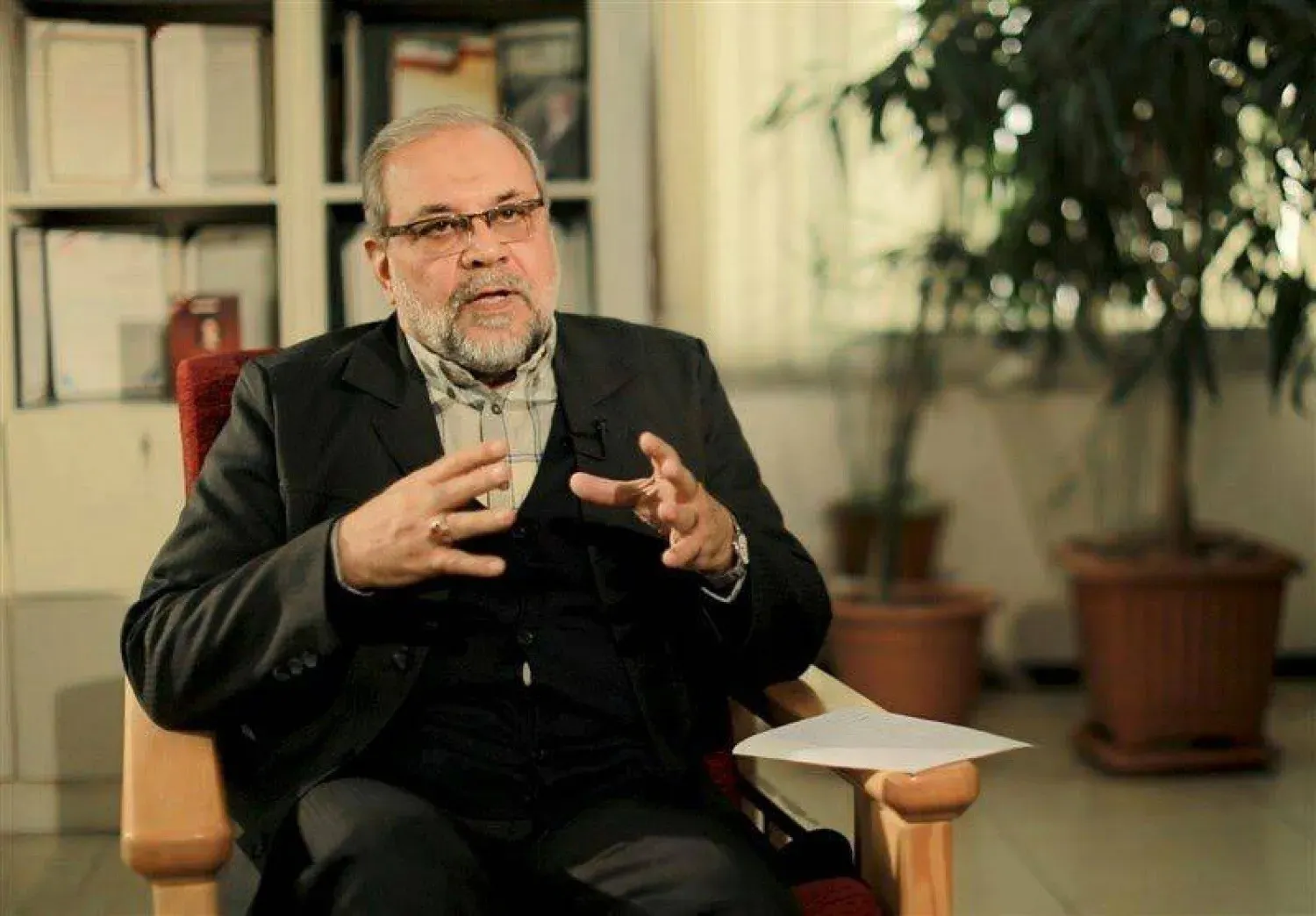
Zolghadr speaks in an interview with the Tasnim News Agency, December 2020.
TT

Mohammad Baqer Zolghadr: A Man with Strong Connections at the Heart of Iran’s Revolutionary Guards

Zolghadr speaks in an interview with the Tasnim News Agency, December 2020.

Mohammad Baqer Zolghadr was not an unfamiliar figure when he was appointed on Tuesday as secretary of Iran’s Supreme National Security Council. One week after the killing of Ali Larijani, and amid a war that has thinned the ranks of Iran’s top leadership, authorities turned to a man shaped within one of the deepest layers of the “Islamic Republic’s” power structure.

Mehdi Tabatabaei, the Iranian president’s deputy communications director, said on Tuesday that General Zolghadr had been appointed to replace Larijani. He wrote on X that Iran’s new Supreme Leader Mojtaba Khamenei had approved the decision.

The Supreme National Security Council, formally headed by President Masoud Pezeshkian, coordinates security and foreign policy. It includes senior military, intelligence and government officials, as well as representatives of the Supreme Leader, who has final authority in state affairs.

Zolghadr’s appointment appears to reflect state priorities in a time of crisis. A further decree is expected to name him as the Supreme Leader’s representative on the council, allowing him to vote under the constitution.

Unlike politicians who rise through elections or public platforms, Zolghadr belongs to a different category: a figure who boasts internal networks that predate the state and later embedded themselves within it. He accumulated power within the agencies instead of confronting them. His career resembles less a sequence of administrative posts and more a continuous thread linking some of the most entrenched centers of power in Iran.

His elevation to one of the country’s top security posts is significant not only for the positions he has held, but for the role he has played within the system. A veteran of the Iran-Iraq war, he developed expertise in organization and network-based operations, consolidating his position within the Iranian Revolutionary Guard Corps (IRGC) and later extending his influence through the interior ministry, judiciary and Expediency Council.

The appointment signals a broader logic within Iran’s ruling establishment: in moments of heightened pressure, figures rooted in institutional networks tend to take precedence over those with a public political profile.

Early career

Zolghadr’s career is closely tied to the political environment from which he emerged. He belongs to a generation associated with the “Mansouroun” network, an early group that later produced influential figures within the IRGC, including Mohsen Rezaei, Ali Shamkhani, Gholam Ali Rashid, and Mohammad and Ahmad Forouzandeh.

The significance of this affiliation lies not only in early organizational ties, but in the nature of the group itself: an ideologically driven pre-revolutionary network that repositioned itself within the state through the IRGC.

Zolghadr’s rise was not an individual climb through institutional ranks, but growth within a web of relationships and loyalties embedded at the core of the system. He emerged not simply as a professional military officer, but as part of a generation that viewed security and politics as intertwined domains in safeguarding the regime. This gave him the rare ability to “reposition” himself and retain power as successive government ruled Iran.

War and the ‘Ramadan’ headquarters

After the fall of the Shah, Zolghadr, like other members of Mansouroun, initially operated through revolutionary committees before joining the IRGC. His most defining wartime role was leading the “Ramadan Headquarters,” a key unit during the Iran-Iraq war.

This post was central to his political and security development. The Ramadan Headquarters served as a nucleus for external operations, coordinating cross-border activities with Iraqi Kurdish and Shiite groups opposed to Saddam Hussein and managing operations inside Iraq. It later evolved into what became the Quds Force, the IRGC’s current foreign arm.

There, Zolghadr developed a hallmark approach: operating at the intersection of military, intelligence and political spheres. The role involved not only managing battlefield operations, but also building networks, cultivating allies and leveraging conflict to generate long-term influence.

This model — combining military structure, indirect operations and proxy management — became a defining feature of Iran’s regional strategy. Within this environment, Zolghadr gained a reputation as a manager and strategist rather than a public-facing commander.

Rise within the IRGC

Following the end of the war in the late 1980s, Zolghadr spent 16 years at the top of the IRGC hierarchy: eight years as chief of the joint staff and eight years as deputy commander-in-chief.

These roles emphasized administration, coordination and institutional discipline rather than field command. His influence was rooted not in public charisma but in his position within the IRGC’s internal machinery.

Over time, he became firmly aligned with Iran’s conservative camp. His political role became more visible during the reformist presidency of Mohammad Khatami, when tensions between reformists and hardline institutions intensified.

Reform era

During the late 1990s, Zolghadr was among military figures associated with the conservative bloc within the IRGC. His name was linked to a letter sent by IRGC commanders to President Khatami, widely seen as a signal of military intervention in political affairs at a time of unrest. He was also associated with hardline opposition to the reform movement and the student protests of that period.

This phase highlighted a structural aspect of his career: his political role did not begin after leaving the military, but was embedded within the IRGC itself as it became increasingly politicized during its confrontation with reformists.

Interior Ministry under Ahmadinejad

When Mahmoud Ahmadinejad became president in 2005, Zolghadr was appointed deputy interior minister for security affairs. The position placed him at the heart of internal security, overseeing provincial governors and managing crises, protests and local tensions. It marked a transition from military service to the executive branch, while maintaining a focus on security.

His move illustrated a broader pattern: shifting from protecting the system through force to safeguarding it through security bureaucracy, expanding his network within the state apparatus.

Basij

Zolghadr left the interior ministry in 2007 amid reports of differences with Ahmadinejad, but his departure did not signal a loss of influence. In December of that year, Supreme Leader Ali Khamenei appointed him deputy chief of staff of the armed forces for Basij affairs, a newly created role.

The Basij, a paramilitary force, plays a key role in ideological mobilization and maintaining the IRGC’s presence in Iranian society. The decree emphasized strengthening and expanding the Basij’s reach, underlining the importance of Zolghadr’s assignment.

Judiciary and expanding influence

In 2010, Zolghadr moved to the judiciary, serving first as deputy for social prevention and crime reduction, and later as strategic deputy to the head of the judiciary until 2020.

The shift did not represent a departure from security work, as Iran’s judiciary operates closely under the authority of the Supreme Leader. Instead, it broadened his influence across another pillar of the state.

In September 2021, he was appointed secretary of the Expediency Council, succeeding Mohsen Rezaei. The role involves overseeing the council’s committees and acting as a link to the highest levels of decision-making.

Zolghadr also has family ties that extend his influence. He is the father-in-law of Kazem Gharibabadi, Iran’s deputy foreign minister for legal and international affairs and a prominent figure in nuclear negotiations.

Gharibabadi previously served as Iran’s ambassador to international organizations in Vienna, including the International Atomic Energy Agency.

From Larijani to Zolghadr

Larijani’s death deprived Iran of a political figure skilled in navigating between power centers. The choice of Zolghadr suggests a shift in priorities.

While Larijani represented balance and negotiation, Zolghadr embodies institutional discipline and internal cohesion. His selection follows speculation over other candidates, including former defense minister Hossein Dehghan, who was ultimately not appointed.

The decision reflects the system’s preference, in wartime conditions, for figures trusted by security networks over those known for political flexibility.

He may not be a prominent public figure, but he represents a type of official often relied upon in times of crisis: a man with internal networks, brought back to the forefront as Iran faces one of its most challenging periods.


Expulsion of Iran Ambassador Tests Diplomacy between Beirut and Tehran

Iranian Ambassador to Syria Mohammad Reza Sheibani, shows his ink-stained finger as he votes in the first round of the Iranian presidential election on June 14, 2013 at the Iranian embassy in the Syrian capital, Damascus. (AFP)
TT

Expulsion of Iran Ambassador Tests Diplomacy between Beirut and Tehran

Iranian Ambassador to Syria Mohammad Reza Sheibani, shows his ink-stained finger as he votes in the first round of the Iranian presidential election on June 14, 2013 at the Iranian embassy in the Syrian capital, Damascus. (AFP)

Diplomatic relations between Lebanon and Iran have entered a new phase with Beirut’s unprecedented withdrawal on Tuesday of its approval of the accreditation of Tehran’s new ambassador Mohammad Reza Sheibani.

The Foreign Ministry said in a statement that it had summoned the Iranian charge d'affaires in Lebanon and informed him of “the Lebanese state's decision to withdraw approval of the accreditation of the appointed Iranian ambassador, Mohammad Reza Sheibani, and declare him persona non grata, demanding that he leave Lebanese territory no later than next Sunday.”

The ministry said it had also summoned Lebanon's ambassador to Iran “in light of what the Lebanese state described as Tehran's violation of diplomatic norms and established practices between the two countries”, after Beirut accused Iran's Revolutionary Guards of commanding Hezbollah's operations in its war against Israel.

The government has accused Hezbollah of dragging Lebanon to war after it fired rockets at Israel on March 2 in wake of the killing of Iran's supreme leader Ali Khamenei at the beginning of the conflict.

Crisis

After three decades of calm, relations between Lebanon and Iran started to grow strained after the 2024 war between Hezbollah and Israel.

Iranian parliament Speaker Mohammad Bagher Ghalibaf declared at the time that Tehran was ready to negotiate with Paris about the implementation of United Nations Security Council resolution 1701 in Lebanon, sparking condemnation from Lebanon.

Then Prime Minister Najib Mikati slammed it as flagrant meddling in Lebanon’s sovereign affairs. He informed the foreign minister at the time to summon Iran’s charge d’affaires to file a formal complaint.

Relations became more strained in 2025 after Ambassador Mojtaba Amani’s suitcases were searched at Beirut’s Rafik Hariri International Airport.

Youssef Raggi, who became Lebanon’s foreign minister in 2025, summoned the Iranian ambassador for the first time since the 1990s last year. In April, he summoned Amani after he posted that the “project to disarm Hezbollah is an obvious conspiracy.”

The Lebanese government had issued a decision on the disarmament of Iran-backed Hezbollah last year.

In December, media close to Hezbollah reported that Raggi had suspended procedures on approving the accreditation of the new Iranian ambassador.

Last week, he summoned the charge d’affaires over statements attributed to the Iranian mission in Beirut and Iranian officials over security and military developments in Lebanon.

Ties between Raggi and Iranian officials have been strained for months. Last year he declined an official invitation from his Iranian counterpart Abbas Araqhchi to visit Tehran, suggesting that they meet in a third neutral country.

The withdrawal of accreditation is rare and it effectively means that a country refuses to welcome a diplomatic representative, reflecting deep political disapproval of the concerned country’s behavior.

The withdrawal was the latest Lebanese measure against Iran.

On March 5, the government took a series of steps that reflect a hardening approach towards Tehran. It imposed visas on visiting Iranians that had been suspended since 2011 in an effort to encourage trade and tourism between Beirut and Tehran.

The government also banned any activity by the Iranian Revolutionary Guards in Lebanon. Dozens of Iranians have since been deported from Lebanon.

‘Correcting’ relations

Lebanon had in the early 1990s launched a phase to “correct” relations with Iran after the end of the Lebanese civil war.

Then Foreign Minister Fares Boueiz was responsible for “reorganizing diplomatic work in line with the Vienna Convection”, said Lebanese sources.

During the 1975-90 civil war, Iranian officials would move freely to Lebanon through Syria and meet with Hezbollah officials in Beirut. Lebanese authorities had opposed the behavior.

In previous statements to Asharq Al-Awsat, Boueiz said Iranian delegations would travel to Lebanon through Syria without coordinating with the state.

The situation was later addressed through official diplomatic channels, he added.

The Iranian ambassador at the time was informed of the authorities’ objection and the stance was relayed to then Iranian FM Ali Akbar Velayati, said Boueiz.

Two days later, the Lebanese Foreign Ministry received an approval to “correct relations”, leading to an exchange in official visits and the signing of agreements that “regulated” the ties.


Falih al-Fayadh, a ‘Cunning’ Player Who Survived Saddam and the US

PMF chief Falih al-Fayadh and his chief of staff Abdulaziz al-Muhammadawi. (PMF file photo)
TT

Falih al-Fayadh, a ‘Cunning’ Player Who Survived Saddam and the US

PMF chief Falih al-Fayadh and his chief of staff Abdulaziz al-Muhammadawi. (PMF file photo)

Despite his “modest and calm” appearance, Iraq’s Popular Mobilization Forces chief Falih al-Fayadh is widely seen, including by rivals, as a “cunning” operator with a keen ability to seize opportunities and wage “fierce” battles against his opponents, traits that have kept him in power for more than a decade atop the PMF despite deep polarization and intense internal rivalries.

An airstrike on Tuesday, believed to be carried out by the US, targeted a house used by Fayadh in Mosul’s al-Arabi neighborhood. Reuters, citing sources, said he was not at the site at the time.

Who is Fayadh?

Fayadh was born in Baghdad in 1956 and holds a bachelor’s degree in electrical engineering from the University of Mosul, obtained in 1977.

He belongs to the Albu Amer (Albu Khamis) tribal leadership, which owns large agricultural lands in the Rashidiya and Tarmiyah areas north of Baghdad.

It is widely believed that this tribal affiliation helped him avoid execution during Baath Party rule.

His family was said to enjoy a degree of favor with former Iraqi President Saddam Hussein, who pardoned him during a visit to the family and commuted a death sentence issued in 1980, on charges of belonging to the then-banned Dawa Party, to 20 years in prison.

Fayadh entered politics early after 2003, joining the movement of former Prime Minister Ibrahim al-Jaafari. He remained a low-profile figure before moving into the security establishment, first through the National Security advisory and later the PMF.

He was appointed head of the PMF Committee in 2014, ahead of the body’s formal establishment, alongside the “jihad of Sufficiency” fatwa issued by top Shiite cleric Ali al-Sistani to confront ISIS. He was formally confirmed in 2016, when the parliament passed the PMF law.

Fayadh served as national security adviser until he was dismissed in 2018 by then Prime Minister Haider al-Abadi.

In 2020, then Prime Minister Mustafa al-Kadhimi reappointed him as PMF chief in full capacity, after he had previously held the post in an acting role.

Firmly in control

Despite internal power struggles, including open opposition from the Asaib Ahl al-Haq faction, and US sanctions imposed on him in 2021 over alleged human rights violations, Fayadh has retained firm control of the PMF.

Sources familiar with his career say he built his security and political clout on close ties with Iran and with slain Revolutionary Guard Corps commander Qassem Soleimani, who was killed in a US airstrike in Baghdad in early 2020.

Leveraging his central role in the PMF, Fayadh has secured financial gains through various partnerships and contracts, the sources said.

His success in mobilizing tribal Sunni forces and consolidating their loyalty has helped him build a political foothold in Sunni provinces, particularly Nineveh and the city of Mosul.

The sources said Fayadh also capitalized on tribal mobilization groups, often aligned with Sunni lawmakers or politicians, who pledged loyalty to him as a figure capable of delivering benefits.

Through a network of alliances and loyalties across Sunni-majority areas, including Nineveh, Fayadh has emerged as a leading political player, with notable representation on the local council.

However, rivals accuse him of dominating most projects and investments in Mosul and of using the PMF to place members of his tribe in sensitive positions within the organization.
