Israeli Assessment: Doha Strike Costs Outweigh Any Gains
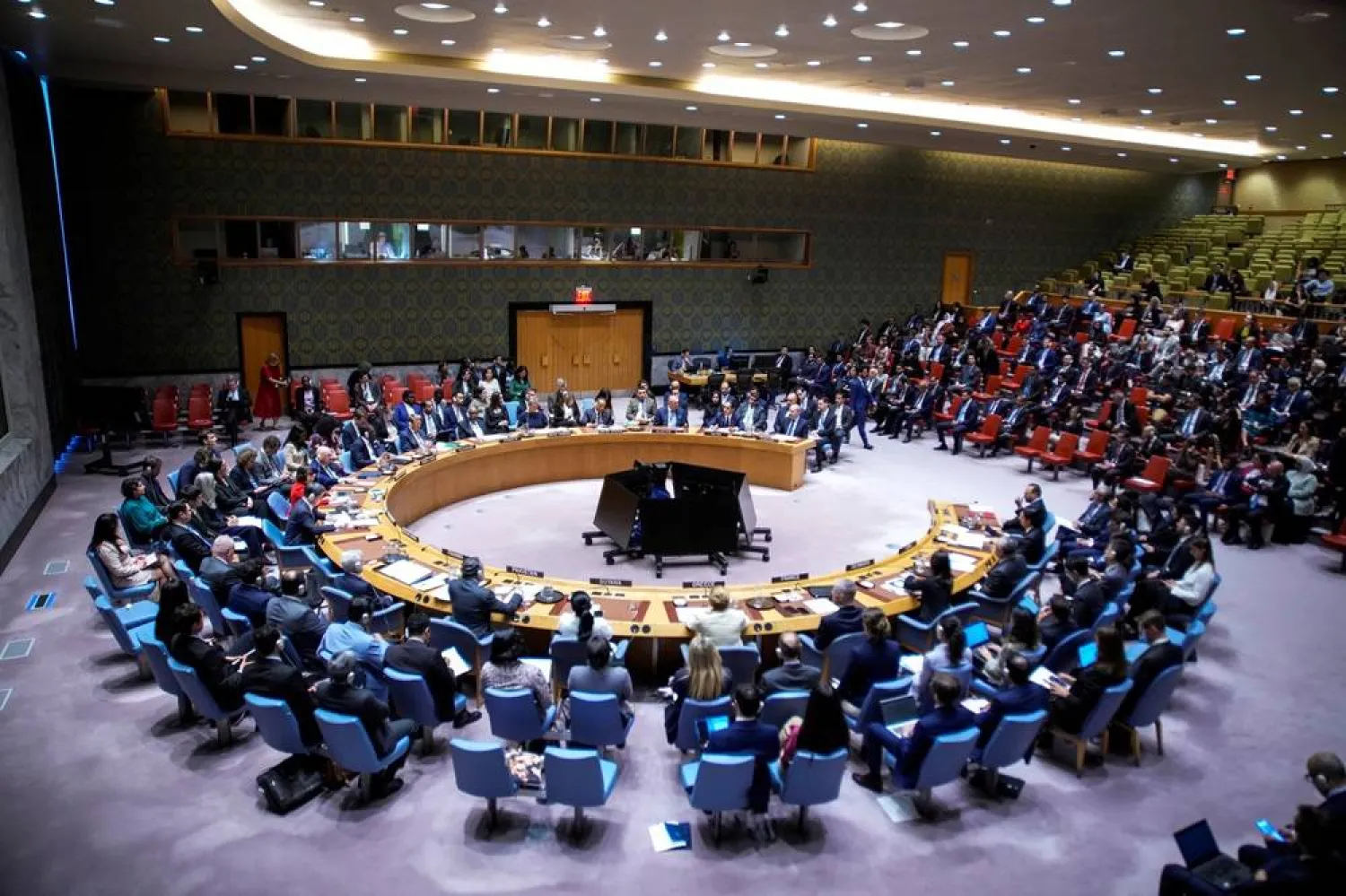
Qatar's Prime Minister and Minister for Foreign Affairs Sheikh Mohammed bin Abdulrahman bin Jassim Al Thani addresses to delegates during an emergency meeting of the United Nations Security Council, following an Israeli attack on Hamas leaders in Doha, Qatar, at UN headquarters in New York City, US, September 11, 2025. (Reuters)
Israeli Assessment: Doha Strike Costs Outweigh Any Gains
Qatar's Prime Minister and Minister for Foreign Affairs Sheikh Mohammed bin Abdulrahman bin Jassim Al Thani addresses to delegates during an emergency meeting of the United Nations Security Council, following an Israeli attack on Hamas leaders in Doha, Qatar, at UN headquarters in New York City, US, September 11, 2025. (Reuters)
Israel continues to assess the consequences of Tuesday’s failed strike on Hamas leaders in the Qatari capital, Doha, with officials and analysts concluding that the political and diplomatic fallout has been far more damaging than any potential benefit.
While the attack is unlikely to derail ongoing negotiations or force Qatar to abandon its mediation role, it has left Israel facing sharp criticism at home and abroad.
An Israeli official told Yedioth Ahronoth that the risk was justified, arguing that eliminating Hamas leaders had never prevented agreements in the past.
“Hamas makes deals based on its own calculations, not on anger or appeasement,” he said, adding that only strong US pressure could alter the trajectory of negotiations.
Yet across Israel’s security and political establishment, there is near consensus that the operation backfired.
Former Knesset member Ksenia Svetlova wrote in the Times of Israel that the failed assassination attempt damaged Israel’s standing in peace talks and eroded its international reputation.
Arab leaders, she said, see Israel’s overreliance on force and lack of diplomacy as a liability, warning that such a “rampaging elephant” approach could ultimately destabilize the region further.
Elie Podeh, professor of Middle Eastern studies at the Hebrew University, called the strike a strategic error.
Writing in Channel 12, he argued that even if successful, the costs would have outweighed the gains, noting that the attack undermined years of quiet trust-building with Qatar and embarrassed US President Donald Trump, a key ally to both sides.
Instead of weakening Hamas, he said, the strike elevated Qatar’s stature and unnerved other Arab states.
Journalist Ronen Bergman said that the targeted facility may have also housed a senior Qatari official managing Israel relations, which could have escalated the crisis further.
Interviews with four Israeli security and intelligence officials revealed deep dissatisfaction, questioning Prime Minister Benjamin Netanyahu’s decision-making and whether the operation could realistically have secured hostage releases from Gaza.
The fallout has extended beyond diplomacy.
Israeli media drew attention to Qatar’s Emir Sheikh Tamim bin Hamad Al Thani warmly receiving Hungarian Prime Minister Viktor Orbán - a staunch ally of Israel - in a moment described by Yedioth as “a hug from a friend of Israel, too,” symbolizing Israel’s growing isolation.
Opposition leader Yair Lapid accused the government of wrecking Israel’s international standing with “a lethal mix of irresponsibility, incompetence, and arrogance.”
Columnist Sima Kadmon added that what initially looked like a dramatic success quickly unraveled, exposing not just a failed operation but a deeper erosion of public trust in the government’s motives. “For many hostage families,” she wrote, “that trust no longer exists.”
A partially-torn billboard for Israeli Prime Minister Benjamin Netanyahu's Likud party is displayed in southern Tel Aviv on October 20, 2026. (AFP)
TT
TT
Israel’s Elections: Four Possible Scenarios
A partially-torn billboard for Israeli Prime Minister Benjamin Netanyahu's Likud party is displayed in southern Tel Aviv on October 20, 2026. (AFP)
Israel goes to the polls on October 27 with results forecast to be close, meaning that the next government will be determined by whoever can cobble together a coalition in a fragmented political landscape.
Israel votes through proportional representation based on the nationwide vote and it is highly unlikely that any single party would come even close to the 61 seats needed for a majority in the 120-seat parliament, or Knesset.
Here are four possible scenarios:
Coalition
Immediately after the election, the parties will begin negotiations to try to reach the 61-seat threshold.
After the official announcement of the results, President Isaac Herzog will consult with party representatives and name a candidate who has the chance to form a government -- not necessarily the party with the most seats, but the one deemed best positioned to secure enough seats in parliament.
The negotiations can be arduous and lengthy, with parties insisting on parochial interests, and can produce unstable governments.
Following the previous election in November 2022, it took Benjamin Netanyahu 58 days to form his government.
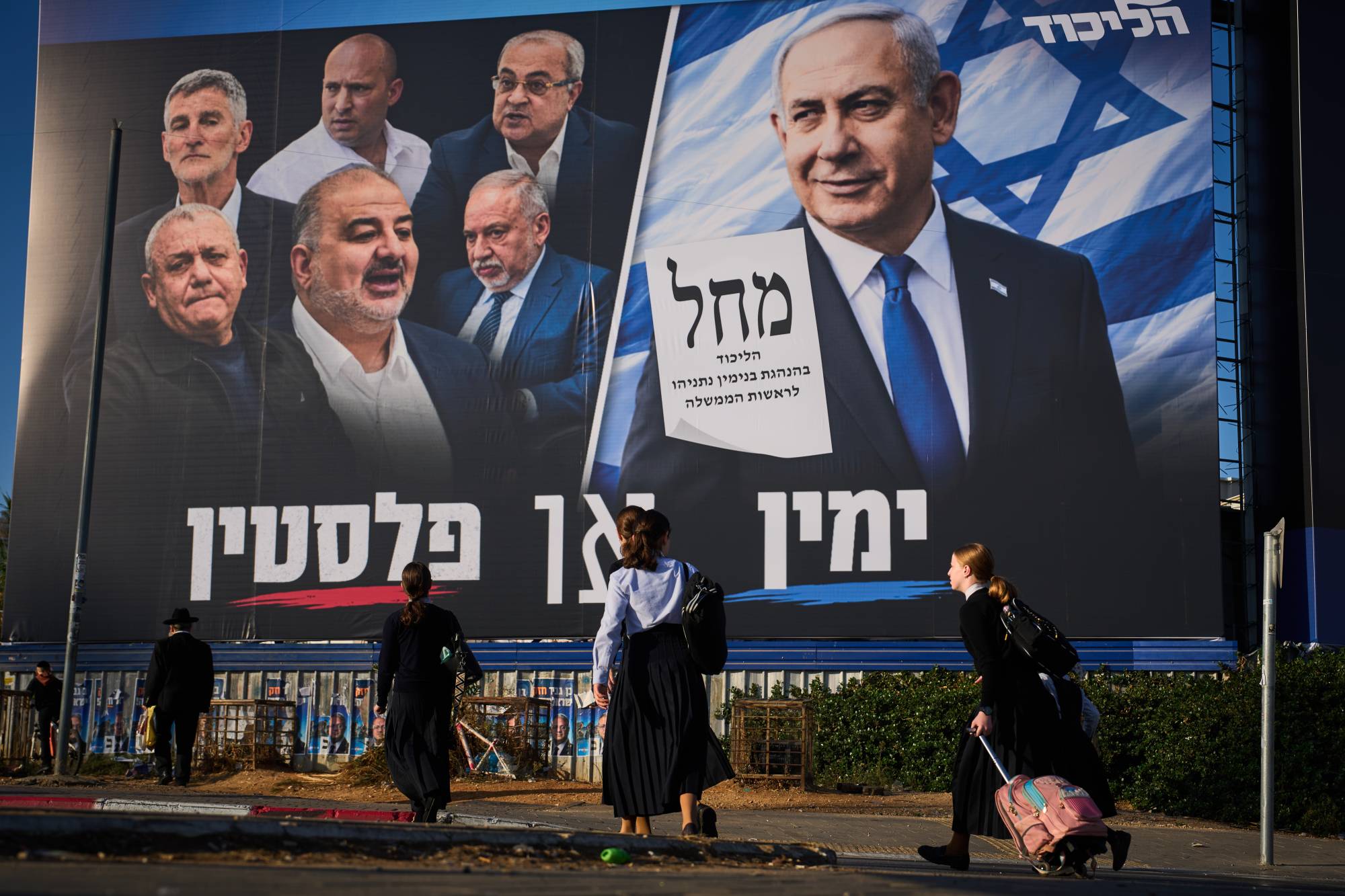
People walk past a Likud party campaign billboard featuring Israeli Prime Minister Benjamin Netanyahu alongside opposition party leaders and bearing the Hebrew slogan "Right or Palestine," ahead of Israel's general election, in Beni Brak, Israel, Sunday, Oct. 18, 2026. (AP)
Polls show that Netanyahu's right-wing and far-right coalition and the opposition bloc, whose most prominent figure is former military chief Gadi Eisenkot, are neck and neck, with approximately 50 to 52 seats each.
The two sides have been nearly even in polls for weeks, foreshadowing a mathematical puzzle that both sides will have to solve to find the 10 or so seats needed for a coalition.
Israeli political history is full of twists and turns, with defections and other unexpected shifts in alliances.
Israel also has two new right-wing parties that are seen as scratching the threshold of entering parliament, where they could throw their decisive support to one of the two blocs.
Minority government
If no bloc manages to secure 61 seats, a candidate could attempt to govern without a majority but rather through support on an ad hoc basis by other lawmakers.
In this scenario, lawmakers from Israel's Arab minority -- who make up 20 percent of the population and generally identify as Palestinians -- could play a critical role. Polls show that two Arab-Israeli lists, the Joint List and Raam, could win 12 to 14 seats in total.
Raam, led by Mansour Abbas, a kingmaker in the past, has stated its willingness to work with Eisenkot's bloc, and the Joint List has offered to provide a "safety net" for any coalition that ousts Netanyahu from power.
But the leading figures in the opposition bloc are reluctant to publicly acknowledge such a possibility, due to the hostility of a large segment of the Jewish electorate towards any form of alliance with Israeli Arabs.
This has not prevented Netanyahu from focusing his campaign on the possibility of Eisenkot working with Arab parties, campaigning on the slogan, "Either the right wing or Palestine."
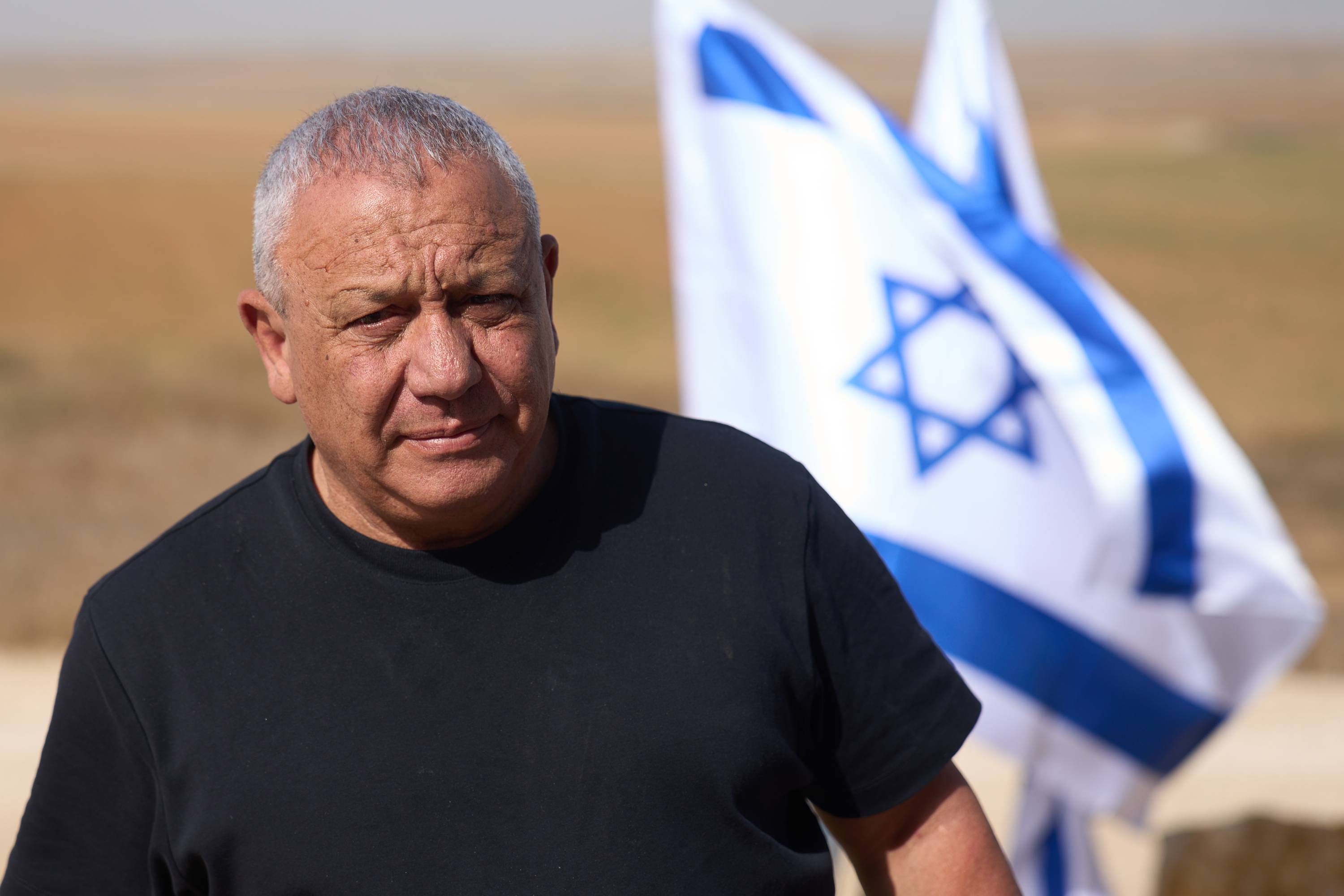
Gadi Eisenkot, former Israeli military chief of staff and leader of the centrist Yashar "Straight" party delivers a statement ahead of Israel's general election near Israel-Gaza border, southern Israel, Thursday, Oct. 15, 2026. (AP)
National unity government
Considering Israel's extreme polarization, a national unity government would appear fanciful, but it could theoretically create a less extreme government.
Israeli commentators have often mused on the possibility of a national unity government in which Netanyahu would jettison his provocative far-right allies as well as ultra-Orthodox parties and team up with Eisenkot, who shares Netanyahu's views on many security issues.
The grand coalition would also exclude Arab parties.
A poll published on October 16 found that 55 percent of Israelis would prefer a national unity government over new elections if the vote did not produce a clear majority.
This scenario has a recent precedent. In 2020, Netanyahu and Benny Gantz, like Eisenkot a retired general appealing to the center, reached a power-sharing agreement after three elections in less than a year, which stipulated a rotation of the prime ministership.
But the partnership fell apart after a year, triggering a new election. According to media reports, Herzog is working behind the scenes to bring Netanyahu and Eisenkot together to repeat the experiment should a deadlock occur after October 27.
However, the scenario would face strong opposition from both sides, particularly from the opposition bloc, which is treating the election as a referendum against Netanyahu and has questioned his character.
Deadlock and new elections
If no candidate manages to form a government, Israel will have to return to the polls.
The country held four elections between April 2019 and March 2021 due to the inability of politicians to forge a lasting coalition.
The candidate designated by the president will, in principle, have 28 days to form a coalition, with a possible 14-day extension, although there are other procedural ways to prevent an immediate calling of new elections.
Iran Prolongs Talks in Stalemate to Influence US Midterms, Officials Sayhttps://english.aawsat.com/features/5331671-iran-prolongs-talks-stalemate-influence-us-midterms-officials-say
An Iranian woman walks past a mural of late Iranian Supreme Leader Ali Khamenei on a street in Tehran, Iran, 14 October 2026, amid the ongoing conflict between Iran and the United States. (EPA)
TT
TT
Iran Prolongs Talks in Stalemate to Influence US Midterms, Officials Say
An Iranian woman walks past a mural of late Iranian Supreme Leader Ali Khamenei on a street in Tehran, Iran, 14 October 2026, amid the ongoing conflict between Iran and the United States. (EPA)
Iran has deliberately prolonged talks with the US to try to weaken Donald Trump politically ahead of November's US midterm elections, senior officials say, while fears of renewed military action and deep distrust of Washington have reinforced Tehran's reluctance to strike a quick deal to end the war.
Three senior Iranian officials and an Iranian insider, speaking to Reuters on condition of anonymity, said Tehran was convinced the US president was ready to resort to renewed attacks to try to break the stalemate in the eight-month-old war.
"Iran is preparing for renewed Israeli and US attacks, not for a deal with America to end the war," one of the officials said. "The clerical establishment is determined not to give Trump a political victory."
Tehran analyst Saeed Leylaz said that, by prolonging the talks, "Iran is influencing the US election without taking any unlawful action".
IRAN CAN EXPLOIT TRUMP'S POLITICAL PROBLEMS
The war, which began in February when the US and its ally Israel launched strikes on Iran, has helped drive Trump’s approval rating to a record low as polls suggest that Americans worried about high gasoline prices will punish his Republican Party in the November 3 congressional elections.
Trump has repeatedly said he expects oil prices to drop after the elections, but has not offered a detailed plan to end the war and reopen the Strait of Hormuz, a vital global energy shipping route effectively closed by Iran since the war began.
Iranian attacks both threatened and real have kept ship traffic through the strait to a trickle, while a US maritime blockade and trade sanctions have cut off Iran's oil export revenues and exacerbated growing domestic economic woes.
With Tehran refusing to make concessions it believes could benefit Trump politically, there is little chance of a breakthrough before the elections, the officials said.
Under pressure from Israel, Washington wants Iran’s decades-long nuclear program - which Iran says is purely peaceful and Western powers allege has military dimensions - on the table from the outset.
For its part, Tehran insists that its conditions under a "seven-day plan" must be met before nuclear negotiations begin. It offers no prospect of giving up the leverage over the Strait of Hormuz that the conflict prompted it to seize.
Iran's Foreign Ministry and the US White House did not respond to Reuters requests for comment.
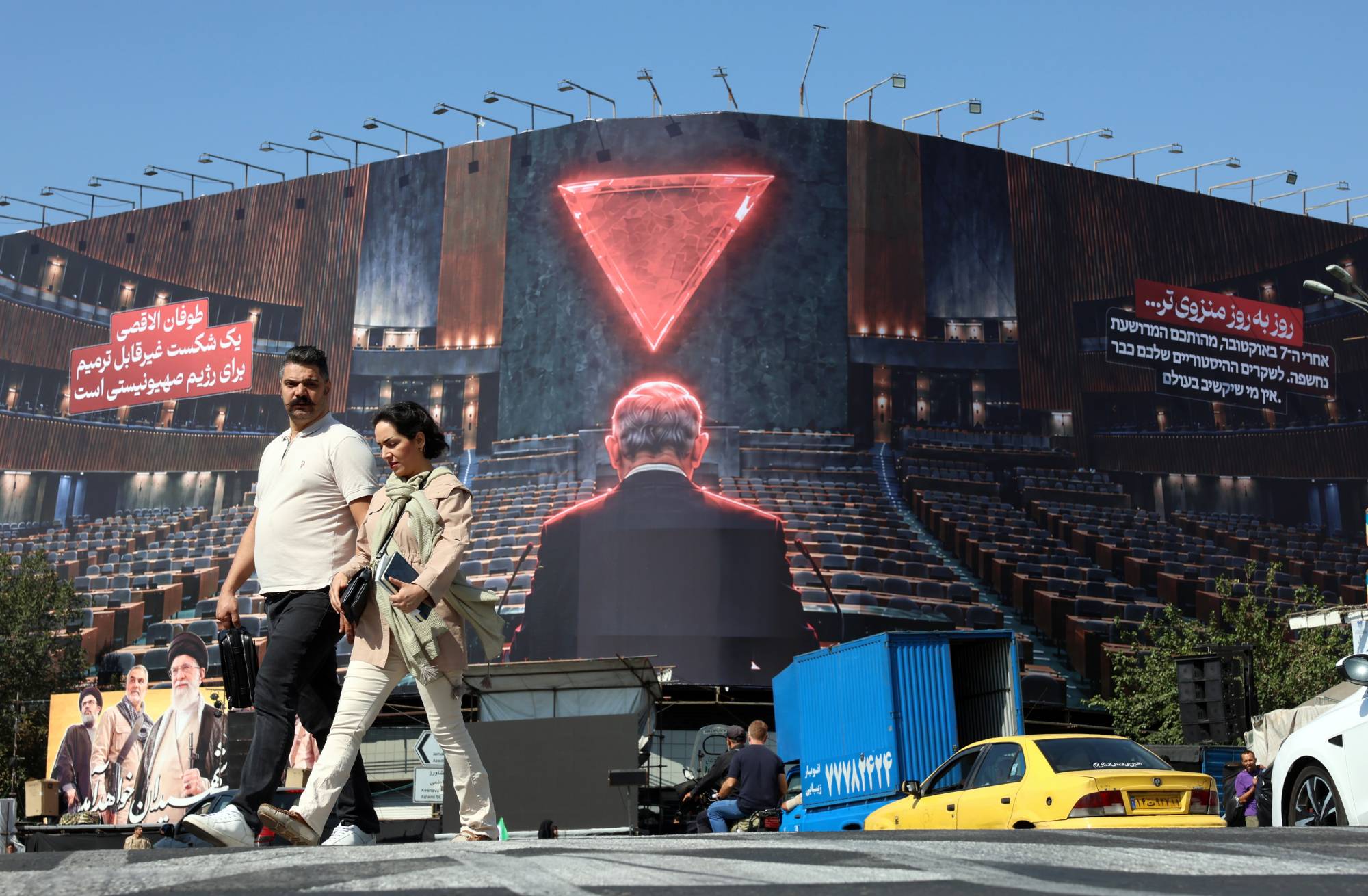
An Iranian couple walks near an anti-Israel billboard featuring Israeli Prime Minster Benjamin Netanyahu and a sentence reading in Persian “Day by day isolated” at the Enghelab square in Tehran, Iran, 12 October 2026. (EPA)
IRAN CANNOT TRUST WASHINGTON, OFFICIALS SAY
Iran’s proposal, conveyed through Qatari mediators, offered to reopen the strait within seven days, albeit under Iranian control, provided that Washington lifted its maritime blockade, eased restrictions on Iranian oil exports, released frozen assets and ended hostilities on all fronts.
Iranian Foreign Minister Abbas Araghchi said on Sunday that the offer remained on the table, with messages being exchanged through mediators.
Tehran's view that Washington cannot be trusted to commit to diplomacy stems from the attacks on Iran that have derailed previous negotiations, one Iranian official said.
In June 2025, an Israeli attack wrecked plans for a sixth round of US-Iran nuclear talks in Oman. And last February, the US and Israel launched their war just after another round of talks ended, with further technical discussions scheduled.
Maintaining a state somewhere between war and peace through the US midterms allows Iran to sustain pressure on Washington while reiterating its commitment to diplomacy.
Trump has said the US will not bomb Iran again before November 3. However, the officials said Tehran continues to expect that bombing will resume, sooner or later.
Alex Vatanka, director of the Iran program at the Middle East Institute in Washington, said the clerical establishment clearly wanted to hurt Trump politically.
"But the fundamental issue is that Tehran believes that Trump is interested in regime change ... and following Israeli Prime Minister (Benjamin) Netanyahu’s policy of seeking to bring down Iran’s ruling establishment," he said.
US Defense Secretary Pete Hegseth discussed Iran with Netanyahu on Monday, three Israeli officials said, in an unannounced visit to Israel a week before a parliamentary election in which Netanyahu's position is at risk.
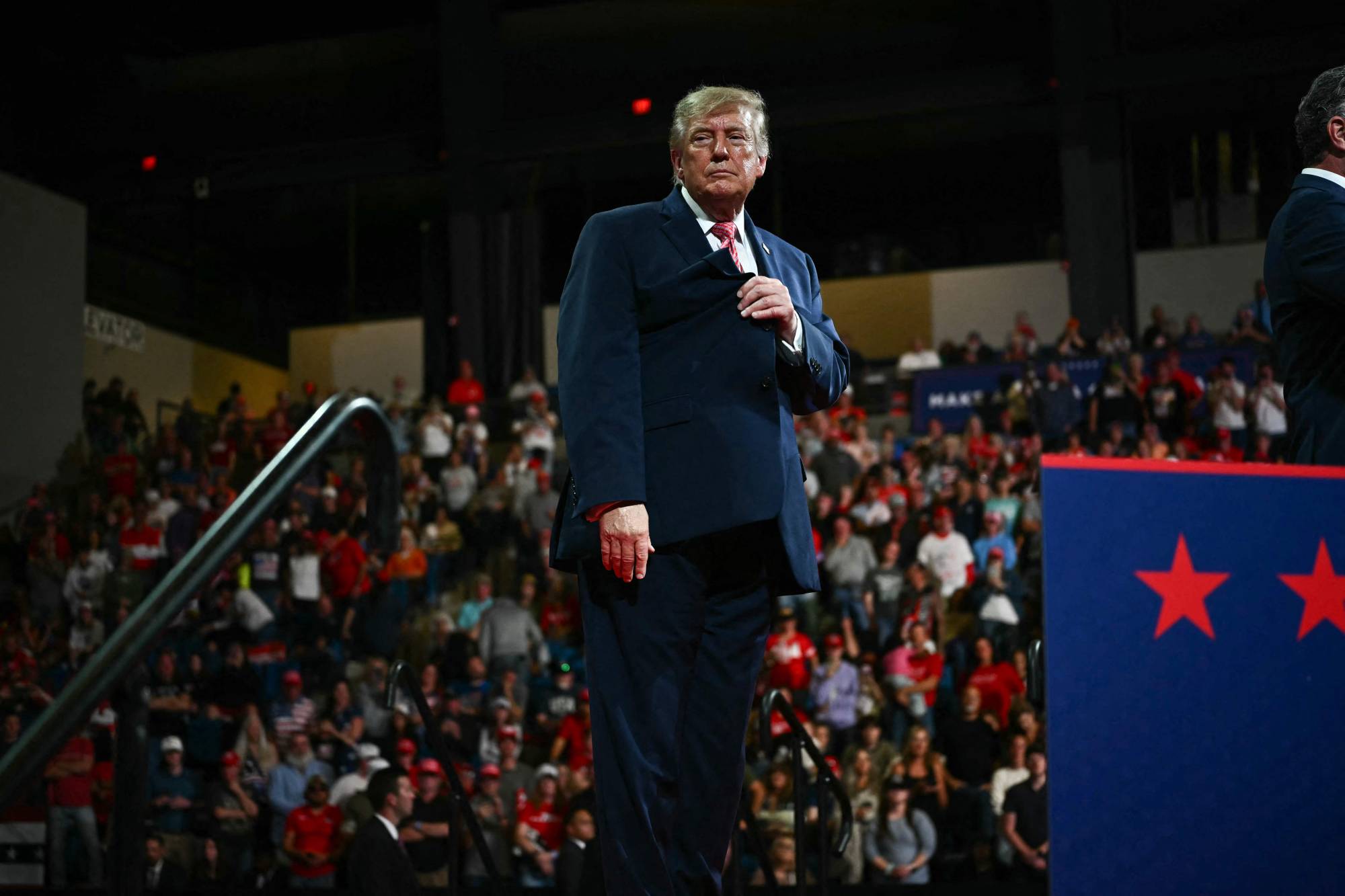
US President Donald Trump looks on during a campaign rally at the Heartland Credit Union Arena in Park City, Kansas, a suburb of Wichita, on October 19, 2026. (AFP)
RETURN TO PRE-WAR STATUS IMPOSSIBLE FOR IRAN, SAYS ANALYST
Iran’s strategy of keeping negotiations alive without rushing towards agreement comes at a cost.
Prolonged uncertainty is weighing on Iran’s already crippled economy and wearing down public patience. Thousands were killed at the turn of the year when the security forces crushed spiraling anti-government protests.
Annual inflation hit 73.6% in September, according to the Statistical Centre of Iran, and the rial currency has fallen nearly 35% against the dollar since Washington reapplied its naval blockade in July.
Iran’s seaborne crude exports fell to zero in the second week of September from a 14-day average of 230,000 barrels per day at the start of the month, and remained there as of October 5, according to energy intelligence platform Vortexa.
But the leadership's distrust of Washington extends beyond the current conflict to existential concerns. Iran believes the US has repeatedly broken agreements even when Tehran honored its commitments, Leylaz said, leaving little confidence that any comprehensive deal would endure.
“Reaching a sustainable deal with the US, even after the Trump administration, is no longer possible because of the deepened distrust,” Leylaz said. "Nothing will go back to the pre-war status quo."
Can Trump’s Endorsement Boost Netanyahu’s Election Chances?https://english.aawsat.com/features/5331431-can-trump%E2%80%99s-endorsement-boost-netanyahu%E2%80%99s-election-chances
An ultra-Orthodox Jewish man walks past an electoral banner for the Reservist party's list led by Yoaz Hendel (R) and Yaron Zelekha (L) in Bnei Barak near Tel Aviv on October 18, 2026. (Photo by Ilia YEFIMOVICH / AFP)
Can Trump’s Endorsement Boost Netanyahu’s Election Chances?
An ultra-Orthodox Jewish man walks past an electoral banner for the Reservist party's list led by Yoaz Hendel (R) and Yaron Zelekha (L) in Bnei Barak near Tel Aviv on October 18, 2026. (Photo by Ilia YEFIMOVICH / AFP)
US President Donald Trump’s endorsement of Israeli Prime Minister Benjamin Netanyahu ahead of the October 27 election has given the ruling right-wing camp a boost. But whether it can reverse Netanyahu’s declining electoral fortunes remains uncertain.
Netanyahu and his Republican allies had lobbied hard to secure Trump’s backing. According to Israel’s Channel 12 and Channel 13, White House officials struggled with the decision, holding numerous meetings with figures from Israel’s governing coalition and opposition and requesting in-depth opinion polls.
Aware that Trump dislikes backing losers and prefers strong leaders, Netanyahu assembled a team to convince Washington that his electoral prospects had improved.
Meanwhile, the opposition’s “change camp” sought to discourage US interference. Former Prime Minister Yair Lapid met officials from both American parties, promising that an alternative Israeli government would maintain closer ties with the Trump administration and cooperate more fully in implementing his peace plan.
But Washington’s proposal for a unity government bringing together Netanyahu and his main rival, Gadi Eisenkot, exposed divisions and hesitation within the opposition. Its apparent reluctance to cooperate reportedly frustrated Trump and contributed to his decision to endorse Netanyahu.
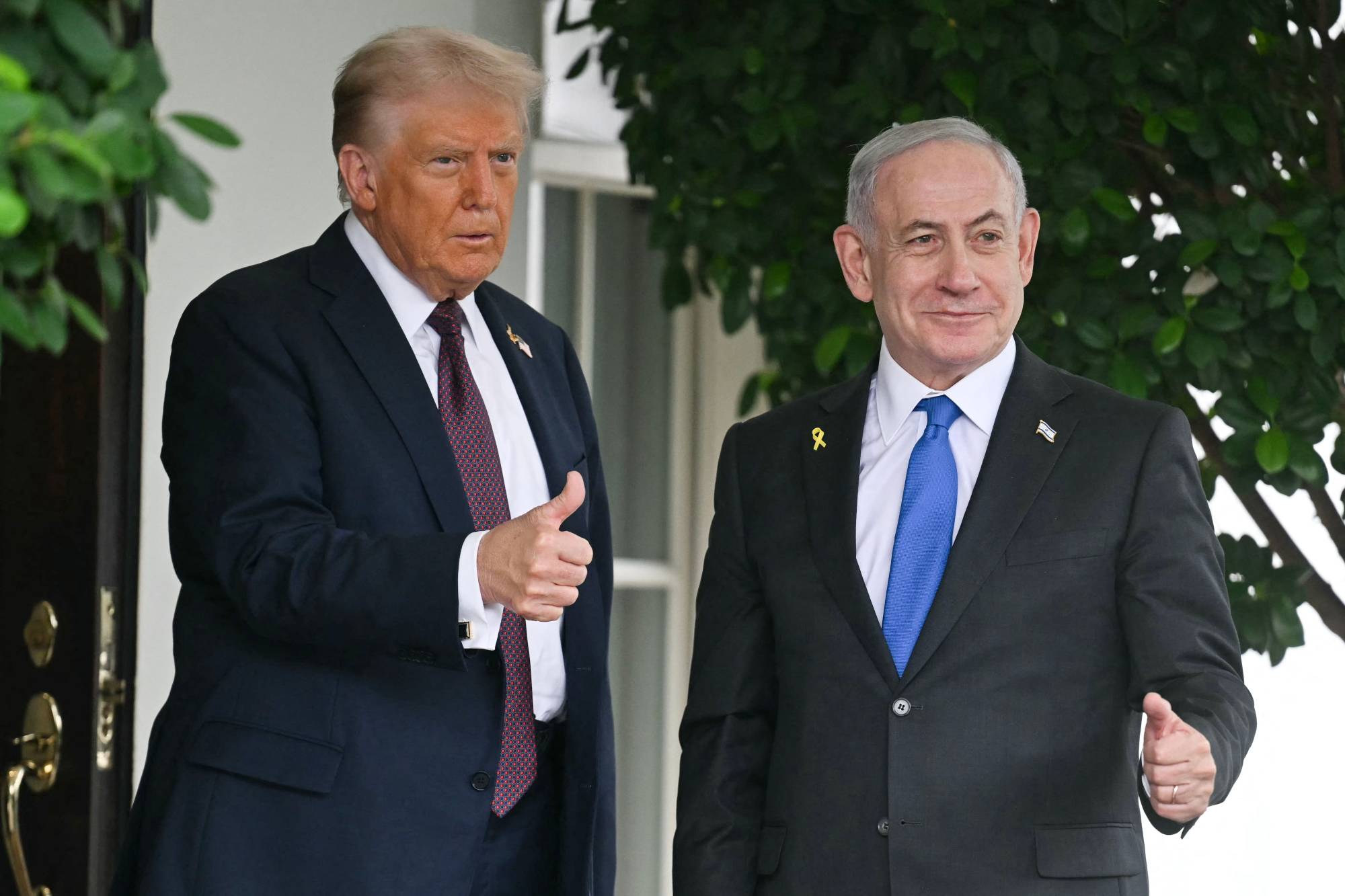
(FILES) US President Donald Trump greets Israeli Prime Minister Benjamin Netanyahu as he arrives at the West Wing of the White House in Washington, DC on September 29, 2025. (Photo by Jim WATSON / AFP)
Can Trump revive Netanyahu’s fortunes?
The president’s backing is likely to resonate primarily with right-wing voters rather than the Israeli electorate as a whole, reflecting sharply divided attitudes toward him.
In 2024, Trump enjoyed support from 60% to 72% of Israelis. By early 2025, 61% considered him the preferred US president for advancing Israel’s interests, including 96% of right-wing respondents, 52% of centrists, 30% of left-wing voters and 32% of Arab citizens.
Confidence in Trump rose to 75% in March 2026 before plunging to 26% that summer following Washington’s agreement with Tehran. Surveys also found that 81% of left-wing respondents, 73% of centrists and 65% of right-wing voters believed Israel’s security was not a priority for him.
Israeli media have frequently greeted Trump’s shifting positions with skepticism and even ridicule.
His clashes with Netanyahu have particularly unsettled the right. In 2025, when the Israeli leader opposed Washington’s proposed negotiations with Iran, Israeli outlets reported that Trump had demanded he fall into line with the American approach, telling him that he and his government were now part of Trump’s plan, not the other way around.
In June 2026, Axios and CNN reported details of a heated telephone conversation in which Trump allegedly shouted at Netanyahu over strikes on Beirut and attempts to obstruct US-Iran negotiations. According to those accounts, the American president called him completely “crazy,” claimed to have kept him out of prison and accused his policies of turning public opinion against Israel.
With Likud holding 36 seats in the Knesset but polling at just 18 to 21, Netanyahu hopes Trump’s intervention will persuade disillusioned right-wing supporters to return to the party.
Its impact may be limited, however, among voters who view Trump unfavorably, including some on the right and a larger share of the political center.
Much of the Israeli media, described in the analysis as aligned with the opposition’s “change camp” and the country’s entrenched establishment, has played down the announcement. Some commentators have even called it a bad omen, pointing to Trump’s previous support for Hungary’s Viktor Orban and Brazil’s Jair Bolsonaro, both of whom subsequently lost elections.
What might Netanyahu offer in return?
Israeli political analysts have advanced several theories about what Trump hopes to gain from supporting the prime minister.
One is that Netanyahu pledged to strike Iran independently, with US forces providing assistance from a distance rather than participating directly, as they did in June.
Trump appeared to reinforce that interpretation by describing Netanyahu as the only Israeli prime minister both willing and able to attack Iran. He added that while he could order US strikes himself, he had no interest in doing so.
Another explanation centers on Washington’s interest in a post-election unity government involving Netanyahu and Eisenkot, who would share the premiership.
Under this scenario, Trump wants a strong, predominantly right-wing Israeli government reflecting the country’s political majority and capable of making far-reaching decisions to implement his peace plan.
The endorsement could therefore give Netanyahu an opportunity to stage an “October surprise,” borrowing a term from US politics for a late campaign development capable of dramatically reshaping electoral prospects.
But the Israeli leader must still prove that he can turn Trump’s support into votes.
Netanyahu moved quickly to capitalize on the announcement Sunday evening, posting a video on Telegram urging Israelis to pay close attention to the president’s remarks.
Fifteen minutes later, he released another recording describing Trump’s endorsement as unconditional and emphasizing their partnership.
Netanyahu credited their cooperation with major achievements against Iran and its regional allies, claiming they had dealt crushing blows to both and removed the immediate threat of nuclear bombs.
He also portrayed Trump as determined to work alongside him to complete the task of eliminating the Iranian threat within the next two years, or possibly sooner.
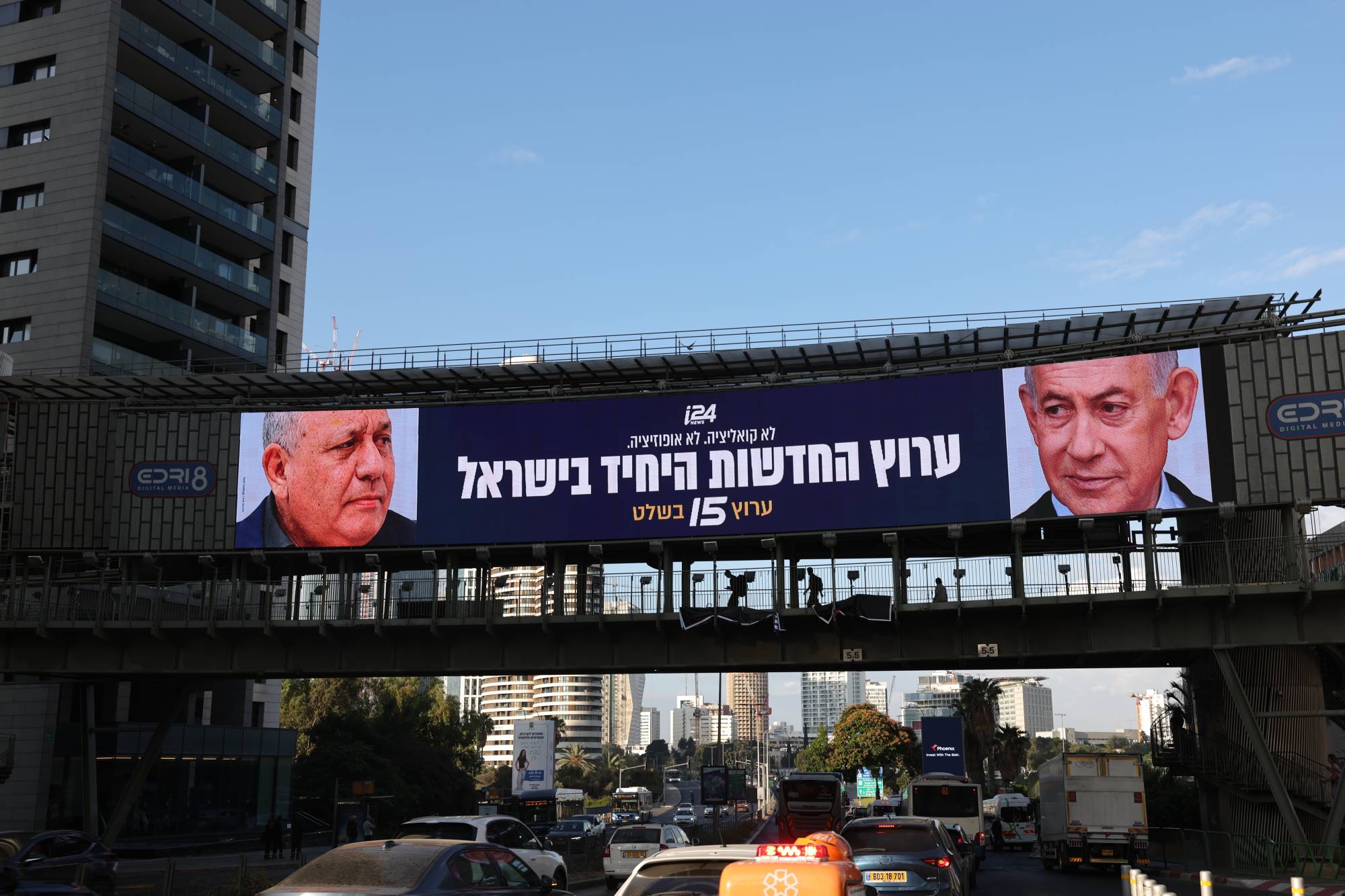
Vehicles drive past an election billboard featuring images of Israeli Prime Minister Benjamin Netanyahu (R) and Yashar party leader Gadi Eisenkot (L) in Ramat Gan near Tel Aviv, Israel, 18 October 2026. EPA/ABIR SULTAN
Opposition caught off guard
Opposition leaders were stunned by the announcement.
An associate of Lapid disclosed that people close to Trump had indicated earlier Sunday that the president did not intend to interfere in Israel’s election.
The official suggested that the endorsement might have been compensation for Netanyahu after Trump refused to launch another attack on Iran.
Eisenkot’s allies were divided over whether to ignore the development to preserve good relations with Washington or publicly suggest that Netanyahu had offered concessions in return, potentially including advancing Trump’s Gaza plan and accepting a Palestinian state.
Speaking at Tel Aviv University on Sunday evening, Eisenkot expressed appreciation for Trump’s contribution to Israel’s security and the hostage agreement but insisted that Israeli voters alone would choose their government.
He added that the US administration would be able to cooperate with any government elected in Israel.
لم تشترك بعد
انشئ حساباً خاصاً بك لتحصل على أخبار مخصصة لك ولتتمتع بخاصية حفظ المقالات وتتلقى نشراتنا البريدية المتنوعة