
Israeli attacks in southern Lebanon widened in recent hours from calculated strikes on alleged military sites to heavy bombardment inside crowded civilian areas, signaling what appears to be Israel’s abandonment of the principle of shielding civilians from its operations.
After an airstrike late on Tuesday on the Ain al-Hilweh Palestinian refugee camp east of Sidon, another Israeli strike hit the border town of Tayrī on Wednesday, hitting a bus carrying students. The attacks underscored that civilians are no longer being spared in what Lebanese officials described as a new Israeli escalation beyond traditional confrontation zones.
Ain Al-Hilweh
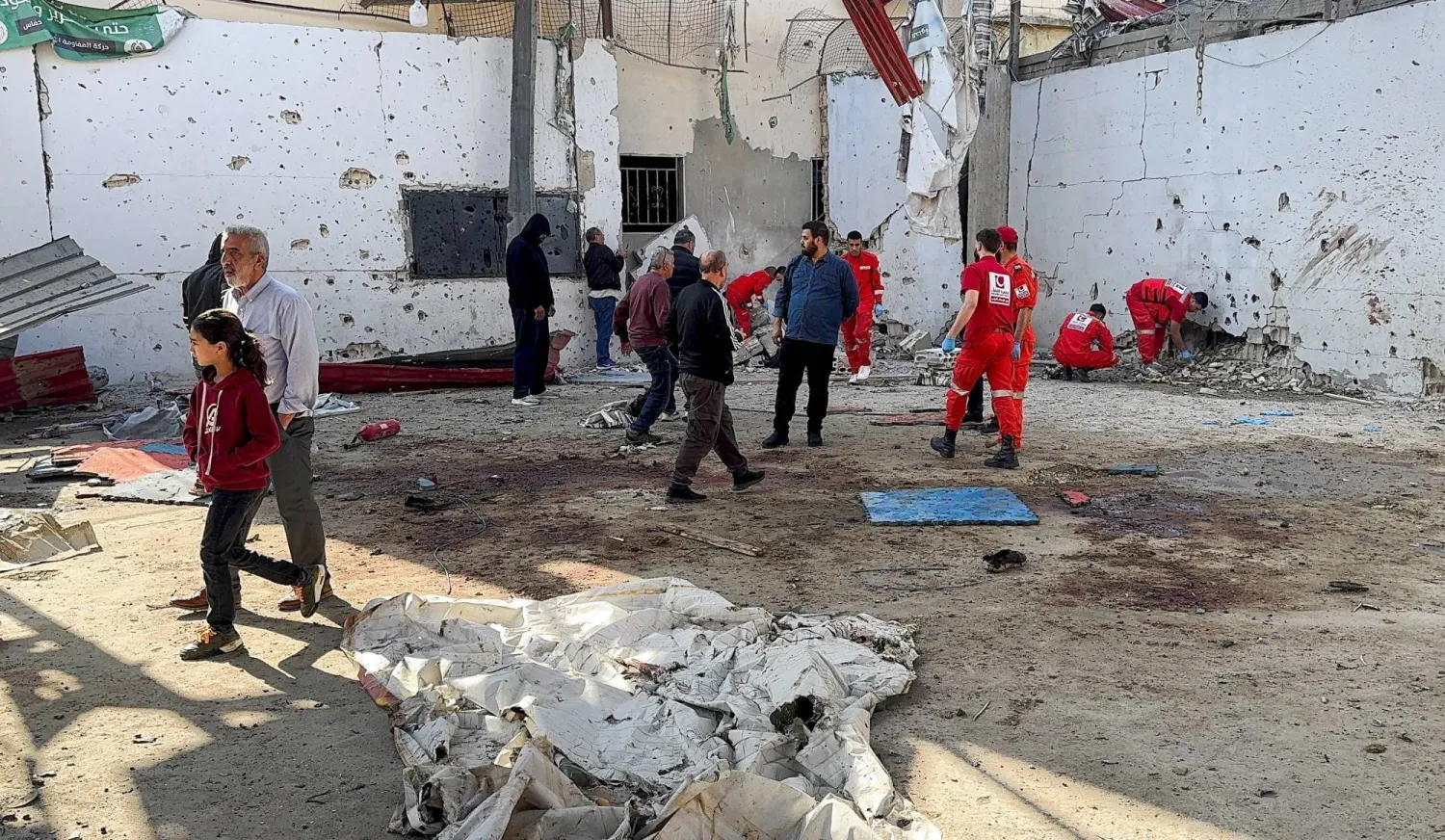
Late on Tuesday, Israeli warplanes struck a civilian complex that included a sports field, a swimming pool, and a parking area near the Khaled bin al-Walid Mosque at the western entrance of Ain al-Hilweh. The strike killed thirteen people and wounded dozens.
Israel said it had targeted a Hamas training compound. Hamas said the location was a field frequented by youngsters and described the strike as a massacre against civilians.
A general strike swept through the camp on Wednesday in protest at what residents called a massacre. Public and private schools in Sidon closed their doors in mourning for the victims.
Al-Tayri
One person was killed and eleven wounded in the Israeli strike on a car in Al-Tayri, the National News Agency said. A school bus happened to be passing behind the targeted vehicle, injuring several students and the driver.
The Public Health Ministry’s emergency operations center said the strike in Al-Tayri in the Bint Jbeil district caused the death of one civilian and wounded eleven others.
Berri and the Lebanese position
Parliament Speaker Nabih Berri called for an urgent session of the United Nations Security Council and urged the body to affirm Lebanese rights and condemn what he said were Israeli violations that included targeting civilians and annexing land.
Commenting on the strike on Al-Tayri, which wounded university and school students, Berri said Israel was once again committing crimes against civilians, children, and students. He said Israel was acting above accountability while Lebanon, which he said remained committed to Security Council resolution 1701 and the November 2024 cessation of hostilities agreement, was instead facing criticism and blame.
Hezbollah and the national duty
Hezbollah condemned what it called the horrific massacre in Ain al-Hilweh. The group said Lebanese state institutions should recognize that showing any flexibility, weakness, or submission only encouraged Israel to be more ferocious and reckless. Hezbollah said limited reactions that fell short of the scale of Israeli attacks would only invite further assaults and massacres.
The group said national duty required a firm and unified stance to confront Israel’s actions, deter its aggression through all possible means, and hold on to the elements of strength Lebanon possesses, describing them as the only guarantee for stopping Israeli plans and protecting Lebanon’s sovereignty and security.
A daily scene
Lebanese MP Abdul Rahman Bizri said the recent Israeli attacks in Ain al-Hilweh and in the south, including the strike on the bus carrying students, showed a dangerous expansion in strikes on civilians. He said Israel was acting with complete disregard for civilian life, particularly that of children, and for minimum humanitarian norms.
Bizri told Asharq Al-Awsat the strike on Ain al-Hilweh marked a serious turning point and a real massacre.
He said the camp was one of Lebanon’s largest and most sensitive Palestinian camps and had stayed away from cross-border military activity for years. He said the strike carried multiple messages directed at the Lebanese state, Palestinian factions, and possibly all Lebanese that the coming period could be more difficult.
He said the bus attack showed the same pattern. He said these strikes were being carried out without oversight or accountability and without any serious international stance capable of stopping them. Civilian casualties were becoming a near-daily scene, he said, due to repeated attacks.
Bizri said the strikes were a clear violation of Lebanese sovereignty and part of an attempt to increase tensions. He said international mechanisms were no longer capable of restraining Israel or mitigating the damage.
He said the possibility of the attacks widening was high and that recent events pointed to a harsher and more dangerous trajectory. He urged strengthening Lebanon’s internal front and intensifying contacts with Arab and international partners to create effective pressure on Israel to halt its attacks.
Multi-level pressure
Military experts see deeper messages behind the strikes.
Retired Brigadier General Naji Malaeb said the attack on Ain al-Hilweh near a mosque and without any regard for civilian life, and with the level of force that killed thirteen people, carried multiple signals.
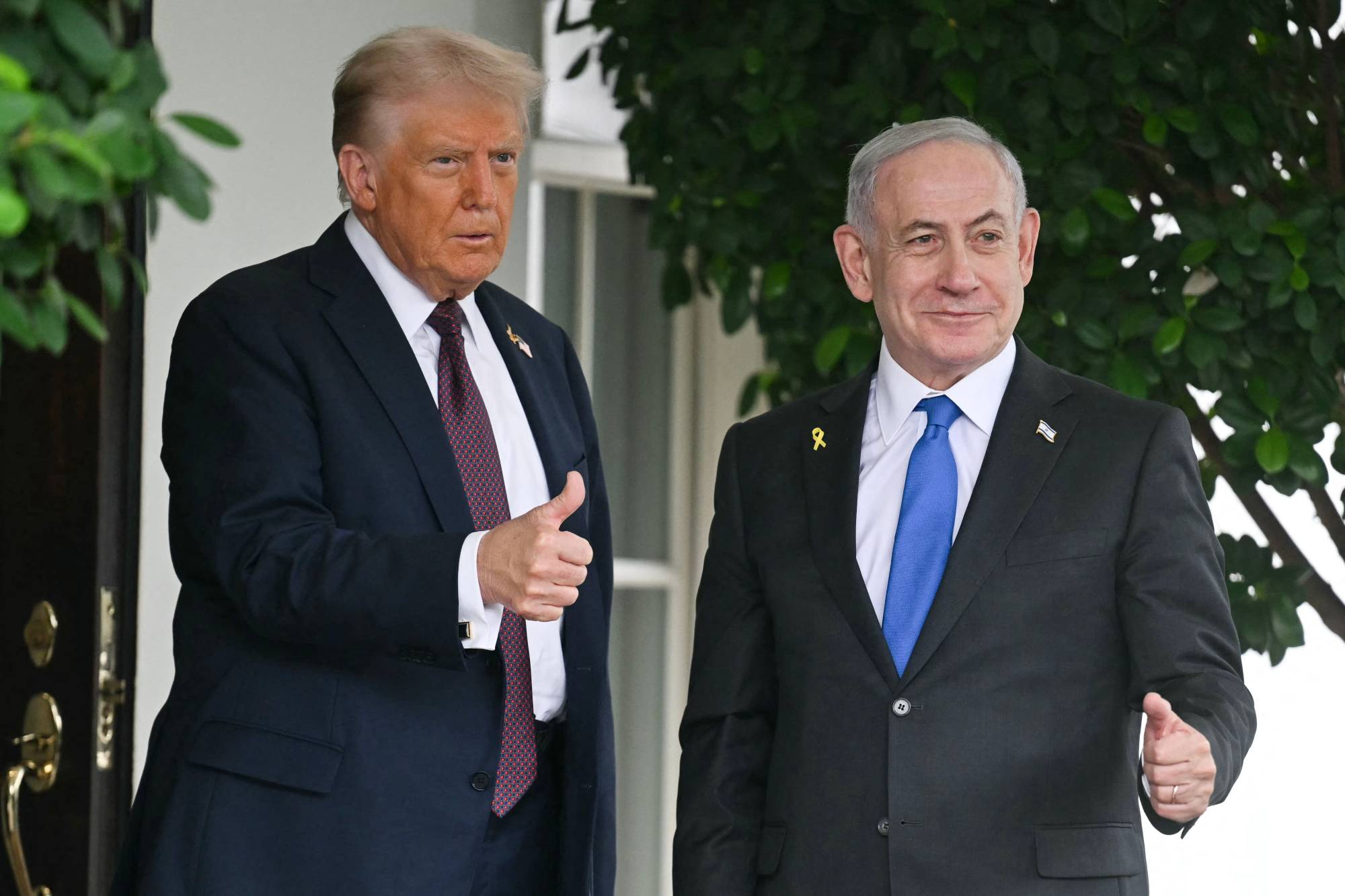
He said the first message was a direct response to Hamas’ position following the UN Security Council’s approval of US President Donald Trump’s plan.
He said Hamas had not rejected the plan entirely but had rejected it conditionally, insisting it would only hand over its weapons to a Palestinian authority formed to govern Gaza. He said media reports that Hamas had rejected the plan outright gave Israel a pretext to attack a Palestinian camp.
Malaeb said there was another dimension tied to Israel’s pattern in the West Bank and Gaza, where it had repeatedly targeted camps such as Jabalia and others in an apparent bid to inflict maximum casualties and strike refugee communities originally displaced by Israel.
He said Ain al-Hilweh fit into this pattern, with Israel viewing camps as environments that must be weakened.
He said the strike also carried a message to the Lebanese authorities that weapons inside the camps remained active and that trained cells and fighters were still present, countering claims that these weapons had lost their relevance.
He said this message aligned with US pressure on Lebanon, which he said was evident in the recent cancellation of the army commander’s visit to the United States.
Commenting on the strike near Al-Tayri, which damaged the bus carrying students, Malaeb said it was part of psychological and moral pressure on southern communities and fell within a broader pattern of targeting infrastructure, logistics, and safe housing as a form of advanced pressure.
He said the escalation coincided with requests by the international mechanism committee for the Lebanese army to enter and search homes in the south, adding that the multi-level pressure reflected a new phase in Israel’s escalation.