


Shadow Battles in Syria: Fighting ISIS, Rebuilding the State 

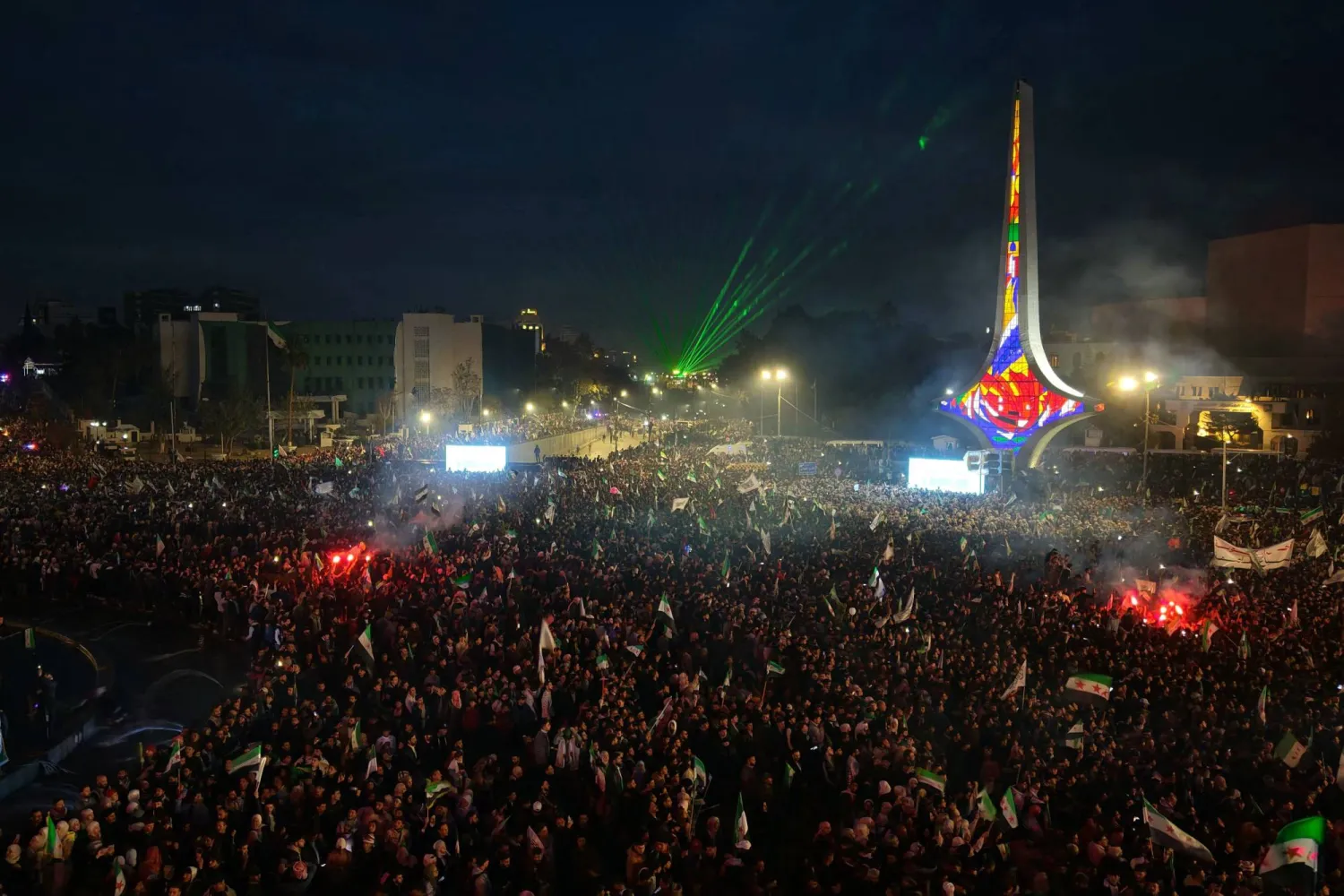
An aerial photograph shows thousands of people celebrating the first anniversary since the ousting of longtime ruler Bashar al-Assad near The Damascus Sword monument in Umayyad Square, in the Syrian capital Damascus on December 8, 2025. (AFP)
TT

Shadow Battles in Syria: Fighting ISIS, Rebuilding the State 

An aerial photograph shows thousands of people celebrating the first anniversary since the ousting of longtime ruler Bashar al-Assad near The Damascus Sword monument in Umayyad Square, in the Syrian capital Damascus on December 8, 2025. (AFP)

At the entrances to Damascus branching off the Mezzeh highway, just before Umayyad Square, young men with a quasi-military appearance line both sides of the road, selling flags and banners for “Liberation Day.”

In narrower streets and at intersections leading deeper into the city, they are met by women in long dresses, some with headscarves pulled halfway across their faces. The women drag one or two children behind them and carry loaves of bread for sale, stacking them openly and thrusting them toward passersby and car windows — unwrapped, exposed to diesel fumes and the dust rising from the rubble encircling the capital.

Selling bread in this manner has gradually become a “profession,” largely female, expanding as poverty deepens. Women queue at bakeries to purchase their ration, resell it for a small margin, then return to the lines, repeating the cycle late into the night.

This scene is not confined to Damascus; it recurs across Syrian cities and regions I visited, from Homs and Idlib to Aleppo. Over time, this female presence has become woven into the landscape of a prolonged crisis, a quiet pillar of daily survival.

Widespread destruction

If women’s exhausted faces and roughened hands are the clearest witnesses to a catastrophe now nearing its fifteenth year, the unrelenting destruction bears equally stark testimony. Entire neighborhoods and suburbs, flattened to the ground, ring Damascus, choking it in dust and debris.

The same gray desolation dominates major cities and their surrounding countryside, stretching across vast expanses of the country. Driving more than 350 kilometers without encountering a single intact tree, neighborhood, or home offers a visceral sense of what over a decade of killing, destruction, and vengeance has left behind.

The scale of devastation reflects not only military confrontations or the superiority of one side, but a deliberate effort to annihilate people and livelihoods, to extinguish even the faintest hope of return. What bombs spared was often burned, looted, or rendered uninhabitable. And yet, returns are taking place slowly, haltingly, through sheer individual persistence.

Only a few enclaves have endured in Damascus and its markets, or beyond in certain towns and districts, some even prospering, driven by sectarian calculations or political and commercial interests, most notably those tied to the production and trafficking of captagon.
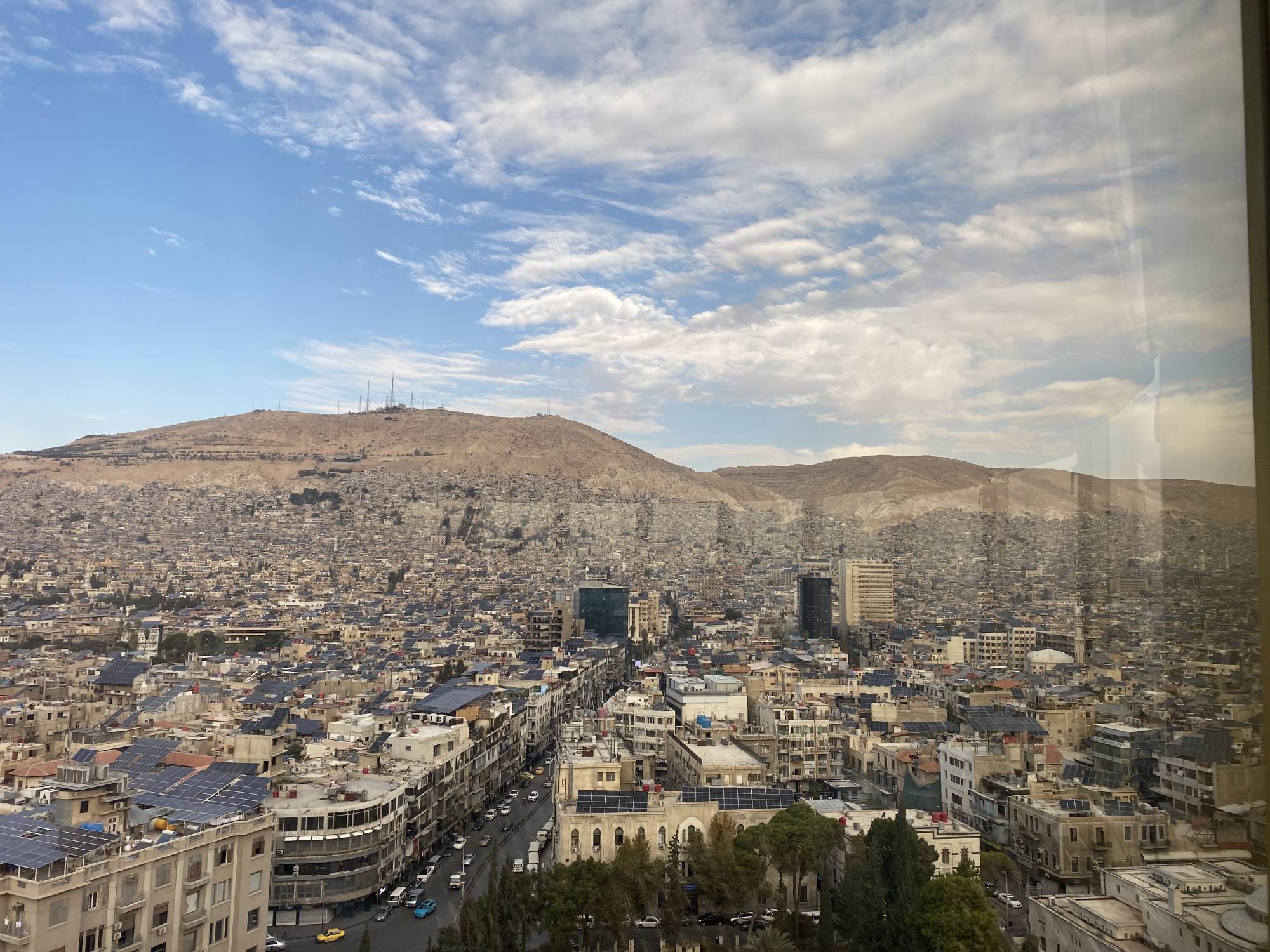
A view of Damascus, Syria. (Asharq Al-Awsat)

Damascus: The polished façade

Damascus was preparing for exceptional celebrations marking the first anniversary of Bashar al-Assad’s ouster. Preparations were extensive: stages erected, loudspeakers installed, traffic rerouted, and banners raised proclaiming national unity, “One people... one nation”, and announcing that “the dark era has ended.”

Programs circulated via text messages urging citizens to participate and “celebrate freedom and hope... and complete the story.” But which story? The question reverberates through streets where bread is sold on bare asphalt while victory celebrations unfold.

Here, narratives multiply and diverge, sometimes to the point of contradiction, like neighboring bubbles that coexist without touching. A sharp vertical divide in perspectives remains, recalling 2011, when Syrians split to the brink between supporters and opponents, even as official discourse insists on projecting a seamless image of a new phase.

Silent security battle

Behind the celebratory façade, another battle is underway, which is quieter and more complex. “ISIS, especially the muhajireen [foreign fighters], poses our most serious challenge,” a senior Syrian security source who requested anonymity told Asharq Al-Awsat, noting that arrests and “neutralizations” are carried out regularly.

Another source explained that “security operations are conducted with precision and professionalism. Lists of those affiliated with extremist organizations under the broad ISIS umbrella are already in the hands of the security services.”

He added: “We know them individually. We monitor them closely. The former regime left behind an extremely detailed surveillance system that we continue to rely on.”

I met both sources days before the recent Palmyra incident. When it occurred, it appeared unsurprising; officials and those in sensitive positions had anticipated such scenarios as among several looming security risks, especially after Syria formally joined the counterterrorism coalition.

One source summarized these risks as three simultaneous confrontations: “First, the fight against ISIS and its offshoots, handled with extreme caution because it poses a personal threat to President Ahmed al-Sharaa. Second, the confrontation with the Syrian Democratic Forces (SDF), which threatens the emerging state and its identity over the long term. Third, a colder, less intense standoff with Israel linked to developments in Sweida.”

In a semi-official assessment, the security source did not rule out that those released from al-Hol camp could become “time bombs,” exploited to destabilize internal security and serve the agendas of extremists rejecting the current transition of power.

Such incidents could also signal abroad that stripping the SDF of its “counterterrorism” duties would be futile, potentially “opening the door to packs of lone wolves.”
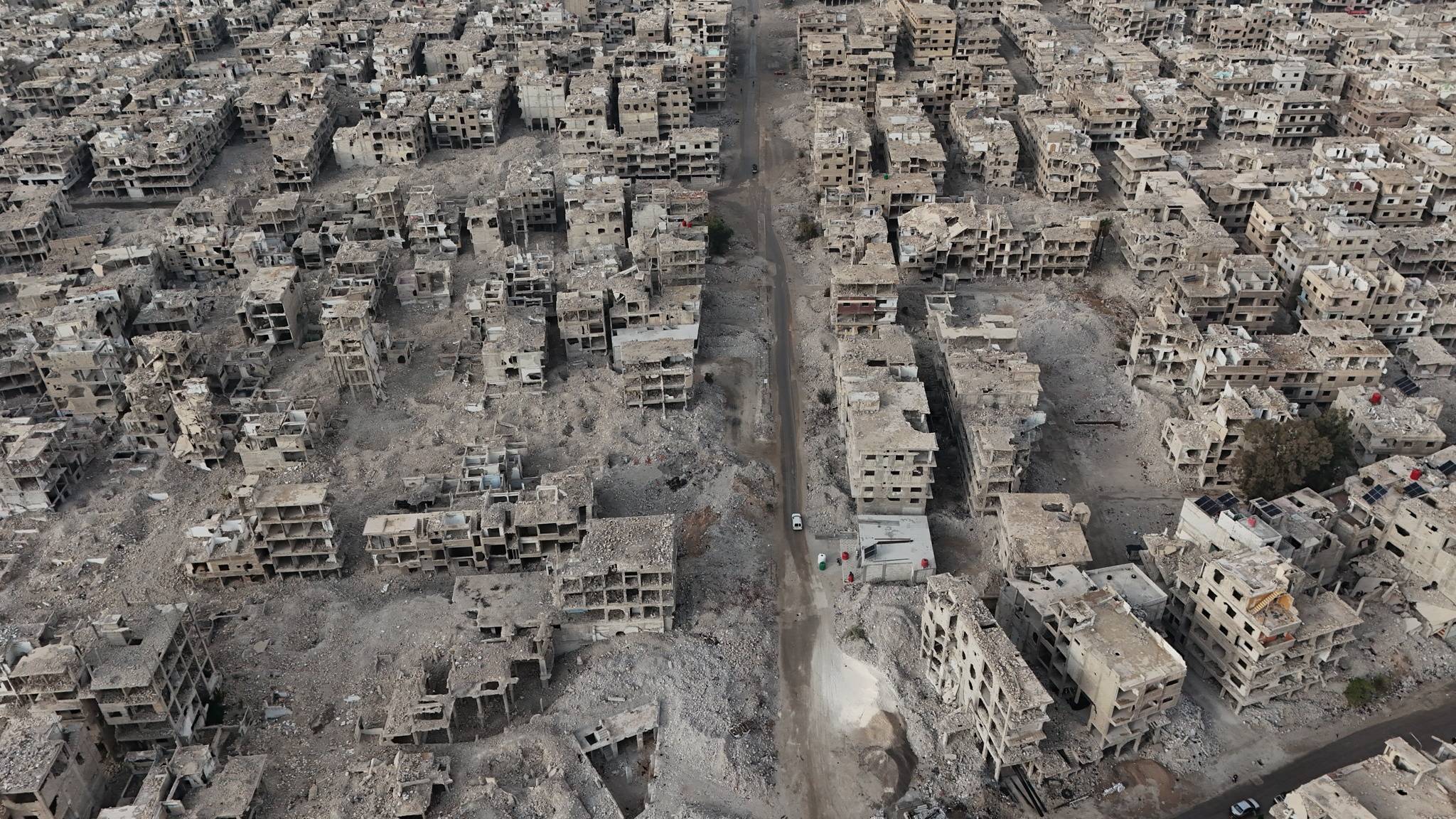
Destruction from fighting between the regime forces and opposition is seen in the Yarmuk camp on the outskirts of Damascus. (EPA)

Is a security approach enough?

The challenge confronting the state is not purely a security one, and a strictly securitized approach lacks consensus even within governing circles.

Contrary to those who view ISIS and extremism as a “technical problem” solvable through force alone, a figure close to the political leadership argues that “the core issue lies in absorbing a massive human bloc that spent years outside any normal social framework, without education, stable families, or organized structures of life.”

“The real challenge,” he added, “is integrating them into the idea of the state and rehabilitating them accordingly. Just as these adolescents were once pulled toward a specific form of extremism, today we must work to move them toward a middle ground.”

“If the president says we are leaving a factional phase and entering a state-based one, how does that happen at the grassroots level? Is it merely individual and security-driven, or is it societal as well?” he wondered.

In this light, one observer interpreted al-Sharaa’s statement — “Obey me so long as I obey God among you” — delivered from the Umayyad Mosque on the night of the grand celebration and widely criticized by civil and secular circles, as a message aimed at a different audience: a segment the state seeks to reassure through a religious call to obedience and rejection of rebellion.

If words come easily, lived reality does not.

Security is tightly enforced in major cities, such as Damascus and Aleppo, through heavy deployments and modern technologies, including drones, especially during sensitive periods like mass anniversary celebrations.

Beyond the cities, however, vast rural areas remain largely neglected, marked by immense destruction, extreme poverty, and rampant unemployment. Checkpoints line major inter-provincial roads, but side towns and village alleys are often left to fend for themselves.

Idlib, once cited as an exception for its services and administrative capacity, has lost much of that distinction since liberation. Opening to the rest of Syria exposed the city and its devastated countryside to the demands of ordinary life, revealing governance that had amounted largely to crisis management. That legacy persists even in everyday language: soldiers addressing civilians as “sheikh,” or telling them to “seek God’s help” as shorthand for “move along.”

Between Idlib’s countryside and Aleppo, villages and small towns are known for particular loyalties and affiliations — some far removed from the moderation celebrated on Damascus stages. Their reputations lead drivers to take longer routes considered “safer.”

In this belt, young men, especially the youngest, have long served as fuel for armed factions. In recent years, only Hayat Tahrir al-Sham maintained dominance on the ground.

After the fall of the regime, thousands joined the general security forces or the army, often for lack of alternatives. Many cannot afford to rebuild destroyed homes or recover looted livelihoods; barracks, offering food and shelter, remain preferable to civilian life.

A fabric of clashing identities

These identities crystallized during years of militarization, particularly after 2013, though their social roots run deeper. Today, anyone associated with the new authority is often labeled “Idlibi,” after Idlib — the stronghold of Hayat Tahrir al-Sham for nine years — a term frequently tinged with condescension in Damascus and Aleppo. Understanding the social and economic distinctions among these rural communities helps explain their divergent political and military choices.

Some towns, organized around extended families, land ownership, and later labor migration beginning in the mid-1980s, invested in education and professional paths while maintaining a socially rooted religiosity. These communities had previously experienced nationalist and Arabist currents before Baathist authoritarianism took hold.

Others, smaller towns built around sub-clans, relied on seasonal agriculture and service in the police and security apparatus of the former regime. They welcomed their sons’ joining the Nusra Front when it began recruiting, seeing in it both as an organized military path against Assad and a religious identity long suppressed.

Added to this are vast desert regions governed by tribal structures and shifting systems of mutual aid.

Though all are Arab Sunnis, their behaviors, loyalties, and alignments differed, shaping how radical factions penetrated some communities while failing in others, often setting one group against another.
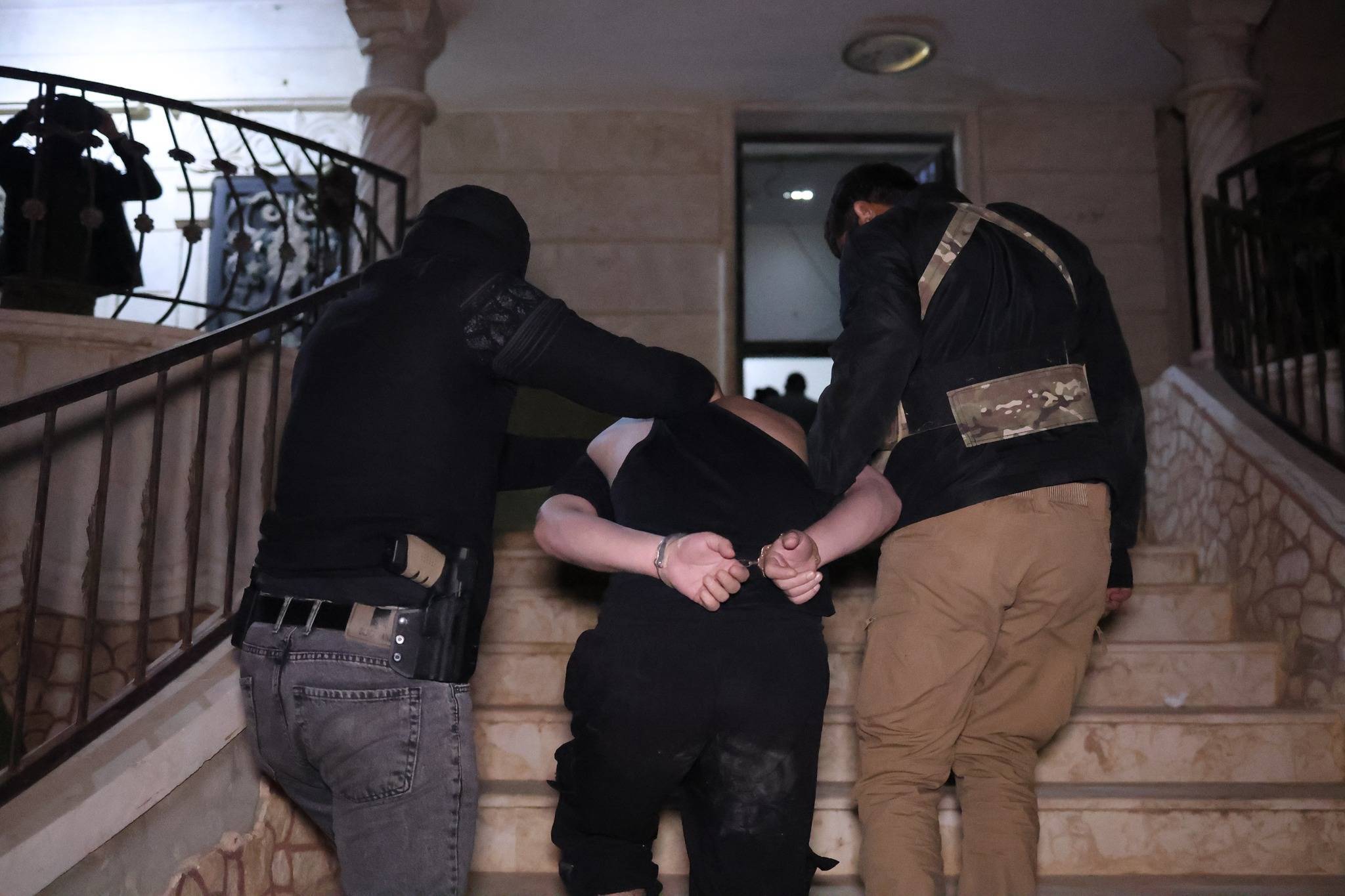
Syrian security forces detain a suspect during an anti-ISIS operation in the Idlib countryside on December 1. (Syrian Interior Ministry)

Idlib and the keys to Damascus

When security officials say today they know extremists “one by one,” they rely partly on Hayat Tahrir al-Sham’s security apparatus and its accumulated knowledge of radical factions it fought in recent years, such as Jund al-Aqsa and the al-Qaeda-aligned Hurras al-Din, along with informant networks.

Idlib remains, to a significant extent, a secure stronghold holding key levers of power. Courts, administrative bodies, and civil registries still operate under the “Sharia courts” established in mid-2013, unlike other regions, especially Damascus, where transactions are centralized.

Sources identify three main recruitment pathways used by ISIS and its offshoots: ideological recruitment, the fastest and most effective, especially among youth who embraced extremism and have yet to absorb Syria’s rapid changes; recruitment driven by money and revenge amid pervasive poverty and lost status; and recruitment among foreign fighters, embittered by abandonment and with little left to lose.

The emerging state and the ‘Sahwa’ model

When President al-Sharaa returned from Washington, he carried a daunting mandate: to “confront and dismantle terrorist networks” linked to remnants of ISIS, Iran’s Revolutionary Guard, Hezbollah, and Hamas, according to US envoy to Syria Tom Barrack.

While Israel has targeted Hezbollah in Lebanon and Hamas in Gaza, Syria must contend with their residual networks. Yet the greater challenge remains ISIS and its offshoots, fighters who, until recently, were close “brothers in arms” to Hayat Tahrir al-Sham.

As observers await the form this confrontation will take, particularly in the absence of a unified army with a clear doctrine, Washington’s earlier experiment in post-Saddam Iraq looms large: the Sunni-on-Sunni “Awakening” (Sahwa).

The Sahwa rested on what an informed Iraqi source described as a “coalition of the harmed” from al-Qaeda, centered in Anbar province with its Sunni Arab identity and traditional religiosity. A similar model could emerge in Syria through an alliance of communities damaged by ISIS in the north and northeast, led by the emerging state that wants to fight extremism.

The Iraqi source, who closely followed the Sahwa’s rise and subsequent decline under then Prime Minister Nouri al-Maliki, noted that tribes around Ramadi, especially al-Bourisha, al-Buallwan, al-Bou Fahd, and to a lesser extent al-Dulaim, formed the backbone of the fight after al-Qaeda devastated their trade and social fabric.
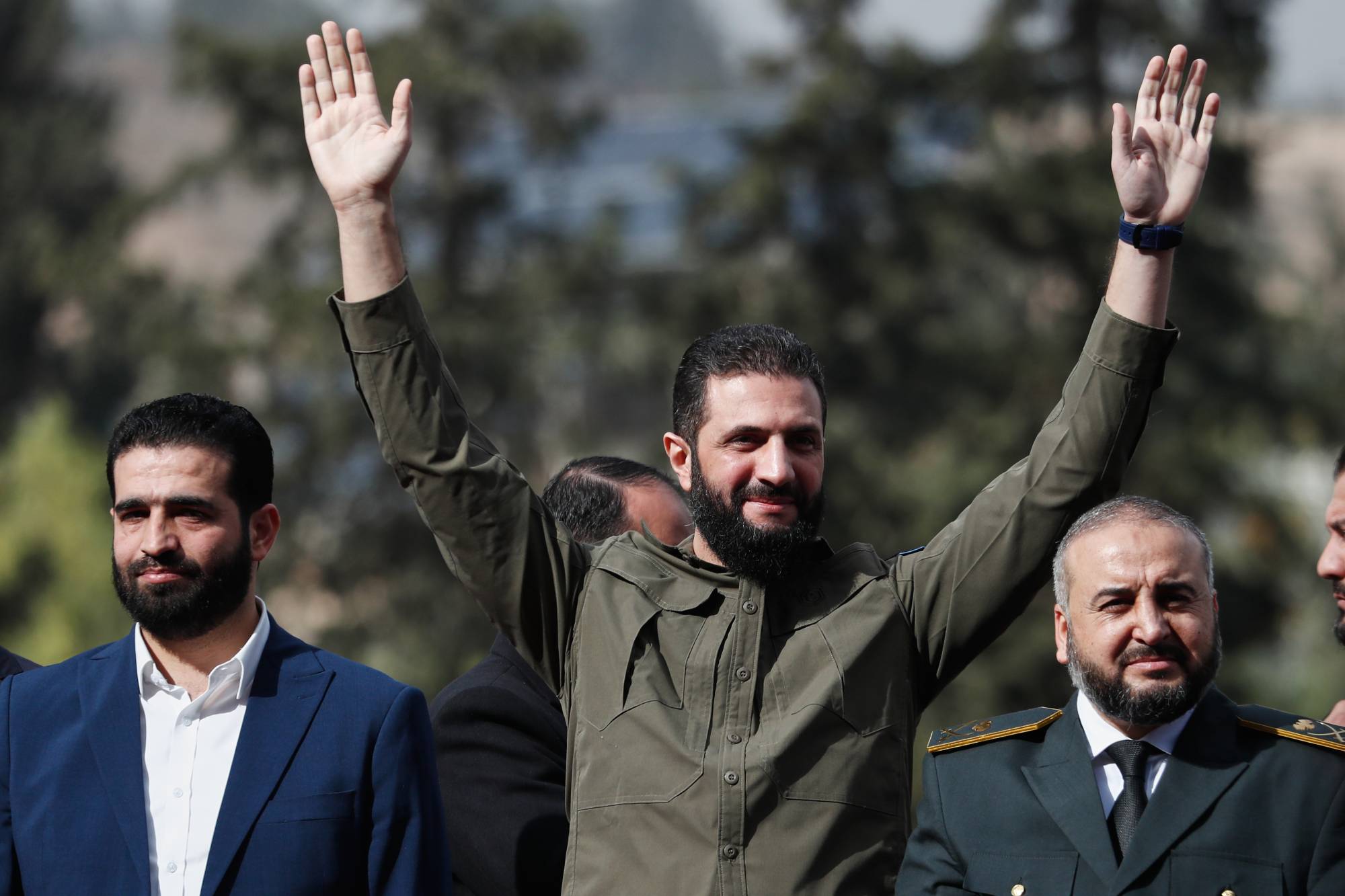
Syria's interim president, Ahmed al-Sharaa, greets people as he attends celebrations marking the first anniversary of the ousting of former President Bashar al-Assad in Damascus, Syria, Monday, Dec. 8, 2025. (AP)

Though some were coerced into allegiance, clashes never fully ceased, culminating in atrocities such as the massacre of the al-Bu Nimr tribe, where nearly 2,000 men were executed. A Syrian parallel is the al-Shaitat tribe, which resisted ISIS and suffered one of the largest massacres, with around 1,800 young men killed.

Those who joined the Sahwa were required to publicly renounce al-Qaeda and integrate into security forces coordinated with US troops, in hopes of transforming that tribal bloc into a political actor.

From arms to politics

The Iraqi source highlighted a central lesson: despite the Sahwa’s security successes, it failed to transition into meaningful political participation. When its leaders entered elections, they achieved little representation and failed to build durable popular support.

That failure mirrors Syria’s core dilemma today: the collective transition from a factional, militarized reality confined to limited geography toward a state defined by broader political and administrative principles — and, militarily, by the monopoly of force within a single national army.

Between a woman selling bread on a street corner, a young man dancing in a public square, and institutions struggling to impose order and define the state, Syria appears as a country of overlapping bubbles: a glossy façade prepared for celebration, like a carefully designed postcard, and beneath it a fragile social and security depth whose battles remain unresolved.



Khartoum Markets Back to Life but 'Nothing Like Before'

Men walk along a street past destroyed high-rise building, as efforts to restore the city's infrastructure resumes after nearly three years of devastation caused by war, in the Sudanese capital Khartoum on January 17, 2025. (AFP)
TT

Khartoum Markets Back to Life but 'Nothing Like Before'

Men walk along a street past destroyed high-rise building, as efforts to restore the city's infrastructure resumes after nearly three years of devastation caused by war, in the Sudanese capital Khartoum on January 17, 2025. (AFP)

The hustle and bustle of buyers and sellers has returned to Khartoum's central market, but "it's nothing like before," fruit vendor Hashim Mohamed told AFP, streets away from where war first broke out nearly three years ago.

On April 15, 2023, central Khartoum awoke to battles between the Sudanese army and the paramilitary Rapid Support Forces, who had been allies since 2021, when they ousted civilians from a short-lived transitional government.

Their war has since killed tens of thousands and displaced millions. In greater Khartoum alone, nearly 4 million people -- around half the population -- fled the city when the RSF took over.

Hashim Mohamed did not.

"I had to work discreetly, because there were regular attacks" on businesses, said the fruit seller, who has worked in the sprawling market for 50 years.

Like him, those who stayed in the city report living in constant fear of assaults and robberies from fighters roaming the streets.

Last March, army forces led an offensive through the capital, pushing paramilitary fighters out and revealing the vast looting and destruction left behind.

"The market's not what it used to be, but it's much better than when the RSF was here," said market vendor Adam Haddad, resting in the shade of an awning.

In the market's narrow, dusty alleyways, fruits and vegetables are piled high, on makeshift stalls or tarps spread on the ground.

- Two jobs to survive -

Khartoum, where entire neighborhoods were once under siege, is no longer threatened by the mass starvation that stalks battlefield cities and displacement camps elsewhere in Sudan.

But with the economy a shambles, a good living is still hard to provide.

"People complain about prices, they say it's too expensive. You can find everything, but the costs keep going up: supplies, labor, transportation," said Mohamed.

Sudan has known only triple-digit annual inflation for years. Figures for 2024 stood at 151 percent -- down from a 2021 peak of 358.

The currency has also collapsed, going from trading at 570 Sudanese pounds to the US dollar before the war to 3,500 in 2026, according to the black market rate.

One Sudanese teacher, who only a few years ago could provide comfortably for his two children, told AFP he could no longer pay his rent with a monthly salary of 250,000 Sudanese pounds ($71).

To feed his family, pay for school, and cover healthcare, he "works in the market or anywhere" on his days off.

"You have to have another job to pay for the bare minimum of basic needs," he said, asking for anonymity to protect his privacy.

For Adam Haddad, the road to recovery will be a long one.

"We don't have enough resources or workers or liquidity going through the market," he said, adding that reliable electricity was still a problem.

"The government is striving to restore everything, and God willing, in the near future, the power will return and Khartoum will become what it once was."


Trump Heads into Davos Storm, with an Eye on Home

FILE - President Donald Trump is illuminated by a camera flash as he gestures while walking across the South Lawn of the White House, Nov. 2, 2025, in Washington, after returning from a trip to Florida. (AP Photo/Mark Schiefelbein, File)
TT

Trump Heads into Davos Storm, with an Eye on Home

FILE - President Donald Trump is illuminated by a camera flash as he gestures while walking across the South Lawn of the White House, Nov. 2, 2025, in Washington, after returning from a trip to Florida. (AP Photo/Mark Schiefelbein, File)

Donald Trump returns to the Davos ski resort next week after unleashing yet another avalanche on the global order. But for the US president, his main audience is back home.

Trump's first appearance in six years at the gathering of the world's political and global elite comes amid a spiraling crisis over his quest to acquire Greenland.

Fellow leaders at the mountain retreat will also be eager to talk about other shocks from his first year back in power, from tariffs to Venezuela, Ukraine, Gaza and Iran.

Yet for the Republican president, his keynote speech among the Swiss peaks will largely be aimed at the United States.

US voters are angered by the cost of living despite Trump's promises of a "golden age," and his party could be facing a kicking in crucial midterm elections in November.

That means Trump will spend at least part of his time in luxurious Davos talking about US housing.

A White House official told AFP that Trump would "unveil initiatives to drive down housing costs" and "tout his economic agenda that has propelled the United States to lead the world in economic growth."

The 79-year-old is expected to announce plans allowing prospective homebuyers to dip into their retirement accounts for down payments.

Billionaire Trump is keenly aware that affordability has become his Achilles' heel in his second term. A CNN poll last week found that 58 percent of Americans believe his first year back in the White House has been a failure, particularly on the economy.

Trump's supporters are also increasingly uneasy about the "America First" president's seemingly relentless focus on foreign policy since his return to the Oval Office.

But as he flies into the snowy retreat, Trump will find it impossible to avoid the global storm of events that he has stirred since January 20, 2025.

Trump will be alongside many of the leaders of the same European NATO allies that he has just threatened with tariffs if they don't back his extraordinary quest to take control of Greenland from Denmark.

Those threats have once again called into question the transatlantic alliance that has in many ways underpinned the western economic order celebrated at Davos.

- 'Economic stagnation' -

So have the broader tariffs Trump announced early in his second term, and he is set to add to the pressure on Europe in his speech.

Trump will "emphasize that the United States and Europe must leave behind economic stagnation and the policies that caused it," the White House official said.

The Ukraine war will also be on the cards.

Ukrainian President Volodymyr Zelensky is hoping for a meeting with Trump to sign new security guarantees for a hoped-for ceasefire deal with Russia, as are G7 leaders.

But while the largest-ever US Davos delegation includes Secretary of State Marco Rubio, special envoy Steve Witkoff and son-in-law Jared Kushner, who have all played key roles on Ukraine, no meeting is assured.

"No bilateral meetings have been scheduled for Davos at this time," the White House told AFP.

Trump is meanwhile reportedly considering a first meeting of the so-called "Board of Peace" for war-torn Gaza at Davos, after announcing its first members in recent days.

Questions are also swirling about the future of oil-rich Venezuela following the US military operation to topple its leader Nicolas Maduro, part of Trump's assertive new approach to his country's "backyard."

But Trump may also pause to enjoy his time in the scenic spot he called "beautiful Davos" in his video speech to the meeting a year ago.

The forum has always been an odd fit for the former New York property tycoon and reality TV star, whose brand of populism has long scorned globalist elites.

But at the same time, Trump relishes the company of the rich and successful.

His first Davos appearance in 2018 met occasional boos but he made a forceful return in 2020 when he dismissed the "prophets of doom" on climate and the economy.

A year later he was out of power. Now, Trump returns as a more powerful president than ever, at home and abroad.


Russia, China Unlikely to Back Iran Against US Military Threats

A man stands by the wreckage of a burnt bus bearing a banner (unseen) that reads "This was one of Tehran’s new buses that was paid for with the money of the people’s taxes,” in Tehran's Sadeghieh Square on January 15, 2026. (AFP)
TT

Russia, China Unlikely to Back Iran Against US Military Threats

A man stands by the wreckage of a burnt bus bearing a banner (unseen) that reads "This was one of Tehran’s new buses that was paid for with the money of the people’s taxes,” in Tehran's Sadeghieh Square on January 15, 2026. (AFP)

While Russia and China are ready to back protest-rocked Iran under threat by US President Donald Trump, that support would diminish in the face of US military action, experts told AFP.

Iran is a significant ally to the two nuclear powers, providing drones to Russia and oil to China. But analysts told AFP the two superpowers would only offer diplomatic and economic aid to Tehran, to avoid a showdown with Washington.

"China and Russia don't want to go head-to-head with the US over Iran," said Ellie Geranmayeh, a senior policy expert for the European Council on Foreign Relations think tank.

Tehran, despite its best efforts over decades, has failed to establish a formal alliance with Moscow and Beijing, she noted.

If the United States carried out strikes on Iran, "both the Chinese and the Russians will prioritize their bilateral relationship with Washington", Geranmayeh said.

China has to maintain a "delicate" rapprochement with the Trump administration, she argued, while Russia wants to keep the United States involved in talks on ending the war in Ukraine.

"They both have much higher priorities than Iran."

- Ukraine before Iran -

Despite their close ties, "Russia-Iranian treaties don't include military support" -- only political, diplomatic and economic aid, Russian analyst Sergei Markov told AFP.

Alexander Gabuev, director of Carnegie Russia Eurasia Center, said Moscow would do whatever it could "to keep the regime afloat".

But "Russia's options are very limited," he added.

Faced with its own economic crisis, "Russia cannot become a giant market for Iranian products" nor can it provide "a lavish loan", Gabuev said.

Nikita Smagin, a specialist in Russia-Iran relations, said that in the event of US strikes, Russia could do "almost nothing".

"They don't want to risk military confrontation with other great powers like the US -- but at the same time, they're ready to send weaponry to Iran," he said.

"Using Iran as a bargaining asset is a normal thing for Russia," Smagin said of the longer-term strategy, at a time when Moscow is also negotiating with Washington on Ukraine.

Markov agreed. "The Ukrainian crisis is much more important for Russia than the Iranian crisis," he argued.

- Chinese restraint -

China is also ready to help Tehran "economically, technologically, militarily and politically" as it confronts non-military US actions such as trade pressure and cyberattacks, Hua Po, a Beijing-based independent political observer, told AFP.

If the United States launched strikes, China "would strengthen its economic ties with Iran and help it militarize in order to contribute to bogging the United States down in a war in the Middle East," he added.

Until now, China has been cautious and expressed itself "with restraint", weighing the stakes of oil and regional stability, said Iran-China relations researcher Theo Nencini of Sciences Po Grenoble.

"China is benefiting from a weakened Iran, which allows it to secure low-cost oil... and to acquire a sizeable geopolitical partner," he said.

However, he added: "I find it hard to see them engaging in a showdown with the Americans over Iran."

Beijing would likely issue condemnations, but not retaliate, he said.

Hua said the Iran crisis was unlikely to have an impact on China-US relations overall.

"The Iranian question isn't at the heart of relations between the two countries," he argued.

"Neither will sever ties with the other over Iran."