
How Iranians Are Communicating Through Internet Blackout

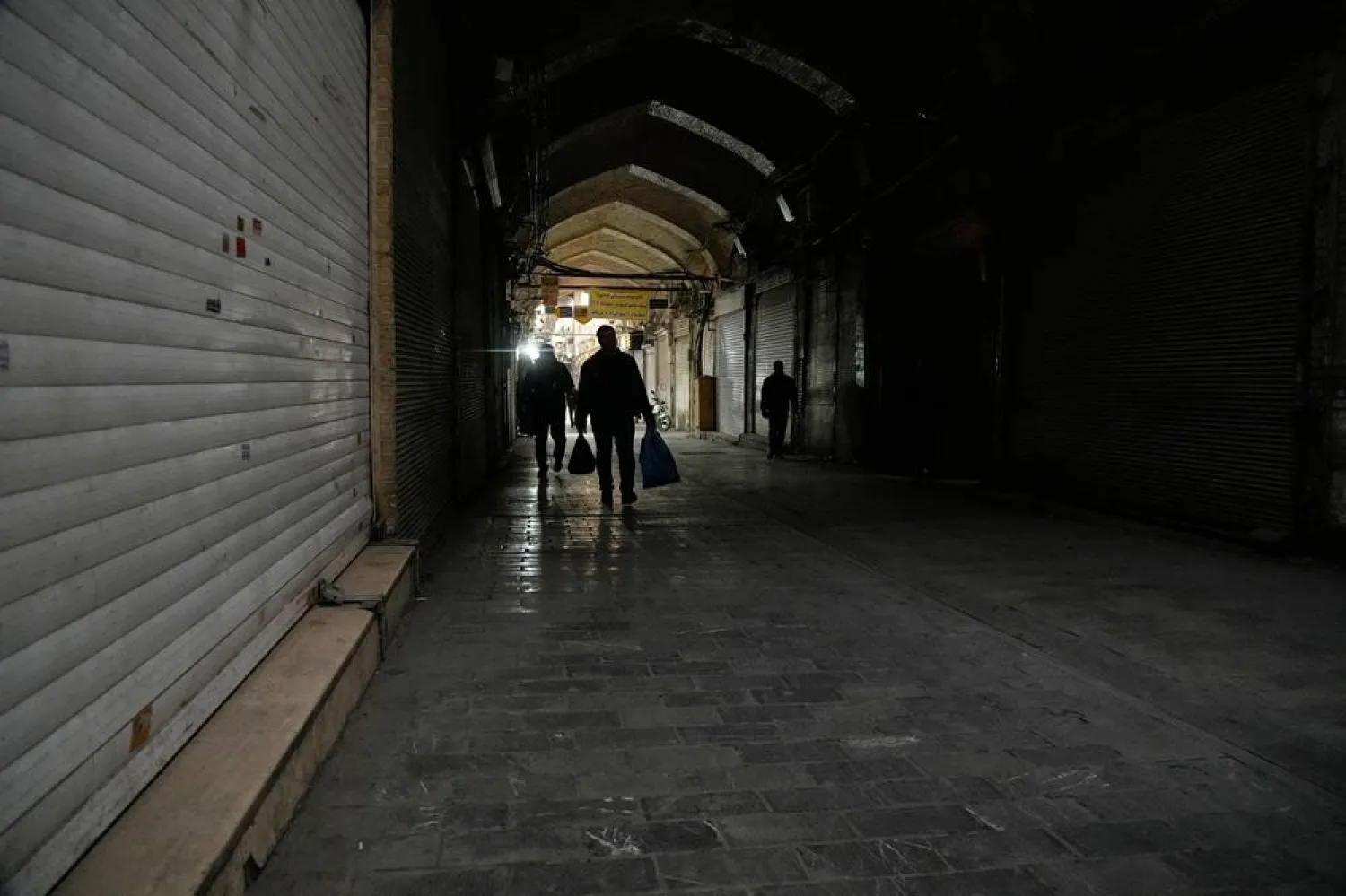
 People walk past closed shops at the almost empty traditional main bazaar, in Tehran, Iran, Tuesday, March 10, 2026. (AP)
People walk past closed shops at the almost empty traditional main bazaar, in Tehran, Iran, Tuesday, March 10, 2026. (AP)
TT

How Iranians Are Communicating Through Internet Blackout

 People walk past closed shops at the almost empty traditional main bazaar, in Tehran, Iran, Tuesday, March 10, 2026. (AP)
People walk past closed shops at the almost empty traditional main bazaar, in Tehran, Iran, Tuesday, March 10, 2026. (AP)

Iran's latest internet blackout has lasted more than 14 days, connectivity monitor Netblocks said Friday.

The nature of the limits on internet activity shows "this is a government-imposed measure" and not the result of damage from US and Israeli airstrikes, Netblocks research chief Isik Mater told AFP.

"It is a deliberate shutdown imposed by the authorities to suppress the flow of information and prevent further dissent," said Raha Bahreini, Iran researcher at Amnesty International.

Here are some of the ways information is still flowing in and out of Iran.

- Shortwave radio -

Amsterdam-based nonprofit Radio Zamaneh began shortwave broadcasts during the January protests, sending a nightly Farsi news program from 11:00 pm Tehran time.

"It's really difficult for the regime to jam shortwave because it's a long-distance broadcast," executive director Rieneke van Santen told AFP.

"People can just listen on a super cheap, small, simple radio... It's one of those typical emergency fall-back solutions."

Declining to specify where the transmitter is located, she said it is "closer to the Netherlands than to Iran" -- although Tehran "can figure it out" if they choose.

- Phone calls -

Many with ties to Iran are still receiving landline phone calls from inside -- "quite surprising" given the internet blackout, said Mahsa Alimardani of global rights organization Witness.

Fearing the authorities listening in, people often avoid speaking directly about political topics, such as the killing of Ali Khamenei, she added.

"It's not possible to communicate about sensitive issues through these brief phone calls," Amnesty's Bahreini said.

The required prepaid international calling cards are expensive and often fail to provide their face value in minutes.

"You buy a phone card for 60 minutes, but in eight minutes, it's out," van Santen said.

"It's really just phone calls from family members saying, after the bombing, we're still alive."

- VPN or other internet services -

Virtual private networks (VPNs) -- widely-used services that encrypt internet traffic -- can't create an internet connection where none is available.

But even at around one percent of typical levels, Iran's connectivity is "still a large figure in absolute terms", Netblocks' Mater said.

Iranians suspected of using VPNs since the war began have received warning text messages claiming to be from the authorities.

Before the war, millions turned to Toronto-based company Psiphon, which creates specialist tools more capable than typical "off-the-shelf" VPNs.

Offering techniques including disguising users' data as different types of internet traffic, Psiphon "is able to evade detection more successfully", data and insights director Keith McManamen told AFP.

With up to six million unique daily users in Iran before the latest internet shutdown, connections have now tumbled to fewer than 100,000.

Few but the most tech-savvy users can reach Psiphon's network for now.

Nevertheless, "the situation is extremely dynamic. We're seeing changes not just day to day, but hour by hour," McManamen said.

A similar service, US-based Lantern, is also widely used in Iran.

- Satellite broadcasts -

Created by US-based nonprofit NetFreedom Pioneers, Toosheh is a "filecasting" technology using home satellite TV equipment to broadcast encrypted data to people in Iran.

Users record from the Toosheh satellite TV channel onto a USB stick plugged into their set-top box, which they can then decrypt using a special app installed on their phone or computer.

From that initial download, the data can be copied and shared across multiple households.

The group estimated around three million active users in Iran across 2025, with "thousands to hundreds of thousands... since the (internet) shutdown in January," the group's director of projects Emilia James told AFP.

From its usual educational repertoire ranging from English lessons to news, content these days includes more on "personal safety and digital security... helping people to stay safe," she added.

Since people are tuning in to a broadcast signal, there is no way for the government to track them, she added.

- Starlink -

Elon Musk-owned satellite internet service Starlink was used during this year's protests to get information out, while the government attempted to jam its signals.

At around $2,000 on Iran's black market, the terminals are expensive and very rare in poorer regions like Balochistan or Kurdistan that have suffered the most government repression, Alimardani said.

Meanwhile, Amnesty has received reports of "raids on houses... arrests of people who had Starlink devices," Bahreini said.

Charges for those caught communicating with the outside world range from prison sentences to the death penalty, she added.

Starlink did not respond to AFP's request for comment on usage in Iran.


What Options Does Hezbollah Have in Dealing with Israeli Escalation?

Portraits of current and former Iranian and Hezbollah leaders displayed at a rally, in the southern suburbs of Beirut, Lebanon, September 2, 2026. (Reuters)
TT

What Options Does Hezbollah Have in Dealing with Israeli Escalation?

Portraits of current and former Iranian and Hezbollah leaders displayed at a rally, in the southern suburbs of Beirut, Lebanon, September 2, 2026. (Reuters)

Hezbollah finds itself facing an increasingly difficult equation as Israeli escalation in South Lebanon has widened in recent days. How will the party respond to mounting Israeli strikes without being drawn into a broader confrontation that Israeli Prime Minister Benjamin Netanyahu may be seeking either to postpone Israel’s elections or improve his prospects in them.

At the same time, Hezbollah is facing growing pressure from its support base, which is bearing the brunt of the strikes and demanding a response capable of deterring Tel Aviv. Yet the group’s options appear largely constrained by regional developments, particularly the course of US-Iran negotiations, as well as domestic political calculations in Lebanon.

A response could benefit Netanyahu

Sources familiar with Hezbollah’s position said the Iran-backed party has largely avoided signaling whether it intends to retaliate or continue exercising restraint and adhering unilaterally to the ceasefire agreement.

They told Asharq Al-Awsat that Hezbollah is currently focusing on holding the Lebanese authorities responsible for addressing the situation, noting that the group had previously called on the government to engage in dialogue over the expanding Israeli offensive and the failure of negotiations.

The sources see no indication so far that Hezbollah may make a military response. They argue that one objective of Israel’s widening offensive is to provoke Hezbollah and Iran into retaliating and trigger a broader war, which could benefit Netanyahu electorally or help him postpone the polls.

Limited ability to confront Israel

Hilal Khashan, a professor of political science at the American University of Beirut, took a different view, saying Hezbollah has no options left because its military power has collapsed, particularly after its decision to hand over Ali al-Taher — “a symbol of its pride” — to Israel rather than surrender it to the Lebanese army.

“Hezbollah lacks the ability not only to fight Israel, but even to provoke it,” Khashan told Asharq Al-Awsat. “It sent two drones, and we saw the results.”

The academic believes the party’s current priority is to retain its weapons domestically after its military role in confronting Israel has effectively ended, although Hezbollah “insists on living in denial.”

He expects Israeli escalation to continue ahead of the heated elections, saying it will not be confined to Lebanon but could extend to the West Bank, Gaza and southern Syria, amid continued threats of strikes against Iran.

“As for America’s ability to pressure Israel, it appears limited,” Khashan noted, saying this means an expansion of Israeli operations into Lebanon's Bekaa Valley cannot be ruled out.

Three options for Hezbollah

Retired Lebanese army Brig. Gen. Mounir Shehadeh offered a different assessment, identifying three options available to Hezbollah.

“The first is a broad, direct military response,” he told Asharq Al-Awsat. “This is the option that could give Israel the pretext it is seeking to expand its target list, take the escalation deeper into Lebanon and perhaps strike Lebanese infrastructure. It is therefore a high-cost option.”

The second is to refrain entirely from responding. That also carries a price because Israel could interpret it as evidence that it can impose new realities without paying a cost, particularly following the escalation over Ali al-Taher and the continuing strikes, he explained.

The third option is a calibrated, limited response. “In my view, this is the most logical option if the group decides to respond,” Shehadeh said.

Such action would seek to establish the principle that “aggression carries a cost” without triggering an all-out confrontation, he went on to say. Hezbollah could simultaneously maintain a policy of ambiguity by declining to claim every operation, particularly if it wanted to preserve room for political maneuver.

Shehadeh said Hezbollah may be facing a more complicated calculation: whether to respond to Israel now or wait until the direction of US-Iran negotiations becomes clearer.

Waiting for the outcome of those talks would not necessarily mean surrendering or remaining passive, he noted. Instead, Hezbollah could defer a major response while keeping the option of limited retaliation open, since a broad confrontation at this stage could benefit Israel more than the party and give it an opportunity to widen the war before the regional picture becomes clearer.

Shehadeh expects Hezbollah to avoid, in the near term, initiating a major response that could trigger an all-out war. At the same time, the group cannot indefinitely tolerate continued Israeli escalation without responding.

He stressed that the most realistic scenario is to contain the escalation, monitor developments on the ground, take into account the US-Iran diplomatic track and keep open the option of a limited, carefully calibrated response if Israel crosses certain lines.


Iran's Hormuz Leverage Wanes as US Economic Squeeze Bites

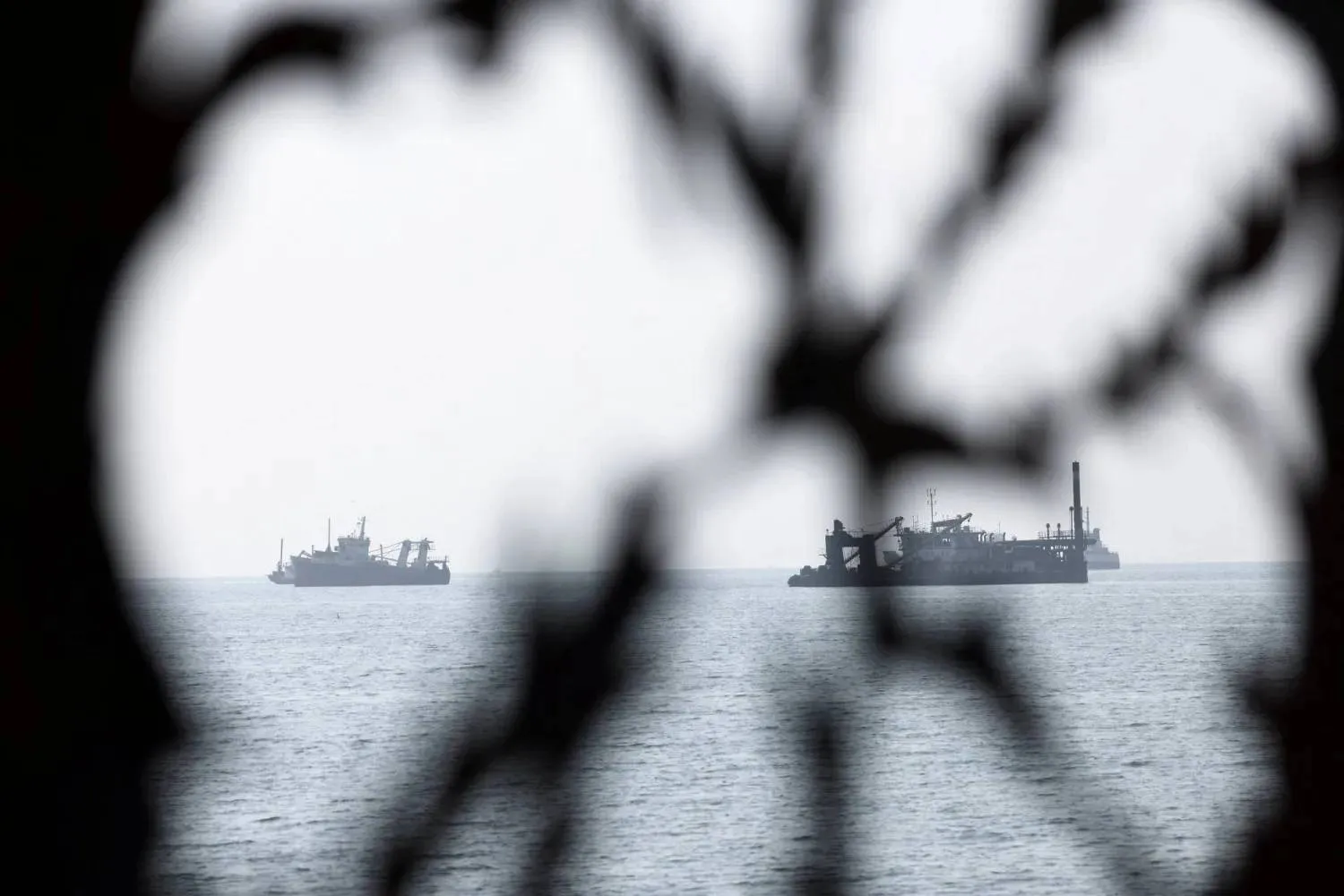
Vessels in the Strait of Hormuz near the beach of Bandar Abbas, Iran, September 5, 2026. (Reuters)
TT

Iran's Hormuz Leverage Wanes as US Economic Squeeze Bites

Vessels in the Strait of Hormuz near the beach of Bandar Abbas, Iran, September 5, 2026. (Reuters)

Six months after a conflict that rattled markets and pushed the region to the brink of a wider war, the tide may be turning against Iran as Washington unleashes an unprecedented economic offensive to achieve what military force could not.

After years of surviving sanctions, Tehran is now confronting one of the harshest squeezes in the regime's history, according to Iranian insiders and regional sources cited by Reuters.

A US naval blockade and tougher sanctions are curbing oil exports, ‌restricting access to foreign currency and exposing growing strains in the economy.

The campaign has led US and regional officials to wager that mounting economic pressure can force Tehran to allow free passage through the Strait of Hormuz, which carries about a fifth of global oil and LNG supplies.

Their bet rests on a simple calculation: Iran is suffering more economic damage than it is inflicting. Efforts to choke off oil exports have cut state revenues, while attempts to disrupt shipping through Hormuz have not triggered the global economic shock Tehran hoped would force Washington to compromise. Energy markets have adjusted and alternative supplies have continued to flow.

Whether the pressure will force concessions remains unclear, the regional sources said. Tehran has failed to impose the costs it hoped would break Washington's resolve but has shown little sign of abandoning demands for sanctions relief, access to frozen assets and recognition of its security role in Hormuz.

Still, a new formula for resolving the standoff is now under discussion between mediators and Iran, the sources said.

Can Tehran outlast the squeeze?

Three senior Iranian sources acknowledged that Washington's campaign is becoming increasingly difficult to withstand. The latest measures have sharply restricted Tehran's ability to access foreign currency, import goods and tap global financing networks that have helped keep the economy afloat.

Iranian leaders fear a worsening economy, marked by surging prices, weaker trade and pressure on household incomes, could reignite nationwide unrest that has repeatedly challenged Tehran.

Shortages of key imports, including fuel and wheat, are becoming an increasing concern, officials said.

US Treasury Secretary Scott Bessent described the strategy as a “one-two punch” combining the blockade with “the toughest sanctions in history.”

“It is going to work in Iran and we are going to collapse this regime,” he told CNBC.

For some US, Israeli and regional officials, such ‌strains strengthen ⁠hopes that economic pressure could eventually carry political consequences inside Iran by triggering unrest, widening rifts within the leadership and weakening its grip on power.

Others remain skeptical that economic and military coercion will produce a political rupture, pointing to decades of failed efforts to destabilize the regime and Tehran's willingness to suppress dissent. They argue Iran's rulers may again prove more resilient than their adversaries expect.

Resilience test

Dennis Ross, a former US negotiator, said Washington may be interpreting Iran's economic distress as evidence of strategic success when the reality is more complicated. Tehran remains determined to demonstrate it can control Hormuz, but appears to be calibrating its use of force while keeping further escalation in reserve.

The Revolutionary Guards may believe Iran can absorb the economic pain and outlast the pressure rather than compromise, ⁠Ross said.

“The Iranians have consistently surprised us in terms of their resiliency,” he added, saying he doubted economic and military pressure alone would force a retreat. Hardliners, he said, may believe they can endure and ultimately secure what they want.

Resilience may depend as much on public tolerance as Tehran's ability to absorb economic hardship, said Burcu Ozcelik, a senior research fellow at the Royal United Services Institute.

“Of course, the economic squeeze raises the risk of public unrest, but for now, a wartime mentality appears to have a significant hold ⁠over the population,” said Ozcelik. “Foreign military intervention, civilian casualties and the perception of a wider civilization confrontation with a US-led order are sustaining a degree of 'Iran-first' patriotic support, tolerance or simply patience with the regime.”

The result is a more stubborn impasse than Washington may have anticipated. Economic pressure is deepening the pain, but Tehran's powerful Revolutionary Guards may see endurance, backed by the threat of escalation, as leverage rather than a reason to concede.

The key question is not whether Iran is ⁠hurting, but whether it is hurting enough to compromise before either side slips toward another confrontation, the regional sources said.

Ross said the clearest path to a deal may lie in the dispute over shipping fees through the Strait of Hormuz. Iran could abandon any demand for a toll while retaining the right to charge for legitimate navigational, security or environmental services, he said.

Such an arrangement could give both sides a claim to victory, allowing Tehran to step back without appearing to capitulate.

“If you could announce that the Strait were reopened,” Ross said, “I think Trump would do a deal.”


China's Memories of Mao Fade to Nostalgia 50 Years after His Death

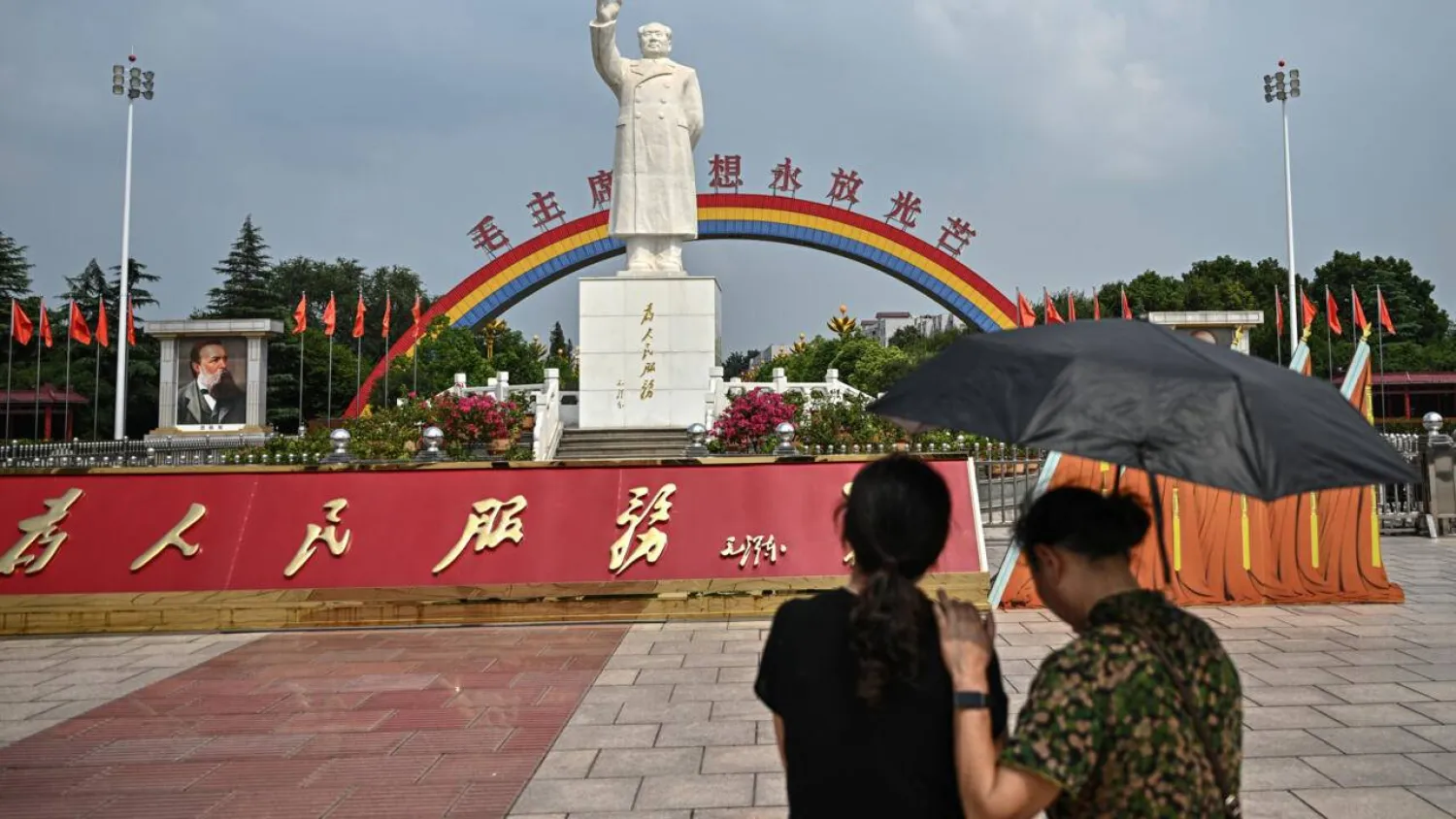
The Great Helmsman, who died September 9 1976, is still very much a fixture in central Henan province's Nanjie -- often dubbed "China's last Maoist village". Pedro PARDO / AFP
TT

China's Memories of Mao Fade to Nostalgia 50 Years after His Death

The Great Helmsman, who died September 9 1976, is still very much a fixture in central Henan province's Nanjie -- often dubbed "China's last Maoist village". Pedro PARDO / AFP

The crimson flags on Nanjie village's "East is Red" Square hang limp in the sweltering summer heat as a trickle of tourists take photos with a towering statue of Chairman Mao Zedong, still gleaming white almost 50 years after he died.

The Great Helmsman, who died September 9 1976, is still very much a fixture in central Henan province's Nanjie -- often dubbed "China's last Maoist village", said AFP.

Nostalgia for Mao's egalitarian ideals is growing in China as memories of his turbulent rule fade and the country grapples with a slowing economy and inequality.

Mao, who led the 1949 communist revolution against the ruling nationalists, ushered in an era of collectivized ownership he argued would drive industry and unite the country, but his drastic policies are also blamed by historians for mass starvation and millions of deaths.

While the ruling Chinese Communist Party maintains Mao was a revolutionary hero, it publicly acknowledged after his death that his devastating Cultural Revolution was a "grave mistake" -- a verdict upheld by subsequent leaders.

In Nanjie, countless murals of the former Chinese leader are plastered around the village.

Residents still live under Maoist principles of shared ownership, while the rest of the country moved on from that economic model.

"I still revere him very much," Xie Kaiyue, a 22-year-old local university student, said of Mao, who died almost three decades before she was born.

"I think young people in the village and, actually, myself, aren't as strong-spirited as in the past... People were purer," she said.

Nearby, electric carts whisked visitors past uniform apartment blocks plastered with socialist slogans as guides explained how cooperative ownership in local enterprises funds free housing for residents.

- Party line -

Around 500 kilometers (310 miles) north, in the mountain village of Dazhai in Shanxi province, once promoted by Mao as a national model after locals terraformed its arid hills into irrigated fields, tourists reminisce about an era when the Great Helmsman dominated political and social life.

"(People) didn't have enough to eat or to wear," Li, a 64-year-old tourist from Xi'an, said of his childhood.

"But... the whole country was full of vigor, and there was a spirit of struggling with heaven, earth, and people to change every aspect of China," the retiree said.

"Of course I miss it."

Now, Dazhai is overflowing with shops selling items that support Mao's personality cult -- posters, playing cards, and crockery emblazoned with his image, and the "Little Red Book" of his quotations.

Still, references to dark chapters of his decades in absolute power are tightly censored in public discourse.

The decade-long episode instigated by Mao in 1966 saw intellectuals brutally targeted as "class enemies" and schools shuttered, setting China back for years in education and development.

Private property and land were collectivized, while economic management pushed the country to the Great Famine, which the government says killed around 15 million people, while historians estimate around 20-43 million.

In one museum, text mentioning the Cultural Revolution had been crudely scraped off signage.

"Everything you see in the public domain... is the party line. No one is allowed to deviate from this," said scholar Xu Chenggang, who was targeted as a child in Beijing during the Cultural Revolution because his father was labelled a "rightist".

Mao's face is printed on banknotes, his portrait overlooks Tiananmen Square, and his body is preserved in a mausoleum.

Every year new movies and TV shows dramatizing Mao's life beam the message of his great deeds to public.

Public discussion has been squeezed further under current leader Xi Jinping, who warns against "historical nihilism", or narratives contradicting the party's own.

"The Communist Party told people there were mistakes, but what's the meaning of 'mistake'? No one knows," Xu said.

- 'Great figure' -

The sanitized history has left space for romanticized interpretations among youths frustrated by long working hours and intense competition in education and the job market.

In December, a viral video series on Bilibili -- a platform popular with those under 30 -- argued that the 2017 movie 'Youth', which follows young performers in a military dance troupe during the 1970s, was a subtle ode to the Cultural Revolution.

The videos, which praised Mao and blamed capitalist elites for crushing the movement, were removed after gaining over 35 million views in less than a week.

"Today, there is more of a sense that the Cultural Revolution was a period of idealism, where society was fired by ideals and not by the relentless pursuit of money and material goods," said to Kerry Brown, head of the Lau China Institute in London and author of a recent book on Mao.

"This is, of course, a total fabrication," he said.

Many also credit Mao with laying the foundation for China to become a modern, technologically advanced nation, said Mobo Gao, professor of Chinese studies at Adelaide University.

"They ask, where did (today's China) come from? It came from the establishment of the PRC," said Gao, who lived through the Mao era in rural Jiangxi province.

"Who was the one who really established the PRC? It must be Mao."

In Shijiazhuang, an industrial city of seven million northeast of Dazhai, 20-year-old Wang Zhihao and his classmates posed with a giant Mao statue opposite the municipal government.

"We admire and revere Chairman Mao very much. He is a great figure," Wang said, as the sound of elderly residents singing songs praising the Communist Party drifted over from the nearby square.

"He led the founding of New China."