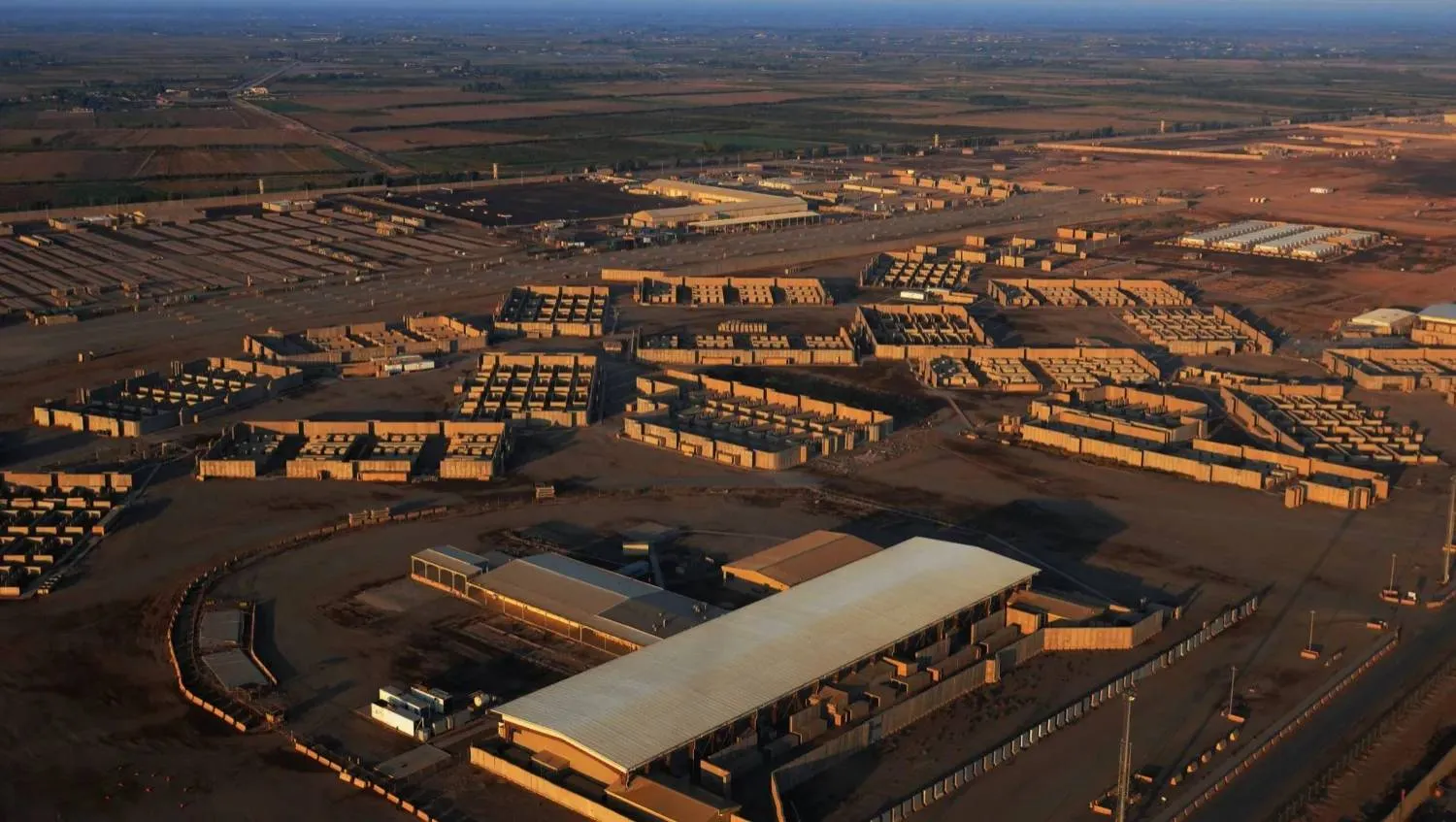

An American contractor responsible for operating Iraq’s F-16 fighter jets has withdrawn its staff from an Iraqi air base after attacks by Iran-aligned factions, leaving Baghdad racing to find replacements before its most advanced aircraft risks becoming “scrap,” officials and sources said.
The attacks cap years of what sources describe as “infiltration and espionage attempts” targeting US technology acquired by Iraq about a decade ago, culminating in what they called a “doomsday scenario” to seize Iraqi military assets.
The Iraqi government had tried to persuade staff from V2X to remain at Balad Air Base despite repeated strikes. A senior Iraqi official said that although the attacks caused no major damage, “the company’s employees insisted on leaving for their own safety.”
According to a foreign contractor, security personnel and employees, the evacuation followed an intense wave of drone attacks and was carried out during a temporary truce to secure what one source described as a “high-risk flight.”
Since the outbreak of war involving the US-Israeli war on Iran, the Balad Air Base has come under attack from three directions, most of which failed to cause significant damage, sources said.
During the first term of President Donald Trump, Iran-aligned groups forced a previous American contractor to leave the same base after the US strike that killed Qassem Soleimani in January 2020.
Dozens of staff from Sallyport were reported to have departed after deadly attacks.
The pattern now appears to be repeating with V2X during Trump’s second term, but in a broader regional war.
Drone attacks strain operations
The first attack in the current escalation occurred on March 2, the third day of the war. Subsequent strikes followed a pattern, often between midnight and early dawn, sometimes involving paired drones.
Local residents filmed smoke rising near the base. A nearby farmer told Asharq Al-Awsat that most drones fell within or just outside the perimeter, close to the security fence.
A security source said around 10 attacks were recorded in the first month of the war, causing no casualties or damage, including to the F-16 fleet.
But the attacks disrupted daily operations. “We had to stay in fortified rooms for hours,” one contractor said, adding that foreign staff feared a repeat of the 2012 US consulate attack in Libya.
Iraqi staff downplayed the threat, saying operations continued as normal.
Evacuation under truce
Baghdad’s efforts to retain the American team failed. The official said the logistical support program for the F-16s was essential to keeping Iraq’s fighter squadron operational, but the staff chose to leave.
Sources said dozens of foreign personnel were evacuated overnight aboard a military C-130 aircraft to a neighboring country, in coordination with the US military. The operation was timed with a brief truce in the final week of March.
Some advisers had already withdrawn in late February, citing early warnings of rising risks.
V2X did not respond to requests for comment. A New York Stock Exchange filing shows its contract was renewed in June 2025 with an initial value of $118 million.
The base now lacks a specialized team to operate Iraq’s F-16s, and the government lacks the funds to maintain them, the Iraqi official said.
Aircraft at risk
Retired Colonel Salam Asaad said the aircraft would likely become inoperable without American expertise. “Local crews lack the experience to manage such a strategic system,” he said.
He added that the jets delivered to Iraq had been modified, with the United States removing some systems and not equipping them with long-range missiles.
Even during the war against ISIS, Iraqi F-16s relied on coalition aircraft to strike targets, he said.
Although the US Central Command has pointed to improved Iraqi self-sufficiency in recent years, the combination of technical dependence and sustained attacks has exposed vulnerabilities.
The attacks on Balad are part of a broader campaign since early March targeting US and Iraqi facilities. A source close to armed factions said the initial goal was to pressure US forces, but “when they withdrew, the targets expanded.”
The source said Iran’s Revolutionary Guards sought to isolate adversaries from the F-16 fleet and prevent its use during the conflict.
A former Iraqi official involved in procurement said Iran-aligned groups had long shown a strong interest in the aircraft, suggesting Tehran was uneasy with Iraq possessing such capabilities because it would view it as a threat.
‘Doomsday scenario’
An Iraqi official said a prolonged intelligence struggle had taken place between the US and Iranian sides over access to the aircraft’s systems, with armed groups repeatedly attempting to gather sensitive information.
Figures within Iraq’s ruling pro-Iran Coordination Framework warned of a potential “coup against what remains of the state.”
One figure said that after the war, factions could move toward a “doomsday scenario,” consolidating control over state military assets with political backing and institutional presence.
On March 30, head of the IRGC’s Quds Force Esmail Qaani said the “resistance’s joint operations room” had contributed to shaping a new regional order.
A former Iraqi official said earlier attempts by armed groups to penetrate military infrastructure had failed, but could now be seen as “a long rehearsal,” with Iraq being exposed to the Iranians during the war.