



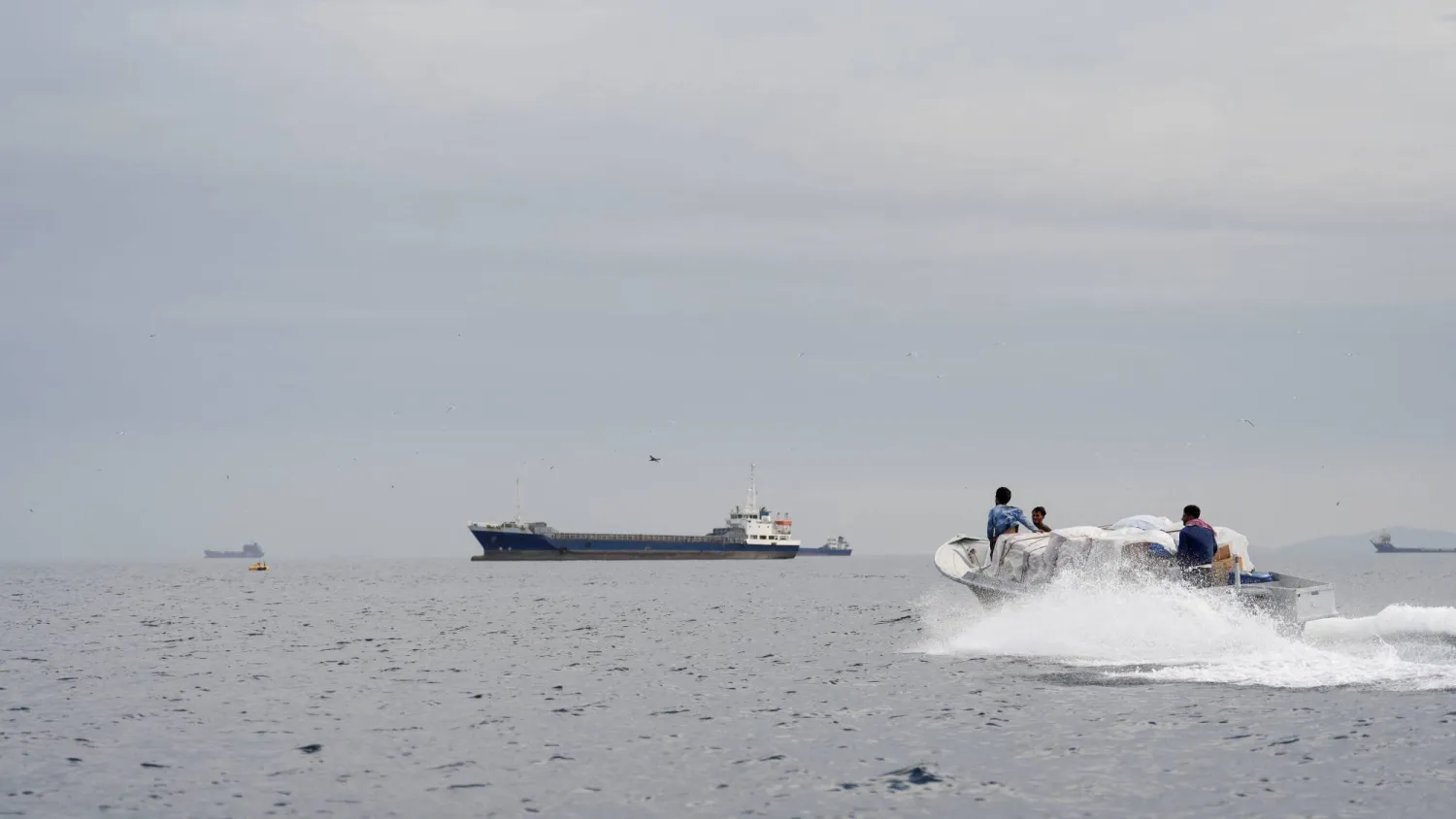

When Iran moved to close the Strait of Hormuz, it did not physically seal the waterway — for example, by fully mining it. Instead, it barred ships and oil tankers belonging to Gulf littoral states, as well as vessels from countries it considers adversaries, chiefly the United States and Israel, from transiting the strait.
At the same time, Tehran allowed its own tankers to pass, maintaining exports of about 1.5 million barrels per day to global markets.
In effect, Iran imposed a selective blockade on the Strait of Hormuz, closing it to much of the world while keeping it open for its own trade.
By contrast, US President Donald Trump’s proposal to impose a naval blockade on the strait and all Iranian ports would amount to a “blockade of the blockade.” Such a move would deny Iran access to the waterway altogether, halting both its oil and non-oil exports and dealing a severe blow to its economy.
Iran’s Gains and Losses
Oil prices surged after traffic through the strait was disrupted, rising from about $75–$80 a barrel before the February conflict to roughly $120–$126 at peak wartime levels.
With exports of around 1.5 million barrels per day, Iran is estimated to have earned an additional $60 million a day from higher prices. However, because about 90 percent of its crude is sold to China at discounted rates, the net additional gain is likely closer to $45 million a day.
These figures reflect incremental revenue. At an assumed average price of $100 a barrel, Iran’s total oil income would reach roughly $150 million a day, or about $4.5 billion a month, revenues that would be cut off under a full naval blockade.
Such a “blockade of the blockade” would likely push oil prices even higher. But its impact would extend beyond Iran. China, which buys the bulk of Iranian crude, would be among the most affected.
According to Pakistani diplomatic sources, Beijing played a key role in persuading Tehran at the last minute to accept a two-week truce announced on April 7 by Donald Trump. Some analysts believe that if China’s energy supplies are threatened, it could again press Iran to make concessions in talks with Washington aimed at ending the conflict.
Rerouting Shipping Traffic
Iran’s restrictions did more than limit access; they reshaped how ships moved through the strait.
Rather than formally altering internationally recognized shipping lanes, Iran imposed operational controls that effectively redirected maritime traffic. Vessels permitted to transit were steered toward routes closer to Iran’s coastline, particularly between Qeshm and Larak islands, instead of the traditional channels running between Abu Musa and the Greater and Lesser Tunb islands.
This shift created a de facto controlled corridor near Iranian shores without any formal declaration of new navigation routes.
In many cases, passage became contingent on prior coordination with Iranian authorities, permits, or even transit fees, marking a sharp departure from the previously unrestricted flow of traffic.
Iran has allowed “friendly” or neutral vessels to pass under certain conditions, while blocking those it deems hostile. It has also deployed drones, naval mines and fast attack craft to monitor and, when necessary, intercept ships that fail to comply.
The risks have forced many shipping companies to reroute vessels around the Cape of Good Hope or adopt longer, more secure paths, including routes closer to Iranian-controlled waters.
Before the conflict, roughly 130 to 150 ships transited the Strait of Hormuz each day. During the crisis, that number dropped sharply to about five vessels, or fewer, a day.


