


Iran War Has Complicated Plans for an Int’l Force in Gaza That Has Yet to Materialize

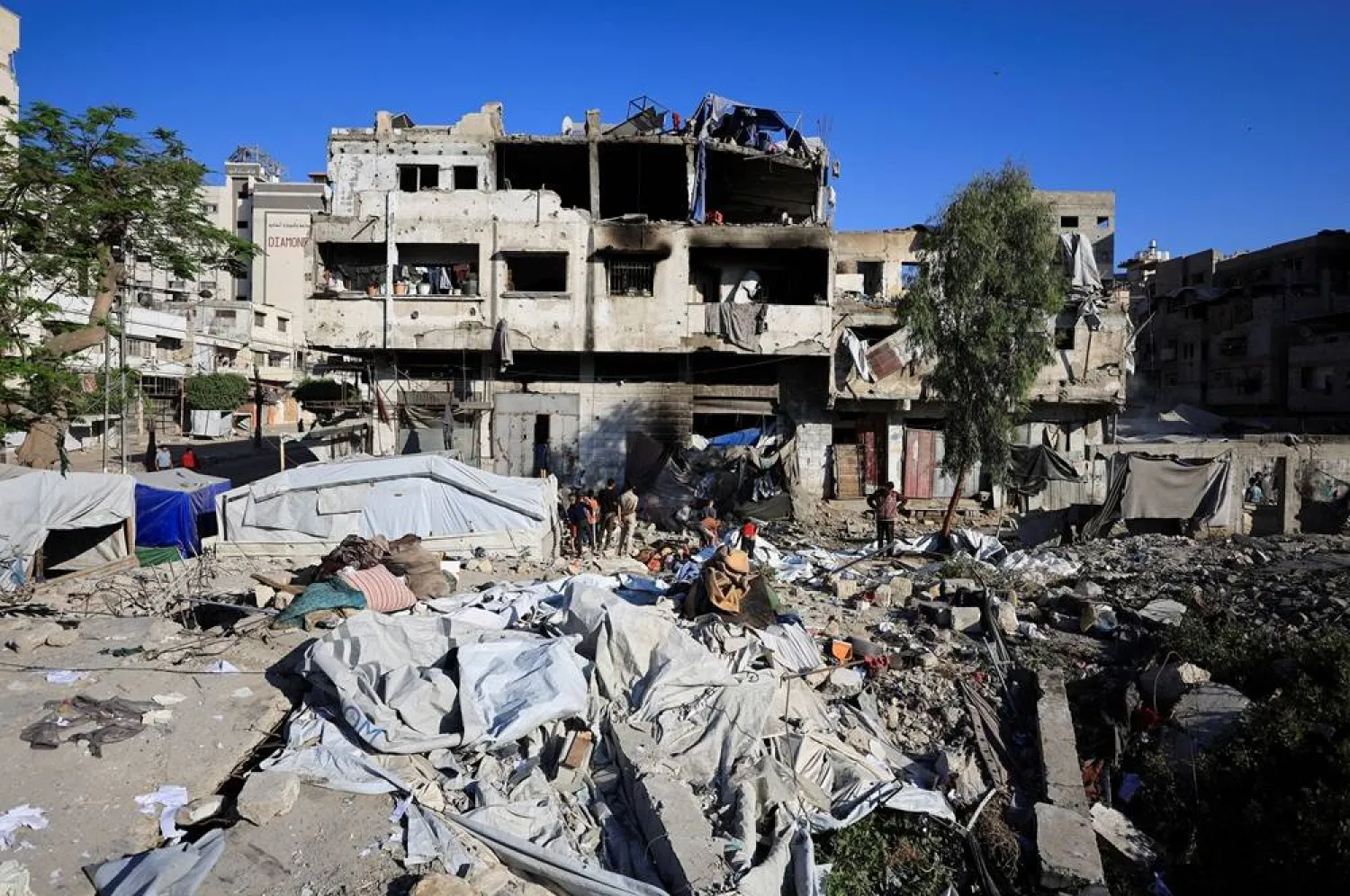
Palestinians inspect the damage at the site of an Israeli strike on Wednesday in Gaza City, May 28, 2026. (Reuters)
TT

Iran War Has Complicated Plans for an Int’l Force in Gaza That Has Yet to Materialize

Palestinians inspect the damage at the site of an Israeli strike on Wednesday in Gaza City, May 28, 2026. (Reuters)

The International Stabilization Force for Gaza was announced with great aplomb at the inaugural meeting of US President Donald Trump's Board of Peace in February. The American general tapped to lead the 20,000-strong force said it would ensure “future prosperity and enduring peace” after the devastating Israel-Hamas war.

Three months on, he still has no force to lead as none of the five countries that pledged troops have come through with any significant contributions.

Efforts to shore up the fragile ceasefire have stalled as Hamas has refused to disarm and Israel has seized more territory while continuing to strike what it says are militant targets, often killing civilians.

Indonesian commitment on indefinite hold

The biggest blow to the planned force came about a week after the US and Israel attacked Iran on Feb. 28, when Indonesia put its commitment of 8,000 troops on indefinite hold. Some 1,000 were to have been sent in April, followed by the remainder in June.

Indonesian's pledge was by far the largest of the group, which also includes Morocco, Kazakhstan, Kosovo and Albania. US Maj. Gen. Jasper Jeffers, who spoke at the Board of Peace event, was to command the force.

Indonesia suspended its plans over what Defense Minister Sjafrie Sjamsoeddin said last week seemed to be a lack of commitment from a distracted Washington, saying “we have not yet received any implementation guidelines.”

“New dynamics have emerged,” he told parliament. “Because the intensity of the conflict between US and Iranian forces remains very high, the BoP has tended to be left behind. Since the BoP has been left behind, the ISF has also been left behind.”

US attack on Iran influenced Indonesia's decision

Domestic issues may have factored into Indonesia's decision, said Muhammad Zulfikar Rakhmat, director of the Indonesia-Middle East/North Africa desk at Jakarta's Center for Economic and Law Studies.

The Iran war is extremely unpopular in Indonesia, the most populous Muslim country. The economy is suffering from soaring prices as a result of the conflict, and there is widespread skepticism of the Board of Peace.

“If you talk to the people on the street, I don’t think they believe that the Board of Peace will actually help the people of Gaza,” Rakhmat said. There are also concerns about sending troops to the Middle East when the economy is faltering, he added.

Indonesia lost four peacekeepers who were part of the United Nations mission in Lebanon during fighting between Israel and the Iran-backed Hezbollah. That has further soured public opinion on such international commitments, he said.

Board of Peace blames stalled ceasefire on Hamas

The US military’s Central Command declined to comment or make Jeffers available for an interview, referring all queries to the Board of Peace.

Board of Peace spokesman Brad Klapper also declined to comment on Indonesia's decision or the future of the stabilization force, pointing instead to May 21 remarks made at the UN by Nickolay Mladenov, a former Bulgarian defense minister who Trump appointed director of the Board of Peace.

Mladenov said the international force would not be able to begin operations until there was agreement and implementation of a second phase of the ceasefire, which would see Hamas disarm and Israel begin to withdraw. Israeli troops control some 60% of Gaza.

Mladenov has blamed the deadlock on Hamas, saying its disarmament is “non-negotiable” and is holding up progress on other fronts, including Israel's withdrawal and reconstruction.

“You cannot build a future with armed groups running the streets, hiding in tunnels and stockpiling weapons,” Mladenov said in Jerusalem this month. “You cannot deliver reconstruction with militias on every corner.”

Hamas blames delays on Israel

Hamas says Israel has repeatedly violated the ceasefire, holding up its further implementation, and has accused Mladenov of siding with Israel.

Israeli strikes have killed more than 880 Palestinians since the ceasefire, according to local health officials. Israel says it was responding to violations of the truce.

Hamas is also demanding Israel withdraw from areas seized since the start of the ceasefire, according to an Egyptian official with knowledge of the discussions, speaking on condition of anonymity to discuss closed-door talks. Egypt has long served as a mediator with Hamas.

Many of the countries that have pledged forces have refused to send troops without a deal on Hamas disarming, the official said.

Token forces committed and none yet known to be on the ground

Kazakhstan has said its support for the stabilization force would be limited to “the humanitarian component,” including sending medical units with a field hospital. Its Foreign Ministry did not respond to a request for comment.

Albania's Defense Ministry also declined to comment on its troop commitment, saying it was a “dynamic and ongoing process.”

Earlier this month, its chief of staff, Lt. Gen. Arben Kingji, told reporters that while the military had “participated in reconnaissance activities,” no troops had yet been sent. He said only a few would be dispatched as part of the stabilization force headquarters, without giving numbers, adding that further contributions would be considered.

Kosovo, which is expected to send 20 troops, said in April that it was in the “final phase of preparations.” The Defense Ministry did not reply to a request for an update.

Morocco's Foreign Ministry also did not reply. At the inaugural meeting of the Board of Peace, Foreign Minister Nasser Bourita said it would deploy “high-level military officers to the joint military command of the ISF.”

Indonesian turnaround can't be ruled out

Despite the delays from Indonesia, Rakhmat said it was too early to rule out eventual participation in the stabilization force.

President Prabowo Subianto is a former army general who has been keen to raise Indonesia’s profile on the world stage and wants to avoid jeopardizing economic ties with the US, Rakhmat said.

“Prabowo wants to strengthen ties to Washington and sign different agreements with the US, so to completely withdraw and completely cancel the plan, I don't think it's on the table,” he said.
From Jeddah to New York: Why Do Sudan's Truces Fail?

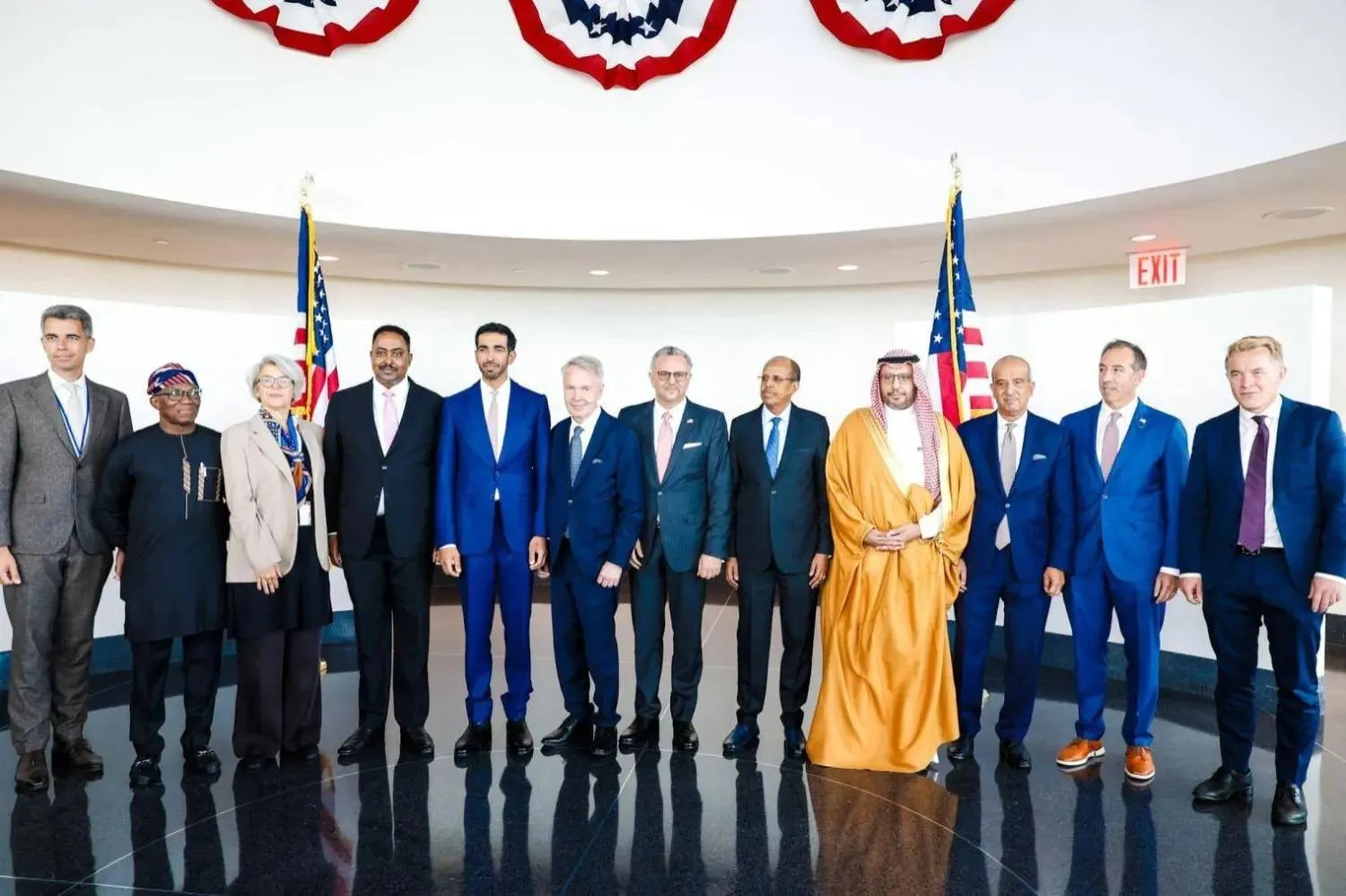
Members of the Quintet and Quad after their first joint meeting on Sudan. (African Union)
TT

From Jeddah to New York: Why Do Sudan's Truces Fail?

Members of the Quintet and Quad after their first joint meeting on Sudan. (African Union)

Sudanese doctor "S" needed a truce to get out of a health center where she and her colleagues were trapped in the first days of the war. She took a long route from Nile Street, crossing the Fiteihab and Halfaya bridges, until she reached her family in Kober.

She said she found bullet holes in the walls of her bedroom. Her siblings were waiting for her so they could leave together. The family fled and remains displaced today.

A brief halt in fighting in May 2023 allowed S to escape, but it did not last long enough for her family to remain in their home. Since that brief truce, initiatives and agreements have followed, while the hardest question has remained: How can mediators bring the two sides to agree to a cessation of fighting that is implemented and sustained?

The question returned to the fore on Sept. 23, when the Quad and Quintet met together for the first time in New York, under the co-chairmanship of the African Union and the United States. Participants called for a humanitarian truce and an end to hostilities.

They agreed to coordinate efforts to protect civilians and prepare to monitor and verify the implementation of any agreement. But the meeting's statement announced no agreement with the army or the Rapid Support Forces (RSF), and set no date for talks between them.

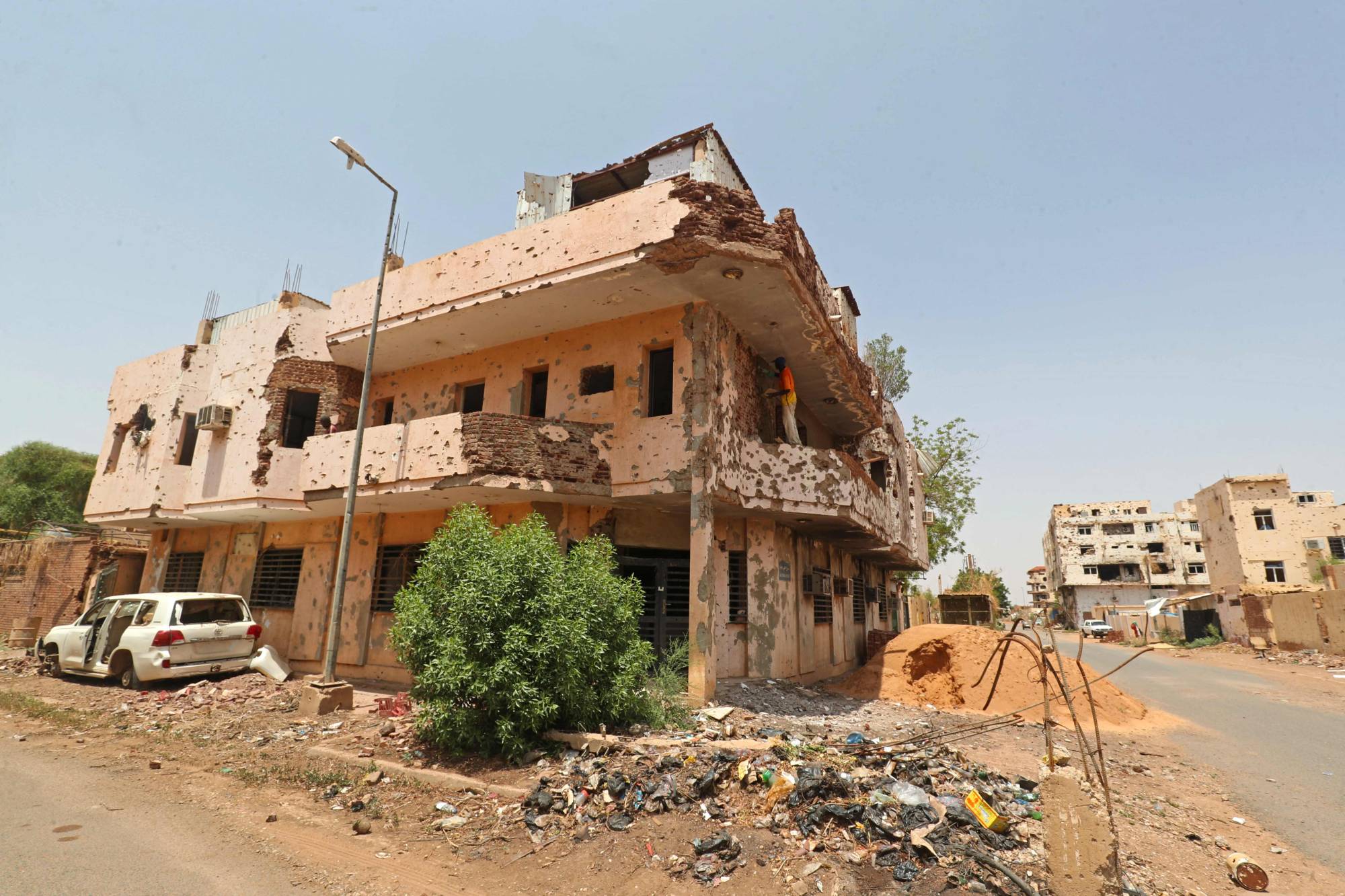
A worker repairs a damaged building in Khartoum on September 20, 2026 (Photo by Ebrahim HAMID / AFP)

The sticking point lies in the terms of the truce itself. According to Reuters, the army-led government accepted most of a US proposal for a 90-day truce but rejected a provision that would limit the RSF's withdrawal to specified areas.

It demanded that the RSF withdraw from all cities it had seized. Sudan's Foreign Ministry said this week that it rejected any negotiating process it believed would legitimize a reality imposed by the RSF through force. The RSF, meanwhile, welcomed the truce proposal, but the fighting continued.

Even when the two sides signed an agreement, it did not guarantee its implementation. In Jeddah, Saudi Arabia, the army and the RSF signed a declaration committing them to protecting civilians on May 11, 2023. On May 20, they signed an agreement on a short ceasefire and humanitarian arrangements.

But the ceasefire did not hold. In June, the army suspended its participation in the talks, accusing the RSF of violating the agreement.

Other efforts faced different obstacles. In December 2023, the Intergovernmental Authority on Development (IGAD), a regional organization involved in peace efforts in the Horn of Africa, announced that army chief Abdel Fattah al-Burhan and RSF leader Mohamed Hamdan Dagalo, known as Hemedti, had agreed to meet face to face under its auspices. IGAD renewed the invitation in January, but the meeting never took place.

In Manama, Bahrain, a document titled "Principles and Foundations for a Comprehensive Solution to the Sudanese Crisis" was initialed on Jan. 20, 2024, in the names of Shams al-Din Kabbashi for the army and Abdel Rahim Dagalo for the RSF, according to the published text. But the initialing was not followed by a final agreement or a sustained negotiating process. Dagalo accused Kabbashi of backing away from the document, while Kabbashi did not comment on the reasons for the process coming to a halt.

In August 2024, the absence of one of the warring sides prevented direct ceasefire talks in Switzerland, shifting the focus to facilitating the delivery of aid and protecting civilians.

Rosalind Marsden, a researcher at Chatham House, wrote in an analysis published by the institute on Sept. 18, 2024, that the main reason the August 2024 ceasefire talks in Switzerland failed was that both the army and the RSF continued to seek a military victory. Their continued hopes of making military gains were a major reason for the negotiations' failure to make progress, despite limited progress in delivering aid to Darfur.

In September 2025, the Quad proposed a roadmap beginning with a three-month humanitarian truce, during which aid would reach areas across Sudan, followed by a permanent ceasefire and a political transition.

But the Quad's roadmap remained a proposal by the mediators and did not become an agreement between the warring parties. The dispute over withdrawal in the latest US proposal shows that the two sides have yet to agree on the terms under which a new truce could be tested.

Researcher Ahmed Soliman says the multiplicity of mediation groups and weak coordination among them make it necessary to link ceasefire efforts to a Sudanese political process led by civilian forces.

Hubert Kinkoh, a researcher at Chatham House, argued in an analysis published by the institute on Feb. 13, 2026, that the multiplicity of mediation tracks on Sudan, along with the absence of clear leadership and effective coordination among them, had allowed the army and the RSF to resist making serious concessions.

The New York meeting may help address the fragmentation of mediation efforts. Its real value, however, will become clear if it can bring the warring parties to a clear agreement and establish a mechanism to monitor compliance and address violations.

A brief truce allowed S to reach her family, but the family was then forced to leave their home. The truce that displaced people and refugees are waiting for today would allow aid to reach them and mark the beginning of a lasting end to the fighting, making a safe return to their homes and communities possible.


Trump's State Dinner for Xi to Feature Sea Bass and a Long List of Tech Titans

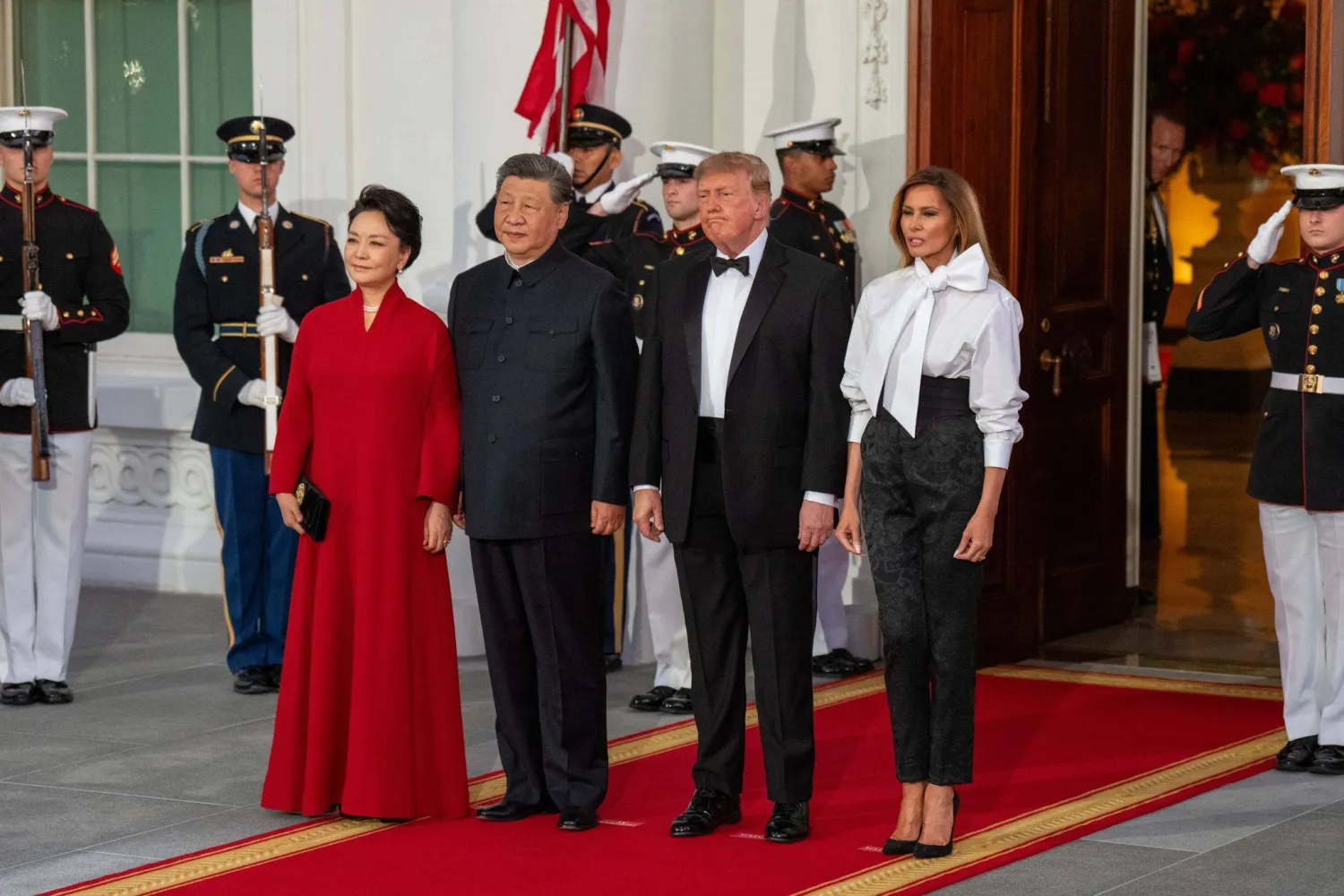
24 September 2026, US, Washington: US President Donald Trump and First Lady Melania Trump welcome Chinese President Xi Jinping and his wife, Peng Liyuan, to the White House for a state dinner in Washington, DC. Photo: Joey Sussman/ZUMA Press Wire/dpa
TT

Trump's State Dinner for Xi to Feature Sea Bass and a Long List of Tech Titans

24 September 2026, US, Washington: US President Donald Trump and First Lady Melania Trump welcome Chinese President Xi Jinping and his wife, Peng Liyuan, to the White House for a state dinner in Washington, DC. Photo: Joey Sussman/ZUMA Press Wire/dpa

A tech-heavy guest list, the fashion choices of those on it, who sits where, their body language throughout the night and what’s on the menu: these are the softer — often and glitzier — details of diplomacy.

Thursday's state dinner for China’s leader Xi Jinping featured a cavalcade of billionaires, Washington powerbrokers, business leaders and the type of festivities that excite President Donald Trump, who has a reputation for reveling in hosting parties, said The Associated Press.

OpenAI CEO Sam Altman signed autographs as he arrived at the White House. Nvidia CEO Jensen Huang chose a tuxedo over his trademark black leather jacket. Bernard Arnault, the CEO of French luxury goods company LVMH, walked through black security fencing to get to the White House.

Trump, clad in a tuxedo, and first lady Melania Trump, in a tuxedo-style outfit with a large necktie bow, greeted Xi and his wife, Peng Liyuan, out in front of the White House.

Xi, in a black suit, and Peng, in a red gown, emerged from their limousine onto a red carpet at the North Portico, where they shook hands with the Trumps.

“Everyone wants to be there,” Trump said during this week's UN General Assembly session. “It's the hottest ticket in town.”

Xi and Trump face tensions over Taiwan, trade and artificial intelligence during business hours — even as an ongoing, First Amendment fight over press access at the White House has unfolded. But Trump publicly chose to focus on showing Xi his White House updates on Thursday afternoon, before attention quickly turned to the flashy details of the swanky meal honoring Xi and his wife in the White House East Room.

Asked on Monday night who'd be in attendance, the president responded, “sort of everybody,” adding, “I would say you have the entire tech world, the entire banking world and a lot more.”

The dinner was expected to showcase “the positive vibes surrounding the visit” and indicate that “the president is very focused on signaling warmth and a close personal connection with Xi,” said Edgard Kagan, senior adviser and chair in China studies at the Center for Strategic and International Studies.

The first lady’s menu is being served on the red china service from Ronald Reagan’s presidency. It features a first course of yellow squash velouté with wild mushrooms, fresh herbs, crispy pancetta and drizzled scallion oil.

After that, guests will get sesame-crusted sea bass with braised baby bok choy, roasted garden eggplant and a sauce verte. Dessert is vanilla crémeux with sour cherry confit and walnut frangipane, as well as ice cream with honey from the White House.

Trump has already sought to one-up Xi after Beijing

The dinner comes after the president took the unusual step of personally greeting Xi and his wife on Wednesday as they arrived at Joint Base Andrews outside Washington. Normally, presidents wait for their state visit guests to arrive at the White House itself before offering a formal welcome.

During Thursday's arrival ceremony, Trump and Xi reviewed troops as trumpets blared, with the US president saying, “From the time of my first election in 2016, President Xi and I have forged a friendship.”

Thursday's dinner will include an abundance of technology industry titans, including Amazon founder Jeff Bezos, Tesla and SpaceX CEO Elon Musk, Google and Alphabet CEO Sundar Pichai, OpenAI President and co-founder Greg Brockman, and Dell Technologies chairman and CEO Michael Dell.

During his own visit to Beijing in May, Xi hosted Trump for a state dinner that unfolded beneath grand chandeliers in the Great Hall of the People. That event included many tech luminaries who are likely to be at the White House this time, such as Tim Cook, formerly Apple's CEO, and Musk.

Trump has since begun referring to the White House ballroom he’s building as the “Great Hall of the United States,” to rival the place where he dined in China.

“This is a very large hall,” Trump recently said of the Great Hall of the People before adding, “But we’re gonna top it.”

Trump used to decry the pomp he now revels in

In 2015, as then-President Barack Obama was preparing to host Xi for a state visit, Trump — in the midst of his first presidential run — criticized all the hubbub.

“Just take them to McDonald’s and go back to the negotiating table,” Trump said then, during a rally in South Carolina. He later conceded on Fox News Channel that Xi might at least be worthy of getting “probably a double-size Big Mac.”

Xi visited Trump for the first time in 2017. But the White House said the Chinese wanted the meeting to take place at Trump's Mar-a-Lago residence in Florida, which is viewed as a more relaxed setting that might defuse some of the high expectations of a formal summit in Washington.

A dearth of pageantry didn't mean a lack of extraordinary moments, however, underscoring just how important it is for China's leader to dine with Trump.

Later recounting the incident to Fox News Channel, Trump said he sprung a surprise on Xi just after dinner, noting that the US was striking Syria as the pair was having “the most beautiful piece of chocolate cake that you’ve ever seen, and President Xi was enjoying it.”

Trump said he told Xi that US forces had “just fired 59 missiles” and that China's president “was eating his cake. And he was silent.”


Long-Suffering Yemeni Families Flee Renewed Fighting

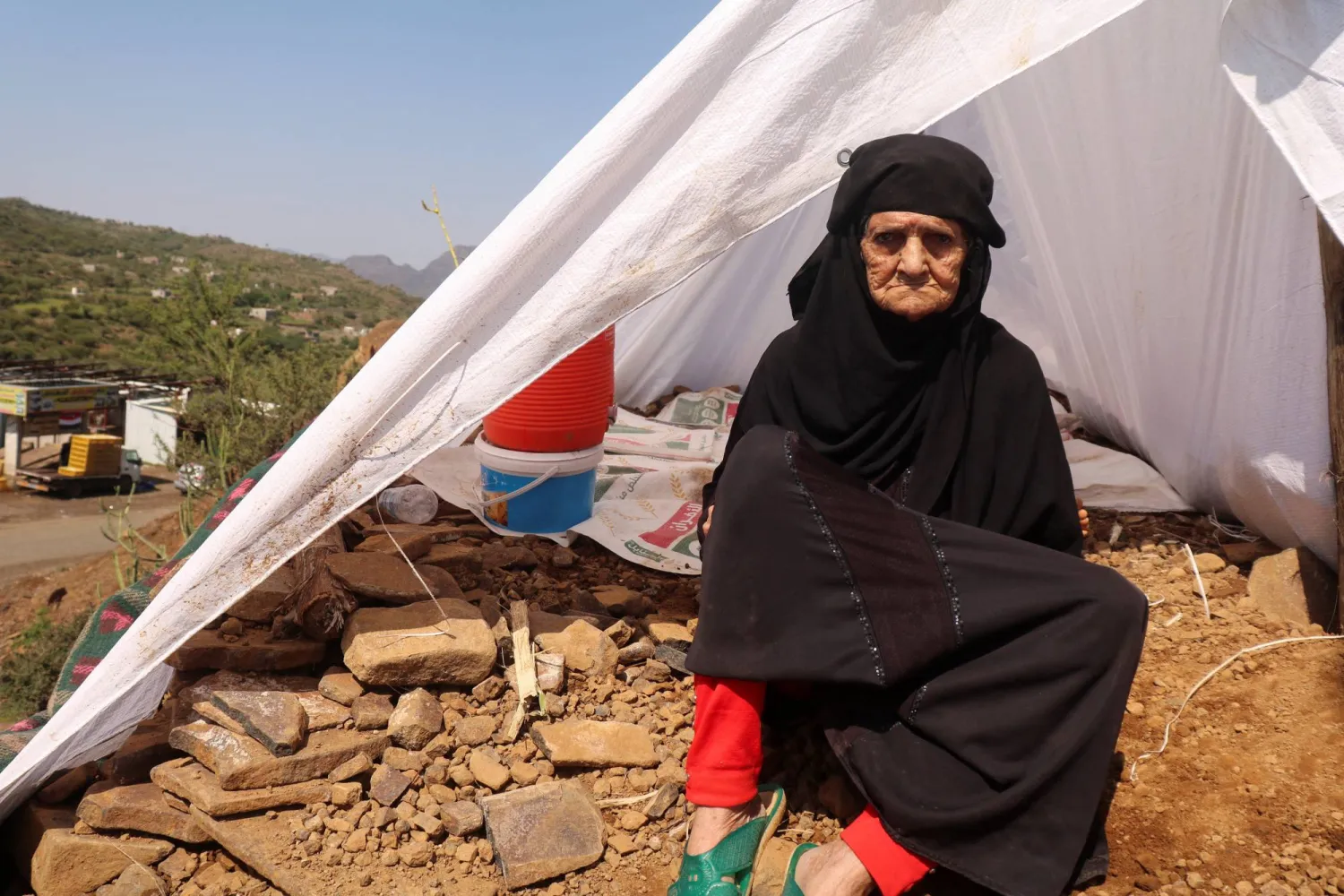
 A displaced woman sits outside her tent at a makeshift camp for people displaced by clashes between Iran-aligned Houthi fighters and Yemeni government forces, in Taiz province, Yemen September 21, 2026. (Reuters)
A displaced woman sits outside her tent at a makeshift camp for people displaced by clashes between Iran-aligned Houthi fighters and Yemeni government forces, in Taiz province, Yemen September 21, 2026. (Reuters)
TT

Long-Suffering Yemeni Families Flee Renewed Fighting

 A displaced woman sits outside her tent at a makeshift camp for people displaced by clashes between Iran-aligned Houthi fighters and Yemeni government forces, in Taiz province, Yemen September 21, 2026. (Reuters)
A displaced woman sits outside her tent at a makeshift camp for people displaced by clashes between Iran-aligned Houthi fighters and Yemeni government forces, in Taiz province, Yemen September 21, 2026. (Reuters)

As fighting escalates once again in Yemen's long-running war, thousands of families have been forced from their homes, many of them for a second or third time.

In the Al-Farsi camp in Aden, Arwa told AFP how she, her husband and their four children left Mokha on Yemen's western coast as it was seized by Iran-backed Houthi fighters.

They shared a single motorcycle to travel 200 kilometers, first to Al-Arah in the Lahj governorate and then on to Aden, temporary seat of Yemen's government.

"We couldn't find any means of transport... We stayed out in the cold and didn't have clothes to keep us warm," Arwa told AFP at the camp, where sat on the ground by a tent.

The camp currently hosts 128 families living under canvas along dirt paths where barefoot children run.

Their tents are sparsely equipped -- some bedding, cooking pots, and a few clothes and belongings that the families managed to bring with them when they ran.

It is not the first time Arwa has been forced to flee her home.

Nine years ago she left Maqbanah in Taiz governorate to head to Mokha, also because of the war.

"I hope I can find a house to live in with my children. We're exhausted by the heat, the dust and the humiliation," she said. "I hope the situation improves and we can return to our home and our families."

Armin Yedgarian, a representative of the UN High Commissioner for Refugees, said the camp was "in dire need of more support", adding that its 8,800 inhabitants included many elderly people and women with children.

International organizations, including the World Food Program, distribute meals to the displaced.

Arwa received a portion of rice to feed her children. But she regrets that her seven-year-old daughter, her only school-aged child, has not been attending class since the family was forced to head to Aden.

- No schooling -

At Aden's Al-Firdaws camp, which currently shelters about 110 families who arrived over the past two weeks, the acting representative of UNICEF's office in Yemen, Obiya Atchieng, told AFP that families' needs were not limited to food and basic supplies.

"Most of the children were enrolled in schools," he says. "Our team carried out a field visit to assess the possibility of providing education services."

Last week, UNICEF said 57,000 children had been displaced inside Yemen in just two weeks and 243 schools had been closed or suspended, affecting more than 137,000 students.

Even before the latest escalation, 3.2 million school-age children were not enrolled.

After years of relative calm, Yemen's civil war flared back to life in July against the backdrop of the broader conflict in the Middle East.

In the past 10 days, a surprise Houthi offensive enabled the group to expand its areas of control as far as the strategic Bab al-Mandeb Strait linking the Indian Ocean to the Red Sea, and by extension, the Suez Canal.

- 'Hearts beating' -

As a result of a 2022 ceasefire, those under the age of four have not previously experienced conflict of this intensity.

"The sounds of explosions were new to the children, and now any loud noise unsettles them, even if it's a motorcycle," said one 39-year-old father of two who remained in Mokha despite the Houthi takeover.

"I try to reassure them and convince them there is no danger. But even when they're in my arms, I can feel their hearts beating rapidly against my chest."

The man said he had been displaced from the city of Hodeidah eight years ago, and had no desire for it to happen again.

Noha, a housewife and mother of two children aged eight and 10, said she broke down in tears when she heard they were fleeing from Al-Khokha in western Yemen -- which the Houthis captured less than two weeks ago -- to her husband's family home in Aden.

"Because I cried, the children cried. We left in a bus with our neighbors and I haven't been able to make the children feel safe."

"Today I learned that my neighbor, a mother of six children who was in her final month of pregnancy, was also displaced and died in Aden two days after we arrived because of postpartum hemorrhage," she said.

"The newborn baby girl is in the incubator, and the other children and her husband are in a terrible, miserable state."
