
Baghdad Emerges as Next Arena in US-Iran Confrontation

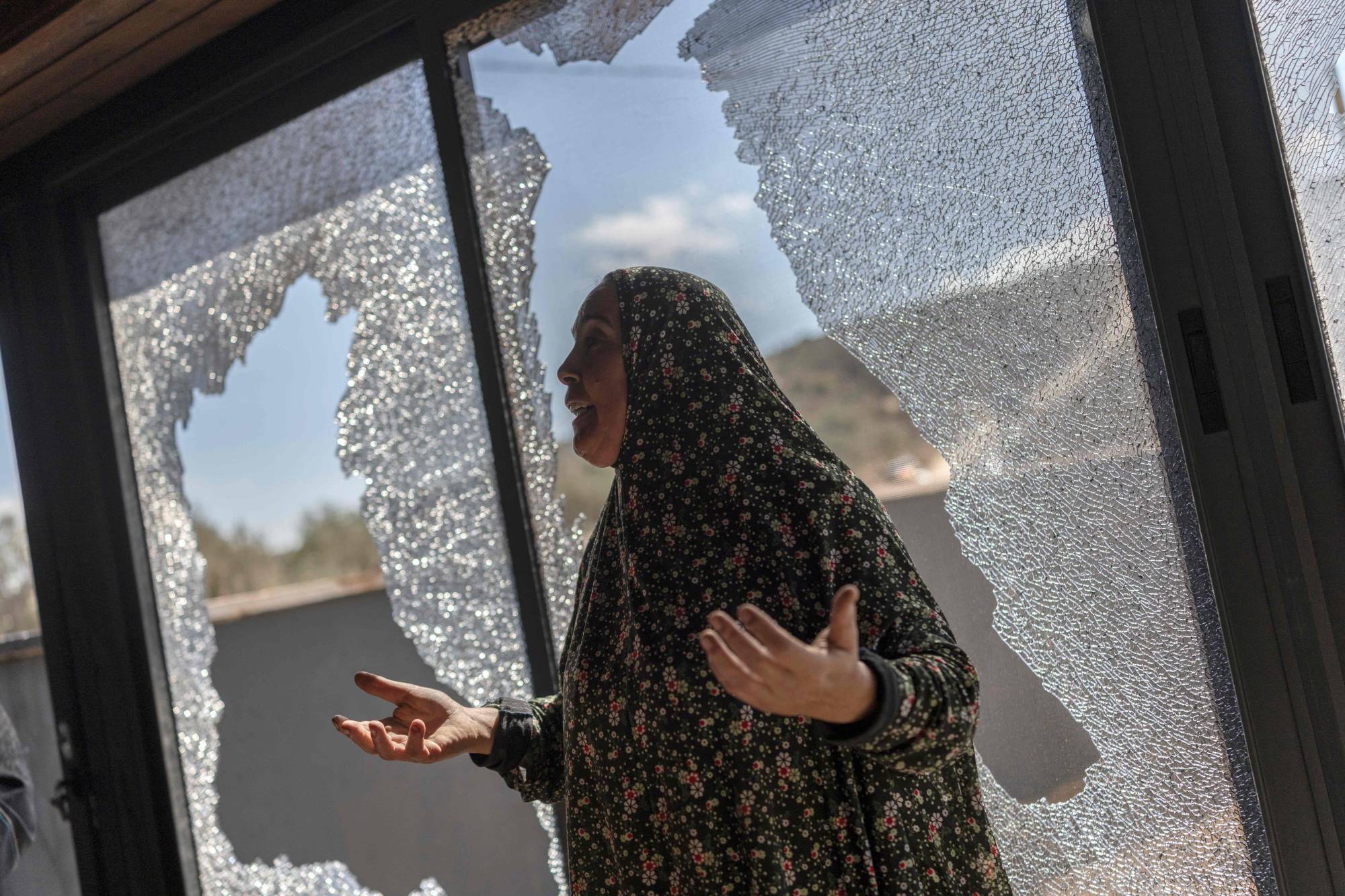
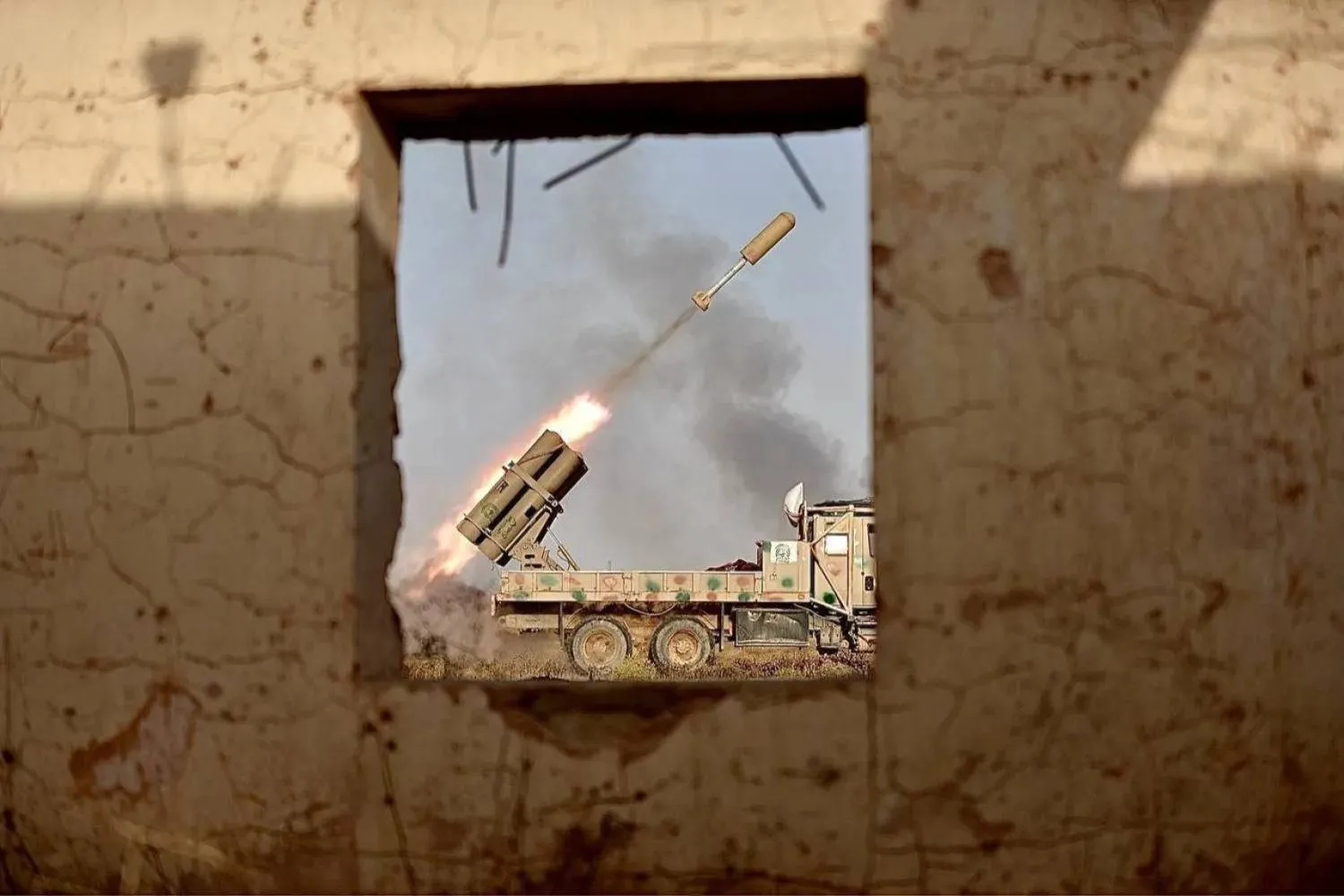
Iraqi factions that fought alongside Iran in the recent war with the United States. (Popular Mobilization Forces media)
TT

Baghdad Emerges as Next Arena in US-Iran Confrontation

Iraqi factions that fought alongside Iran in the recent war with the United States. (Popular Mobilization Forces media)

More than a month after winning parliament’s confidence on May 14, 2026, Ali al-Zaidi’s government remains unfinished. Nearly 10 ministerial portfolios are still unresolved, including two central pillars of the Iraqi state: interior and defense.

In Iraq, where governments often emerge only after long bargaining among parties, parliamentary blocs, influence networks and regional powers, the delay may look familiar. But that reading only goes so far.

The incomplete cabinet does not just reflect the usual struggle over posts. It shows, above all, that the deals that brought al-Zaidi to power have not yet produced a real governing balance.

Al-Zaidi has parliamentary legitimacy, but not full command of his executive branch. His government stands legally, but remains politically incomplete.

The central issue is no longer simply whether he can complete the formation of a cabinet. It is how much room he will have to carry out his political, economic and security program.

Will al-Zaidi be merely the manager of a settlement struck by the main forces inside the Shiite camp? Or can he gradually turn that settlement into a real tool for political action and recover even a limited measure of the Iraqi state’s ability to take initiative?

That is why al-Zaidi’s expected visit to Washington in mid-July matters. It is more than a conventional diplomatic trip. Alongside the economic, energy and security files announced for discussion, the visit will be the first real test of his premiership.

It will show whether he can strengthen his international legitimacy, widen his independence from the political forces that brought him to power and define his relationship with the US administration at a time when Washington’s priorities in Iraq appear to be shifting.

Iraq in a new regional equation

Many were struck by the strategic surprise Tehran unleashed, which altered some regional balances. The move disrupted navigation in the Strait of Hormuz and introduced a troubling shift in international law through what Tehran called its “right to control.”

The interim agreement reached by Washington and Tehran allowed for a ceasefire and opened the way for a new phase of negotiations. It is likely to reduce the chances of direct military confrontation in the short term.

But it resolves none of the core disputes that still divide the United States and Iran in the Middle East. On the contrary, their rivalry appears set to move toward arenas where their interests continue to overlap. Iraq comes first among them.

For Baghdad, the shift carries a clear paradox. Relative easing between Washington and Tehran could give Ali Falih al-Zaidi’s government more space to pursue reforms without directly absorbing the costs of regional escalation.

But the same easing could also move the competition between the two powers into Iraqi institutions, turning the Iraqi state into the main arena of conflict.

The Washington-Tehran agreement also reopens the Iraqi file on other geopolitical fronts.

Gulf states are expected to accelerate strategies aimed at consolidating their regional interests, especially in Iraq, Syria and Lebanon.

Türkiye, through its geopolitical strategy in energy and logistical connectivity, will seek to strengthen its position in Iraq. China and Russia, in turn, will try to entrench their presence in what they regard as the “southern front” of the US, and broader Western, offensive in the Eurasian space: Iran, alongside the western front in Ukraine and the eastern front in Taiwan, and the surrounding spaces of connection and influence.

In principle, Iraq should be able to benefit from this renewed competition for regional influence, particularly by attracting economic investment and securing stronger support for normalization and regional integration.

This geopolitical shift will inevitably affect Iraq’s place in the rivalry between Washington and Tehran. For nearly two decades, Iraq’s political system has rested on an ambiguous balance.

It is neither a US protectorate nor an absolute subordinate of Iran. It is an open space for constant negotiation among outside powers, local elites, sectarian parties, armed factions, fragile institutions and a rentier economy.

Despite its fragility, that model delivered a measure of relative stability for years. But current signs suggest it is entering a new phase; one expected to move toward consolidating the state and its institutions.

A shift in US policy

The Trump administration no longer appears fully prepared to accept the implicit logic that governed Iraq in recent years: a form of direct or indirect joint management between Washington and Tehran.

The signals so far point to a US approach built on long-term influence by strengthening Iraqi state institutions. The aim is to use technocratic tools and, perhaps, a greater degree of ideological neutrality to tilt the balance toward Iraqi national interests, especially economic ones, and away from Iranian influence.

Several officials inside the US administration appear to support this view. They argue that Iraq can gradually free itself from reliance on Iranian support if Iraqi state institutions regain credibility and effectiveness.

As the scheduled US military withdrawal in September 2026 approaches, a purely security-driven approach looks insufficient. Repeated operations targeting armed faction leaders and their organizational structures since 2020 have not produced a real shift in the balance of power.

One of the most prominent defenders of this approach is Tom Barrack, who occupies a special place in it. Barrack is the US ambassador to Türkiye and a close associate of Donald Trump.

He is also known for his close relationship with Turkish President Recep Tayyip Erdogan and for being one of the leading defenders of the effectiveness of centralized, even authoritarian, systems in producing transitions. Today, he is one of the key actors in the Syrian and Iraqi files.

Barrack belongs to a classical school that sees no sustainable influence in the Middle East without central states that possess at least a minimum of political and institutional credibility.

In Syria, this translates into support for a pragmatic path toward normalizing relations with the new authority in Damascus. In Iraq, there appears to be a focus on strengthening Baghdad’s role, without overlooking the importance and status of Erbil.

This is how the recent reactivation of several files should be understood. Efforts to ease tension between Baghdad and Erbil, the push for closer coordination between Baghdad and Damascus, and renewed interest in some regional projects are not merely diplomatic moves.

They all serve one logic: gradually strengthening the Iraqi state’s ability to reclaim its role as the central actor in regional balances.

A settlement of the chronic disputes between the federal government and the Kurdistan Region, whether over the budget, oil exports, energy management or the distribution of powers, would strengthen Baghdad. It would also strengthen al-Zaidi himself.

The same logic applies to Baghdad’s relations with Damascus. US authorities, under Barrack’s influence, now appear to favor pragmatic coordination between the two capitals. This is not so much because Washington supports the new Syrian authority, but because it wants to stabilize a border area that has become vital to regional security.

The Iraqi-Syrian border remains a major strategic challenge in the fight against armed groups, smuggling and illegal transit networks. At the same time, it could again become a space for economic exchange and energy movement if the right political conditions emerge.

In this context, the idea of restarting the Kirkuk-Baniyas pipeline regains special importance. The project is not only economic. It also carries deep geopolitical meaning. It would give Iraq an additional outlet for oil exports via the Mediterranean, reducing, at least in part, its reliance on existing routes through the Gulf or Türkiye.

More importantly, it would mark Iraq’s return to its historical role as a link between the Gulf, the Arab Levant and the Mediterranean. The project alone would not solve Iraq’s economic crisis. But it would signal a desire to reposition Iraq at the center of regional dynamics rather than leave it as a stage for regional and international competition.

Governing under financial constraints

That horizon remains extremely fragile because of Iraq’s internal economic situation. Al-Zaidi’s government inherited deteriorating financial conditions. The state’s room for maneuver has narrowed sharply because of obligations accumulated in recent years, particularly under Mohammed Shia al-Sudani’s government.

Public-sector wages, social spending, domestic debt, and other financial commitments now consume a large share of state resources.

Oil exports add another strain. Negotiations with Türkiye on resuming exports through the port of Ceyhan have not yet been settled, depriving Iraq of an important share of oil revenue. Before the crisis, exports through that route reached hundreds of thousands of barrels per day.

The current crisis is therefore not a passing economic problem or a temporary financial squeeze. It exposes the structural limits of the political and economic model built in Iraq after 2003.

The Iraqi state has gradually become a vast machine for redistributing oil rent. Public salaries, pensions, social assistance, government contracts, public companies and subcontracting networks have become the main tools for organizing political and social balances.

Under this equation, the regular payment of salaries is no longer just a matter of financial management or the state budget. It has become central to the stability of the political system itself. Nearly 5 million government employees depend directly on public finances, along with millions of retirees and social welfare beneficiaries.

Any prolonged disruption could quickly trigger broad social tensions and deepen the fragility of a government already facing several political challenges at once.

The executive’s options remain limited. Government bonds could provide temporary liquidity, but they would not fix deep structural imbalances. Domestic borrowing also remains constrained by weak liquidity inside the Iraqi economy.

Turning to the World Bank or the International Monetary Fund remains possible, but it would come with strict conditions. These could include reforming public companies, rationalizing government spending, improving public financial management, and gradually reducing some forms of state support.

Such measures could reassure international partners. But they also risk feeding social anger in a country where the state remains the largest employer and the main safety net against economic crises.

Factions between institutionalization and reconfiguration

Iraq’s economic crisis is tightly linked to the security question. The state is no longer just a rentier state distributing oil revenues. It has become a space where state institutions overlap with political, administrative, economic and military networks, all of which feed, to varying degrees, on public revenues.

Armed factions no longer draw their power from military capacity alone. They also draw it from a long process of institutionalization over the past two decades.

They now have extensions inside parliament and the executive, a presence in public administration, financial resources, economic networks and offices, protection offices dealing with oil companies, media outlets, social organizations and a measure of “legitimacy” acquired by some of them during the war against ISIS.

Seeing these factions as mere armed groups outside the state no longer reflects Iraq’s reality since 2003. The overlap between the state and the factions is no longer simply an infiltration of state institutions. It has become part of how those institutions function.

This reality also requires moving beyond another simplification often repeated in Western analysis: reducing these factions to “Iranian proxies.” They are not all equally close to Tehran, nor do they all have the same political or military relationship with it. Some have a considerable margin of independence and put Iraqi calculations first.

Others remain more deeply integrated into Tehran’s regional networks. It is therefore more accurate to speak of “Iraqi factions close to Iran” than to reduce them to direct Iranian extensions. That reduction obscures the transformations these groups have undergone inside Iraqi society and the Iraqi state.

The distinction is crucial to understanding current debates over the factions’ future. Part of this network now appears ready to discuss a gradual reorganization of its status.

Negotiations with the government are not centered on immediate disarmament so much as on deeper integration into the Popular Mobilization Forces and a clearer separation between political activity and military command.

Other groups, especially Kataib Hezbollah, Harakat al-Nujaba and Kataib Sayyid al-Shuhada, are more cautious about any process that could narrow their independence or redefine their relationship with the state.

The real question, however, is not whether political and military wings can realistically be separated. It is what kind of state Iraq has become. Can politics and weapons truly be separated when both operate inside the same institutional structure? Can traditional models of disarmament and reintegration be applied to groups that no longer stand outside the state?

Today, the factions are not defending their arsenals as much as they are defending their positions inside the state, their share of public resources, their economic networks and a social base that now depends, directly or indirectly, on the jobs, salaries, services and patronage they provide.

Estimates put their membership at between 200,000 and 300,000. Including their families, millions of Iraqis are linked to this system in varying degrees.

Any attempt to restructure the factions or reduce their role will therefore face a highly complex equation: US pressure to confine arms to the state, Iranian influence seeking to preserve part of the regional deterrence system, and broad local interests that view the factions’ survival as a guarantee of their economic and political positions.

Amid this overlap, the question is no longer how to disarm the factions. It is how to rebuild a state.

Time as a factor in the balance of power

This institutional complexity is compounded by another often-overlooked dimension: time.

The United States usually thinks within a relatively short political horizon, shaped by presidential terms, the search for quick results and near-term diplomatic deadlines.

Iraqi factions close to Iran, like Tehran itself, operate on a very different timeline. They know how to wait, postpone decisions, absorb pressure, multiply mediation efforts and turn time into a political resource.

In Iraq, time itself is part of the balance of power. The most entrenched actors are those that can withstand changes of government, international sanctions, shifting political balances and regional crises.

This ability to work according to the logic of the long term explains why repeated attempts to restructure the security sphere have produced limited results. Local forces know that international balances change far faster than Iraq’s internal balances.

These different timelines also help explain how the recent war between Iran, the United States and Israel was received by an important part of Iraq’s political scene.

A belief has gradually taken hold among a broad segment of political actors that Iran emerged from the confrontation politically stronger. This does not mean Tehran suffered no losses or faced no serious pressure.

It simply means the Iranian system did not fall and was not pushed to the margins of the regional equation. For many of its allies, its ability to endure was itself a form of “political victory.”

That reading directly shapes the behavior of Iraqi factions closest to Tehran. Many now ask a simple question: If Iran itself preserved its regional capabilities, why should the factions in Iraq make concessions?

Is there a new US doctrine?

At this stage, it is still too early to say a clear new US doctrine toward Iraq has taken shape. But several indicators suggest that part of the US administration now believes that limiting Iranian influence does not require direct confrontation with Tehran. It runs through the gradual strengthening of the Iraqi state’s credibility and capacity to act.

This approach, however, collides with the Iraqi reality described above. The United States, Iran and Iraq also move according to different clocks.

Al-Zaidi will have to confront several challenges at once. He must restore balance to public finances, preserve existing political settlements, redefine the relationship between the state and the factions, balance Baghdad’s relations with Erbil and Damascus, and maintain a constructive dialogue with Washington without reproducing internal polarization.

The challenge facing the new government is therefore not simply whether it can manage the country’s affairs. It is whether Iraq can rebuild a more credible state within the existing political balances that have provided a measure of relative stability.

In that space between reform and continuity, between state authority and the authority of influence networks, and between different national and regional rhythms, Iraq’s political future will most likely be decided in the years ahead.


Sudan’s Gum Arabic Industry Crippled as War and Displacement Take Their Toll

A farmer harvests gum arabic near the town of En Nahud in western Sudan, a major center for gum arabic production, December 18, 2012. (Reuters)
TT

Sudan’s Gum Arabic Industry Crippled as War and Displacement Take Their Toll

A farmer harvests gum arabic near the town of En Nahud in western Sudan, a major center for gum arabic production, December 18, 2012. (Reuters)

Sudan’s war has driven thousands of gum arabic producers from their land, destroyed vast hashab and talh forests, and turned one of the country’s most strategic exports into the subject of international warnings over the possible use of its revenues to finance the conflict.

While the world struggles to trace the gum arabic trade, Sudanese producers face a different crisis: the loss of their land, harvests, and livelihoods, forcing many into displacement and dependence on humanitarian aid.

Aida Hassan has produced gum arabic in the Blue Nile State for more than 15 years, following a family trade passed down through generations. The income once allowed her family to save money and expand its forests and farms. The war, however, turned her from a self-reliant producer into a displaced woman waiting for humanitarian assistance.

She recalled fleeing after the Rapid Support Forces (RSF) stormed the Bout area of Blue Nile State, looting her family’s harvest, farm equipment, and property. She and her relatives walked for 10 days to reach Damazin.

“What we are living through is like a piece of fire,” she said quietly. “All I have are my tears to cool its heat.”

Her story reflects the plight of thousands of producers forced to abandon Sudan’s gum arabic belt, which stretches across 13 states. Most production is concentrated in Kordofan and Darfur, where large areas have fallen under RSF control or become active battlefields, halting production and displacing farmers.

Harvested mainly from hashab and talh trees, gum arabic is a key ingredient in food, pharmaceutical, cosmetics, and soft drink manufacturing.

According to sector officials, Sudan supplies about 80 percent of global gum arabic production. But the war threatens that position as other countries expand output to benefit from disruptions to Sudanese supplies.

Abkar Adouma Ahmed, head of North Darfur’s gum arabic producers, told Asharq Al-Awsat that regional production has fallen below 30,000 metric tons after most producers fled deteriorating security conditions.

“The war destroyed the gum arabic trading exchange, wiped out productive forests, and severely damaged transport routes for moving crops to market,” he stated.

Awadallah Ibrahim, head of the Gum Arabic Farmers Union, estimated that about one million people work in the sector through 5,000 production associations.

Sudan produces around 20 varieties of gum arabic, with hashab and talh among the world’s finest, he said.

Before the war, Darfur produced more than 30,000 metric tons annually and Kordofan about 40,000, in addition to significant output from Blue Nile State. Some parts of Kordofan now produce only around 10,000 metric tons, while thousands of farmers have lost their livelihoods altogether.

Producers from Al-Fulah, En Nahud, Awlad Bakhit in West Kordofan; Ed Dubeibat and Al Quoz in South Kordofan; and large parts of East Darfur have fled to safer states or neighboring countries as their communities became front lines.

In South Kordofan, producers’ association member Othman Bugadi said production has stopped in Kadugli, Dilling, and Habila — three of the state’s seven gum arabic-producing localities. Many farmers have relocated to El Obeid.

Bugadi told Asharq Al-Awsat that Abu Jubeiha has become the main trading hub after markets in North Kordofan shut down, attracting companies seeking to buy the crop. However, many farmers have refused to return to areas recaptured by the army because of the lack of drinking water and the distance from displacement sites.

Production has also ceased in the area stretching west of El Obeid to En Nahud, home to more than 300 villages once known for producing premium gum arabic.

In Blue Nile, producer and trader Shaker Qandil said the RSF attacked previously peaceful areas and looted about 60 percent of the harvest.

He told Asharq Al-Awsat that the hardest-hit areas lie north of Kurmuk, south of the Bao locality, and in the Arab area of Tadamon locality.

Fatima Mohamed Ramli, director of the “Natural Gums Department at the National Forest Corporation”, stressed that the war has wiped out entire forests and that only about 40 percent of the gum arabic belt is currently in production.

The agency plans to distribute one million seedlings across Kordofan to restore damaged forests.

The conflict has also fueled looting and smuggling that threaten Sudan’s position in global markets. Sudanese officials accuse the RSF of transporting gum arabic into neighboring countries.

A UN report likewise revealed that large quantities from RSF-controlled areas were moved through neighboring transit countries before being re-exported as local products, making their true origin difficult to trace.

Ahmed Naqad, spokesman for the government affiliated with the Tasis Alliance, did not respond to Asharq Al-Awsat’s request for comment.

Industry representatives agree that ending the war, while essential, will not by itself restore the sector. Recovery will require a comprehensive reconstruction program that finances producers who lost their crops and equipment, secures production areas, restores drinking water and basic services, rehabilitates roads and markets, and protects hashab and talh forests so Sudan can retain its position as the world’s leading producer and exporter of gum arabic.


What to Know about the Challenges Andy Burnham Will Face as UK Prime Minister

 Andy Burnham is pictured before being confirmed as the Labour Party's new leader and the country's next prime minister, during "Labour's Special Conference" in central London on July 17, 2026. (AFP)
Andy Burnham is pictured before being confirmed as the Labour Party's new leader and the country's next prime minister, during "Labour's Special Conference" in central London on July 17, 2026. (AFP)
TT

What to Know about the Challenges Andy Burnham Will Face as UK Prime Minister

 Andy Burnham is pictured before being confirmed as the Labour Party's new leader and the country's next prime minister, during "Labour's Special Conference" in central London on July 17, 2026. (AFP)
Andy Burnham is pictured before being confirmed as the Labour Party's new leader and the country's next prime minister, during "Labour's Special Conference" in central London on July 17, 2026. (AFP)

Andy Burnham will enter 10 Downing Street on Monday with a wave of enthusiasm behind him and a mountain of challenges ahead.

His coronation as British prime minister may be short-lived as he faces the same struggles as his predecessor in trying to temper a cost-of-living crisis, improve overstretched public services, and step into the international spotlight during major wars in Ukraine and the Middle East.

He arrives after spending most of the past decade running Greater Manchester, in northwest England, before winning his ticket back to Parliament in a special election last month.

Leading a government delivering services for 70 million people will be a monumentally larger task with problems on a larger scale and facing issues foreign to a leader of a region with 3 million residents.

Here are the main issues confronting Burnham and some hints to how he may approach them:

Boosting the economy and decentralizing government

Burnham has been vague, but promised to provide details this week about how he would fund a domestic agenda to kick-start a sluggish economy, enhance services and raise living standards.

“This change today is the most significant change moment in our politics for 40 years," he said Friday as he became Labour Party leader. “It will take us to a country where life is more affordable, and all people and places are lifted from where they are now.”

Burnham inherits an economy that was improving until the Iran war upended forecasts and growth is now widely predicted to slow sharply over this year while inflation rises.

He has said he wants to equalize opportunities around the UK, particularly by decentralizing government, funneling money to local governments and taking back some services that were privatized four decades ago.

His brand of business-friendly socialism — known as “Manchesterism” and aiming to harness private and public money to invest in areas like transportation, housing and infrastructure — could take years to put in place.

Joshi Herrmann, founder of Manchester news site The Mill, who has covered Burnham for years, said he may be able to soften the blow for some people who are struggling.

“But if the essay question is who can get economic growth and who can remodel the economy in the post-Brexit, post-financial crash era, I’d be very surprised if the answer to that question is Andy Burnham,” Herrmann said.

With the uncertain state of public finances, Burnham won’t have much room to raise spending. He is replacing Prime Minister Keir Starmer, who was elected on a manifesto that ruled out increases in the government’s major tax rates, so he’s locked in unless he breaks those pledges.

Burnham said he would not rule out a wealth tax, telling Gary Lineker on the Goalhanger podcast last week that the government “might be having to ask for a little more."

Foreign policy and striking the right tone with Trump

Burnham has little foreign policy experience, but has promised to continue the government’s NATO commitment and support for the UK’s nuclear deterrent.

He said Britain will remain a strong booster of Ukraine and a firm United States ally.

Relations with the US could depend on how he interacts with a capricious President Donald Trump, who initially gave Starmer glowing reviews only to sour on him for not supporting his war with Iran.

Burnham has publicly criticized Trump in the past but has said he would deal with him respectfully, as he does with others, but would also be willing to disagree.

“I like to think I’ve got some personality myself and I’ll just, you know, I’ll deal with him very upfront in the same way,” he told Lineker. "Where you disagree, do it, but do it in a way that is kind of meeting him where he’s at.”

Trump has pushed NATO members to significantly boost military spending, and Burnham will be under pressure to exceed the defense spending goals set out by Starmer.

The defense plan calling for a 15-billion-pound ($20 billion) spending boost is much smaller than military leaders had sought and has been criticized for not being fully funded under the current budget.

Sensitive messaging about Israel's war with Hamas

Burnham has criticized Starmer's approach to Israel's war with Hamas and the devastation of Gaza.

Burnham condemned the Oct. 7, 2023, attacks on southern Israel by Hamas fighters, who killed around 1,200 people and took 251 others hostage, but said the British government waited too long to call for a ceasefire.

More than 73,000 Palestinians have been killed, according to the Gaza Health Ministry, which is part of the Hamas-led government. The ministry, which does not differentiate between civilians and combatants, is staffed by medical professionals who maintain detailed records viewed as generally reliable by United Nations agencies and independent experts.

Burnham said the UK would consider further sanctions against Israelis involved in Gaza violence and illegal West Bank settlements.

The issue is a sensitive one for Labour, which was found to be tainted with antisemitism before Starmer took over, and also relies on the support of a large Muslim population.

Burnham’s comments drew a backlash from Jewish groups, but he's also been criticized by pro-Palestinian groups for not declaring Israel's bombardment of Gaza a genocide.

The thorny issue of migration

During his acceptance speech as Labour’s leader on Friday, Burnham did not mention immigration, which is a top issue for many voters.

Like much of Europe and other wealthier nations, the UK has seen an influx of migrants fleeing war-torn areas, famine, climate-driven crises, political persecution and poverty.

Concerns over English Channel crossings in overcrowded inflatable boats has helped propel the anti-immigration Reform UK party to victory in recent local and regional elections that led Labour to oust Starmer as leader.

Burnham has largely said he would follow the current Labour playbook on migration, which has touted reductions in net migration from more than 900,000 in 2023 to 171,000 last year. Channel crossings are down 40% this year compared to the same time in 2025.

Burnham wants to continue reducing net migration and voted in support of a bill that aims to further cut channel crossings and direct people to safer, legal routes.


In a Lebanon Museum, 'Keys Without Homes' Evoke Destruction in South

An installation featuring keys from destroyed houses in south Lebanon forms part of an ongoing exhibition at a Beirut museum. JOSEPH EID / AFP
TT

In a Lebanon Museum, 'Keys Without Homes' Evoke Destruction in South

An installation featuring keys from destroyed houses in south Lebanon forms part of an ongoing exhibition at a Beirut museum. JOSEPH EID / AFP

Tears streamed down south Lebanon resident Fatima Hajj Ali's face as she stared at a host of keys hanging like windchimes from the ceiling of a Beirut museum -- each one symbolizing a home, like her own, destroyed by Israel.

Hajj Ali is among the thousands of southerners who lost their houses in the recent conflicts between Israel and Hezbollah, the first of which broke out in 2023 when the group launched attacks in support of its ally Hamas, and the second in March when it entered the Middle East war on the side of its backer Iran, AFP said.

"We were supposed to go home and open the door with the key, but there is no door anymore," the 23-year-old said.

Despite a lull in fighting following the signing of a memorandum of understanding between the United States and Iran on June 17, intermittent Israeli strikes continue, as do widespread demolitions in and around occupied villages, making it impossible for many people to return.

The exhibition "Hkeeli ya Jnoub", or "Tell me, O South", features pictures and videos preserving the memory of southern Lebanon at the capital's Beit Beirut museum.

Walking through, Hajj Ali reminisced on her home in Nabatieh al-Fawqa, which she was only able to visit once after an April truce that ultimately failed to stop the fighting.

"Half the house collapsed and half remained," she told AFP.

"I long for sunset and to hear the call to prayer in our garden while I drink my coffee," said the psychologist, adding that Beirut had "beautiful" places, but "they are not home".

One of the projects on display is "Keys Without Homes", which comprises videos of three southerners who kept the keys to their houses, even though they no longer exist.

The artist, 36-year-old Adeeb Farhat, himself from the south, said the idea came to him during the previous war in 2024, when he feared losing his own home.

"I was constantly haunted by the question: What will happen to my house? Will it be bombed? And how will my relationship with my house key change? Will we become the new Palestinians?" he said.

There is a longstanding tradition among Palestinians of keeping the keys of homes they lost during the Nakba -- or "catastrophe" in Arabic -- which saw the flight and expulsion of an estimated 760,000 Palestinian Arabs during the creation of the State of Israel in 1948.

- 'What Remains' -

Within the exhibition halls, a bedroom, living room and kitchen -- complete with a glass jug, coffee pot, and spice containers -- recreate details of daily life in the homes of southern Lebanese residents.

The exhibition also includes an old photograph of the coastal city of Tyre, a black-and-white video of Nabatieh, and notebooks in which visitors wrote down their memories of the south.

In another work called "What Remains", Sama Beydoun, 29 and living in Paris, showed pictures of her grandfather's now-destroyed home in Bint Jbeil, near the border with Israel, which she last saw in 2025.

However, a technical glitch resulted in most of the images appearing blurry, making them look like a "dream", Beydoun said.

"I remember how many people this house brought together, how my family grew up there, how many generations it witnessed, and how life changed, while some things remained constant", like the weekly Sunday gatherings, she said.

"Life was very simple, but it was beautiful."

In a photo essay called "Manufacturing Estrangements", Rawan Mazeh, 29, tells the story of a couple detained in the notorious Khiam Prison, run by the South Lebanon Army, an Israeli proxy militia, during Israel's 22-year occupation of south Lebanon that ended in 2000.

To Mazeh, the exhibition "created a comfortable place where people could come and feel close to their land".