
Years on From Fall of ISIS, French Extremists Face Justice in Iraq

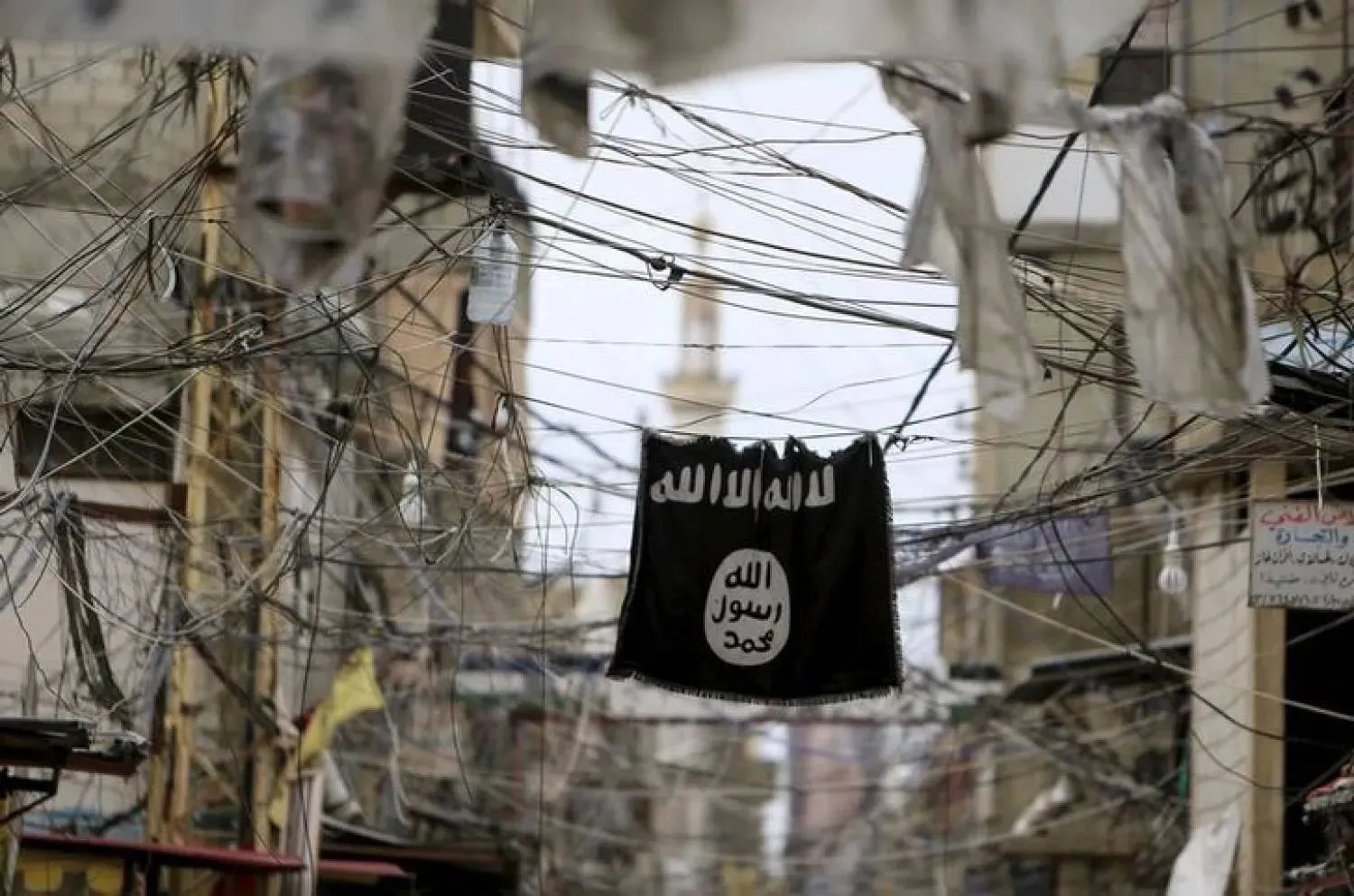
An ISIS flag hangs amid electric wires over a street in Ain al-Hilweh Palestinian refugee camp, near the port-city of Sidon, southern Lebanon January 19, 2016. REUTERS/Ali Hashisho
TT

Years on From Fall of ISIS, French Extremists Face Justice in Iraq

An ISIS flag hangs amid electric wires over a street in Ain al-Hilweh Palestinian refugee camp, near the port-city of Sidon, southern Lebanon January 19, 2016. REUTERS/Ali Hashisho

A decade ago, the ISIS group broadcast its crimes as it recruited radicals from around the world and imposed a brutal system of oppression across swathes of Syria and Iraq.

Years on from the group's military defeat, accused members are again in the spotlight -- this time on trial in Iraq, including French nationals, for atrocities committed against the people trapped in the so-called caliphate.

Trials began in September for 47 French citizens who were transferred from Syria last year, charged with belonging to the group that controlled large parts of both countries between 2014 and 2017.

In its first verdicts handed down last week, Baghdad's Karkh Criminal Court sentenced nine men to jail terms of up to 20 years.

A 24-year-old defendant, taken to Syria by his mother more than 10 years ago, was given 15 years. AFP is withholding his identity for legal reasons.

When the sentence was announced, the man said in Arabic: "I went to Syria, but it was my mother who chose for me. What is my fault?"

- 'Deceived' -

Thousands of people travelled from Europe to join ISIS during the war in Syria, where it declared a caliphate in 2014.

France, while repatriating hundreds of family members of extremists, has refused to bring back most of the men accused of involvement, leaving them to face justice abroad.

Many French recruits were from disadvantaged suburbs of major cities and faced limited opportunities.

The group jailed or killed anyone who dared speak out against its atrocities.

Fear was the group's instrument of domination over areas where women were hidden from view and where executions were carried out by bearded militants in public squares, for all to see.

Now, the accused are now being brought to court with shaved faces, wearing orange jumpsuits.

About 1,500 French people are believed to have joined ISIS.

Among them was Kamel Ben Mbarek, 42, who said he had worked as a driver for the group's police in Raqqa, in northern Syria.

"I regret it... because I wasn't young when the organization deceived me," he told the court.

Fewer than half of the French defendants have appeared so far.

"I regret everything I did. I've lost everything," said Adel Bouaoun, 28, accused of taking part in ISIS operations in Syria's Aleppo and Palmyra.

He recounted harsh conditions in Kurdish-run prisons in Syria, saying detainees had died, and described "physical and psychological torture".

ISIS was defeated in Iraq in 2017 and then in Syria in 2019 by a US-led coalition.

Thousands of extremists, along with their families, were left in Syrian prisons and camps under Kurdish command.

Earlier this year, the new Syrian authorities that came to power after the fall of Bashar al-Assad took over the prisons holding the extremists.

The US army then transferred more than 5,700 detainees of about 60 nationalities to Iraq, including at least five French nationals.

Rights groups have criticized the judicial process, calling it rushed and saying that confessions were extracted under duress.

"This entire procedure is a form of pressure. You have recorded statements that are not mine," Lakhdar Sebouai, 34, said in court.

Also among those awaiting trial is Adrien Guihal, who claimed responsibility on behalf of ISIS for the July 2016 attack in Nice, when a truck rammed Bastille Day crowds, killing 86 people.

- 'Law of the jungle' -

At one hearing, three defendants were visibly moved when they saw their siblings, who had come from France, for the first time in years.

The judge allowed them to speak together for a few minutes.

In October, French lawyers Matthieu Bagard and Marie Dose, who are defending many of the 47 French nationals, said the Iraqi judiciary had barred them from entering the country to attend the hearings, after they described the detainees' treatment as "inhumane".

The two lawyers are calling for the defendants' repatriation to France so they can be tried there.

Two Iraqi lawyers appointed in their absence refused to speak to AFP.

"Even if his sentence is different, he was tortured like an adult and tried like an adult," Bagard told AFP, referring to the 24-year-old taken to Syria as a child.

Observers, representatives of the French embassy and journalists are attending the trials.

Rights groups fear death sentences will be handed out.

Before the court, Thomas Barnouin, 45, whose verdict is expected November 18, recalled travelling to Syria at the start of the conflict, convinced that he had a religious duty.

But "the organization applied the law of the jungle, not the law of God", he said.

"We did not know that it also wanted to carry out terrorist attacks in our own country, in France," he added.

"I reject all its crimes."


Iraq’s Al-Zaidi Emerges as Risk-Taker in Showdowns Against Factions and Kurds

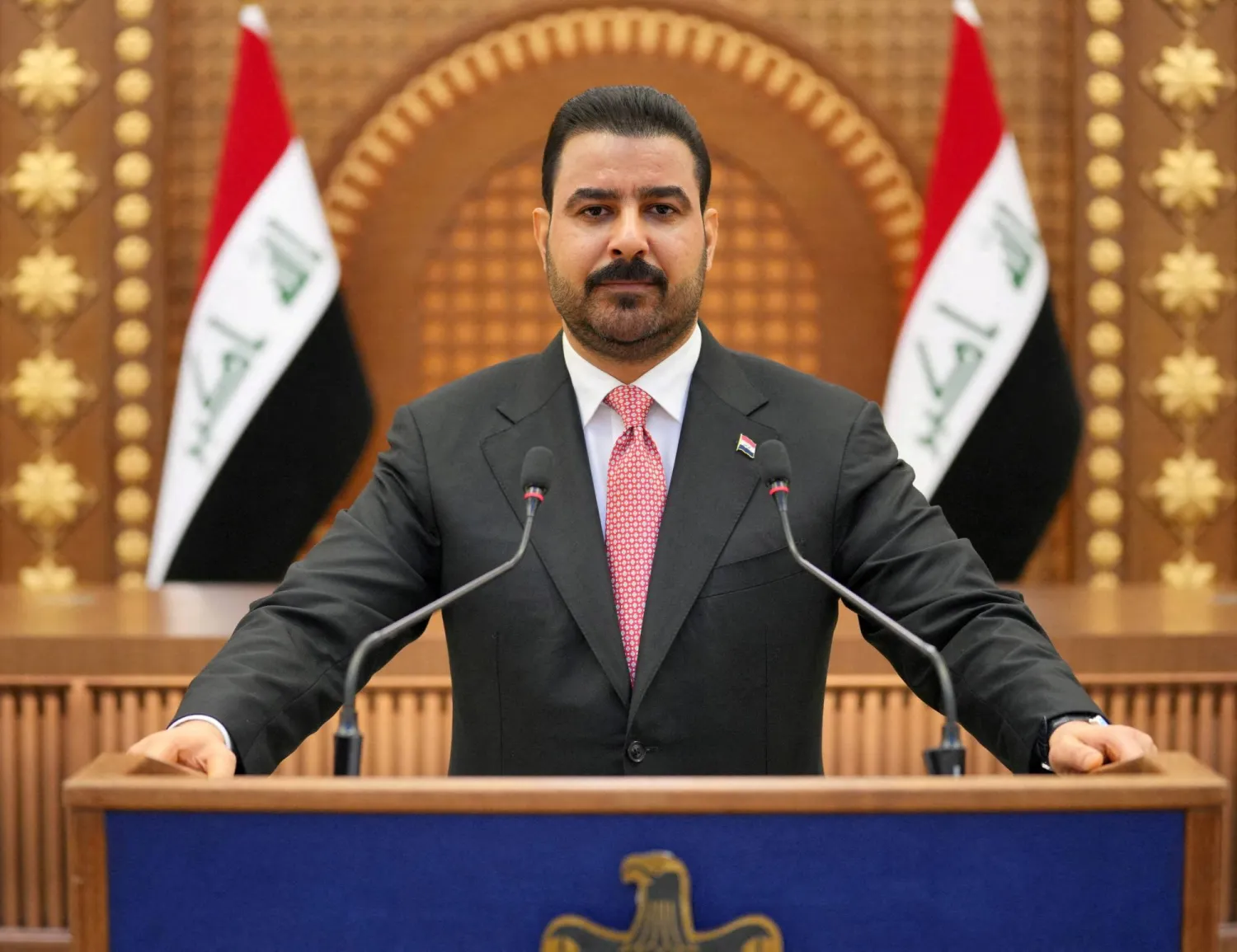
Iraqi Prime Minister Ali al-Zaidi delivers a speech marking Sovereignty Day and the withdrawal of US-led coalition forces from Iraq, in Baghdad, Iraq, September 30, 2026. (Iraqi Prime Minister's Media Office/Handout via Reuters)
TT

Iraq’s Al-Zaidi Emerges as Risk-Taker in Showdowns Against Factions and Kurds

Iraqi Prime Minister Ali al-Zaidi delivers a speech marking Sovereignty Day and the withdrawal of US-led coalition forces from Iraq, in Baghdad, Iraq, September 30, 2026. (Iraqi Prime Minister's Media Office/Handout via Reuters)

Just six months since taking power as a political novice, Iraq's Prime Minister Ali al-Zaidi has emerged as an unexpectedly bold risk-taker, launching simultaneous showdowns against armed Iran-backed factions and the semi-autonomous Kurds.

The two moves put the 41-year-old multimillionaire businessman on a course for direct confrontation with two of the most powerful entrenched groups that have defied Baghdad's central control for decades.

Last week he ordered the military to stand by to enter a city controlled by Iran's most powerful armed group in Iraq, Kataib Hezbollah, after an investigation concluded the group was running an oil smuggling ring there.

Kataib Hezbollah, initially defiant, agreed to let troops enter in a compromise brokered by Shiite politicians.

Then on Tuesday al-Zaidi's office announced that he had ordered the federal oil ministry to manage oilfields now under Kurdish security control, a source of longstanding dispute between Baghdad and the semi-autonomous Kurdistan region.

Al-Zaidi also ordered ‌the border crossings ‌authority to take over all crossings in Kurdistan, and directed the Kurdistan Regional Government to allow ‌exports ⁠of crude oil ⁠and petroleum products only through the federal ministry.

The prime minister of Kurdistan called the moves unacceptable.

"Prime Minister Ali al-Zaidi’s decisions are bold," said Baghdad-based political analyst Hamza Mustafa.

"In taking these decisions, he has moved away from political dealmaking and favoritism. He is unconcerned about securing the support of those political forces for another term," Mustafa said. “These decisions, important as they are, need mechanisms to put them into effect.”

HUGE PERSONAL RISK

Both moves pit the PM against entrenched groups that have resisted Baghdad's authority for decades.

Baghdad-based political analyst Ahmed Younis called the decision to confront Kataib Hezbollah and other Iran-backed armed groups "a huge personal and political risk".

"These groups have demonstrated both their military capabilities and their ⁠willingness to use force against those who challenge their influence. This is a high-stakes test ‌of the government’s authority, and the consequences could extend far beyond a political confrontation."

As for ‌the subsequent decision to assert authority over Kurdish-controlled oil fields, one person familiar with the plan said it would be surprising if the ‌Kurds allowed the federal oil ministry to take over management without resistance.

Analyst Mustafa called the move even riskier than the showdown ‌against Kataib Hezbollah.

Both moves encroach on vital interests of groups that have grown hugely powerful throughout the tumultuous decades of conflict since US-led forces toppled Saddam Hussein in 2003.

'I WILL NOT BACK DOWN'

Al-Zaidi has said he will stand firm.

"I will not back down from bringing all weapons under state control, and I will press ahead with the confrontation, even if it ‌costs me my life," he told a government meeting in August after launching a campaign to disarm factions.

A multimillionaire businessman with interests across sectors of the Iraqi economy, al-Zaidi emerged ⁠as a compromise candidate for ⁠prime minister in April after US President Donald Trump publicly opposed a return of divisive former Prime Minister Nouri al-Maliki, viewed in Washington as too close to Iran.

Al-Zaidi's relative youth and business background helped make him an alternative to established political figures, with supporters seeing an opportunity to bring a different approach to government. But his lack of a political track record left questions about his ability to navigate Iraq’s entrenched political networks.

SUPPORT FROM TRUMP

He has so far received open support from Washington that other recent prime ministers had lacked. But, like all Iraqi leaders, al-Zaidi must tread carefully in challenging Iran, which has steadily gained major influence in the country through its ties to Shiite factions and politicians.

Trump has pressured al-Zaidi to disarm the factions that have struck US troops and targets in Saudi Arabia and the United Arab Emirates in solidarity with Tehran since the United States and Israel launched their war against Iran in February.

In August, Iraqi special forces reporting directly to the prime minister arrested the intelligence chief of the Iran-aligned faction Harakat al-Nujaba on accusations of involvement in drone attacks against US interests.

The detention, which lasted 48 hours, triggered threats of retaliation from the group and prompted intervention by senior Shiite politicians who helped defuse tensions. A week later, Iraqi special forces arrested four faction members over allegations they facilitated attacks on US interests.


Nvidia and Board Still Face Legal Risks After Jensen Huang’s Return

Nvidia's headquarters are seen in Santa Clara, California, on November 23, 2026. (AFP)
TT

Nvidia and Board Still Face Legal Risks After Jensen Huang’s Return

Nvidia's headquarters are seen in Santa Clara, California, on November 23, 2026. (AFP)

Nvidia's board reinstated Jensen Huang as CEO at the urging of US President Donald Trump, less ‌than two weeks after the co-founder of the AI chip powerhouse resigned following revelations of extramarital affairs, including one with an alleged spy for China.

The reported ties between Huang and a suspected spy led to his resignation as CEO and sparked investigations by the US securities regulator and FBI, congressional hearings, a review by the company's independent directors and a proposed investor class action lawsuit.

Below is a look at how the rehiring, which sparked a massive rally in Nvidia's stock, could impact the legal exposure for the company and its directors.

WHAT ARE THE ALLEGATIONS?

Huang allegedly had intimate relations with Alice Huang, an unrelated Chinese businesswoman who is accused of having ties with Beijing. Huang is also accused of having had intimate relationships with at least two Nvidia employees. He resigned on November 12.

Huang has acknowledged being unfaithful to his wife and apologized, but has not publicly addressed the individual alleged relationships in detail. China has denied the espionage allegations. Attempts by Reuters to reach Alice Huang have been unsuccessful.

Nvidia said in a statement that based on US government input the board was confident that "Huang's reinstatement poses no national security risk," a claim backed by Trump in an interview with CNBC. Trump said that Huang did nothing wrong and that his intervention led to Huang's return.

Nvidia sits at the center of the technological rivalry between the United States and China. Washington has imposed restrictions on exports of advanced AI chips to China since 2022, including those made by Nvidia.

COULD ‌THE BOARD BE ON ‌THE HOOK DESPITE TRUMP'S ASSURANCES?

An investor filed a so-called derivative lawsuit in federal court on November 11 seeking to ‌hold the ⁠board liable for failing ⁠to make a good-faith effort to oversee the business and Huang. The lawsuit said the board allowed Nvidia to make repeated assurances about Huang's relationship with Alice Huang and her former company, Megaspeed, until the allegations were public.

Nvidia formed a committee of independent directors that hired law firm Wachtell, Lipton, Rosen & Katz to assist in an internal investigation. The committee is still investigating, Nvidia said on Monday.

Trump's statement that Huang did not pose a national security risk could strengthen the directors' legal defenses, according to legal experts. The directors could argue that Trump's assurances mean the company will not be prosecuted for export control violations, removing the threat that rehiring Huang could damage the company.

However, Lee Squitieri, one of the attorneys representing the shareholder in the derivative lawsuit, told Reuters in an email that rehiring Huang does not change the liability scenario very much and that the problems extend beyond possible export control violations. Squitieri said Huang dominated the ⁠board and harmed Nvidia by leaving it without a succession plan and with poor compliance oversight and weak corporate governance.

Derivative lawsuit ‌settlements are generally paid from insurance, and Nvidia has coverage for its officers and directors of up to $950 million.

WHAT ‌HAPPENS TO ANY FEDERAL CRIMINAL PROBE?

Trump has said the FBI is investigating Huang's affair with Alice Huang, but has been vague about the focus of the probe.

Attorney General Todd Blanche ‌said on November 12 the FBI is investigating Alice Huang. The Department of Justice has said it had no evidence of wrongdoing by Nvidia or its co-founder.

Reuters could ‌not immediately determine the status of federal criminal probes, and the Justice Department declined to comment.

Legal experts said Trump's remarks on Monday make it unlikely the Justice Department would continue an investigation during his administration, particularly given how much influence the president wields over the department.

But the statute of limitations for export control violations extends beyond January 2029, when Trump leaves office, and a new attorney general could reopen an investigation. Trump also could preemptively pardon Huang to avoid future prosecution for violating federal law.

CAN STATES STILL PURSUE CASES AGAINST HUANG AND THE COMPANY?

Attorneys general in Missouri and California ‌said on Monday their investigations will continue.

The office of California Attorney General Rob Bonta, a Democrat, said on November 19 it had served an investigative subpoena on Nvidia to determine if China obtained advanced chips or confidential information and whether Nvidia ⁠misled the public. Bonta has not said whether ⁠the investigation is criminal or civil in nature and a probe does not mean a case will be brought.

The office of Missouri Attorney General Catherine Hanaway, a Republican, said it would proceed with its investigation into whether Huang’s actions harmed state pension funds. Her office previously said it was viewing the investigation through a consumer protection lens focused on potential misrepresentations.

WHAT HAPPENS TO THE SEC PROBE?

The US Securities and Exchange Commission is investigating Nvidia for potential accounting issues, Reuters reported on Friday. Reuters could not immediately ascertain on Monday whether Trump’s intervention had changed the status of that federal probe.

The SEC did not immediately respond to a request for comment.

However, the independence of the SEC, which is structured as a bipartisan commission and is chaired by Trump appointee Paul Atkins, has eroded under Trump’s second administration, according to legal experts.

In March, Reuters reported that the SEC’s enforcement chief quit after just six months on the job after clashing with the agency’s leaders over the direction of its enforcement program, including the handling of cases with ties to Trump and his family.

DO INVESTORS HAVE LEGAL RECOURSE?

A proposed class action was filed in San Jose, California, federal court on November 9 alleging the company and Huang defrauded shareholders by concealing the alleged relationship with Alice Huang and Megaspeed, which Jensen Huang described in an October 30 Bloomberg interview as "normal and not unusual."

The lawsuit did not specify damages but the stock lost around 20% from its peak to the end of the class period, a decline of around $1 trillion in market value.

The stock rally sparked by rehiring Huang could undermine the value of the lawsuit if the shares continue to rise. US securities law caps shareholder damages if the stock rebounds in 90 days after an initial drop.


Sudanese Patients with Chronic Diseases Struggle with Medicine Shortages, Soaring Prices

Packages of approved diabetes and blood pressure medications at a pharmacy in Omdurman, Sudan (Asharq Al-Awsat)
TT

Sudanese Patients with Chronic Diseases Struggle with Medicine Shortages, Soaring Prices

Packages of approved diabetes and blood pressure medications at a pharmacy in Omdurman, Sudan (Asharq Al-Awsat)

When the power goes out at his home, as it frequently does, Al-Hadi Osman is forced to place the insulin he struggled to find and afford in a container filled with water, hoping to prevent it from spoiling.

"Insulin disappears from pharmacies for long periods, and sometimes I have to turn to donors when I can't afford to buy it," he told Asharq Al-Awsat.

Kamal Idris faces a similar struggle. He says he sometimes spends more than two months searching for medication to treat high blood pressure without finding it.

His financial circumstances make obtaining medicine even more difficult. Most of the time, he buys tablets by the strip rather than purchasing an entire package. Occasionally, he relies on medicines sent by relatives or friends living in Arab countries.

Idris told Asharq Al-Awsat that he also takes Glucophage to treat diabetes and vitamin B12 supplements.

The experiences of Osman and Idris illustrate the difficulties patients in Khartoum face in maintaining regular treatment. However, pharmacists interviewed by Asharq Al-Awsat said medicine availability has generally improved, although some medications remain scarce and prices are often beyond patients' means.

Sudan's pharmaceutical supply network was disrupted by the war that began in April 2023, cutting off distribution routes that had previously carried medicines from the capital to other states.

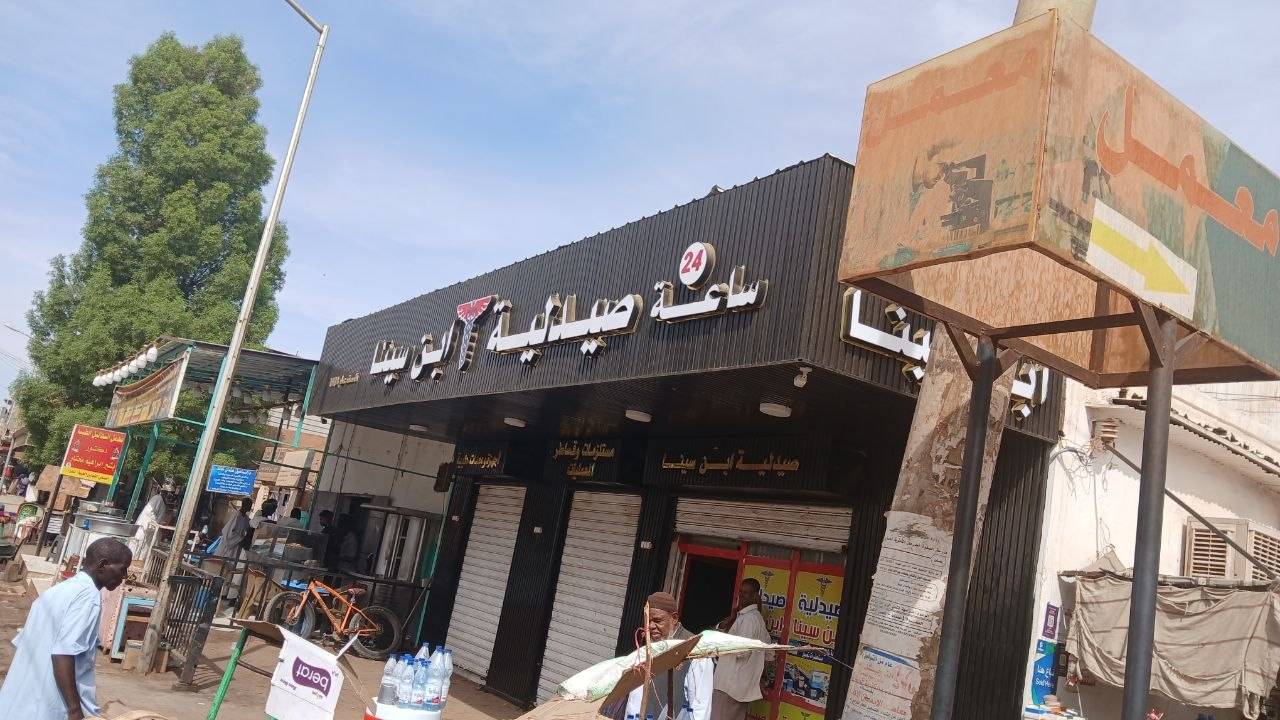
The exterior of a pharmacy operating in Omdurman (Asharq Al-Awsat)

However, the National Medical Supplies Fund (NMSF), the government agency responsible for medical supplies, has gradually resumed operations following its return to Khartoum.

Pharmacist Walid Farid told Asharq Al-Awsat that Amilo, a blood pressure medication, costs approximately 6,000 Sudanese pounds, while Amilosan and Candestan each cost around 15,000 pounds.

Among diabetes medications, Amaryl costs between 30,000 and 45,000 pounds, depending on the formulation and manufacturer, while Metformin costs approximately 54,000 Sudanese pounds.

Farid said a package of insulin costs 30,000 pounds when available.

However, another pharmacist who works for the NMSF told Asharq Al-Awsat that insulin is generally unavailable in pharmacies, with the exception of premixed insulin, which he said is available through the fund at prices ranging from 26,000 to 30,000 pounds.

Pharmacist Nafisa Abdelrahman offered a somewhat different assessment, saying most medications for chronic diseases are available on the market, although shortages persist in certain types of premixed and long-acting insulin, including Lantus and insulin pens.

"Difficulties obtaining some of these types existed even before the war," she said.

Premixed insulin combines two types of insulin with different onset times and durations of action in fixed proportions, typically 30% short-acting insulin and 70% intermediate-acting insulin.

Switching between insulin formulations requires medical supervision, making access to the specific type prescribed to a patient essential, even when other formulations are available.

Monthly treatment costs vary according to individual needs.

Farid explained that some patients require 20 to 30 units of insulin per dose, while others need higher doses. The number of packages required depends on the patient's total daily dosage, as well as the size and concentration of each package.

Abdelrahman said rising prices have placed a burden on both patients and pharmacists.

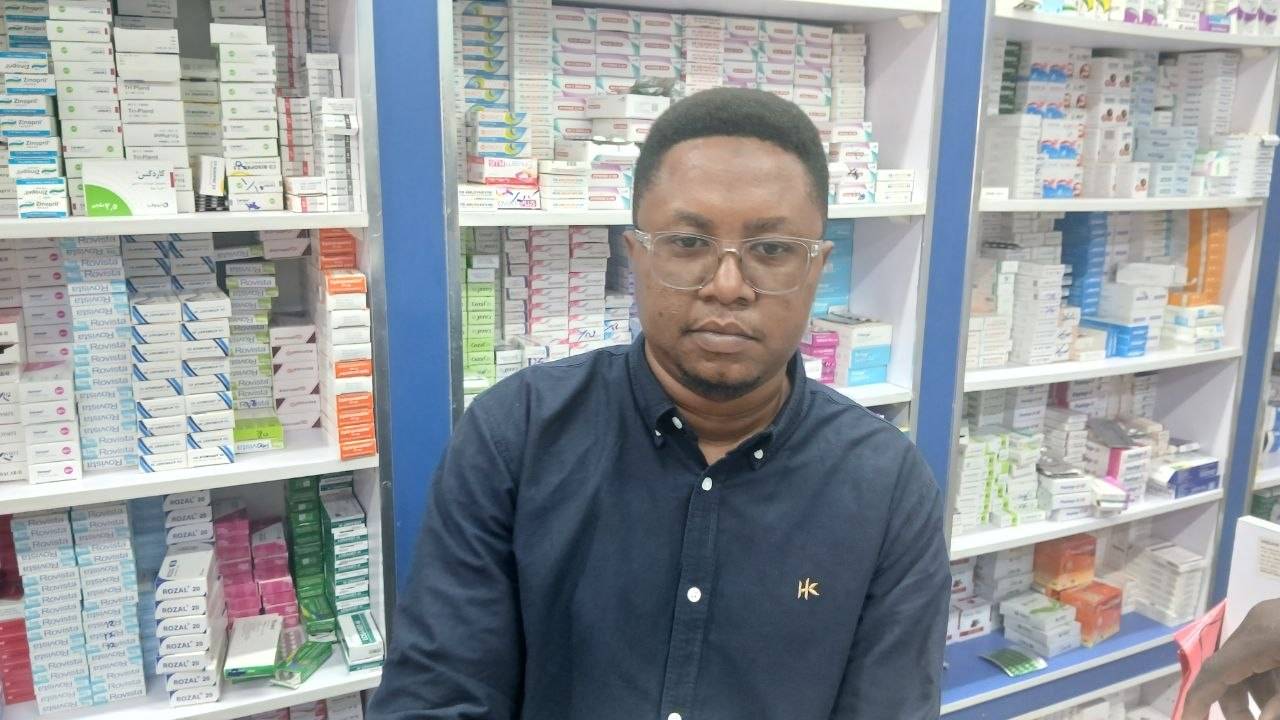
Pharmacist Mohammed Omar speaks to Asharq Al-Awsat about medications for chronic diseases (Asharq Al-Awsat)

She attributed the increases to multiple exchange rates and the emergence of parallel import channels, with some traders pricing medicines according to their import costs.

"Prices sometimes change almost daily, while patients' urgent need for treatment drives some to buy their medicines regardless of how expensive they become," she said.

Farid also attributed fluctuations in medicine prices to the Sudanese pound's volatility against the US dollar, which has made pricing unstable.

He recalled once advising a pharmacy owner to temporarily suspend sales until economic conditions stabilized.

According to pharmacist Omar, manufacturers or entities financing imports determine the initial price of medicines, after which an additional 20% is applied under what he described as the new pricing system.

He estimated that the cost of a package of medicine has doubled since the beginning of the year, attributing the increase to the depreciation of the Sudanese pound.

"High prices sometimes slow sales, leaving certain medicines sitting on pharmacy shelves because patients cannot afford them," he said.

Abdelrahman explained that some pharmacies allow customers to purchase blood pressure medication by the strip when a package contains several strips.

However, opening insulin packages and selling individual doses is not common practice in retail pharmacies because of storage and safety requirements.

Omar said patients requiring urgent doses receive treatment in hospital emergency departments according to their medical condition.

Disruptions to pharmaceutical distribution date back to the early months of the war.

In June 2023, the World Health Organization (WHO) reported that military forces had reportedly taken control of the NMSF's central warehouses in Khartoum.

The facilities stored medicines intended for distribution across Sudan and housed the National Pharmacy for Chronic Diseases.

The NMSF accused the Rapid Support Forces (RSF) of preventing access to its warehouses and said refrigerated vehicles used to transport medicines had been looted.

The agency was subsequently forced to organize distribution operations from Port Sudan, while continuing to face difficulties delivering shipments to Khartoum and other areas.

Sudan's National Investigation Committee estimated the fund's war-related losses at more than $500 million, including life-saving medicines, medical solutions and equipment.

In August 2026, the NMSF announced the reopening of 10 warehouses at its Khartoum headquarters and the restoration of its electronic supply management system.

In October, it announced the reopening of the Martyr Ahmed Hassan Pharmacy, a central pharmacy in the capital.

Omar estimated that medicine availability through the NMSF had reached 68% this year, with the agency aiming to increase that figure to 85% by 2027 to meet the needs of Sudan's states.

He identified two continuing obstacles to increasing supplies: the high cost of foreign currency and disruptions to maritime transport.

He said shipping disruptions, including those affecting traffic through the Strait of Hormuz, had interfered with deliveries of insulin and blood pressure medications to Khartoum state over the past six months.

According to Abdelrahman, some domestic pharmaceutical factories have resumed operations but continue to face multiple fees and levies, along with rising costs for imported raw materials.

She warned that additional medications could become unavailable if the Sudanese pound continues to depreciate.

Omar said Sudan currently imports insulin, although a proposal exists to manufacture it domestically. Implementing such a project, however, would require time, stability and adequate resources.

In November, the WHO called for urgent, sustained funding to protect and expand essential health services in Sudan.

The organization said 21 million people across the country require health assistance and that 37% of healthcare facilities are out of service.

The appeal followed a WHO delegation's visit to Kosti in White Nile state and El Obeid in North Kordofan between November 7 and 12.

The delegation documented medicine shortages and difficulties accessing healthcare, reporting that power outages were disrupting services including surgery, intensive care and kidney dialysis.

Back in Khartoum, Kamal Idris continues to rely on whatever medicine he can afford, sometimes purchasing just one strip of tablets or using supplies sent by relatives and friends in Saudi Arabia.

Meanwhile, Al-Hadi Osman continues searching for someone who can help him pay for insulin. Even when he manages to obtain it and bring it home, frequent power outages remain another obstacle in his struggle to maintain treatment.