
Anyone who traces the history of the modern Saudi state will recognize that the threats and challenges it faces today are not fundamentally new, even if their methods and circumstances have changed. For three centuries, Saudi Arabia has upheld its sovereignty and independence in decision-making.
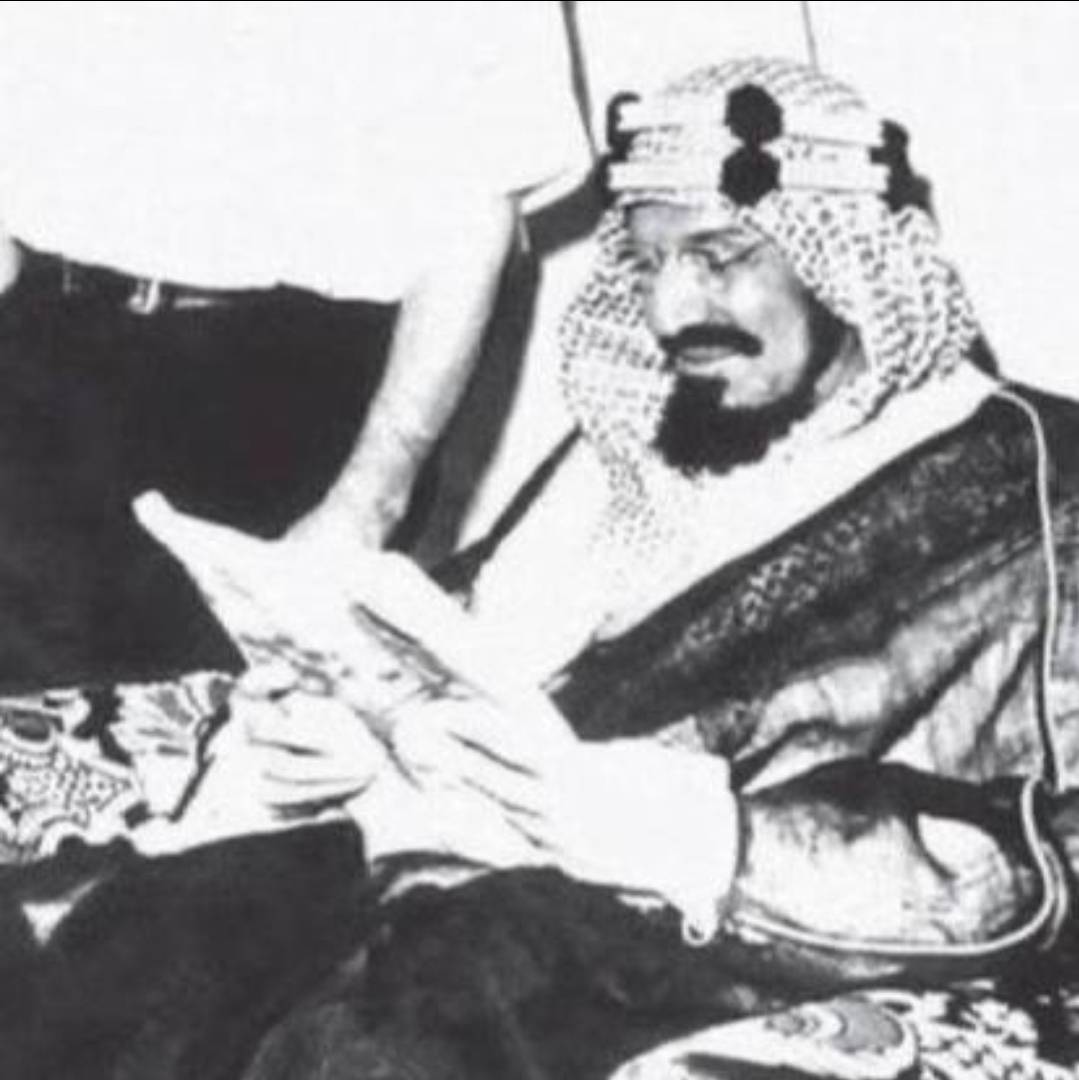
From the earliest stages of unification, King Abdulaziz bin Abdulrahman faced internal and external challenges as he built the state. Among the most dangerous were those that arose between 1927 and 1934, when domestic rebellions became intertwined with foreign threats, nearly plunging the country into crises on several fronts.
These included the rebellion of certain Ikhwan leaders who had previously been among the most prominent participants in the country's unification. Their disagreements with King Abdulaziz, rooted in their misguided interpretations of religious matters, the authority of the state, control over military raids and relations with neighboring countries, eventually escalated into armed confrontation. The conflict culminated in the Battle of Sabilla in 1929, before the rebellion was finally suppressed in 1930.
In the northern Hejaz, Hamid bin Rafadah led a rebellion in 1932 that was linked to opposition activities and backed by outside parties.
The south witnessed an Idrisi rebellion that same year, aimed at restoring the family's former influence. The rebels exploited border disputes with Yemen and received support from Imam Yahya, developments that later contributed to the Saudi-Yemeni War of 1934.
Early Threats
The danger posed by these crises lay not only in their succession and occasional overlap, but also in their geographical reach, extending from the country's central and eastern regions to its northern and southern borders.
Tribal, political and religious motivations became entangled with the calculations of neighboring powers.
These events unfolded as Italy competed with Britain for influence in the Red Sea. Rome supported Imam Yahya's activities, opposed Saudi sovereignty over territories formerly controlled by the Idrisis and backed their rebellion, despite the signing of the Saudi-Italian Treaty of Friendship in February 1932.
King Abdulaziz, however, did not consider these developments sufficient grounds for severing relations.
While responding decisively with military force to the rebellion and Imam Yahya's actions once peaceful options had been exhausted, he also pursued diplomacy to neutralize external parties and subsequently settled disputes through treaties designed to preserve the state's stability.
He thus succeeded in overcoming one of the most complex periods in the Kingdom's formative history.
At the time, the emerging state faced the simultaneous challenges of consolidating its authority at home and securing recognition of its borders, sovereignty and independent decision-making abroad, while colonial powers competed for influence across the region.
King Abdulaziz confronted other challenges and crises in an exceptionally complicated regional and international environment.
What distinguished his political approach, however, was his ability to understand the balance of power and benefit from international relations without allowing those relationships to compromise his freedom of decision or undermine the state's fundamental interests.
These events illustrate a policy that distinguishes between managing disagreements and protecting national interests.
Differences with an international power need not result in severing relations, just as maintaining relations with that power does not require surrendering rights or sovereignty.
That approach continued under successive kings as state institutions developed and foreign relations expanded.
Over time, successive experiences helped build a body of expertise in crisis management that extended beyond wars and security threats to encompass economic disruptions, political transformations, waves of terrorism and other crises.
Each brought challenges that required the development of national institutions, systems and capabilities.
It is therefore nothing new for Saudi Arabia to face political and security threats involving overlapping regional and international interests, or challenges whose objectives and consequences extend beyond the immediate incidents through which they emerge.
Throughout the nearly three-century history of the Saudi state, it has experienced various forms of conflict and attempts to influence its decisions and positions.
The sources and methods of these threats have changed, but protecting national security and preserving independent decision-making have remained fundamental principles of Saudi policy.
The Current Attacks
The developments unfolding in the region today, including attacks against Saudi Arabia by the terrorist Houthi militia and other groups, together with the accompanying international positions and media commentary, require a broader understanding of the situation.
These incidents cannot be assessed solely through their immediate military consequences.
An attack on a civilian facility or critical infrastructure, however serious, may be one manifestation of a wider crisis involving several parties whose interests and objectives differ, even if their positions sometimes produce similar outcomes.
The attacks targeting Saudi cities in recent weeks offer an example of the nature of these challenges.
Threats have extended to airports and civilian and economic facilities, with consequences reaching beyond physical damage and defense costs.
They have also involved attempts to disrupt transportation, economic activity and the public's sense of security and stability.
Understanding these attacks therefore requires examining more than the weapons used. It also calls for assessing their political objectives and the potential pressure they seek to exert beyond the battlefield.
The broader political environment surrounding such incidents deserves close scrutiny, particularly when security threats form part of a wider situation involving economic interests, international alliances and political choices.
Historically, the challenges facing Saudi Arabia have not been exclusively military or political.
At various times, some parties have sought to exploit the Kingdom's religious standing and its responsibilities toward the Two Holy Mosques for political purposes, despite the principle that religious rituals and sacred sites should remain outside political conflicts.
Certain actors have attempted to undermine Saudi Arabia's standing and its service to the Two Holy Mosques by turning these responsibilities into instruments of political pressure.
Terrorist attacks against Saudi security can also be understood from this perspective, particularly when they involve areas or facilities connected to services for Hajj and Umrah pilgrims and other visitors.
Examples include missile attacks targeting the Makkah and Madinah regions and attacks on King Khalid International Airport.
Allies' Calculations
Setting aside the religious and moral dimensions, and recognizing these attacks as forms of military and security threats, the political and international developments surrounding them reveal another layer of complexity in the crises states confront.
Strategic relationships, however strong and deeply rooted, do not guarantee permanent alignment of interests and positions.
Partners may differ in their assessments of the nature of a threat, the appropriate means of confronting it or the extent of the support they are prepared to provide.
This does not diminish the importance of the alliances Saudi Arabia has built over many decades.
Those relationships have contributed to political, economic and defense cooperation and remain an important component of the Kingdom's foreign policy.
But partnership, in political terms, does not mean surrendering freedom of decision. Nor do differing calculations during a particular crisis eliminate the shared interests on which relations between states are founded.
Here lies one of the most complicated challenges.
A country may face a security threat that requires cooperation with its partners while simultaneously confronting political choices or arrangements whose consequences and duration extend far beyond addressing that immediate threat.
This dilemma may emerge in two directions.
An adversary may seek, by attacking civilian facilities, to push Riyadh toward settlements that do not serve its interests or to use Saudi Arabia as a means of relieving pressure on other parties.
Conversely, others may seek to draw the Kingdom into a broader regional conflict whose scope and conclusion it cannot determine on its own.
Independent decision-making means rejecting both possibilities.
Under such circumstances, preserving the freedom to make sovereign decisions becomes an essential part of crisis management.
The need to confront an immediate danger must not become a reason to accept strategic commitments that are not justified by national interests.
The point is that managing crises in a world of intertwined interests involves more than confronting adversaries.
It also requires managing differences with partners, maintaining a range of options and avoiding dependence on the calculations of any single party, regardless of the importance of that relationship.
Media Pressure
Alongside these developments, various analyses and arguments have emerged concerning the attacks and threats facing Saudi Arabia.
Some link them to the future of the Kingdom's economic and development projects, its ability to maintain stability and attract investment and tourism, or the implications for its international relationships and political choices.
It is natural for these issues to attract attention from the media and research centers.
Saudi Arabia's religious, political and economic significance, its extensive economic and development transformation, and the secure and stable environment required by its major projects make attacks on airports and critical infrastructure particularly newsworthy.
Yet some interpretations, especially in the media, tend to focus on the immediate scale of the threats before drawing conclusions about the Saudi government's ability to preserve its political and strategic choices.
Such assessments often fail to give sufficient weight to the historical experience of the Saudi state and its institutions, or to the resources, capabilities and international relationships at its disposal.
This tendency is evident in analyses that treat security attacks as a direct indication that the state's options are narrowing.
Others assume that escalating threats will inevitably compel Saudi Arabia to adjust its political positions according to what other parties consider appropriate responses to the crisis.
The problem is not in examining these possibilities, which is a legitimate part of analysis, but in treating them as inevitable outcomes.
It is equally problematic to measure a state's capacity to manage a crisis solely by the damage it sustains during a particular period.
Political history offers no basis for assuming that states necessarily change their strategic choices whenever they encounter military or economic challenges.
Likewise, maintaining a particular political position does not mean ignoring changing circumstances or refusing to reconsider the methods used to achieve national objectives.

The Limits of Coercion
An important distinction must be drawn between the ability to inflict damage and the ability to dictate decisions.
An armed terrorist group may succeed in threatening critical infrastructure or disrupting certain activities, but that does not mean it has acquired the power to determine the political choices of the state it targets.
Nor does producing an economic or media impact necessarily amount to achieving strategic objectives.
One of the defining features of Saudi Arabia's experience is that crisis management is no longer confined to a limited set of options or temporary responses.
As state institutions have developed, crisis management has become a coordinated effort involving multiple agencies, each with its own responsibilities and areas of expertise.
This enables the state to address crises across their security, economic, social and political dimensions.
Elements of this accumulated expertise have been demonstrated throughout Saudi history.
The relevant question is not how many crises the Kingdom has faced, but how it has overcome them and continued its course while political systems elsewhere changed, balances of power shifted and the calculations of major powers proved mistaken.
Consider, for example, the 1960s, when Saudi Arabia confronted one of the most dangerous and perhaps most complicated crises in its modern history.
An internal struggle over the monarchy, which ended with King Faisal assuming power in 1964, coincided with the rise of Nasserism and the ideological conflict sweeping the Arab world.
The confrontation extended beyond media campaigns and political incitement.
The Kingdom experienced attacks along its borders, as well as a wave of bombings and sabotage targeting security, military and oil installations.
These included the Trans-Arabian Pipeline, known as Tapline, and sites in Riyadh, Dammam and Khamis Mushait.
There were also attempts to infiltrate the military establishment and plot coups.
Saudi leaders confronted these dangers while reorganizing the institutions of government and the state, building military and security capabilities, and continuing development projects.
They did so within international alliances that offered no absolute guarantees, and amid repeated political efforts to contain the war in Yemen that did not always succeed.
Throughout these challenges, independent Saudi decision-making remained a consistent policy.
An example of this approach to external pressure and security threats can be found in a US diplomatic document dated August 11, 1965.
According to the document, Prince Sultan bin Abdulaziz, then Minister of Defense and Aviation, summoned Talcott W. Seelye, the US chargé d'affaires in Jeddah, to a meeting attended by Saudi Deputy Foreign Minister Mohammed Ibrahim Masoud.
Acting on King Faisal's instructions, Prince Sultan outlined the threats facing Saudi territory.
When the American side made the deployment of fighter aircraft to help deter attacks conditional on specific requirements, Prince Sultan responded decisively that Riyadh did not want American assistance if it came with such conditions.
This did not represent a rejection of cooperation with Washington.
Rather, it was a refusal to allow a request for military support to become a constraint on Saudi political decision-making, even in the face of direct threats to national security.

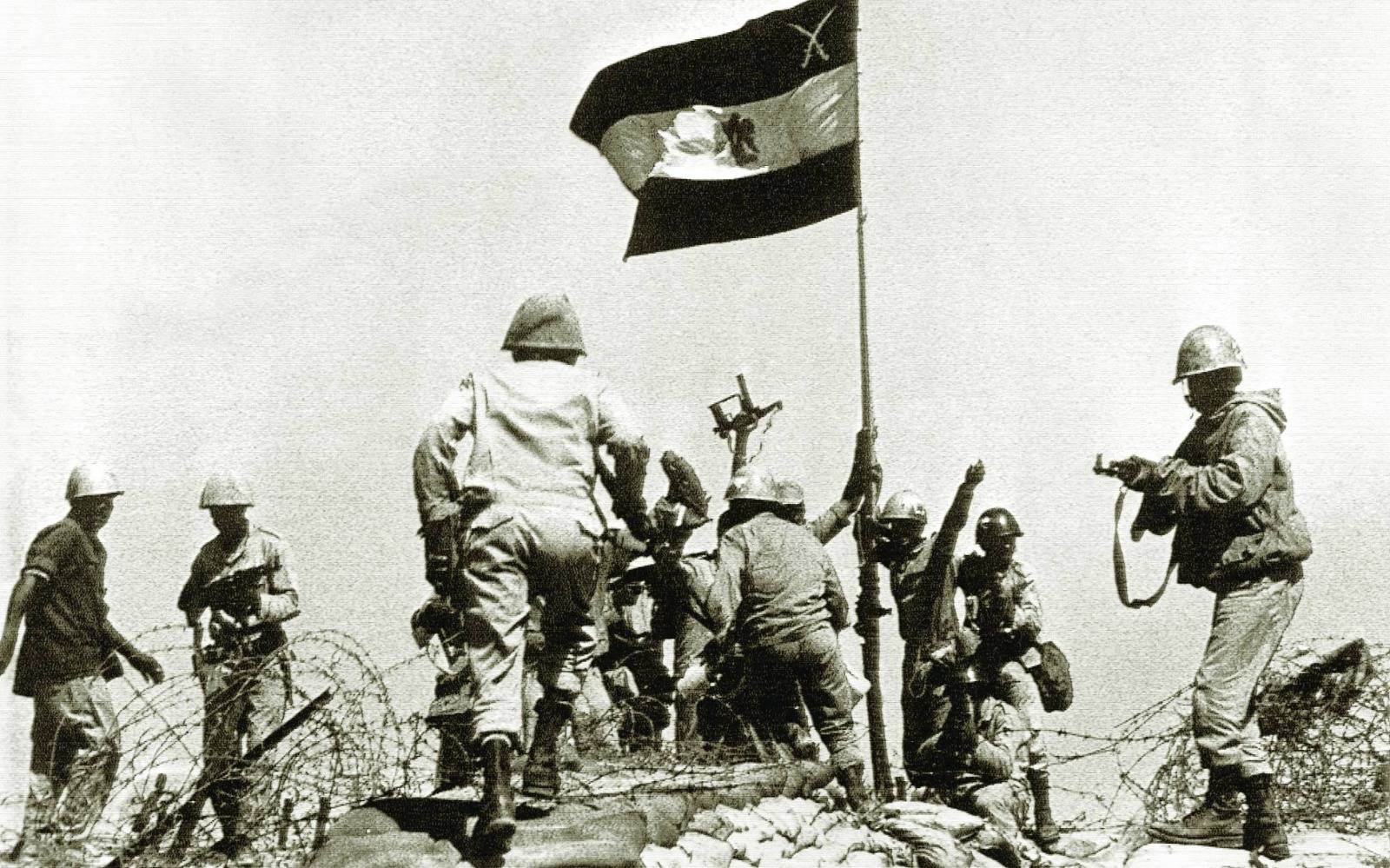
The Arab defeat in June 1967 subsequently transformed the regional balance of power.
Yet King Faisal did not treat the weakened position of his former adversaries as an opportunity to settle scores.
Instead, he moved beyond the dispute with Egypt and contributed to supporting it in the aftermath of the war.
This is what makes that period significant.
Saudi Arabia confronted threats to its security, borders, political stability and economic interests, but managed those challenges without allowing them to undermine the state's unity or stability.
Indeed, it emerged with greater strength and standing.
The crises of the 1970s followed, including the Iranian Revolution, the seizure of the Grand Mosque in Makkah and the Soviet invasion of Afghanistan.
These developments confronted the Kingdom with security and ideological challenges, as well as strategic transformations whose consequences would endure for decades.
They were followed by the Iran-Iraq War and the pressures of the 1980s, which tested the Saudi economy's ability to sustain development spending amid economic and security challenges.
Alliances Put to the Test
Iraq's invasion of Kuwait in 1990 posed an equally serious crisis.
Saudi Arabia faced a direct military threat to its borders and oil installations, ballistic missile attacks against cities and critical infrastructure, and an Iraqi incursion into the city of Khafji.
The Kingdom also encountered political pressure arising from divisions within the Arab world and the repercussions of bringing in international forces to liberate Kuwait.
Economically, the Saudi treasury bore the costs of the war, hosting military forces and supporting affected countries, with expenditures estimated at approximately $55 billion.
The budget deficit rose to 17% of gross domestic product in 1991.
The threats became severe enough to force the closure of several airports, including those in Riyadh and Dhahran, the suspension of civilian flights and the imposition of military restrictions on Saudi airspace.
These measures were not evidence that the state was incapable of protecting its skies.
They were responses to exceptional wartime circumstances, a distinction that must be remembered when assessing current threats.
This applies particularly to the suspension of operations at King Khalid International Airport, without confusing the existence of a threat with the ability to confront it.
The challenges did not end with Kuwait's liberation.
Security and financial commitments continued, while the consequences of the war placed pressure on government spending and development for years afterward.
Liberating Kuwait ended the occupation, but it did not eliminate the financial burdens borne by Riyadh or the political and security repercussions of the conflict.
The Kingdom was therefore confronting more than a war on its borders.
It faced a test of its ability to protect national security, manage alliances and shoulder the burdens of regional stability without losing its internal cohesion.
Confronting Terrorism
The September 11, 2001, attacks placed Riyadh in the midst of one of its most complicated political and media crises.
Its relationship with Washington faced an unprecedented test, accompanied by campaigns casting doubt on Saudi Arabia and pressure for reform and change.
These developments coincided with an international war on terrorism that soon reached Saudi territory through terrorist attacks targeting the state's security, facilities, citizens and residents.
The consequences of the US invasion of Iraq in 2003 were no less serious.
The regional balance of power was disrupted, creating greater opportunities for Iranian influence.
Amid these developments, concepts such as "creative chaos" and the "New Middle East" gained prominence, while maps emerged proposing the redrawing of regional borders, including the partition of Saudi Arabia itself.
Yet the state that confronted terrorism at home and political and media pressure abroad did not allow these crises to dictate its choices.
It preserved its stability and territorial integrity while the wider region continued for years to bear the costs of wars and attempts to reshape its political landscape.
Arab Transformations
The events of the so-called Arab Spring in 2011 brought a different set of challenges.
These were not merely protests that toppled Arab governments, but transformations that threatened regional balances, opened the door to internal conflicts and foreign interventions, and facilitated the rise of extremist organizations.
Saudi leaders faced unrest in Bahrain, a gradual political and security collapse in Yemen, political transformations in Egypt, and wars in Syria and Libya.
There were also attempts to exploit those events to foment unrest inside Saudi Arabia.
The Kingdom had to confront the consequences of these transformations, preserve its own security and stability, and support stability in other Arab countries while regional alliances and balances of power were being reshaped.
The striking aspect was not merely that Saudi Arabia weathered this wave of upheaval.
It also came to shoulder part of the political, security and economic burdens left by crises across its Arab neighborhood.
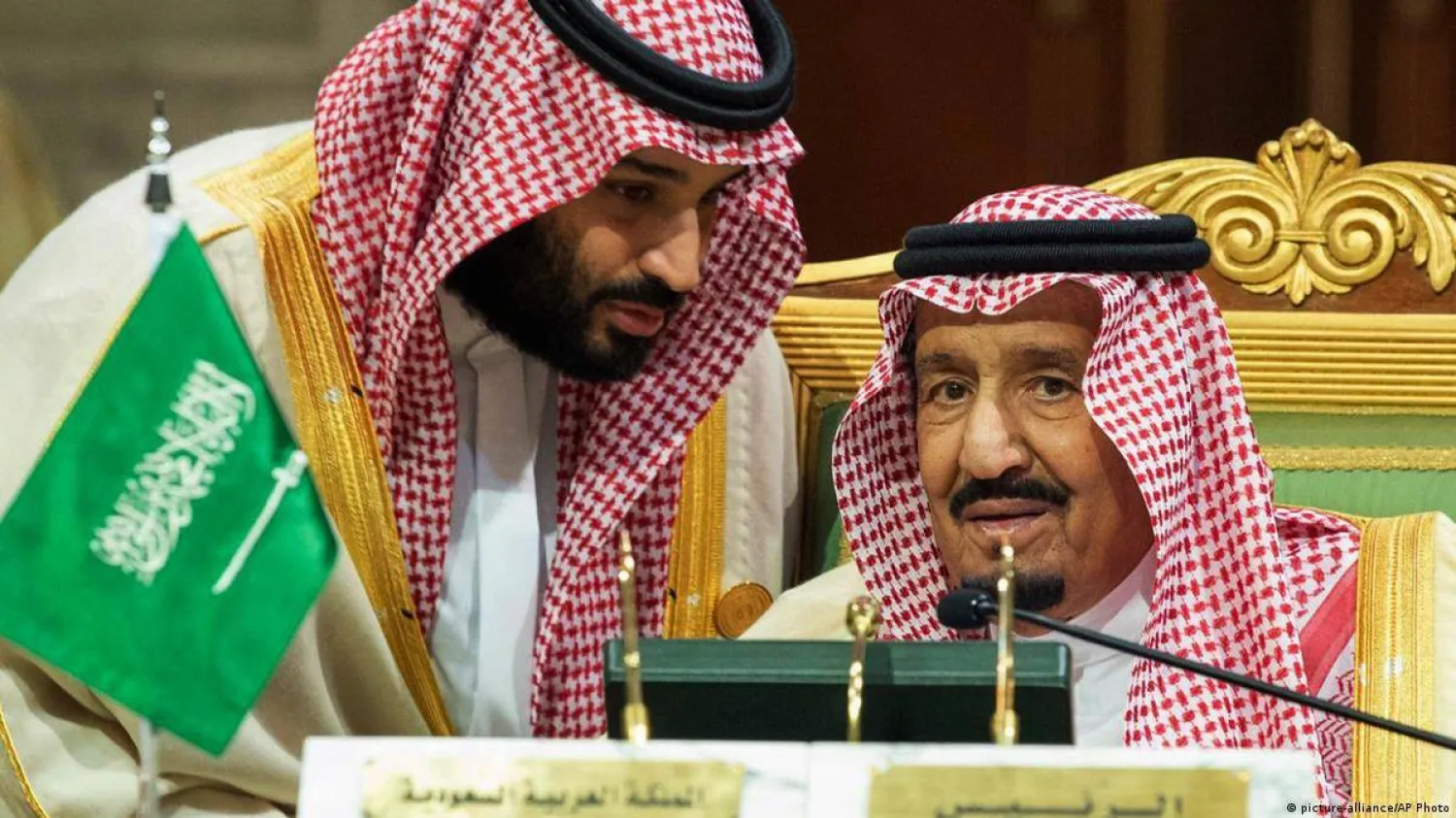
If Saudi Arabia, with fewer resources at its disposal, managed to overcome those challenges while preserving its stability and independent political decision-making, it is today better equipped to confront new threats under the leadership of Custodian of the Two Holy Mosques King Salman bin Abdulaziz and Crown Prince and Prime Minister Mohammed bin Salman.
The Kingdom now possesses greater capabilities, stronger institutions and extensive international alliances.
What some analyses overlook is that the existence of a threat does not necessarily indicate weakness on the part of the state.
Nor does the reluctance of some partners to become directly involved undermine this argument. On the contrary, it reinforces it.
Such reluctance offers practical evidence that a country's security cannot be left to the calculations of others, and that even the strongest partnerships remain subject to each partner's priorities and domestic considerations.
A state confident in its capabilities does not base its decisions on waiting for support that may arrive or be delayed.
It relies instead on its own resources and uses international relationships to expand its options, not as substitutes for them.
Recalling these historical experiences is not intended to equate different crises.
Each has its own characteristics and requires its own methods of response.
The point is to demonstrate that accumulated expertise in crisis management depends on understanding the various consequences of a crisis rather than addressing only one of its manifestations, while preserving the ability of the state and its institutions to fulfill their responsibilities.
This explains why current attacks must be addressed within a comprehensive strategy that is not confined to military retaliation.
Military action should instead form part of a coordinated set of political, diplomatic, economic and security measures serving national interests.
The Saudi state understands that it is not immune to challenges and that past achievements do not eliminate the need to prepare for the future.
It also bears responsibility for protecting its security, citizens and residents, and for assessing the consequences of its decisions.
This is particularly important when the region faces the possibility of a widening conflict involving multiple parties, with repercussions that could extend well beyond the immediate confrontation.
Perhaps the most important lesson of the Saudi experience is that independent decision-making cannot be secured merely by declaring it.
It requires the ability to choose, a range of alternatives, coordination among state institutions and balanced foreign relations, so that confronting one crisis does not create other, more complicated crises.
Here I emphasize once again that, amid the transformations taking place in the world today, the pressures facing states are no longer limited to direct military threats.
Economic, political and media considerations may become intertwined with those threats.
Managing relations with partners, maintaining confidence in the economy and protecting critical infrastructure have therefore become integral elements of national security.
Enduring Principles, Multiple Options
With its long history of navigating regional and international transformations, and the religious, political and economic responsibilities it carries, Riyadh understands that confronting challenges does not mean simply reacting to the accelerating pace of events.
It means retaining the ability to assess interests and risks and to choose the means of achieving national objectives without compromising the state's fundamental principles.
Over the decades, the sources of threats and methods of pressure have changed.
The interests of countries and alliances have shifted, and challenges unknown to previous generations have emerged.
Yet one principle has remained constant throughout the Saudi state's experience: its security, stability and independence in decision-making are responsibilities that cannot be left to the judgment of others, however important its relationships and shared interests with them may be.
Circumstances may change, methods of pressure may multiply, and the positions of adversaries and partners may diverge.
But sovereignty, at its core, remains a state's ability to preserve its freedom of decision and choose what it considers consistent with its interests and responsibilities, rather than what others seek to impose on it under the pressure of crises.