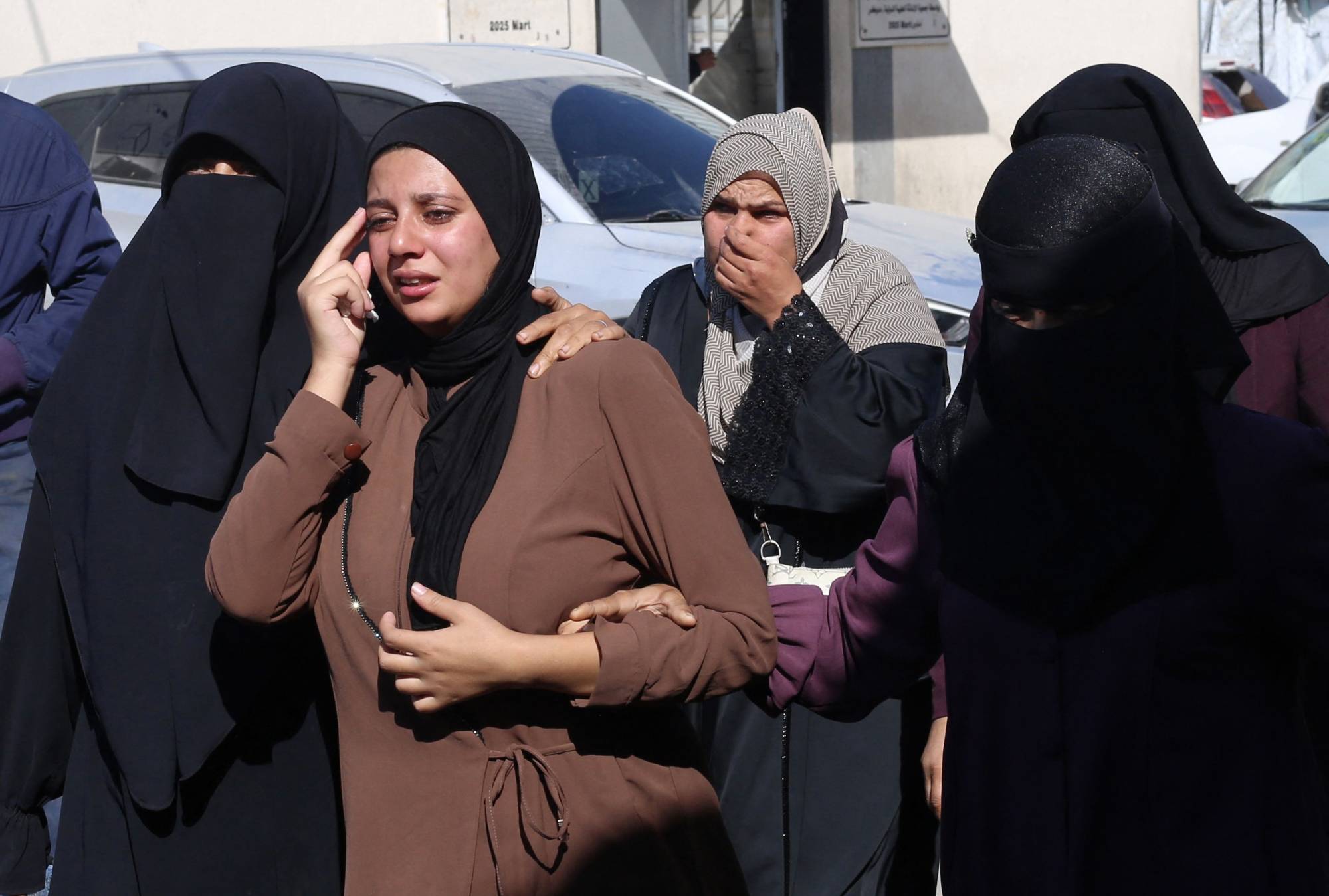
Yasmine al-Najjar, 31, from the Jabalia refugee camp in the northern Gaza Strip, never imagined she would have to wage a legal and tribal battle to protect the rights of her three children, who faced harsh treatment at the hands of their grandfather and uncles after their father was killed in an Israeli strike targeting a group of Palestinians in early 2025.
Najjar told Asharq Al-Awsat that she had fought on several fronts to safeguard her rights and those of her children. She turned to a Sharia court to obtain an inheritance certificate that would ensure each heir received their rightful share.
But she met fierce resistance from her husband’s family, who sought to seize the money in their son’s bank account, deny her any entitlements and take her children away.
Now displaced in western Gaza City, Najjar fought for nearly a year before securing her rights under Islamic law, civil legislation and tribal customs. She eventually obtained her entitlements and retained custody of her children following the intervention of community leaders, tribal elders, mediators and legal authorities.
Half a share is better than nothing
Women in Gaza face legal complications stemming from the Palestinian division between the Gaza Strip and the West Bank.
Najjar pointed to difficulties arising from the Palestinian Authority’s suspension, since the outbreak of the war, of its recognition of certain legal procedures in Gaza, including inheritance certificates, transfers of guardianship and other administrative matters, for reasons including changes in the judges responsible for such cases.
Further complications involve banking operations in the enclave and suspected interference by Hamas-affiliated bodies in the work of Palestinian Authority judges. However, Gaza and the West Bank are governed by the same law.
Najjar described her ordeal as a cruel and oppressive battle endured by most of Gaza’s widows, who have lost their husbands and been left without a breadwinner.
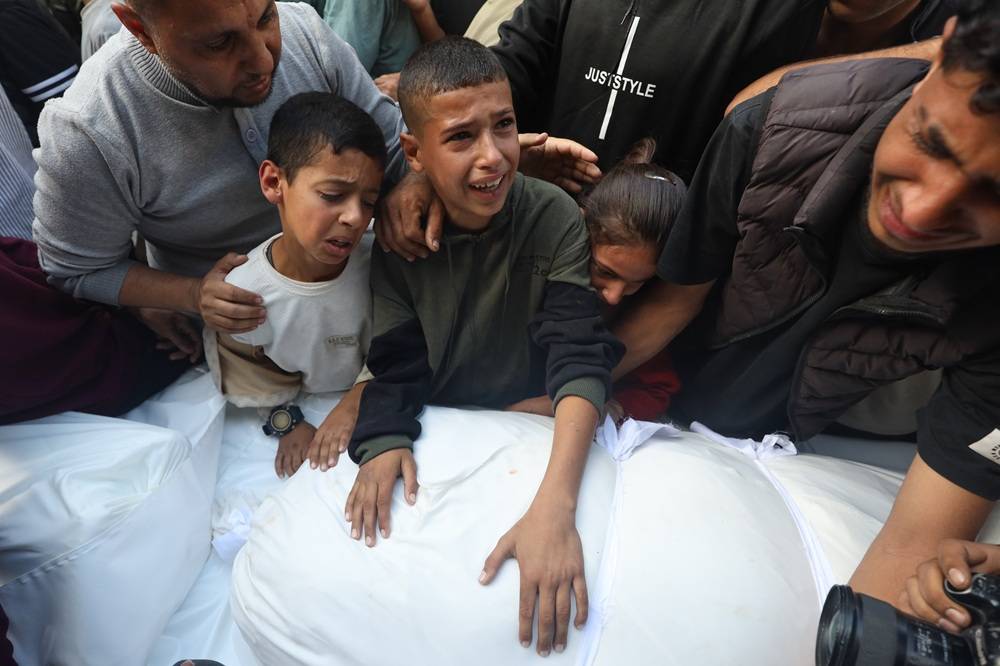
According to Gaza’s Ministry of Social Development, 64,413 women have been widowed during the war, while the number of households supported solely by women has soared to nearly 86,000, accounting for almost a quarter of all households in the enclave.
The ministry said these families needed comprehensive programs extending beyond emergency aid to include regular cash assistance, food, shelter, healthcare, psychological support, economic empowerment for women and provision for children’s needs.
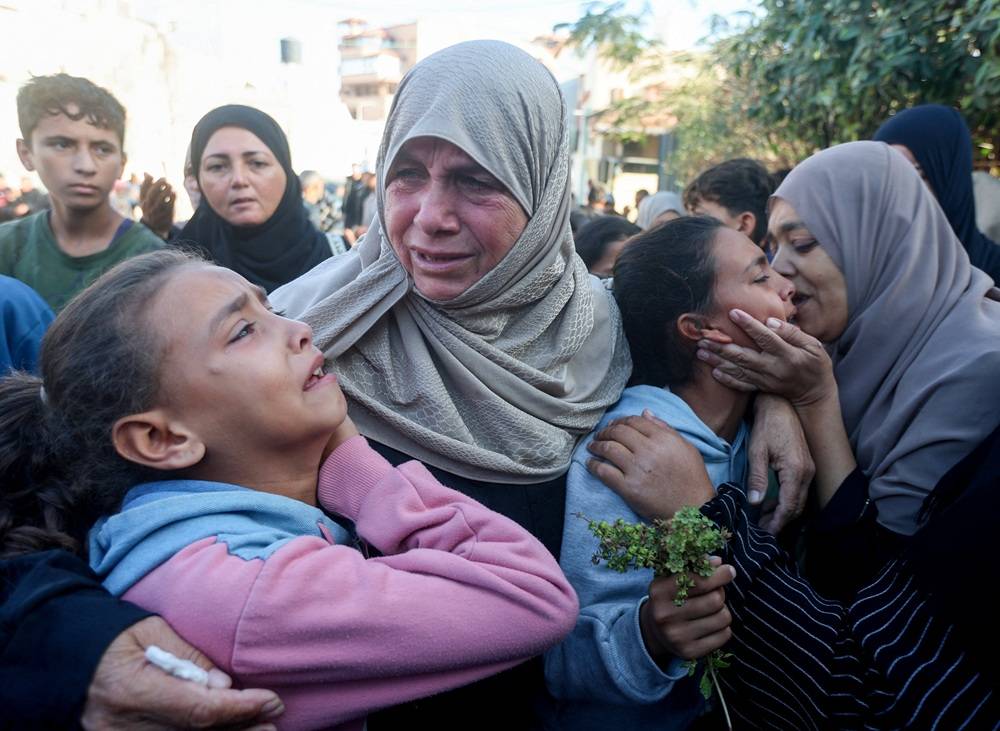
The suffering inflicted on widows and their children by their husbands’ families goes beyond financial hardship. It includes a form of emotional exclusion from the wider family at a time when they are already grieving the loss of a father.
Cast out of the grandfather’s tent
Hanan, 37, now lives in Jabalia. She had been sharing a shelter in western Gaza City with her husband and his family.
Barely two weeks after her husband was killed in an airstrike targeting him in early 2026, his family ordered her to leave with her four children, the eldest aged 12, claiming there was no longer room for them.
Hanan, who asked that neither her surname nor that of her husband, an employee of the Hamas government, be disclosed, was stunned by the decision. She had been on good terms with his family, but they left her no choice but to find another place for herself and her children.
Another shock followed when her husband’s relatives laid claim to his modest salary of around 1,000 shekels ($318), which was already being paid at intervals of 60 or 100 days.
“My family’s elders intervened, and I turned to a lawyer to secure my rights. Thanks to the legal measures introduced by the Hamas government in Gaza, I obtained my entitlements and those of my children,” Hanan told Asharq Al-Awsat.
“Although we received only a portion of my husband’s salary, which his family shared with me, I was happy to have secured some of our rights. We could have been deprived of them altogether and ended up with nothing.”
Hamas had introduced several legal measures involving consultations with widows and other eligible heirs to ensure the equitable distribution of deceased husbands’ salaries and assets in accordance with Islamic law and applicable legislation, safeguarding the rights of all beneficiaries without exception.
Salaries and any existing assets were consequently divided under those provisions.
“The greatest shock was that they threw me and my children out of the place where we lived with them, instead of sheltering and helping us cope, especially when my children need affection and care, and someone to make up for the loss of their father,” Hanan said.
After enormous difficulties, she managed to obtain a tent, which she pitched at another shelter.
“I have become both mother and father to my children, their sole breadwinner. I am responsible for everything, under unbearable living conditions,” she said sadly.
Sponsorships and cash shortages
Several Arab organizations are seeking to support widows through grassroots campaigns at home and abroad to secure financial sponsorships for orphans.
The King Salman Humanitarian Aid and Relief Center (KSrelief), as part of efforts undertaken by the Saudi Center for Culture and Heritage in Gaza, has launched a large-scale campaign to register orphans with the aim of providing extensive financial sponsorship in the coming period. Algeria’s Al-Baraka Association has long pursued similar initiatives.
The sponsorships, ranging from $50 to $100 per child a month, help widows provide for their children after losing their breadwinners and seeing their incomes shrink as they are required to share their late husbands’ salaries with the men’s parents, in cases where the deceased held jobs that guaranteed such entitlements.
But tens of thousands of widows and orphans have no regular income because the deceased fathers were either not salaried employees or were unemployed.
Hanan, who receives financial sponsorship for only two of her four children, said organizations struggled to make regular payments because of cash shortages in Gaza and restrictions on financial accounts and transfers from abroad.
She added that organizations limited assistance to children under eight, while the amounts provided were barely enough to meet the needs of a single child amid the soaring prices of the few goods and commodities available.
Forced into marriage
Beyond financial hardship and the struggle to find shelter, Gaza’s widows face painful choices. Some are forced to marry their deceased husbands’ brothers or risk losing their children if they refuse. Others find their freedom and that of their children curtailed by decades-old social customs and traditions.
Maysaa, 33, endured a bitter ordeal at the hands of the family of her husband, who was killed in late 2025. She was forced to marry his brother in a bid to retain custody of her three children. Even after the marriage, the children’s grandfather took them away from her, barely allowing her to see them twice a week, for just two hours at a time.
Their uncle, now their mother’s husband, refuses to support them financially, arguing that they receive a share of the salary of their late father, a Palestinian Authority employee.
Samaher, 29, lost her husband in late 2023, in the early months of the Gaza war. With two children, aged two and four, she fought relentlessly to keep them.
Her father-in-law tried to force her to marry another of his sons, saying the arrangement would protect the children and allow them to remain with their uncle. She categorically refused, she told Asharq Al-Awsat.
Samaher resisted every threat and pressure exerted by her father-in-law and insisted on keeping her children. He eventually demanded that she never remarry if she wished to retain custody.
She recalled the immense pressure she endured as she was made to choose between marrying her brother-in-law and giving up her children.
She chose her children and an uncertain future with them, without a breadwinner, rather than marry her late husband’s brother.
It is a story repeated in different forms across Gaza.
Amal, 25, lost her husband just six months after their marriage in 2023, giving birth to her only child after his father’s death.
She endured overwhelming hardship amid bitter disputes between her family and her husband’s relatives, who pressured her to marry his brother.
After nearly a year of fierce resistance, she was forced to bow to social customs and traditions to protect herself and her child.
But her ordeal was far from over. Becoming a second wife brought a new set of problems and pressures.
Speaking to Asharq Al-Awsat, Amal said the past three years of her life had been exceptionally harsh, marked by psychological torment and humiliation of every kind.
Ceasefire marriages
During periods of ceasefire, grassroots initiatives backed directly or indirectly by Hamas, and other Palestinian factions, organizations, community leaders and tribal elders, sought to encourage marriages between widows and Palestinian men who had lost their wives during the war.
Some succeeded, although they encountered difficulties, including those involving children. Unmarried young men also married the widows of friends or relatives killed in the war.
But such efforts have not always ended well.
Aseel, 24, reached an agreement with the family of her husband, who was killed in the October 7 attack, to marry one of his friends a year and a half after his death. In return for keeping her two children, she agreed to relinquish her entitlements.
About a month after the amicable agreement and her remarriage, the children went to visit their grandparents for the first time. They were kept there and prevented from returning to their mother.
Despite the intervention of numerous influential parties and tribal groups, her late husband’s family refused to return them, demanding that she relinquish her rights in exchange for allowing her children to visit her.
A war unlike any before
Before the current war, Hamas would launch projects after each conflict or round of escalation with Israel to arrange marriages between widows and other members of the movement, sometimes providing between $2,000 and $5,000 to help cover marriage expenses.
Weddings were held in mass ceremonies organized through its established institutions.
During the current war, however, Hamas has overseen some of these projects from behind the scenes, keeping a low profile because of difficult security and economic conditions.
It has supported grassroots initiatives and others organized by foreign-funded charities to carry out such projects on the ground.
But the unprecedented numbers of widows and orphans have also strained the ability of Hamas and its institutions to provide care, leaving its role largely confined to mediation and limited arrangements.
The laws of war and peace
Ahmed al-Lahham, a lawyer specializing in Sharia law, said neither Islamic law nor civil legislation prohibits a previously married woman from remarrying.
He said Gaza’s Sharia courts were recording a sharp rise in marriages involving war widows and other widowed women.
Their new husbands include bachelors, men seeking a second wife, widowers and men whose social circumstances have compelled them to enter such marriages.
Among them are men who married the widows of brothers killed during the war to protect the children of the deceased and ensure they were not left without a father or a breadwinner.
Lahham explained that legal guardianship of children passes to their grandfather upon their father’s death, while financial guardianship rests with their mother, even if she remarries, provided that a share of the funds under her guardianship is allocated to the grandfather.
A mother, however, loses custody of her children if she remarries, unless an amicable agreement is reached, he said.
“These laws have been applied in accordance with Islamic law since Ottoman rule in Palestine,” Lahham added. “They have undergone only limited legislative amendments to protect women’s rights in accordance with Islamic law, which remains unchanged, whether in times of war or peace.”