


OIC Hails Adoption of Resolution on Acts of Religious Hatred at Human Rights Council

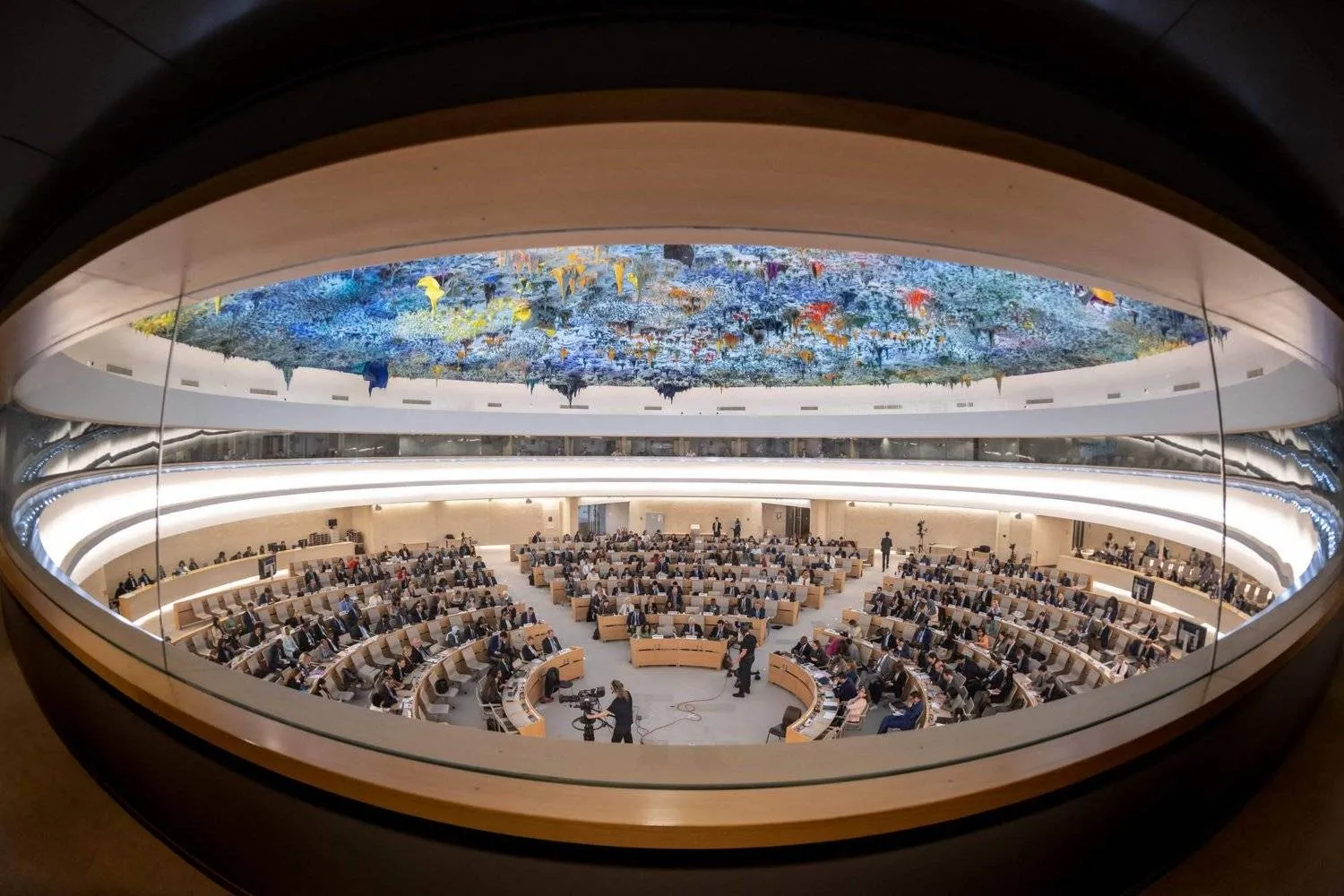
The UN Human Rights Council in session in Geneva. AFP
TT

OIC Hails Adoption of Resolution on Acts of Religious Hatred at Human Rights Council

The UN Human Rights Council in session in Geneva. AFP

The Organization of Islamic Cooperation (OIC) has hailed the adoption by the UN Human Rights Council of the resolution on "Countering religious hatred constituting incitement to discrimination, hostility or violence" as an important milestone towards strengthening collective efforts to reject religious intolerance and the desecration of holy books.

The resolution was adopted at the 53rd session of the Human Rights Council following a request by the OIC Group of countries in Geneva in response to a series of provocative acts of desecration of copies of the Quran in European and other countries.

The adopted resolution condemns the recent public and premeditated acts of desecration of the Quran, and it underscores the need to hold the perpetrators of these acts of religious hatred to account in line with the obligations of states arising from international human-rights law.

The resolution urges the UN High Commissioner for Human Rights to speak out against the advocacy of religious hatred. It requests the Human Rights Council to identify drivers and manifestations of religious hatred and to outline existing gaps in laws, policies, practices, and law enforcement that impede the prevention and prosecution of public and premeditated acts. It also asks the council to propose measures aimed at countering acts of religious hatred that hinder the full enjoyment of human rights and fundamental freedoms.

Through the resolution, states are encouraged to adopt national laws and policies to prevent and counter acts and advocacy of religious hatred.

The OIC has always urged the international community to resolutely tackle the repeated incidents of desecration of holy books and the rise of xenophobia, Islamophobia, racism, discrimination based on religion or belief, hate speech, and incitement to violence.

It has called for the condemnation and rejection of the abhorrent Islamophobic actions that incite hatred, exclusion, and racism and clearly undermine diverse communities' inter-religious harmony, dialogue, and peaceful coexistence. Such premeditated acts cannot be accepted under any justification nor conflated with the exercise of the right to freedom of expression or opinion.

The OIC said it strongly believes that the adoption of the historic resolution by the Human Rights Council will open a new era in terms of dialogue and collective efforts aimed at curbing manifestations of religious hatred and incitement to violence.

In these challenging times, there is an urgent need to unite in the upholding of the values of tolerance and peaceful coexistence among peoples and civilizations, it said.

Following the adoption of the resolution, OIC Secretary General Hissein Brahim Taha commended all the states that sponsored the draft resolution and those that have supported it. He also commended Saudi Arabia, the current Chair of the Islamic Summit and Chair of the OIC Executive Committee, for its commitment and initiative to convene an urgent meeting of the Executive committee on this matter, which led to the successful debate at the UN Human Rights Council.

He reiterated the OIC's call to the international community to stand firm against the manifestations of discrimination, intolerance, and incitement to hatred and to unite in upholding the values of tolerance and peaceful coexistence among peoples and civilizations.




Faisal bin Farhan, Shaibani Discuss Developments in Syria 

Saudi Minister of Foreign Affairs Prince Faisal bin Farhan bin Abdullah and Syrian FM Asaad al-Shaibani meet in Riyadh earlier in February. (Saudi Foreign Ministry) 
TT

Faisal bin Farhan, Shaibani Discuss Developments in Syria 

Saudi Minister of Foreign Affairs Prince Faisal bin Farhan bin Abdullah and Syrian FM Asaad al-Shaibani meet in Riyadh earlier in February. (Saudi Foreign Ministry) 

Saudi Minister of Foreign Affairs Prince Faisal bin Farhan bin Abdullah received on Monday a telephone call from his Syrian counterpart Asaad al-Shaibani to discuss regional developments.

They reviewed bilateral relations between their countries, as well as the latest developments in Syria and efforts exerted towards them.


GCC Calls on Iraq to Withdraw Contentious Coordinates, Map Lodged with UN 

Secretary-General of the Gulf Cooperation Council (GCC) Jasem Albudaiwi. (GCC)
TT

GCC Calls on Iraq to Withdraw Contentious Coordinates, Map Lodged with UN 

Secretary-General of the Gulf Cooperation Council (GCC) Jasem Albudaiwi. (GCC)

Secretary-General of the Gulf Cooperation Council (GCC) Jasem Albudaiwi called on Monday Iraq to withdraw the list of coordinates and the map lodged with the United Nations, which includes claims regarding Iraqi maritime zones.

In a statement, Albudaiwi said the coordinates and map infringe on Kuwait’s sovereignty over its maritime areas and shoals, including Fasht Al-Qaid and Fasht Al-Aij.

He underscored the importance of resorting to international law and the 1982 United Nations Convention on the Law of the Sea (UNCLOS), in a manner consistent with the understandings, agreements, and bilateral memoranda of understanding concluded between the two countries.

Albudaiwi reiterated the GCC’s steadfast positions and previous resolutions on Iraq's respect for Kuwait's sovereignty and territorial integrity and its categorical rejection of any violation of Kuwait's sovereignty.

"The GCC and Iraq are bound by deep-rooted historical relations and close ties based on mutual respect and good neighborliness," he stressed, noting that such claims undermine efforts to boost cooperation and bilateral relations between Iraq and Kuwait.

He hoped Baghdad would withdraw the list of coordinates and the map in order to bolster mutual trust, support the stability of relations, and enshrine commitment to relevant legal and international principles.


Saudi Arabia, Various Foreign Ministers Condemn Israel over West Bank Moves

FILE - This photo shows a construction site of new housing projects in the West Bank Israeli settlement of Givat Ze'ev, Monday, June 18, 2023. (AP Photo/Ohad Zwigenberg, File)
TT

Saudi Arabia, Various Foreign Ministers Condemn Israel over West Bank Moves

FILE - This photo shows a construction site of new housing projects in the West Bank Israeli settlement of Givat Ze'ev, Monday, June 18, 2023. (AP Photo/Ohad Zwigenberg, File)

The ‌foreign ministers of Saudi Arabia, Brazil, France, Spain, Türkiye and various other states condemned Israeli decisions that they said introduce sweeping extensions to unlawful Israeli control over the West Bank.

"Changes are wide-ranging, reclassifying Palestinian land as so-called Israeli ‘state land’, accelerating illegal settlement activity, and further entrenching Israeli administration," said the joint statement, ‌issued late ‌on Monday by the ‌Turkish Foreign ⁠Ministry.

Other countries to ⁠sign the statement included Egypt and Qatar, as well as the heads of the Arab League and Organization of Islamic Cooperation, Reuters said.

Israel's cabinet on February 15 approved further ⁠measures to tighten Israel's control ‌over the occupied ‌West Bank and make it easier for ‌settlers to buy land, a move ‌Palestinians called a "de-facto annexation".

The West Bank is among the territories that Palestinians seek for a future independent state. Much ‌of it is under Israeli military control, with limited Palestinian self-rule ⁠in ⁠some areas run by the Western-backed Palestinian Authority.

The joint statement said the settlements, and decisions designed to further them, are "a flagrant violation of international law" and a step towards "unacceptable de facto annexation".

It said they also undermine the ongoing efforts for peace and stability in the region and threaten any meaningful prospect of regional integration.