
The burnings of the holy Quran in Sweden and Denmark have been widely condemned in the Islamic world, even sparking violent protests in Iraq. These reactions will likely escalate if the necessary measures aren’t taken to contain the Quran-burning phenomenon, especially in the West, given media reports that said such acts are being planned in other countries.
In what was seen as a belated response, Sweden on Saturday said it was reviewing the residency permit of the Iraqi refugee who was behind the recent burning of a Quran in Stockholm. A similar act took place in Denmark, which, like Sweden, condemned the burning but still defended the need to “respect freedom of expression.”
These acts are a slap in the face of Islamic efforts, most notably the Makkah-based Muslim World League, in promoting moderation against hatred. MWL Secretary General Sheikh Dr. Mohammed Al-Issa praised the United Nations National Assembly for adopting last week a resolution on “Promoting interreligious and intercultural dialogue and tolerance in countering hate speech.”
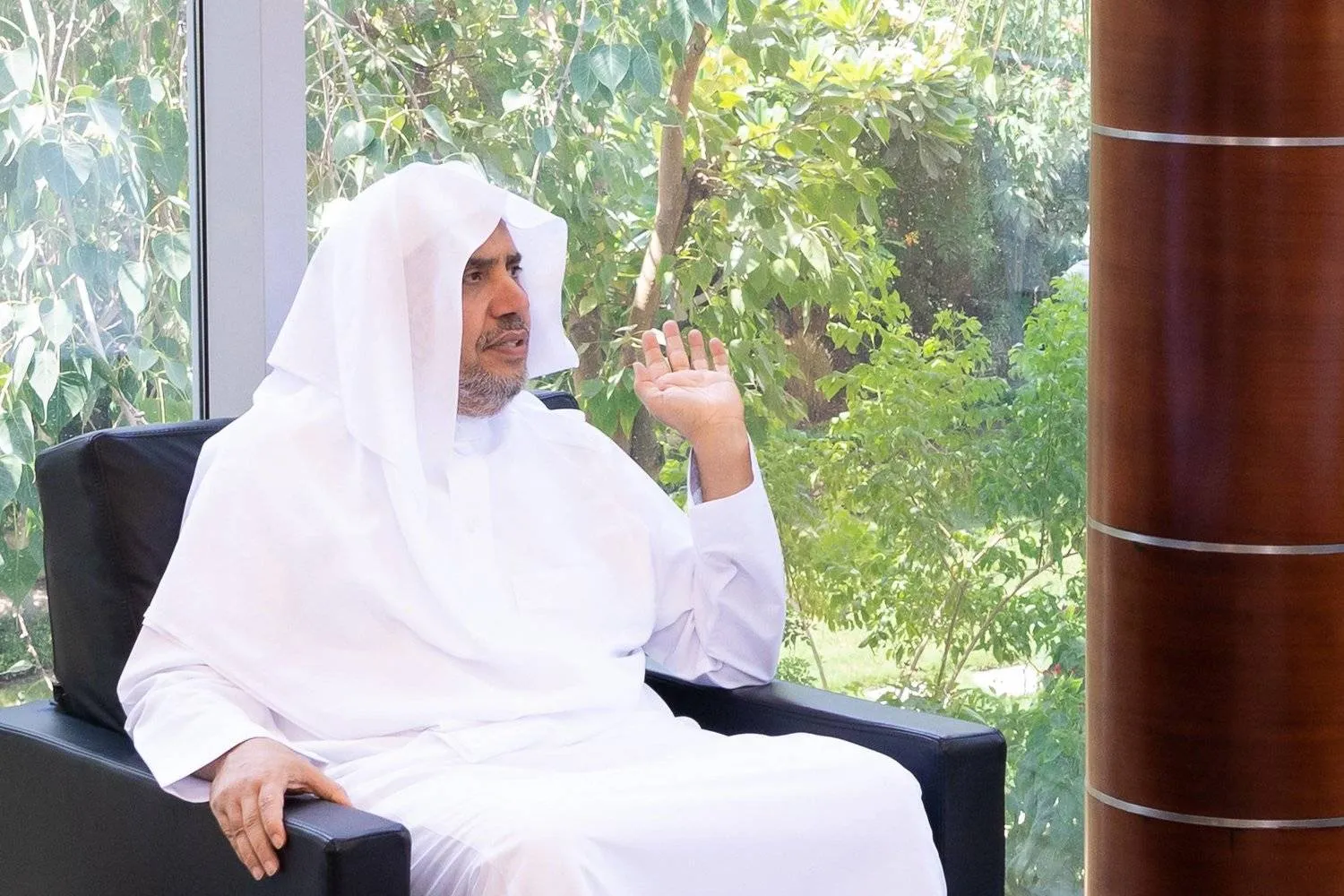
Sitting down for an interview to Asharq Al-Awsat, Al-Issa stressed that the MWL had long warned of the danger of stoking “religious hatred”, saying it was one of the most dangerous aspects of extremism and violence.
He underscored the importance of differentiating between the person who carries out the hateful act and the culture or religion he belongs to.
“Freedom of expression must respect principles and values,” he urged.
In short, the burning of the holy Quran is a provocative act that stems from spite and from certain agendas that are hoping for reactions that ultimately aim to harm Islam and Muslims, he added.
The perpetrators are malicious and have no moral or humanitarian compass, he went on to say.
“The greatest issue here, however, is how the official authorities allow such acts to happen,” said Al-Issa. “Freedom of expression must respect values and principles. How can some countries pride themselves in their absolute protection of freedoms, while they can be abused to stoke spite and hostility and spark a clash between civilizations?”
The world today is stressing the importance of building bridges between people and here comes the Quran-burning crime with official authorization, he noted. “It is as if this authorization is saying that ‘people are allowed to fuel hatred and conflicts because you have my protection.’”
“The concept of freedom must not be chaotic,” urged Al-Isaa.
Some red lines must not be crossed by freedom and respect for religious sanctities is an important element in harmony between nations and is a main pillar of world peace, he told Asharq Al-Awsat.
“For our world to live in peace, people must respect each other. Differences and disputes are only normal, but respect is another issue. Respect is tied to dignity and nothing is more important to believers than dignity and religious identity,” he stated.
Followers of the same religion may have religious disputes, but the Muslim nation has been unanimous in condemning the Quran-burning, said Al-Issa.
Moreover, he noted that the majority of conflicts throughout history were sparked by religious disputes. Religion is a “very sensitive and dangerous issue and so we must carefully handle sanctities,” he continued.
He said the Thirty Years' War in Europe was sparked by a religious conflict. The Crusades were religious and waged against Muslims in the East. The oppression of minorities across the world and throughout history was often due to religious hatred.
“Had those behind the oppression read history closely, they would have realized that they will ultimately lose this battle. Shame and condemnation will hound them forever,” he remarked.
Furthermore, Al-Issa noted how far-right extremists in secular countries often fuel religious hatred during their electoral campaigns to garner support. Such practices undermine national unity and stoke tensions related to religious identity.
Ultimately, he continued, the burning of the Quran has happened. “We cannot change the constitution that protects these acts. As Muslims, we must strongly condemn this crime and do everything we can, through peaceful means, in expressing our severe disappointment in such offensive behavior that we view as the greatest of hate crimes.”
Asked by Asharq Al-Awsat if countries that allowed the burning should be held responsible, he replied: “A country that believes it is responsible towards world peace cannot turn a blind eye to such criminal and destructive acts.”
Al-Issa warned that such practices only pave the way for extremism by the perpetrators and those they have offended.
“Unfortunately, some countries have become a haven for those seeking to fuel religious and ideological conflict. We warn them that history will not be kind to them,” he added.
“This is an opportunity to call on all countries to realize the danger of hate speech that incites violence, discrimination and hostility. Such speech must be criminalized because it is a danger to the social fabric and religious diversity of countries,” he went on to say.
Moreover, those claiming to be civilized and humanitarian through their constitution must take a step back and tune in to their people, who undoubtedly overwhelmingly oppose such criminal acts, he said.
In this regard, the MWL hailed Saudi Arabia’s strong and honorable stance towards the Quran-burnings.
Furthermore, Al-Issa noted the contradiction in the nations that allowed the burnings, but then condemned them. “How can they reject something that is permitted in their constitution, as they claim? No one can go against the constitution. In other words, the criminals found a loophole in the constitution in order to carry out their acts.”
The constitution protects these acts because they are believed to be a form of freedom of expression. So, the constitution could be viewed as a contributor in fueling conflict and a clash between peoples and nations, he continued.
Al-Issa added that the burning of the Quran is an extremist interpretation and application of the constitution’s articles on freedom of expression.
Asked by Asharq Al-Awsat who should be held responsible for these criminal acts, he replied: “Those claiming to protect human rights, boast of bolstering fraternity and call for friendship and cooperation between peoples and nations must be held to account.”
“How can we believe these calls when we see such offensive acts on the ground?” he wondered. “In other words, they are seeing, ‘yes, we promote such values, but our constitutions can be exploited to contradict them.’”
“To put it more clearly, civilized constitutions call for boosting human rights and friendship between nations and peoples, while backwards constitutions stoke hatred and incitement and harm freedoms,” he added.
“It is our duty to confront these criminal acts because they harm world peace and the national unity of people in various countries. There are nearly two billion Muslims in the world that honor their Quran and Prophet. Any offense to them is the worst type of violation against them,” he said.
“Extremist forces want such offenses to enrage Muslims and lead them to react recklessly. Such reactions will be used to create more fear of Islam and they will also tarnish the image of our religion to those who don’t know what it is really like,” he warned.
“Therefore, it is up to Muslim scholars to explain this to all Muslims so that they can be wary of falling in the traps of extremists,” he remarked.
These criminal acts must be used to educate others on Islam. Some institutions have even printed copies of the Quran in Swedish to allow Swedes to realize the value of this holy book, Al-Issa noted.
The MWL has sought to stress that the Muslims in Sweden or elsewhere will not waiver in their faith when confronted with such criminal acts. Rather, they will only become more devout.
“Moreover, the MWL has sought to stress to the Muslim world that such acts don’t reflect the beliefs of the majority of the people in those countries. The vast majority of those people have coexisted with Muslims and they refuse and strongly condemn these acts,” Al-Issa said.