Deal to Transport 12,000 Yemeni Pilgrims Via 5 Airports Including Sanaa

A previous flight of Yemenia Airways at Al-Ghaydah International Airport during its reopening by the Saudi Program for the Development and Reconstruction of Yemen (Asharq Al-Awsat)
TT

Deal to Transport 12,000 Yemeni Pilgrims Via 5 Airports Including Sanaa

A previous flight of Yemenia Airways at Al-Ghaydah International Airport during its reopening by the Saudi Program for the Development and Reconstruction of Yemen (Asharq Al-Awsat)

Yemen’s Ministry of Endowments and Guidance has teamed up with Yemenia Airways to fly Yemeni pilgrims from five airports, including Sanaa International airport, for this year’s Hajj season.

The agreement comes after coordination with Saudi Arabia.

Dr. Mukhtar Al-Rabash, a deputy from the ministry, highlighted the cooperation between Yemen and Saudi Arabia in facilitating flights from Aden, Seiyun, Al Rayyan, Al Ghaydah, and Sanaa to the holy sites in the Kingdom.

Al-Rabash pointed out that this step will ease the suffering of pilgrims, sparing them the hardship of long travels due to the ongoing closure of routes between provinces by Houthi militias, backed by Iran.

He expressed gratitude for Saudi cooperation in facilitating flights from Yemen’s airports, including Sanaa, to the holy sites, aiming to make the pilgrimage easier for them.

“The ministry will oversee all stages of issuing air tickets for pilgrims through specialized committees at all airports,” added Al-Rabash.

Mohsen Haidarah, Deputy Managing Director for Commercial Affairs at Yemenia Airways, stressed the importance of the cooperation agreement with the Ministry of Endowments to transport around 12,400 pilgrims via Yemenia Airways.

Haidarah emphasized the need for continued coordination to ensure smooth transportation and the best services for pilgrims.

According to the Yemeni Ministry of Endowments, this year’s Yemeni pilgrims number 24,255.

Early preparations were made through coordination with relevant Saudi authorities and the signing of several agreements to serve Yemeni pilgrims in Makkah, Madinah, and the holy sites.

Speaking to Asharq Al-Awsat, Al-Rabash described Saudi efforts for this year’s Hajj and Umrah season as “blessed and commendable,” operating in an organized and developmental manner, reflecting the insightful vision of the Kingdom’s leadership in serving the pilgrims.

A delegation from the Saudi General Authority of Civil Aviation visited Al-Ghaydah International Airport in Al-Mahra Governorate last week to prepare for international flights, including those for Yemeni pilgrims for this year's Hajj season.

The Saudi Program for the Development and Reconstruction of Yemen rehabilitated and equipped the airport, with flights resuming in July 2023, enhancing transportation services in Yemen.


Current Gulf Conflict is a Struggle Over Continuity of the Global System

Smoke rises after an Iranian attack in Sharjah in the United Arab Emirates (Reuters)
TT

Current Gulf Conflict is a Struggle Over Continuity of the Global System

Smoke rises after an Iranian attack in Sharjah in the United Arab Emirates (Reuters)

At a moment when military calculations intersect with the fragilities of the global economy, the Arabian Gulf is emerging as more than a theater of geopolitical tension. It has become a global operational hub where energy, trade and communications flows converge.

In a strategic assessment released by the Gulf Research Center, based in Jeddah, researchers warn that the conflict unfolding in the region is no longer centered on achieving a rapid military victory.

Instead, it is shifting toward what the report describes as “gradual operational attrition,” aimed at disrupting the vital flows on which the global economy depends.

According to the report prepared by Abdullah AlZaidi, a senior defense studies adviser, the real center of gravity in the crisis lies not in the scale or intensity of military strikes but in countries’ ability to sustain the flow of energy, trade, logistics, and digital communications, the backbone of economic and political stability in the region and beyond.

The Gulf as a Strategic Global Hub

The report highlights how the Arabian Gulf is no longer merely a maritime corridor for oil transport. It now functions as an integrated global system where shipping routes, aviation corridors, maritime infrastructure and communications networks intersect.

Even limited disruption to this system could quickly reverberate through global markets, raising insurance and shipping costs and altering the behavior of companies and investors. Those shifts could in turn influence political decisions on escalation or de-escalation.

The central risk at this stage is not necessarily the complete closure of maritime routes or widespread infrastructure destruction. Instead, it lies in repeated functional disruption through operations designed to complicate activity and slow flows without crossing the threshold into full-scale war.

Four Pathways to Disruption

The report identifies four main channels through which such disruption could unfold.

The first is sustained aerial pressure through missile and drone attacks that increase the risk of defensive saturation and misidentification.

The second is maritime disruption driven by rising insurance risk premiums, potentially altering shipping routes and slowing trade flows.

The third involves limited strikes against critical infrastructure such as ports or nearby areas, using drones or unmanned boats, which could temporarily halt operations.

The fourth is a cyber and electronic layer involving jamming, data manipulation, and actions that erode operational trust in systems.

This approach allows the attacking side to generate significant impact at relatively low cost, particularly through swarms of low-cost drones and missiles designed to overwhelm defenses and complicate operational decision-making.

The Strait of Hormuz as a Turning Point

The report devotes significant attention to the Strait of Hormuz, describing it as the “rhythm regulator” of global energy flows.

It warns that a shift from limited disruption to a formal declaration blocking passage through the strait would transform the crisis from a manageable situation into a direct political and strategic challenge affecting freedom of navigation in one of the world’s most critical maritime chokepoints.

Such a scenario would quickly move beyond the regional arena, triggering global disruption in energy markets and supply chains. The report says major importing countries, particularly China and India, would likely intensify diplomatic pressure to reduce tensions and safeguard maritime traffic.

The Crisis’ Center of Gravity

The report concludes that the crisis revolves around the continuity of three sovereign flows: energy, logistics, and communications.

Disrupting those flows would not only inflict economic damage but also place immediate pressure on political and military decision-making.

Key risks that could drive escalation include airspace saturation, misidentification errors, attacks on maritime and logistical infrastructure, and cyber-jamming operations. Another potential trigger is the closure of the Strait of Hormuz or attacks on subsea infrastructure such as communications cables and energy pipelines.

In its final assessment, the report argues that the Gulf confrontation is no longer a conventional military contest. Instead, it is a struggle over the continuity of global operational systems — where limited disruption, rather than all-out war, may prove the most effective tool in reshaping the regional balance of power.


Saudi Arabia Destroys 4 Rockets, 2 Drones in al-Kharj, Eastern Region

Official spokesman of the Saudi Defense Ministry Turki al-Malki. (SPA)
TT

Saudi Arabia Destroys 4 Rockets, 2 Drones in al-Kharj, Eastern Region

Official spokesman of the Saudi Defense Ministry Turki al-Malki. (SPA)

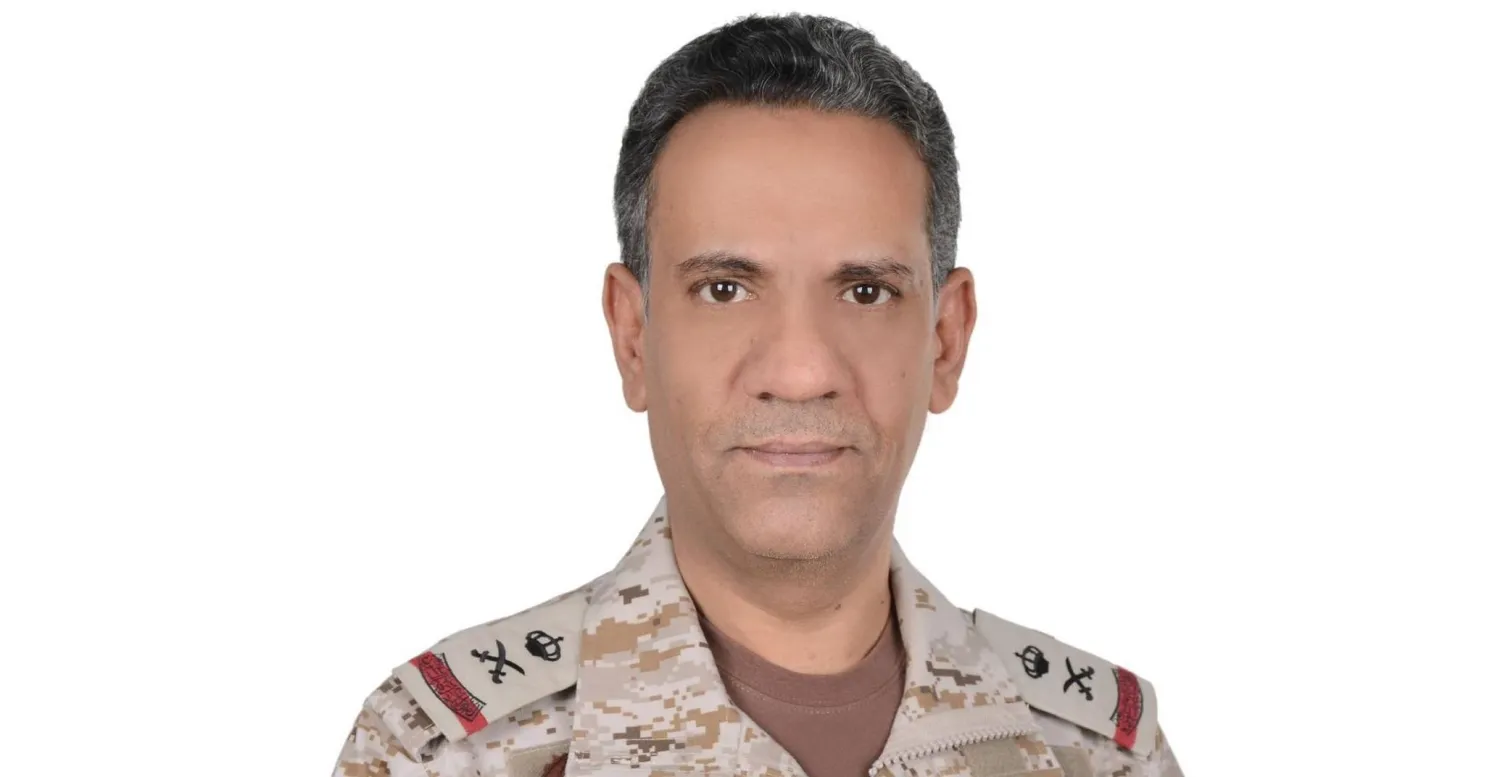
Official spokesman of the Saudi Defense Ministry Turki al-Malki announced on Friday that the Kingdom’s defenses intercepted and destroyed three ballistic missiles that were fired at the Prince Sultan Air Base in the al-Kharj region.

A drone was later destroyed in the Eastern Region and another in the al-Kharj region 80 kms southeast of Riyadh.

A Cruise missile was also destroyed east of al-Kharj.


Saudi Arabia, Kuwait Underline Gulf Cooperation to Preserve Regional Security

Prince Mohammed bin Salman, Saudi Crown Prince and Prime Minister, and his Kuwaiti counterpart Sheikh Sabah Al-Khaled Al-Sabah. (Saudi Foreign Ministry)
TT

Saudi Arabia, Kuwait Underline Gulf Cooperation to Preserve Regional Security

Prince Mohammed bin Salman, Saudi Crown Prince and Prime Minister, and his Kuwaiti counterpart Sheikh Sabah Al-Khaled Al-Sabah. (Saudi Foreign Ministry)

Prince Mohammed bin Salman, Saudi Crown Prince and Prime Minister, and his Kuwaiti counterpart Sheikh Sabah Al-Khaled Al-Sabah underscored on Thursday efforts to bolster joint coordination between Gulf countries to preserve regional security and stability.

In a telephone call, they condemned Iran’s “heinous” attacks against Gulf countries, saying they are a violation of their sovereignty and security and safety of their peoples.

They also warned of the dangerous repercussions those attacks have on regional and international security and stability.

Sheikh Sabah expressed his categorical rejection of anything that may harm Saudi Arabia, adding that an attack on any Gulf country is an attack on Kuwait itself.

“We will overcome this phase with strength through the wisdom of our leaders,” he vowed.

Crown Prince Mohammed also received separate telephone calls from Djibouti’s President Ismail Omar Guelleh and Palestinian President Mahmoud Abbas, who both expressed their solidarity with Saudi Arabia in wake of the Iranian attacks.

They said they stand by the Kingdom as it takes measures to protect its security and territory.