


After 50 Years, Kuwait to Change Name of 'Hassan al-Banna' Street

Hassan al-Banna Street is located in the Rumaithiya area, a suburb of Kuwait City. 
TT

After 50 Years, Kuwait to Change Name of 'Hassan al-Banna' Street

Hassan al-Banna Street is located in the Rumaithiya area, a suburb of Kuwait City. 

Kuwait’s Ministry of Public Works will be changing the names of streets that hold the names of figures who are not heads of state.

The change will include Hassan al-Banna Street. Al-Banna is the founder of the Muslim Brotherhood and the street has carried his name for 50 years.

Numbers will replace names on the streets covered in the change.

The only figures approved to be used as street names are kings, sultans, princes, and heads of state. Otherwise, the street will be identified by numbers.

The prime minister has tasked the minister of public works to go ahead with the changes in line with a cabinet decree.

Hassan al-Banna Street is located in the Rumaithiya area, a suburb of Kuwait City.

Al-Banna (1906-1949) was the founder and spiritual guide of the Muslim Brotherhood that was formed in 1928. He became its spiritual guide and editor-in-chief of its first newspaper, which was issued in 1933.

Over the years, al-Banna became a religious and political leader, saying religion was a form of “political ideology”. He called for “Islamizing” the state, rejecting the concept of modern nationalism and Arab nationalism.

Al-Banna oversaw the formation of the Brotherhood’s secret military wing. The wing was accused of the assassination of Egyptian Prime Minister Mahmoud Fahmi al-Nokrashy in 1948 after he ordered the dissolution of the Brotherhood, the confiscation of its assets and arrest of nearly all of its members, save for al-Banna.

In wake of the assassination, the government ordered a crackdown on the Brotherhood, culminating in al-Banna's assassination on February 12, 1949.

Kuwait is home to the Social Reform Society, a branch of the Brotherhood, and its political arm, the Islamic Constitutional Movement.

The Kuwaiti branch of the Brotherhood was formed in the 1940s. It set up its first headquarters in Kuwait in 1947 and the Islamic Guidance Society in 1952. Religious scholar Youssef al-Qinai became head of the society.

The naming of a street after Hassan al-Banna has always been a source of contention in Kuwait.

In 2020, Kuwaiti journalist Ahmad al-Sarraf wrote in al-Qabas: “The Muslim Brotherhood believed in violence as a means to reach power if it could not attain it through other ways.”

“Few researchers would argue that the Muslim Brotherhood led to the establishment of several extremist organizations and movements, such as the al-Qaeda, ISIS and others,” he added.

He wrote of how “odd it was for Kuwait to continue to embrace the Brotherhood this strongly” and to show “leniency” towards its members and “turn a blind eye to and even sympathize” with it. “It even went so far as to name one of the major streets in Rumaithiya after its founder,” he noted.

Streets of Kuwait are often named after notable historical figures, philosophers, historians, and military and religious leaders. Researchers have often wondered why streets have not been named after notable Kuwaiti figures, such as its martyrs, scientists, athletes and poets.

Streets across the country have been named after prominent Arab figures, such as Ibn al-Rumi, Ibn Sina, Ibn Abbas, al-Ahnaf, al-Bukhari, al-Bakri, Haroun al-Rashid and many others, reflecting Kuwait’s openness to Arab civilization and history. With the new government decree in place, these names will be replaced with numbers.


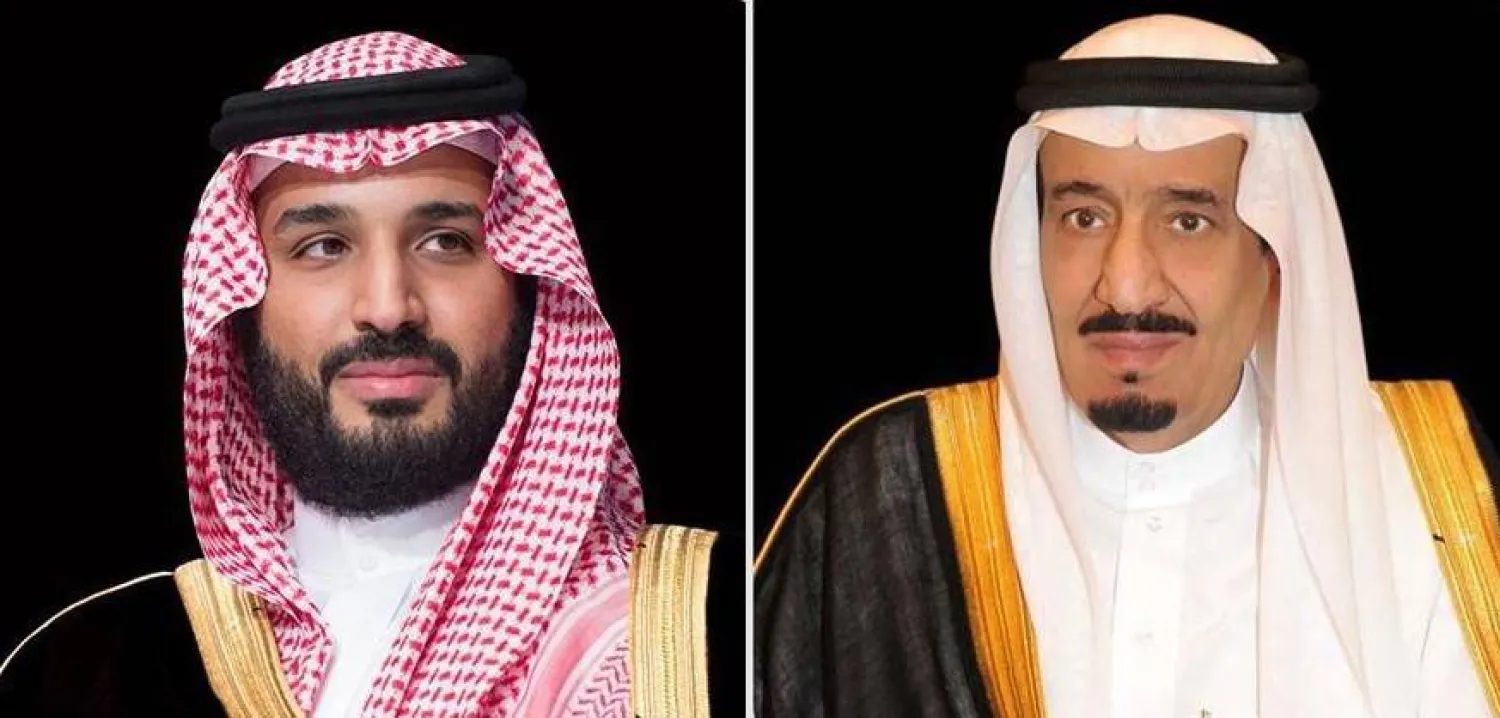

King Salman Directs Disbursement of over SAR3 Billion as Ramadan Assistance for Social Security Beneficiaries

Custodian of the Two Holy Mosques King Salman bin Abdulaziz. (SPA)
TT

King Salman Directs Disbursement of over SAR3 Billion as Ramadan Assistance for Social Security Beneficiaries

Custodian of the Two Holy Mosques King Salman bin Abdulaziz. (SPA)

Custodian of the Two Holy Mosques King Salman bin Abdulaziz Al Saud, upon the recommendation of Prince Mohammed bin Salman bin Abdulaziz Al Saud, Crown Prince and Prime Minister, has directed the disbursement of more than SAR3 billion in Ramadan assistance to social security beneficiaries, SPA reported.

The directive reflects the leadership’s commitment to addressing the needs of beneficiary families and ensuring their requirements are met during the holy month of Ramadan.

The generous assistance includes SAR1,000 for the head of each household and SAR500 for each dependent. The amounts are expected to be deposited directly into the beneficiaries’ bank accounts within the coming hours.

Minister of Human Resources and Social Development Ahmed Al-Rajhi expressed his gratitude and appreciation to the Custodian of the Two Holy Mosques and the Crown Prince for this generous gesture toward social security beneficiaries and for their continued attention to citizens’ needs during Ramadan.


Makkah Deputy Governor Carries Out Field Inspection of Grand Mosque Readiness for Ramadan 

Deputy Governor of the Makkah Region Prince Saud bin Mishaal bin Abdulaziz is seen during his inspection tour at the Grand Mosque in the holy city of Makkah. (SPA)
TT

Makkah Deputy Governor Carries Out Field Inspection of Grand Mosque Readiness for Ramadan 

Deputy Governor of the Makkah Region Prince Saud bin Mishaal bin Abdulaziz is seen during his inspection tour at the Grand Mosque in the holy city of Makkah. (SPA)

Deputy Governor of the Makkah Region Prince Saud bin Mishaal bin Abdulaziz inspected the readiness of the Grand Mosque and its facilities, conducting a field tour to review operational and service preparations for receiving worshippers and Umrah performers during the holy month of Ramadan, reported the Saudi Press Agency on Tuesday.

Prince Saud was briefed on the operational plans implemented by the relevant authorities, including crowd management mechanisms, service enhancements, and facility preparations aimed at ensuring smooth movement and enhancing comfort and safety levels for visitors to the Grand Mosque, particularly during peak times.

He reviewed developmental initiatives and smart services supporting the operational system, notably electric mobility carts for transporting the elderly, persons with disabilities, and those in need of assistance within the Grand Mosque.

The tour also included an overview of the efforts of guidance teams deployed across the corridors and courtyards of the Grand Mosque, providing multilingual assistance and direction.

Prince Saud reviewed the interactive map and digital mobility platform, which allows visitors to plan their routes in advance and identify service locations, entrances and exits, and less crowded pathways.

He was briefed on crowd management systems, including the visitor density sensor platform that measures human density in real time, and the Tawaf and Sa’i crowd status display service, which allows worshippers to select appropriate times to perform rituals with ease. Models of the modern multilingual guidance system were also reviewed.

Prince Saud also visited the Smart Engineering Command and Control Center, which serves as an advanced central platform linking operational systems and monitoring performance in real time, boosting operational efficiency and raising readiness levels during Ramadan.


Saudi Leadership Provides Two Donations Worth SAR150 Mln Through Jood Eskan Platform

Custodian of the Two Holy Mosques King Salman bin Abdulaziz Al Saud and Prince Mohammed bin Salman bin Abdulaziz Al Saud, Crown Prince and Prime Minister. (SPA)
TT

Saudi Leadership Provides Two Donations Worth SAR150 Mln Through Jood Eskan Platform

Custodian of the Two Holy Mosques King Salman bin Abdulaziz Al Saud and Prince Mohammed bin Salman bin Abdulaziz Al Saud, Crown Prince and Prime Minister. (SPA)

Custodian of the Two Holy Mosques King Salman bin Abdulaziz Al Saud and Prince Mohammed bin Salman bin Abdulaziz Al Saud, Crown Prince and Prime Minister, have provided two generous donations amounting to SAR150 million through the Jood Eskan platform.

The move aligns with the leadership's commitment to supporting all national efforts and initiatives to provide suitable housing for deserving families.

Minister of Municipalities and Housing and Chairman of the Board of Trustees of the Developmental Housing Foundation (Sakan) Majed Al-Hogail expressed his deep gratitude to the leadership for its unwavering support to all national efforts and initiatives aimed at providing suitable housing for eligible families across the Kingdom.

He noted the effective impact of previous generous donations in achieving the goals of housing development, and motivating individuals and institutions to donate through the Jood Eskan platform that is based on community giving that helps provide decent housing and boosts stability and quality of life for deserving families.