Saudi FM Holds Meetings with UN Special Envoy for Syria and Prime Minister of Grenada

Saudi Minister of Foreign Affairs Prince Faisal bin Farhan bin Abdullah met with the UN Secretary-General Special Envoy for Syria Geir Pedersen. (SPA)
TT

Saudi FM Holds Meetings with UN Special Envoy for Syria and Prime Minister of Grenada

Saudi Minister of Foreign Affairs Prince Faisal bin Farhan bin Abdullah met with the UN Secretary-General Special Envoy for Syria Geir Pedersen. (SPA)

Saudi Foreign Minister Prince Faisal bin Farhan bin Abdullah met with Geir Pedersen, the UN Secretary-General's Special Envoy for Syria, on the sidelines of the 79th United Nations General Assembly in New York City, the Saudi Press Agency said on Saturday.
During the meeting, they discussed cooperation between the Kingdom of Saudi Arabia and the United Nations regarding the Syrian file, the efforts of the Arab Ministerial Liaison Committee on Syria, and the regional developments and their implications on the region.
The meeting was attended by Saudi Ambassador to the United States of America Princess Reema bint Bandar bin Sultan bin Abdulaziz.
In addition, Prince Faisal met with Prime Minister of Grenada Dickon Mitchell, alongside Grenada's Minister of Foreign Affairs, Trade, and Export Development, Joseph Andall. The officials explored ways to strengthen bilateral relations and enhance cooperation across various sectors. The Saudi Ambassador to the US was also present during this meeting.


Saudi Arabia Appoints Saleh Al-Maghamsi as Imam of the Prophet’s Mosque

Sheikh Saleh Al-Maghamsi in a photo published by Arrajol magazine during a previous interview (Asharq Al-Awsat).
TT

Saudi Arabia Appoints Saleh Al-Maghamsi as Imam of the Prophet’s Mosque

Sheikh Saleh Al-Maghamsi in a photo published by Arrajol magazine during a previous interview (Asharq Al-Awsat).

A royal decree has appointed Sheikh Saleh Al-Maghamsi as an imam at the Prophet’s Mosque in Madinah, according to the Saudi Press Agency (SPA).

Dr. Abdul Rahman Al-Sudais, head of religious affairs at the Grand Mosque and the Prophet’s Mosque, said Saturday that the directive reflects the Saudi leadership’s strong commitment to the Two Holy Mosques and its ongoing support through the appointment of qualified scholars.

He added that such decisions strengthen the mosques’ mission of promoting guidance and moderation, while serving worshippers and visitors.

Al-Sudais congratulated Sheikh Al-Maghamsi on the appointment, praying for his success in carrying out what he described as a great responsibility in line with the aspirations of the Kingdom’s leadership and the message of the Prophet’s Mosque.

Al-Maghamsi is a prominent Saudi preacher known for his contemporary approach and broad engagement in education, sermons and religious lectures. In recent years, he served as imam and preacher of Quba Mosque in Madinah.

He has also lectured at the Higher Institute for Imams and Preachers at Taibah University and headed the Al-Bayan Center for Reflecting on the Meanings of the Quran. Over the course of his career, he has held several academic and administrative posts and is widely regarded for his humility and scholarly depth.

Born in 1963 in Wadi Al-Safra village in Badr Governorate, west of Madinah, Al-Maghamsi later moved to Madinah, where he was raised in a scholarly environment. He specialized in Quranic exegesis during his academic studies.

He completed his primary, intermediate and secondary education in Madinah before earning a bachelor’s degree in Arabic language and Islamic studies from King Abdulaziz University (Madinah branch). He later pursued postgraduate studies.

Al-Maghamsi began his professional career as a teacher before moving into educational supervision and academic instruction. He became a faculty member at the Teachers College — now the College of Education at Taibah University — and went on to serve in several key roles, most notably as imam and preacher of Quba Mosque in Madinah.

He has delivered numerous lectures in Quranic interpretation and Islamic sciences, and has produced widely known recorded programs and scholarly series.


First Saudi State Seal: Official Recognition, Administrative Record

Dr. Faris Almushrafi, head of the History Department at King Saud University (Asharq Al-Awsat)
TT

First Saudi State Seal: Official Recognition, Administrative Record

Dr. Faris Almushrafi, head of the History Department at King Saud University (Asharq Al-Awsat)

Dr. Faris Almushrafi, head of the History Department at King Saud University, said Founding Day is not only a moment to recall events or celebrate beginnings, but an opportunity to scrutinize the very tools through which the state defined and asserted itself.

Chief among them is the seal, a compact material document that distills the idea of the state into a single imprint.

Almushrafi told Asharq Al-Awsat that because a seal cannot be read in isolation from its political and administrative context, examining its structure and formulation opens the door to a deeper understanding of the nature of the state that produced it.

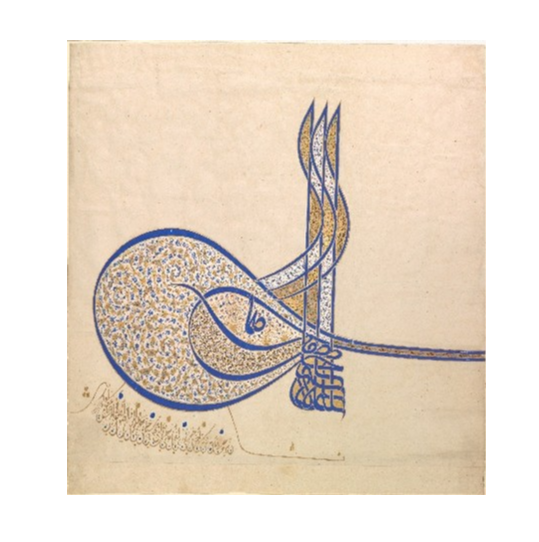
The tughra of Sultan Suleiman the Magnificent (r. 1520–1566)

The seal attributed to Imam Saud bin Abdulaziz (1229 AH/1814), the third imam of the First Saudi State, was used to authenticate official correspondence, including a letter addressed to the Governor of Damascus in the first decade of the 13th century AH.

The seal bears the central inscription “His servant Saud bin Abdulaziz,” and includes the date 1223 AH, set within a circular frame suggesting completeness and order.

A seal, he said, is not created for ornamentation but for formal recognition. Its presence signals a central authority that needs to document its decisions and correspondence, and an administration conscious of representation. Every sealed letter implicitly declares: this is a state speaking in its own name. Legitimacy is not derived from content alone, but from the imprint affixed to it.

Almushrafi said the phrase “His servant Saud” transcends a personal dimension and enters the language of political legitimacy. The choice of the word “servant” reflects a conception of authority inseparable from religious reference, presenting leadership as a moral duty before it is a political privilege.

This language, he said, is not spontaneous but expresses a model of governance that views political power as incomplete without value-based legitimacy, and sees the state as operating within a system of belief rather than above it.

The seal and state functions: inside and out

The head of the History Department at King Saud University stressed that the seal’s importance increases when one considers that it was used in correspondence beyond the local sphere, addressed to the governor of Damascus.

In this context, the seal became an instrument of external political relations, reflecting the First Saudi State’s awareness of itself as a political actor communicating and defining itself in a formal language recognized in the world of political correspondence at the time. The seal was thus not directed inward only, but also performed a sovereign function externally.

At the same time, the inclusion of the Hijri date on the seal is not a mere formal detail but an indicator of the temporal ordering of administrative work.

A state that dates its documents, he said, understands the importance of sequence, precedence and proof, and recognizes that political action is incomplete without being fixed in time. Here, early features of what could be called the administrative mind of the First Saudi State begin to emerge.

Almushrafi placed the seal in its contemporary regional context, saying its significance becomes clearer when compared with the seals of other Islamic states in the late 18th and early 19th centuries.

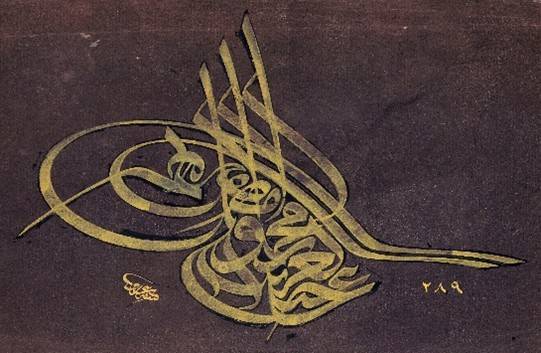
In the Ottoman Empire, the imperial tughra functioned as a composite sovereign signature, bearing the sultan’s name and titles in a dense visual form.

It carried a highly symbolic function that emphasized imperial rank and hierarchical authority before any procedural dimension, turning the seal into a visual declaration of sovereignty as much as a tool of authentication.

In Qajar Iran, official seals were likewise tied to the shah’s name and titles, with a clear emphasis on personal mark and royal legitimacy, making the seal an extension of the ruler’s prestige and symbolic representation of the state more than a neutral administrative device.

In Egypt under Muhammad Ali Pasha, despite early features of administrative modernization, the official seal continued to operate within a language of authority and rank derived not solely from its wording but from the sovereign structure to which the ruler belonged as an Ottoman governor.

Even when Muhammad Ali used the phrase “His servant Muhammad Ali,” Almushrafi said, it did not serve as a foundational definition of legitimacy but functioned as a procedural courtesy within Ottoman writing conventions, softening the tone of rank within the seal while full titles were restored outside it through the system of official ranks and designations - including “Pasha,” a high rank in the Ottoman administrative and military hierarchy, and “Governor of Egypt,” the legally and sovereignly recognized title, along with protocol formulations such as “Governor of Protected Egypt.”

In the Egyptian case, the seal remained as much a declaration of political standing as an instrument of documentation, inseparable from a higher structure of authority defining the ruler’s position.

By contrast, Almushrafi said, the Saudi seal presents a different formulation. The phrase “His servant Saud bin Abdulaziz,” coupled with the Hijri date, suffices to perform the function of official recognition and administrative authentication without symbolic display, inflation of titles, or reference to a higher sovereignty outside the framework of the state itself.

Here, the function of the seal as a state instrument takes precedence over its role as a statement of rank, reflecting a sovereign model based on economy of symbols, clarity of representation and administrative discipline. This distinction, he said, is significant in understanding the nature of the First Saudi State and the logic of its early formation as a state that defines itself through its function and practice rather than through the grandeur of symbols alone.

The tughra of Sultan Abdulaziz

The seal and the function of the emerging Saudi state

In light of this regional comparison, Almushrafi said the seal of Imam Saud bin Abdulaziz should not be read as an isolated administrative tool but understood in the context of the emerging Saudi state at the time.

It was not formed as a ceremonial or symbolic entity, but as an authority concerned with regulation, implementing rulings, securing its domain and organizing relations between inside and outside.

In this context, the seal becomes a direct reflection of the state’s function: a tool for endorsing decisions, fixing correspondence and regulating political action within a clear legal framework.

The simplicity of the seal’s wording, its economy in titles and its association with the Hijri date all point to a state that sees authority as responsible practice before sovereign display. A state that reduces its symbols to a minimum, he said, prioritizes action over rhetoric, organization over ornamentation and function over representation.

Thus, the seal is read not as a mark of the imam’s person, but as an instrument of a state that operates, communicates, binds and records.

In this sense, the seal of Imam Saud bin Abdulaziz stands as testimony to the nature of the First Saudi State as a state of practice, defining itself by what it executes rather than what it displays, and affirming its presence through administrative and legal discipline rather than symbolic grandeur alone.

Almushrafi concluded that the seal teaches that a state is not read only in battles or major treaties, but in its silent details: a seal, a signature and a linguistic formulation.

On Founding Day, recalling this seal is not merely a celebration of an old artifact, but a conscious reading of a moment that shaped the Saudi state as an organized entity with legitimacy and awareness of political representation.

In this way, the seal becomes a historical testimony declaring: here is a state, and here is an authority that knows itself and knows how to assert its presence.


From Founding to Vision: Saudi State and Oral Memory

King Abdulaziz bin Abdulrahman (X)
TT

From Founding to Vision: Saudi State and Oral Memory

King Abdulaziz bin Abdulrahman (X)

Arabs, in their foundational makeup, cultural identity and inherited traditions, are an “oral” rather than a “written” nation. They are captivated by poetry, enchanted by eloquence and stirred by expression.

They celebrate the spoken word, using it to paint vivid images of their lives, environment, values and ethics. Their poems, proverbs and tales, and even their genealogies and chronicles of historic days, were transmitted orally.

The chains of transmission and narrators’ attributions in major works on early Islamic campaigns, biographies and history, along with certifications in Quranic recitation and the narration of prophetic traditions, remain living testimony to the centrality of orality in Arab culture.

This has endured despite the expansion of Arab intellectual horizons and the development of methods of documentation and writing across the arts, sciences and literature.

National memory as a source of legitimacy

States rest not only on territory and authority but on a shared narrative that grants them meaning and continuity.

Saudi oral memory has contributed to shaping a national narrative, reinforcing the image of a state of law and justice after chaos, affirming the symbolism of unification and transmitting values of loyalty and solidarity across generations.

Yet a modern state cannot confine such narratives to their traditional social spheres. It can transform them into institutional symbolic capital, managed and deployed within a national project. Here begins the transition from preservation to vision.

In times of transformation, national identity faces renewed challenges, particularly amid rapid economic and social change. National visions do not only build economies; they redefine citizenship and belonging.

The challenge, therefore, is not merely to safeguard oral narratives but to activate them, moving from simply preserving stories to rereading, interpreting and integrating them into education, converting them into interactive digital content and linking local memories to a unifying national narrative.

In this way, memory becomes a driving force of identity rather than nostalgia for the past.

Clarifying terminology

Before proceeding, three terms related to “oral” history require clarification.

1. Oral heritage: Material transmitted verbally, through speech, narration or performance from one generation to the next, including stories, proverbs, poetry, tales, songs, chants and myths.

2. Oral narrative: A source of history conveyed through direct transmission from eyewitnesses and contemporaries to later generations.

3. Oral history: A modern term and a scholarly discipline within historiography. It refers to a scientific method undertaken by specialized institutions to document oral accounts of individuals who witnessed historical events, according to established standards and through recorded and filmed interviews subject to review and scrutiny.

Oral narrative and documentation

Oral narrative forms the foundation of historical writing. As the discipline of history evolved, it became complementary to documentary sources. It clarifies aspects of specific periods, explains certain events and dispels ambiguity. It also reflects social behavior, values and characteristics.

Such narratives include personal memories and community stories addressing daily life, livelihoods and social relations. They describe professions, crafts and practices across agriculture, trade, herding and education, among other fields.

While official histories and written records focus largely on political and military developments, oral narrative emerges as spoken history centered on customs, traditions and social, economic and cultural issues.

It delves into details of food, clothing, remedies, arts and games, evening conversations, travel accounts and stories of love and life, as well as suffering, illness and death. It conveys emotions and thoughts that may appear only partially in records, personal memoirs and private papers.

Interest in oral heritage generally, and oral narrative in particular, is not a recent phenomenon among Arabs.

They were pioneers in establishing the foundations for collecting and documenting oral material by compiling the Prophet’s traditions according to precise principles and criteria.

Dr. Abdullah Al-Askar noted that Muslim scholars codified scientific rules for the use of oral accounts, which later developed into independent disciplines such as the science of transmission chains, biographical evaluation, criticism and validation, and the methodology of hadith.

Regarding literary oral heritage, including poetry and reports, Dr. Omar Al-Saif said that when fears grew over the loss of oral poetic heritage, systematic efforts were launched to collect, classify and document it before analyzing and studying it.

Narrators established strict criteria for collecting pure Arabic language from tribes considered linguistically untainted, and defined chronological parameters for admissible evidence. The transfer of oral material into written form granted it a degree of recognition that contemporary oral heritage often lacks.

In the Saudi case, much oral heritage remains undocumented, making it a historical reservoir yet to be fully explored.

Saudi historians’ methodology

Saudi history extends from broader Arab and Islamic history in its multiple components and channels.

Oral narrative has been a source relied upon by Saudi historians since the emergence of the first Saudi state three centuries ago. They received such accounts through various means and employed differing methodologies.

Dr. Abdul Latif Al-Homayed, in a study examining the methods of 18 historians from the founding of the Saudi state to the era of King Abdulaziz, classified them into three schools.

The first group, including Ibn Bishr, Mohammed Al-Obaid, Abdulrahman bin Nasser, Al-Zirikli and Mohammed Al-Aqili, applied rigorous methodologies. They received accounts from eyewitnesses or their transmitters, verified credibility and identified narrators, locations and circumstances.

The second and largest group, including Ibn Ghannam, Al-Bassam, Ibn Issa, Al-Rihani, Muqbil Al-Dukhair, Khalid Al-Faraj, Hafez Wahba, Saud bin Hathloul, Ahmed Attar and Mohammed Al Abdulqader, referenced oral accounts as sources but did not systematically document their methodologies.

The third and smallest group, including Ibn Abbad, Al-Fakhiri and Ibn Duyan, did not cite oral sources or explain their documentation methods.

During the founding of the Saudi state, collective memory preserved accounts of disorder and injustice prior to unification and the subsequent transformation.

Similar narratives circulated about the period before King Abdulaziz consolidated rule. Oral accounts also describe aspects of daily life and the roles of prominent families and tribal figures.

Traditional gatherings served as platforms of history, where news was exchanged, poetry recited and stories told according to established norms and customs.

Women also played a central role, not only as custodians but as narrators of detailed social histories passed down by grandmothers across generations, a practice that continues today.

Poetry, aphorisms and proverbs function as repositories of history, encapsulating events in verses and sayings. These are among the vessels that preserved accounts absent from official records.

Reliability, bias and selective memory

Oral narrative does not reproduce events verbatim. It reshapes them through time, the narrator’s awareness and collective identity. It should not be treated as a ready-made fact but examined critically through three dimensions.

Reliability: Memory evolves over time and is influenced by repetition and context. The solution is not exclusion but comparison with other accounts and available documents.

Bias: Narrators speak from social or political positions and may embellish or justify their group’s role. Narratives reveal as much about perspective as about events.

Selectivity: Societies preserve what serves their narrative and may omit disruptive elements. Silence itself can be meaningful.

Al-Askar stressed the importance of examining motivations, transmission methods and narrative structure before incorporating oral accounts into historical documentation.

Efforts to document oral heritage

Since the founding of the Saudi state, individual and institutional efforts have documented oral narratives. Media outlets conducted interviews across various fields, while the General Presidency for Youth Welfare, during its oversight of culture and arts, documented aspects of oral heritage in the 1980s.

Among individual efforts, Dr. Saad Al-Sowayan documented hundreds of recorded hours between 1983 and 1990 on Bedouin life, including history, poetry, genealogy and tribal markings, producing a project to collect Nabati poetry from oral sources.

Writer and cultural figure Abdul Maqsoud Khoja, through his book “Al-Ithnainiya” (1982–2015), honored more than 500 scholars, thinkers and writers. The sessions documented their biographies and experiences, later published in more than 30 volumes, contributing thousands of pages of oral testimony to the national memory.

Oral history as a discipline

Oral history, as a modern academic field, focuses on contemporary history. Institutions active in this field include:

The Hajj Research Center at King Abdulaziz University, which in the 1970s recorded interviews with service providers to pilgrims, documenting the history of their professions.

During its supervision of the Janadriyah National Festival for Heritage and Culture, the Ministry of National Guard recorded interviews in the 1980s and 1990s with men who accompanied King Abdulaziz, documenting aspects of the founder’s life. These recordings were later transferred to the King Abdulaziz Foundation.

King Fahd National Library, which launched an oral documentation project in 1994 and recorded more than 350 interviews with intellectuals and community figures, though they remain unpublished.

Government ministries, including Education and Transport, which recorded testimonies ahead of the 1999 centennial celebrations, used them in commemorative publications.

The King Khalid Foundation, which documented testimonies from around 100 princes, ministers, and officials about King Khalid’s life and published them in a dedicated database.

The King Abdulaziz Foundation established the first specialized oral history center in 1995 under the direction of King Salman bin Abdulaziz Al Saud. Drawing on the University of California, Los Angeles's experience, it developed scientific standards and recorded approximately 8,000 interviews covering multiple aspects of Saudi history.

These efforts reinforced oral narrative as a primary and complementary source to written documentation.

Toward a national digital archive

If oral memory preserved the story of unification and conveyed its values, the challenge today lies not only in collecting narratives but in managing them within a unified national digital archive governed by consistent standards of registration and classification.

Such an archive would link narratives to detailed metadata, ensure digital accessibility while protecting privacy and rights, and employ digital analysis and artificial intelligence tools to extract patterns and meanings.

The launch of the “Men of King Abdulaziz” project, a collaboration between the King Abdulaziz Foundation and the Ministry of National Guard during the first Oral History Forum in December 2025, underscores momentum in this direction.

Institutional governance of the oral archive would transform memory from accumulated information into a knowledge system that serves national identity, supports research and builds a balanced narrative reflecting diversity.

In the digital age, memory becomes not merely preservation of the past but a strategic pillar of national knowledge management.