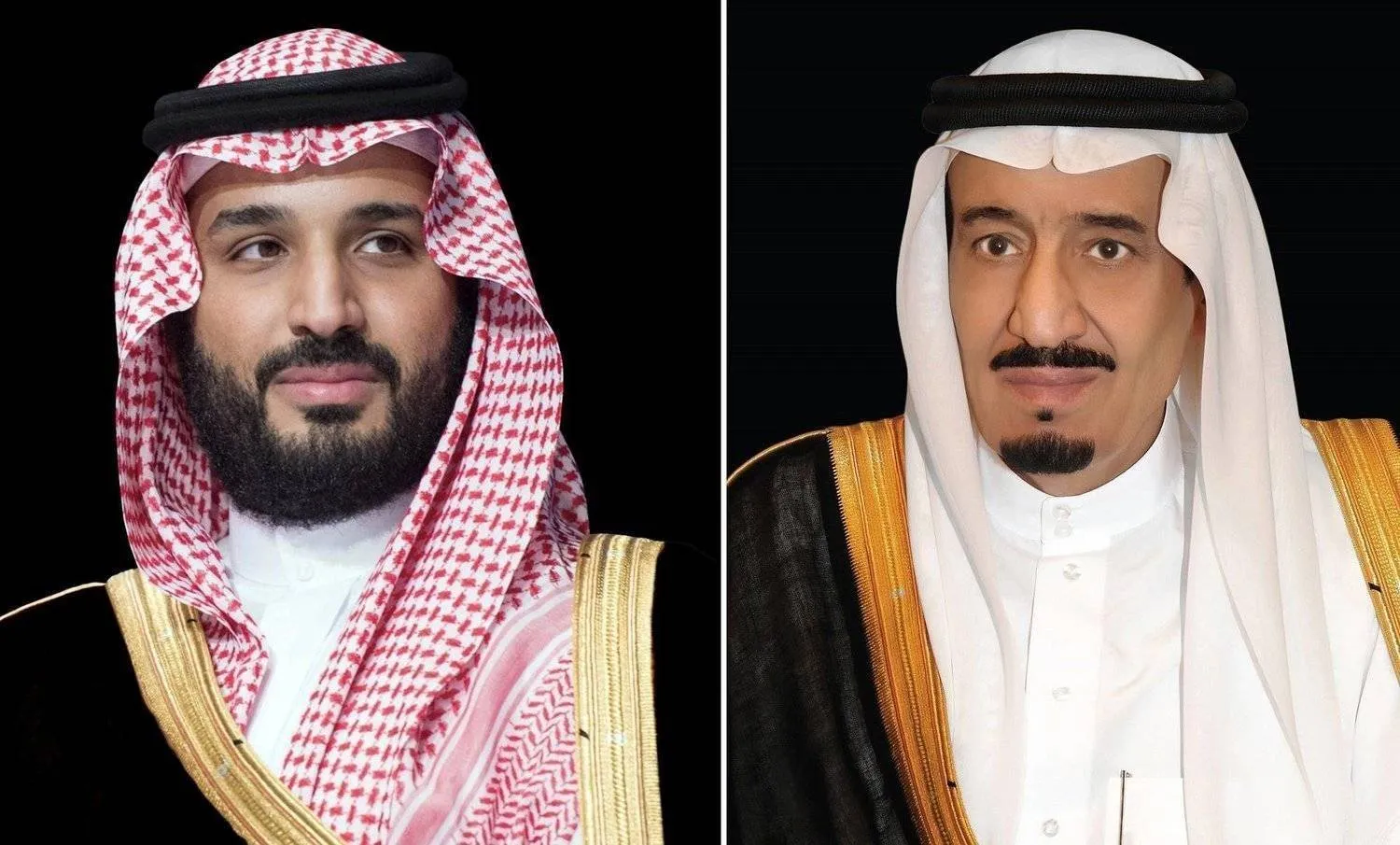
EU, GCC Push to Strengthen Relations, Enhance Cooperation

Crown Prince Mohammed bin Salman led the Saudi delegation at the EU-GCC summit, underscoring Riyadh’s commitment to strengthening its international partnerships (SPA)
TT

EU, GCC Push to Strengthen Relations, Enhance Cooperation

Crown Prince Mohammed bin Salman led the Saudi delegation at the EU-GCC summit, underscoring Riyadh’s commitment to strengthening its international partnerships (SPA)

The first-ever EU-Gulf Cooperation Council (GCC) summit in Brussels on Wednesday saw wide participation from leaders on both sides.
EU Ambassador to Saudi Arabia, Bahrain, and Oman, Christophe Farnaud, told Asharq Al-Awsat that both sides agree on the need for a ceasefire in Lebanon. He also expects a strong joint stance on establishing a Palestinian state, among other key issues.
Farnaud noted ongoing security cooperation between the Gulf and Europe, with both sides working to ensure regional stability. Leaders will discuss major regional issues, including Gaza, Lebanon, Sudan, and the Red Sea, during the summit.
King Salman’s Vision, International Partnerships
Crown Prince Mohammed bin Salman led the Saudi delegation at the summit, underscoring Riyadh’s commitment to strengthening its international partnerships.
Observers believe this reflects the success of the “Vision of the Custodian of the Two Holy Mosques” in enhancing Gulf cooperation, which has effectively boosted the GCC’s strategic partnerships regionally and globally.
With rising military tensions in Gaza and the Palestinian territories, as well as ongoing developments in Lebanon, the Saudi Crown Prince’s participation is vital for coordinating efforts between Saudi Arabia, GCC countries, and their EU counterparts to strengthen regional security and stability.
Saudi Efforts Toward International Coordination
Political analyst Abdul Latif Al-Mulhim told Asharq Al-Awsat that Crown Prince Mohammed bin Salman’s participation in the EU-GCC summit in Brussels will reinforce Saudi Arabia's commitment to the Palestinian cause.
He highlighted the importance of achieving a just peace that allows the Palestinian people to establish their state within the 1967 borders, with East Jerusalem as its capital.
Al-Mulhim added that this participation reflects the Crown Prince's efforts to engage with key regional and international players to coordinate actions aimed at stopping military escalations and enhancing security and stability in the region and beyond.
Al-Mulhim highlighted that Crown Prince Mohammed bin Salman’s role in leading the Saudi delegation at the EU-GCC summit will strengthen trade and investment ties between Saudi Arabia and the European Union, which represents 14.8% of the kingdom’s total trade, making it its second-largest trading partner.
His participation will also boost cooperation with EU countries by leveraging opportunities from Saudi Vision 2030 and the European Green Deal, especially in climate change and clean energy initiatives.
The First Summit and the Gulf’s Openness to International Partnerships
Observers note that the Gulf-European summit is significant as it is the first gathering of state leaders, reflecting the GCC’s openness, especially from Saudi Arabia, to partnerships with key global blocs.
Jassim Al-Budaiwi, Secretary-General of the GCC, called the summit a “historical milestone in the strategic partnership between the council and the European Union.”
He emphasized that it highlights both sides’ commitment to strengthening relations amid increasing regional and international challenges.
Evolution of Relations
The significant improvement in Gulf-European relations since the European Commission announced a “strategic partnership with the Gulf” in 2022 has been notable.
The recent summit marked a culmination of two years of efforts to formalize this partnership, which aims to enhance political cooperation and joint action in areas such as climate change, trade, investment, digitalization, sustainable supply chains, and green transformation, while also advancing negotiations on a free trade agreement.
Al-Mulhim told Asharq Al-Awsat that the summit provides an opportunity to address current geopolitical challenges.
It will help align GCC leaders' efforts to engage with key regional and international parties to coordinate actions to stop military operations in Gaza and respond to the situation in Lebanon. He also stressed the need for a unified vision for a political solution to the Russia-Ukraine crisis.
Both the GCC and EU member states agree on the importance of supporting efforts to enhance regional and international stability and security, especially in halting Israeli military operations in Gaza and addressing human rights violations in the occupied Palestinian territories.
Last month, Saudi Arabia, alongside partners from the Arab-Islamic ministerial committee, Norway, and the EU, launched the Global Alliance for a Two-State Solution.
Al-Mulhim noted that this initiative builds on the recognition of the state of Palestine by several countries, highlighting Saudi Arabia’s global influence and recognition.
Enhancing Economic Cooperation
The EU Ambassador to Saudi Arabia, Bahrain, and Oman emphasized a shared desire to strengthen cooperation.
Leaders will discuss economic and investment issues, with trade between the two sides reaching €170 billion, excluding services. Saudi Vision 2030 and the European Green Deal offer significant opportunities for cooperation, particularly in combating climate change and promoting clean energy.
Official figures indicate that trade between Saudi Arabia and the EU reached $78.8 billion in 2023, with Saudi exports to the EU valued at $38.4 billion and imports at $40.39 billion.
GCC countries have expressed their commitment to establishing a strategic partnership with the EU, aiming for a free trade agreement and mutual facilitation of e-visas.
They also seek to explore new areas of collaboration in technology, artificial intelligence, sustainable energy, environment, water, tourism, mining, logistics, and connecting European ports with GCC ports.



How Can the Riyadh-Paris Partnership Help Strengthen Regional Security?

France's President Emmanuel Macron, right, greets Saudi Crown Prince Mohammed bin Salman before a meeting at the Elysee Palace in Paris, France, Monday Aug. 24, 2026. (AP Photo/Aurelien Morissard)
TT

How Can the Riyadh-Paris Partnership Help Strengthen Regional Security?

France's President Emmanuel Macron, right, greets Saudi Crown Prince Mohammed bin Salman before a meeting at the Elysee Palace in Paris, France, Monday Aug. 24, 2026. (AP Photo/Aurelien Morissard)

Regional security and ongoing developments in the Middle East, including the Strait of Hormuz crisis, Houthi threats to navigation in the Bab al-Mandab Strait and the Red Sea, the two-state solution and recognition of a Palestinian state, the ongoing humanitarian crisis in Gaza amid Israel’s rejection of the US plan for the territory, as well as the situations in Syria and Lebanon, constitute shared concerns for Saudi Arabia and France.

According to observers and experts interviewed by Asharq Al-Awsat, the two countries maintain almost similar views on these issues.

Although major economic, investment, and cultural initiatives continue to strengthen the “strategic partnership” between the two countries, a partnership expected to gain further momentum with the convening on Monday of the first meeting of the Saudi-French Strategic Partnership Council, which was agreed upon during President Emmanuel Macron’s state visit to Saudi Arabia at the end of 2024, political and security cooperation also occupies a central place in bilateral relations. Indeed, it has become intertwined with virtually every major regional issue, reflecting a model of strategic partnership that many regard as exemplary.

Mohammed bin Salman and Macron: Continuous Consultation

Political and military analyst Abdul Latif Al-Mulhim believes that both countries are actively working to promote regional and international security, stability, and peace, while pursuing diplomatic efforts aimed at safeguarding maritime security and freedom of navigation.

According to Al-Mulhim, there are clear indications of the importance France attaches to its partnership with Saudi Arabia. He argues that Paris increasingly regards the Kingdom, given its regional role, as a “close ally that plays a key role in maintaining regional peace, security, and stability.”

As evidence, he points to what he describes as Macron’s commitment to maintaining continuous consultations with Crown Prince Mohammed bin Salman on current crises and possible solutions.

Joint Projects

Speaking to Asharq Al-Awsat, Al-Mulhim noted that Saudi Arabia and France consistently emphasize the importance of strengthening cooperation and coordination in defense-related fields to serve their mutual interests.

He added that both countries’ efforts to develop their defense industries and technologies could pave the way for joint defense projects or military cooperation that would contribute to regional and global security and stability.

He further highlighted ongoing efforts to enhance security coordination in areas such as combating crime in all its forms, counterterrorism and counter-extremism efforts, disrupting terrorist financing, and strengthening cybersecurity.

Political analyst Nidal Al-Sabaa believes there are significant opportunities for political and security cooperation between the two countries, particularly at this critical moment for the Middle East, where numerous crises remain unresolved.

He pointed to the US-Israeli confrontation with Iran, Iranian threats to the economic interests of Gulf and Arab states, the closure of the Strait of Hormuz, the security challenges in the Bab al-Mandab Strait, the ongoing Gaza crisis resulting from the policies of Israel’s current government, uncertainty surrounding Lebanon amid continued Israeli threats, and the wider instability affecting the region.

Cooperation on Syria: A Model of Strategic Partnership

Al-Sabaa views recent developments in Syria as a positive example of Saudi-French cooperation in support of the Syrian government. He cited the international conference on implementing the two-state solution, co-chaired by the Saudi Crown Prince and Macron, as another illustration of effective bilateral coordination.

He also identified a new potential avenue for cooperation involving coordination between the European Union’s maritime mission Aspides and the multinational defense coalition launched by Saudi Arabia with the participation of several regional and international partners.

Opportunities to Secure Maritime Navigation

Aspides is a naval operation established by the European Union in February 2024 as a defensive response to the Red Sea crisis following repeated Houthi attacks on international shipping that began in October 2023.

The mission was launched with a mandate to protect commercial vessels and ensure freedom of navigation. It operates along major shipping lanes around the Bab al-Mandab Strait while monitoring maritime security in the Strait of Hormuz, as well as international waters in the Red Sea, the Gulf of Aden, the Arabian Sea, the Gulf of Oman, and the Arabian Gulf.

French Interest in Saudi Defense Initiatives

French sources told Asharq Al-Awsat on Sunday that Paris attaches great importance to the visit of the Saudi Crown, given the Kingdom’s influential position at the Gulf, Arab, regional, and Islamic levels.

The sources also highlighted France’s interest in Saudi-led initiatives, including the Makkah Agreement, which resulted in the formation of a defense alliance bringing together Saudi Arabia, Pakistan, and Türkiye. According to the sources, the agreement has been designed to remain open to additional members in the future.

They also pointed to another Saudi initiative: the creation of a multinational maritime defense coalition aimed at ensuring safe navigation through the Bab al-Mandab Strait and the Red Sea.


Macron Hails Saudi Crown Prince’s Visit as ‘Important Milestone’

French President Emmanuel Macron and Saudi Crown Prince Mohammed bin Salman attend the closing ceremony of the Esports World Cup at the Grand Palais in Paris, France, August 23, 2026. Bandar Algaloud/Courtesy of Saudi Royal Court/Handout via REUTERS
TT

Macron Hails Saudi Crown Prince’s Visit as ‘Important Milestone’

French President Emmanuel Macron and Saudi Crown Prince Mohammed bin Salman attend the closing ceremony of the Esports World Cup at the Grand Palais in Paris, France, August 23, 2026. Bandar Algaloud/Courtesy of Saudi Royal Court/Handout via REUTERS

French President Emmanuel Macron said that the visit of Saudi Crown Prince and Prime Minister Mohammed bin Salman to France carries significant strategic importance, describing it as an important step in strengthening bilateral relations and promoting peace and stability.

In a post on X, Macron described the visit as an “important milestone.”

“At a time when the region faces major challenges, France and Saudi Arabia have always worked together to promote peace and stability, and they will continue their consultations in this regard,” he wrote.

Macron noted that the Paris-Riyadh partnership is built through concrete cooperation in major projects, advanced technologies, mutual investments, and joint international events, such as the Esports World Cup (EWC) in Paris.

He added: “We have already achieved a great deal together, and we can move forward toward even greater horizons.”

The state visit by Prince Mohammed bin Salman to France, at the invitation of President Macron, reflects the commitment of both countries’ leaderships to advancing bilateral relations, strengthening their comprehensive strategic partnership, and leveraging their political and economic capabilities in support of shared interests amid the rapid development of ties between the two nations.

Saudi Arabia remains committed to deepening its strategic partnerships with major and influential global powers while maintaining balanced relations that serve the Kingdom’s national interests and reinforce its leading role in the Middle East and beyond.

Both countries hope the visit will help maximize the opportunities offered by Saudi Vision 2030 and France 2030, further strengthening economic cooperation in areas including joint investment, industry, energy, culture and heritage, tourism, education, technology, space, defense and security, and other sectors.

The Saudi-French relationship is regarded as one of the most important bilateral partnerships globally. It is founded on a long history of trust and cooperation and is characterized by continuous development, effective collaboration across multiple strategic sectors, and a convergence of views on many issues of mutual concern.

The ambitious partnership between the two countries is being reinforced by expanding opportunities for trade and investment cooperation in sectors such as energy, industry and mining, agriculture, health and healthcare, biotechnology, telecommunications and information technology, artificial intelligence, quantum technologies, space, smart and sustainable cities, tourism, and culture.


GCC Secretary-General Highlights Joint Efforts to Combat Money Laundering

Al-Budaiwi speaking to attendees at the introductory workshop on international best practices in combating money laundering and terrorist financing in Riyadh (GCC)
TT

GCC Secretary-General Highlights Joint Efforts to Combat Money Laundering

Al-Budaiwi speaking to attendees at the introductory workshop on international best practices in combating money laundering and terrorist financing in Riyadh (GCC)

Secretary-General of the Gulf Cooperation Council (GCC) Jasem Albudaiwi stressed on Monday that the GCC states attach the utmost importance to developing their national capabilities to combat money laundering and terrorist financing.

These remarks were made during his speech at the introductory workshop on international best practices in combating money laundering and terrorist financing, held at the General Secretariat headquarters in Riyadh.

"Combating money laundering and terrorist financing constitutes a fundamental pillar for protecting the integrity of financial systems, bolstering economic stability, and confronting criminal activities and their funding sources," he stated in his opening remarks.

Albudaiwi highlighted the GCC states' continued dedication to strengthening their national capabilities and developing regulatory and institutional frameworks aligned with international standards and best practices.

He explained that the General Secretariat plays an essential role in fostering Gulf coordination in this field by representing the GCC member states in the Financial Action Task Force (FATF) and the Middle East and North Africa Financial Action Task Force (MENAFATF), monitoring relevant international developments, and facilitating the transfer of expertise and practices that support member states' efforts.

"The workshop coincides with the fifth round of Mutual Evaluations conducted by FATF, which requires a high level of coordination and preparedness, a precise understanding of international requirements and standards, and the ability to demonstrate the effectiveness of implemented frameworks and measures on the ground," he noted.

He also emphasized that the workshop serves as a key platform for exchanging knowledge and expertise, drawing upon international practices, and discussing practical challenges.

"This contributes to unifying understanding, cementing coordination among relevant entities in the GCC states, and elevating their readiness to address the requirements of the upcoming phase efficiently and effectively," Albudaiwi said.

The secretary-general pointed out that the success of the GCC states in mitigating the risks of money laundering and terrorist financing and fulfilling their international obligations necessitates ongoing joint Gulf action, role integration among relevant stakeholders, and the utilization of international expertise, thereby enhancing the resilience of GCC economies and safeguarding the integrity of their financial systems.

He further expressed hope that the discussions and exchange of expertise during the workshop would yield practical outcomes that support existing efforts and advance Gulf coordination and integration in this vital domain.