


Iranian Official to Asharq Al-Awsat: Committed to Peace and Stability with Saudi Arabia

Iranian Deputy Foreign Minister Majid Takht Ravanchi (Reuters)
TT

Iranian Official to Asharq Al-Awsat: Committed to Peace and Stability with Saudi Arabia

Iranian Deputy Foreign Minister Majid Takht Ravanchi (Reuters)

Iranian Deputy Foreign Minister Majid Takht Ravanchi reaffirmed Iran and Saudi Arabia’s mutual determination to establish lasting peace and stability in the region.
Speaking to Asharq Al-Awsat during his visit to Riyadh, Ravanchi emphasized that achieving this goal requires sustained bilateral and regional cooperation to address current threats and build a foundation for prosperity and security.
During his meetings with the Saudi Vice Minister of Foreign Affairs, Eng. Waleed ElKhereiji, Ravanchi discussed strengthening bilateral relations in political, economic, and consular fields, and explored key regional and international issues.
He described Saudi-Iranian efforts as a “successful model of bilateral and multilateral cooperation,” aimed at fostering peace, security, and development on both regional and international levels. Ravanchi underscored the importance of historical ties and the principle of good neighborliness as the basis for advancing this relationship.
Following the second meeting of the Saudi-Chinese-Iranian trilateral committee in Riyadh, both Saudi Arabia and Iran reiterated their full commitment to implementing the Beijing Agreement, according to a statement by the Saudi foreign ministry. The accord, mediated by China, aims to restore diplomatic ties and promote mutual respect for sovereignty and security in accordance with the principles of the UN Charter, the Organization of Islamic Cooperation (OIC), and international law.
China praised the progress achieved since the agreement’s signing, including the reopening of embassies and increased bilateral engagement. It pledged to continue supporting Saudi-Iranian efforts to deepen their cooperation and maintain regional stability.
Ravanchi, who previously served as Iran’s ambassador to the United Nations and was a member of the Iranian nuclear negotiating team with the P5+1, described the atmosphere of the meetings as “cordial and transparent.” He added that the three nations exchanged views on topics of mutual interest and stressed the importance of continuing this “positive and forward-looking process.” He also revealed “constructive and friendly” meetings held by the Iranian delegation with their Saudi hosts and Chinese counterparts, during which they discussed enhancing bilateral and trilateral cooperation and reviewed developments in relations over the past year.
One significant development has been the improvement in consular services. Over 87,000 Iranian pilgrims performed Hajj, and more than 52,000 completed Umrah in the past year, demonstrating enhanced coordination. Additionally, the first meeting of the Saudi-Iranian Joint Media Committee and the signing of an MoU between Saudi Arabia’s Prince Saud Al-Faisal Institute for Diplomatic Studies and Iran’s Institute for Political and International Studies further strengthened institutional ties.
The trilateral meeting also tackled pressing regional challenges, particularly the Israeli-Palestinian conflict. The participants condemned Israel’s aggression in Palestine, Lebanon, and Iran, calling for an immediate cessation of hostilities and the continuation of humanitarian aid to affected regions. They warned that ongoing violence poses significant risks to regional and global security, including threats to maritime safety.
On Yemen, the parties reiterated their support for a comprehensive political solution under United Nations auspices. They emphasized the importance of dialogue and diplomacy to achieve lasting peace in the war-torn country.
Saudi-Iranian relations have undergone a remarkable transformation since the signing of the Beijing Agreement. The reopening of embassies, including Iran’s embassy in Riyadh in June after a seven-year hiatus, marked a turning point in their ties.
Iranian Deputy Foreign Minister for Consular Affairs Alireza Bigdeli described the day as a “historic milestone” in Saudi-Iranian relations. He expressed confidence that the renewed relationship would reach its peak, emphasizing that the restoration of ties between Iran and Saudi Arabia opens a new chapter in bilateral and regional relations, aimed at greater cooperation and stability.



Saudi Leadership Offers Condolences to Bangladesh on Death of Former PM Khaleda Zia

An aerial view shows mourners gathered for the funeral ceremony of Bangladesh's former Prime Minister Khaleda Zia at the Parliament House premises in Dhaka on December 31, 2025 a day after her death. (AFP)
TT

Saudi Leadership Offers Condolences to Bangladesh on Death of Former PM Khaleda Zia

An aerial view shows mourners gathered for the funeral ceremony of Bangladesh's former Prime Minister Khaleda Zia at the Parliament House premises in Dhaka on December 31, 2025 a day after her death. (AFP)

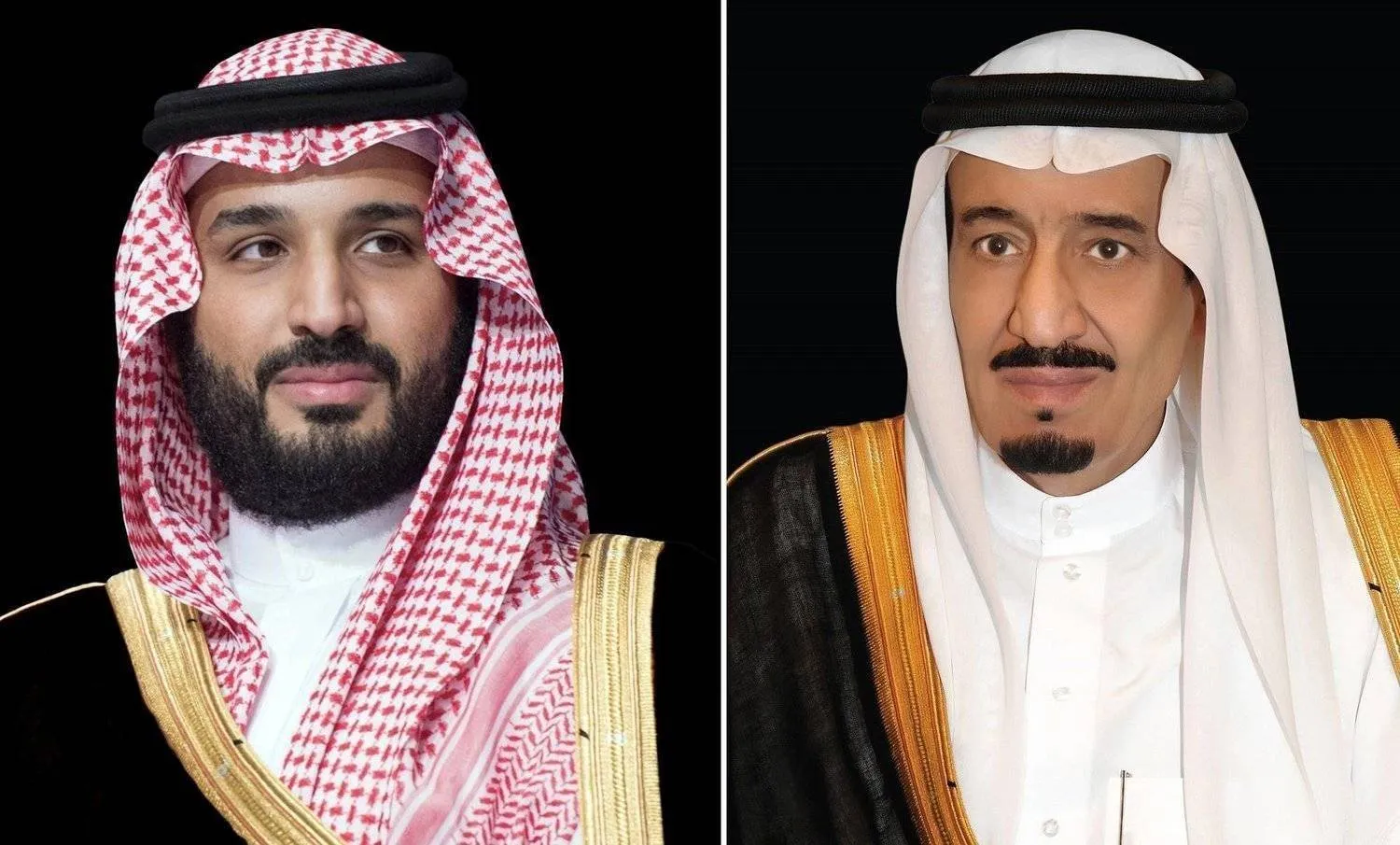
Custodian of the Two Holy Mosques King Salman bin Abdulaziz Al Saud sent on Thursday a cable of condolences to Bangladesh’s President Mohammed Shahabuddin on the death of former Prime Minister Khaleda Zia.

He extended his sincere condolences and sympathy to the president and the family of the deceased.

Prince Mohammed bin Salman bin Abdulaziz Al Saud, Crown Prince and Prime Minister, sent Shahabuddin a similar cable.


Pakistan Supports Saudi Arabia, Welcomes Regional Efforts to De-escalate Situation in Yemen

The Pakistani flag is seen in Islamabad.  AP file photo
The Pakistani flag is seen in Islamabad. AP file photo
TT

Pakistan Supports Saudi Arabia, Welcomes Regional Efforts to De-escalate Situation in Yemen

The Pakistani flag is seen in Islamabad.  AP file photo
The Pakistani flag is seen in Islamabad. AP file photo

Pakistan has confirmed its support for Yemen’s unity and territorial integrity, and for all efforts aimed at achieving lasting peace and stability in the country.

The Pakistani Ministry of Foreign Affairs said in a statement issued Wednesday that Pakistan strongly opposes any unilateral actions taken by any Yemeni party that escalate the situation, undermine peace efforts, and threaten peace and stability in Yemen and the region.

The statement said Pakistan welcomes regional efforts to de-escalate the situation and maintain peace and stability in Yemen, expresses its full solidarity with Saudi Arabia, and reaffirms its commitment to the Kingdom’s security.

It added that Pakistan maintains its strong support for resolving the Yemen issue through dialogue and diplomacy, and hopes that the Yemeni people and regional powers will work together to reach a comprehensive and lasting settlement of the issue and safeguard regional stability.


Saudi-Palestinian Discussions Focus on Gaza, the West Bank

The Saudi Foreign Minister met on Wednesday in Riyadh with Vice President of the State of Palestine and Vice Chairman of the PLO's Executive Committee. SPA
TT

Saudi-Palestinian Discussions Focus on Gaza, the West Bank

The Saudi Foreign Minister met on Wednesday in Riyadh with Vice President of the State of Palestine and Vice Chairman of the PLO's Executive Committee. SPA

Saudi Minister of Foreign Affairs Prince Faisal bin Farhan bin Abdullah met on Wednesday in Riyadh with Vice President of the State of Palestine and Vice Chairman of the Executive Committee of the Palestine Liberation Organization (PLO) Hussein Al Sheikh.

During the meeting, they discussed developments in the Gaza Strip and the West Bank, including the dire humanitarian conditions facing Gaza residents, ongoing Israeli violations of the ceasefire, and Israeli escalation in the West Bank. They stressed the importance of the unhindered delivery of humanitarian aid.

The two sides also underlined the need for the release of Palestinian Authority funds, the protection of the Palestinian banking system, and commitment to implementing the comprehensive peace plan put forward by US President Donald Trump.

The meeting highlighted Saudi Arabia’s support for the reform program launched by Palestinian President Mahmoud Abbas and praised the efforts of the US president.

The two sides affirmed the importance of connecting Gaza to the West Bank and continuing efforts, in coordination with brotherly countries and international partners, to ensure the legitimate rights of the Palestinian people, including the realization of an independent state with East Jerusalem as its capital.

The meeting was attended by Advisor to the Foreign Minister for Political Affairs Prince Musab bin Mohammed Al Farhan and Minister Plenipotentiary at the Ministry of Foreign Affairs Manal Radwan.
