A woman walks amid debris after an Israeli strike a day earlier in Syria's southern town of Daraa, on March 18, 2025. (Photo by Bakr ALKASEM / AFP)
The Saudi Ministry of Foreign Affairs has condemned Israeli strikes in Syria, describing them as a flagrant violation of international law.
The Kingdom condemned on Tuesday Israeli attempts to destabilize Syria and the region through repeated violations, which contravene relevant international agreements and laws.
It stressed the need for the international community to take a firm stance against these attacks and the importance that Security Council member states fulfill their role, stand firmly and seriously against ongoing Israeli attacks and violations in Syria, prevent the expansion of the conflict, and activate international accountability mechanisms for these violations.
The Kingdom reiterated its solidarity with the Syrian government and its people.
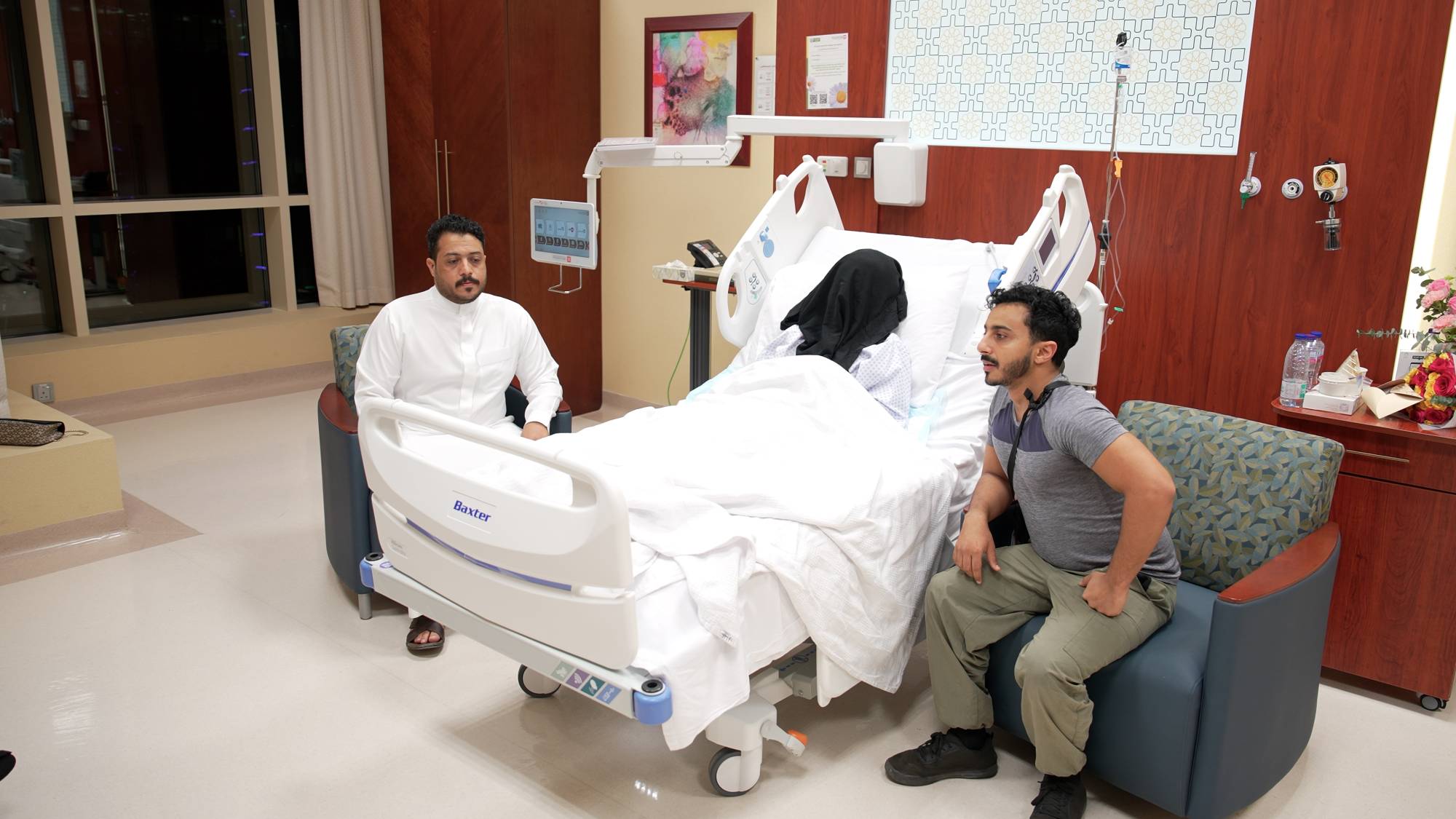
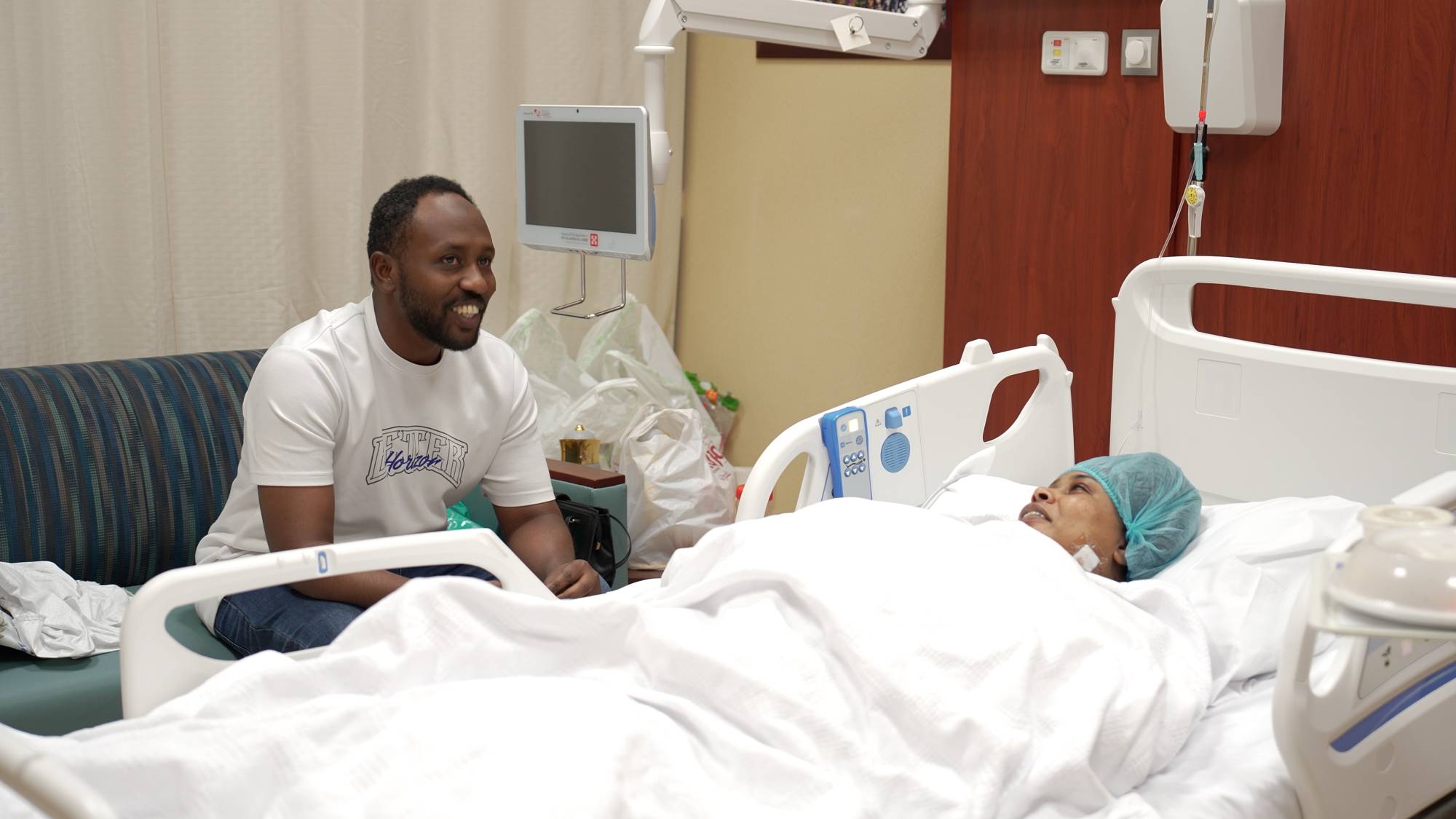
400 Medical Staff Save Victims of Riyadh Airport Attack
Twenty-five surgeries were performed in ten hours following the attack on Riyadh. (Turky Al-Agili)
Dr. Maad Al-Saati, Head of the Orthopedic Surgery Department at Dr. Sulaiman Al Habib Hospital in Riyadh, confirmed that medical teams successfully treated with high efficiency and in record time people wounded in the attack on Riyadh’s King Khalid International Airport.
Regarding the protocol for handling the injured upon their arrival at the hospital, Al-Saati told Asharq Al-Awsat that cases were classified into three main categories under a precise triage system.
The first comprised critical and severe cases, which were handled with immediate precision by a specialized emergency center; urgent examinations and surgeries were performed directly to save the lives of all those requiring such intervention.
He noted that moderate cases received initial treatment in the emergency department immediately upon arrival before being transferred directly to the operating room. Meanwhile, mild cases received the necessary treatment solely within the emergency department and were cleared for discharge after ensuring their health conditions were stable.
The medical team acted with high efficiency and in record time according to international standards. (Turky Al-Agili)
25 surgeries in 10 hours
He revealed that within just ten hours of the attack, 25 surgeries were performed covering various injuries.
All surgeries were successful, with the cases affected by shrapnel and various wounds handled in a smooth and professional manner, he added.
Regarding the current medical status of the injured, Al-Saati said that only two cases remain under intensive care, while the remaining patients have been transferred to designated inpatient wards.
Many cases have achieved full recovery, while others will require more surgeries, he revealed.
Around 400 specialized medical personnel treated the victims. (Turky Al-Agili)
400 medical staff
Al-Saati said that around 400 specialized medical personnel treated the victims, covering a range of procedures, such as general, orthopedic, neurosurgery, vascular and pediatric surgeries.
The team acted with high efficiency and in record time according to international standards, he stressed.
Al-Saati expressed his gratitude and appreciation for the full and continuous support of Custodian of the Two Holy Mosques King Salman bin Abdulaziz and Prince Mohammed bin Salman, Crown Prince and Prime Minister, for their gracious and comprehensive care of the sick and injured of all nationalities following the attack.
UN Human Rights Chief ‘Appalled’ by Attacks on Airports Saudi Arabiahttps://english.aawsat.com/gulf/5328903-un-human-rights-chief-%E2%80%98appalled%E2%80%99-attacks-airports-saudi-arabia
General view of the highway leading to the King Khalid International Airport in Riyadh, Saudi Arabia, October 12, 2026. (Reuters)
TT
TT
UN Human Rights Chief ‘Appalled’ by Attacks on Airports Saudi Arabia
General view of the highway leading to the King Khalid International Airport in Riyadh, Saudi Arabia, October 12, 2026. (Reuters)
United Nations High Commissioner for Human Rights Volker Türk condemned on Monday the repeated attacks carried out by the Houthis on airports in Saudi Arabia.
“I am appalled by the repeated attacks over the past few days by the Houthis on airports in Saudi Arabia, which have killed and injured dozens of Saudis and foreign nationals, notably the horrific attack on Riyadh’s main airport,” he said in a statement.
“Attacks on civilians and civilian infrastructure are prohibited under international humanitarian law. These attacks and other alleged violations by all parties to this conflict must be investigated, and those found responsible held to account,” he added.
“The disastrous toll of this conflict on civilians, both in Yemen and in Saudi Arabia, is a reminder to all parties that continued fighting will only unleash further misery with no end in sight,” he warned.
“In addition to the duty to respect the principles of distinction and proportionality, all parties have the obligation, under international humanitarian law, to take constant care to spare civilians. I urge them to de-escalate and avert further catastrophe,” he stressed.
Saudi Grand Mufti: Houthi Militia's Targeting of Holy Sites Is a Grave Crime with Dire Consequenceshttps://english.aawsat.com/gulf/5328898-saudi-grand-mufti-houthi-militias-targeting-holy-sites-grave-crime-dire-consequences
Grand Mufti of Saudi Arabia, Chairman of the Council of Senior Scholars, and President of the General Presidency of Scholarly Research and Ifta Sheikh Dr. Saleh bin Fawzan Al-Fawzan. (SPA)
TT
TT
Saudi Grand Mufti: Houthi Militia's Targeting of Holy Sites Is a Grave Crime with Dire Consequences
Grand Mufti of Saudi Arabia, Chairman of the Council of Senior Scholars, and President of the General Presidency of Scholarly Research and Ifta Sheikh Dr. Saleh bin Fawzan Al-Fawzan. (SPA)
Grand Mufti of Saudi Arabia, Chairman of the Council of Senior Scholars, and President of the General Presidency of Scholarly Research and Ifta Sheikh Dr. Saleh bin Fawzan Al-Fawzan condemned on Monday the terrorist Houthi militia’s attacks against holy sites in the Kingdom.
In remarks carried by the Saudi Press Agency, he stressed: “The terrorist Houthi militia's targeting of civilian facilities and the killing of innocent people, including worshippers heading to the Grand Mosque and the Prophet's Mosque, is among the gravest of crimes for which Allah Almighty has threatened painful punishment.”
“Throughout history, no one has followed the path of this criminal gang in targeting holy sites and those heading to the Sacred House of Allah without facing destruction and dire consequences,” he added.
“We ask Allah Almighty to put an end to these criminals and protect our country and Muslim countries,” he said.
لم تشترك بعد
انشئ حساباً خاصاً بك لتحصل على أخبار مخصصة لك ولتتمتع بخاصية حفظ المقالات وتتلقى نشراتنا البريدية المتنوعة