


Bernard Haykel to Asharq Al-Awsat: Trump’s Visit Reflects Saudi Arabia’s Significant Global Role

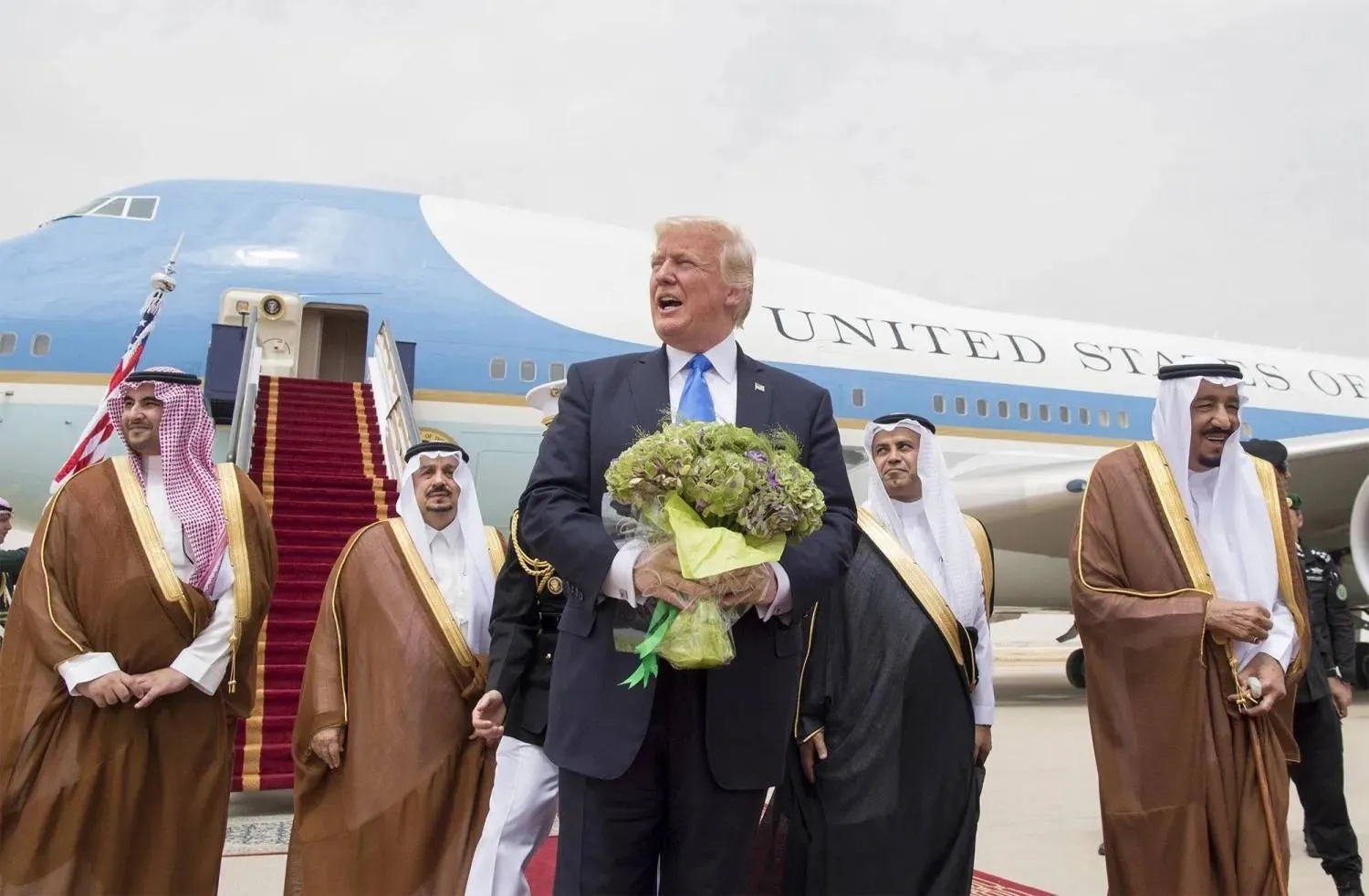
US President Donald Trump is welcomed in Riyadh during his visit to the Kingdom in May 2017. (SPA)
TT

Bernard Haykel to Asharq Al-Awsat: Trump’s Visit Reflects Saudi Arabia’s Significant Global Role

US President Donald Trump is welcomed in Riyadh during his visit to the Kingdom in May 2017. (SPA)

Dr. Bernard Haykel, professor of Near Eastern Studies at Princeton University, said US President Donald Trump’s visit to Saudi Arabia on Tuesday is very important and that it sends messages not just to the international community, but inside the US itself.

The messages indicate that Saudi Arabia is the most important country for American interests, not just in the Middle East, but the entire world, Haykel told Asharq Al-Awsat in an interview.

Haykel added that Prince Mohammed bin Salman, Saudi Crown Prince and Prime Minister, has dedicated his life in service of his country and has set national interests above all else.

Haykel expects Trump’s visit to Riyadh to yield several bilateral agreements. The deals may cover vital sectors such as AI, the development of a peaceful nuclear program and facilitating arms deals.

He ruled out, however, reaching any agreement that would pave the way for the normalization of ties between Saudi Arabia and Israel. Such an agreement must be tied with a clear pledge from Israel to establish an independent sovereign Palestinian state.

‘Excellent’ relations

Trump’s visit is expected to be a success on several levels, notably on the level of bilateral ties or files related the war on Ukraine, Haykel went on to say.

Relations between Riyadh and Washington are “excellent”, as they have been during the final two year’s of former President Joe Biden’s term in office, despite the difference in policies, he noted.

Trump’s return to the White House has restored momentum in the bilateral relations, while Saudi Arabia recognizes the differences between the former and current administration, he continued.

The Kingdom has managed to build solid relations with both the Republican and Democratic parties based on its firm policy that is founded on consolidating regional security and stability, explained Haykel.

This policy intersects with American interests in several files, most notably achieving regional peace and over Iran’s nuclear program.

Trump and Biden both oppose Iran developing nuclear weapons, Haykel said.

Saudi Arabia’s global standing

By choosing Saudi Arabia again as the destination of his first foreign visit, Trump is clearly saying that the Kingdom is the United States’ most important partner, not just in the Middle East, but the world, Haykel added.

The Kingdom’s role in complex international files, such as the Russian-Ukrainian war, consolidated its standing as an influential global player, he remarked.

He warned, however, that the visit is not without its risks. He explained that Trump still faces severe internal opposition, and his rivals will use the visit to target Saudi Arabia in the media.

Circumstances, though, have changed since his first term in office. The media attacks will not be as intense as the first time he visited the Kingdom given its balanced foreign policy and strong ties with the Republican and Democratic parties, predicted Haykel.

On this note, he hailed Crown Prince Mohammed’s ability to forge strong ties with world leaders. He has dedicated his life to serving the Kingdom and so, he realizes the importance of establishing strong ties with various world leaders.

The Crown Prince places Saudi interests above all else as demonstrated by his decision to open a new chapter in relations with Iran, for example, Haykel said.

No normalization

During Trump’s visit, Riyadh and Washington will likely negotiate a number of strategic agreements that cover security cooperation, a peaceful nuclear program, exchange of goods, AI and facilitating US arms sales to the Kingdom.

Some of these agreements were tied to Saudi Arabia normalizing ties with Israel, said Haykel, but such a deal is unlikely to happen without the latter making real concessions to the Palestinians, starting with accepting the establishment of an independent Palestinian state.

It is obvious that Saudi Arabia will not go ahead with the normalization, he stressed. Strategic agreements will be separated from the normalization efforts.



Saudi Arabia Urges Yemen’s STC to 'Urgently’ Withdraw from Hadhramaut and al-Mahra

Saudi Arabia Urges Yemen’s STC to 'Urgently’ Withdraw from Hadhramaut and al-Mahra
TT

Saudi Arabia Urges Yemen’s STC to 'Urgently’ Withdraw from Hadhramaut and al-Mahra

Saudi Arabia Urges Yemen’s STC to 'Urgently’ Withdraw from Hadhramaut and al-Mahra

The Saudi Ministry of Foreign Affairs issued a statement on Thursday expressing concern over the recent military movements witnessed in the governorates of Hadhramaut and al-Mahra.

It noted that “the actions carried out by the Southern Transitional Council were taken unilaterally, without the approval of the Presidential Leadership Council or coordination with the coalition leadership”.

The Kingdom described the moves as an “unjustified escalation” that has harmed the interests of the Yemeni people across all segments of society, undermined the Southern cause, and weakened the coalition’s efforts.

The Kingdom further emphasized that, in recent months, it has focused on maintaining unity and has undertaken intensive efforts to reach peaceful solutions to address the situation in the two governorates, as part of its ongoing endeavors to restore stability.

The statement added that these efforts were “coordinated with the brethren United Arab Emirates, the Chairman of the Presidential Leadership Council, and the Yemeni government to contain the situation”.

It said that a “joint Saudi–Emirati military team was dispatched to coordinate with the Southern Transitional Council in Aden, ensuring the withdrawal of its forces from the two governorates and the handover of camps to the National Shield Forces and local authorities under the coalition’s supervision”.

The Foreign Ministry stressed that efforts are still underway to restore the situation to its previous state, expressing the Kingdom’s hope that the public interest will prevail and that the Southern Transitional Council will take the initiative to de-escalate tensions and urgently and peacefully withdraw its forces from the two governorates.

Saudi Arabia also underscored the importance of cooperation among all Yemeni forces and components, exercising restraint, and avoiding actions that could undermine security and stability.

The Kingdom reiterated its position that the “Southern cause is a just issue with historical and social dimensions and can only be resolved through dialogue that brings all Yemeni parties together at one table, within a comprehensive political process that ensures a lasting solution in Yemen”.

The statement concluded by affirming the Kingdom’s “support for the Chairman and members of the Presidential Leadership Council and the Yemeni government, in a manner that achieves security, stability, development, and peace in the sisterly Republic of Yemen”.


MWL Condemns Attack Targeting Pakistani Police

The Muslim World League (MWL) logo
TT

MWL Condemns Attack Targeting Pakistani Police

The Muslim World League (MWL) logo

The Muslim World League (MWL) strongly condemned the attack targeting police personnel in Pakistan’s Khyber Pakhtunkhwa Province, the Saudi Press Agency reported on Thursday.

In a statement issued by its General Secretariat, MWL Secretary-General and Chairman of the Organization of Muslim Scholars, Sheikh Mohammed Al-Issa, affirmed the League’s solidarity with the Islamic Republic of Pakistan in the face of all threats to its security and stability. He reiterated the MWL’s firm rejection and condemnation of violence and terrorism in all their forms and under any pretext.

He also extended his sincere condolences and sympathies to the families of the victims and to the Pakistani people.


Sultan of Oman Awards Military Order to Royal Saudi Air Force Commander

Commander of the Royal Saudi Air Force (RSAF) Lieutenant General Prince Turki bin Bandar bin Abdulaziz receives the Military Order of Oman (Second Class). (SPA)
TT

Sultan of Oman Awards Military Order to Royal Saudi Air Force Commander

Commander of the Royal Saudi Air Force (RSAF) Lieutenant General Prince Turki bin Bandar bin Abdulaziz receives the Military Order of Oman (Second Class). (SPA)

Oman’s Sultan Haitham bin Tarik awarded on Wednesday the Military Order of Oman (Second Class) to Commander of the Royal Saudi Air Force (RSAF) Lieutenant General Prince Turki bin Bandar bin Abdulaziz in recognition of his efforts and contributions to strengthening military cooperation between the two countries.

The order was presented to the RSAF commander by Omani Deputy Prime Minister for Defense Affairs Shihab bin Tarik Al Said, in the presence of Commander of the Royal Air Force of Oman (RAFO) Air Vice Marshal Khamis Al Ghafri, Saudi Ambassador to Oman Ibrahim bin Saad bin Bishan, and the accompanying delegation.

During the visit, the RSAF commander also met with Minister of the Royal Office of Oman General Sultan bin Mohammed Al Nomani for talks on issues of mutual interest.

Prince Turki bin Bandar bin Abdulaziz arrived in Oman on Tuesday on an official visit during which he met with the commander of RAFO. The discussions addressed issues of common interest, particularly in the field of joint training and exercises.

The visit included a tour of the Air Center for Specialized Training, where the delegation reviewed the advanced capabilities on display, reflecting the level of development achieved by the Royal Air Force of Oman.