


Gulf-US Summit Bolsters Strategic Ties, Sets Vision for Regional Security

President Trump’s historic visit to Saudi Arabia set to strengthen strategic ties (SPA)
TT

Gulf-US Summit Bolsters Strategic Ties, Sets Vision for Regional Security

President Trump’s historic visit to Saudi Arabia set to strengthen strategic ties (SPA)

Gulf Arab leaders will meet with US President Donald Trump in the Saudi capital on Wednesday for a high-stakes summit expected to outline a shared vision for regional security and stability.

Analysts say the summit aims to strengthen alliances in the turbulent Middle East and align strategic interests and national priorities between Washington and its Gulf partners.

They also affirm that Saudi Arabia is positioning itself as a leading voice in the region, offering bold alternatives and engaging in active diplomacy to address regional crises.

According to analysts, Riyadh has demonstrated in recent years a clear vision for tackling regional turmoil, underpinned by a belief that Gulf stability is no longer a secondary concern in global alliances but a central pillar of international security.

Stronger Alliances

Hesham Alghannam, a scholar at the Malcolm H. Kerr Carnegie Middle East Center and head of the national security program at Naif Arab University for Security Sciences, said Trump is likely to use the summit to project Washington’s ability to forge more durable alliances in the Middle East.

“When the US president takes the stage at the Gulf-US summit, he will aim to show that his country can build stronger partnerships in a region rife with turmoil,” Alghannam told Asharq Al-Awsat.

“His address will likely strike a balance between strategic assurances and economic interests.”

He said the Trump administration is keen to reassure Gulf allies that the US remains a committed security partner, even if that commitment fluctuates with political currents in Washington. “Nonetheless, the administration is eager to show its seriousness about reinforcing strategic ties and long-term partnerships.”

Asked about the long-discussed US-Gulf missile defense shield, Alghannam said Trump views defense cooperation as a solid foundation for regional trust.

“By emphasizing defensive capabilities, the president is laying the groundwork to reaffirm his support for the US-Gulf missile shield project,” he said.

The missile shield is not a new idea but has faced delays due to the complexity of unifying the Gulf’s defense infrastructure.

“This project has been under negotiation for years,” said Alghannam.

“The real challenge lies in integrating the various defense systems of Gulf states into a single framework, which requires extensive logistical and financial coordination,” he added.

“Resolving every detail at once may not be feasible, but committing to the process signals a crucial political will to move forward and that’s what truly matters right now.”

Saudi Arabia’s Expanding Regional Role

Alghannam said Saudi Arabia’s leadership role in the region has been steadily growing and is now central to shaping Arab security. “This isn’t a sudden development,” he said.

“Riyadh has consistently shown a clear vision on regional crises - from the war in Yemen to the fight against extremism - and has succeeded in building regional alliances that serve as the backbone of Arab security.”

He added that the Kingdom’s engagement with Washington reflects a strategic understanding that balances national interests with broader regional concerns.

“Saudi Arabia is not just a participant; it puts forward initiatives that influence regional decision-making. It holds the keys to several critical files.”

Alghannam said Washington understands that cooperation with Riyadh is essential to the success of any US policy in the Middle East, whether in counterterrorism or in economic and investment initiatives.

According to Alghannam, both Washington and Riyadh are expected to present a unified front at the summit, with a focus on regional security, defense infrastructure investment, and intensified counterterrorism efforts.

“This alignment reflects a long-term partnership, even if tactical disagreements arise over specific issues,” he said.

Trump is expected to use Wednesday’s Gulf-US summit in Riyadh to outline a fresh strategic vision for the region, as Saudi Arabia pushes ahead with a bold leadership role in shaping Middle East security.

“The summit gives the US president a platform to unveil new ideas,” said Alghannam.

“Expectations are high, and Riyadh is clearly committed to leading regional dialogue and proposing bold alternatives, driven by the understanding that Gulf stability is no longer optional - it is a global necessity.”

Regional Security in Focus

Kuwaiti strategic analyst Dr. Dhafer Al-Ajmi said Trump is likely to highlight the importance of a stronger strategic partnership with the Gulf Cooperation Council (GCC), with a particular focus on regional security, countering Iranian influence, and advancing stability efforts in Gaza and Yemen.

“There’s a clear momentum toward activating the US-Gulf missile defense shield,” Al-Ajmi told Asharq Al-Awsat.

“It’s a key step aimed at reinforcing a collective defense system capable of facing regional threats.”

The summit comes as the US seeks to reassure its Gulf allies of its long-term commitment to the region, while Riyadh positions itself at the heart of emerging security and political frameworks in the Middle East.

The anticipated revival of US-Gulf defense cooperation is likely to be accompanied by major arms deals, including the supply of advanced missile systems and cutting-edge air defense technology.

“These deals are expected to significantly boost deterrence capabilities and expand joint military readiness across the region,” said Al-Ajmi.

He added that Saudi Arabia will play a central role in driving efforts to stabilize the region and in aligning policies with Washington.

“The Kingdom’s leadership reflects its status as a cornerstone of the region’s security and development architecture,” Al-Ajmi affirmed. “Its influence extends across both political and economic arenas in the Middle East.”

The summit, which brings together Trump and leaders of the GCC, comes as the region faces heightened threats and renewed calls for closer military and strategic cooperation.



Makkah Deputy Governor Carries Out Field Inspection of Grand Mosque Readiness for Ramadan 

Deputy Governor of the Makkah Region Prince Saud bin Mishaal bin Abdulaziz is seen during his inspection tour at the Grand Mosque in the holy city of Makkah. (SPA)
TT

Makkah Deputy Governor Carries Out Field Inspection of Grand Mosque Readiness for Ramadan 

Deputy Governor of the Makkah Region Prince Saud bin Mishaal bin Abdulaziz is seen during his inspection tour at the Grand Mosque in the holy city of Makkah. (SPA)

Deputy Governor of the Makkah Region Prince Saud bin Mishaal bin Abdulaziz inspected the readiness of the Grand Mosque and its facilities, conducting a field tour to review operational and service preparations for receiving worshippers and Umrah performers during the holy month of Ramadan, reported the Saudi Press Agency on Tuesday.

Prince Saud was briefed on the operational plans implemented by the relevant authorities, including crowd management mechanisms, service enhancements, and facility preparations aimed at ensuring smooth movement and enhancing comfort and safety levels for visitors to the Grand Mosque, particularly during peak times.

He reviewed developmental initiatives and smart services supporting the operational system, notably electric mobility carts for transporting the elderly, persons with disabilities, and those in need of assistance within the Grand Mosque.

The tour also included an overview of the efforts of guidance teams deployed across the corridors and courtyards of the Grand Mosque, providing multilingual assistance and direction.

Prince Saud reviewed the interactive map and digital mobility platform, which allows visitors to plan their routes in advance and identify service locations, entrances and exits, and less crowded pathways.

He was briefed on crowd management systems, including the visitor density sensor platform that measures human density in real time, and the Tawaf and Sa’i crowd status display service, which allows worshippers to select appropriate times to perform rituals with ease. Models of the modern multilingual guidance system were also reviewed.

Prince Saud also visited the Smart Engineering Command and Control Center, which serves as an advanced central platform linking operational systems and monitoring performance in real time, boosting operational efficiency and raising readiness levels during Ramadan.


Saudi Leadership Provides Two Donations Worth SAR150 Mln Through Jood Eskan Platform

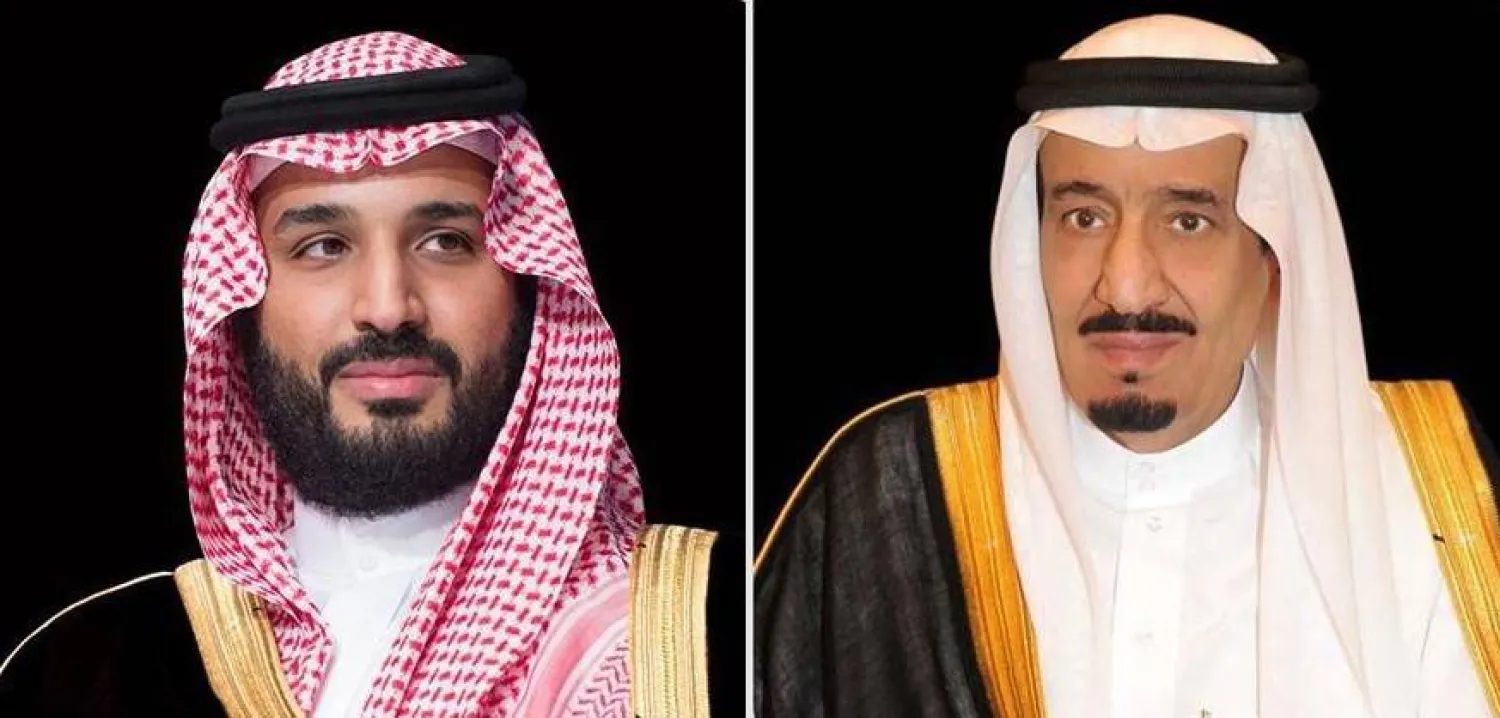
Custodian of the Two Holy Mosques King Salman bin Abdulaziz Al Saud and Prince Mohammed bin Salman bin Abdulaziz Al Saud, Crown Prince and Prime Minister. (SPA)
TT

Saudi Leadership Provides Two Donations Worth SAR150 Mln Through Jood Eskan Platform

Custodian of the Two Holy Mosques King Salman bin Abdulaziz Al Saud and Prince Mohammed bin Salman bin Abdulaziz Al Saud, Crown Prince and Prime Minister. (SPA)

Custodian of the Two Holy Mosques King Salman bin Abdulaziz Al Saud and Prince Mohammed bin Salman bin Abdulaziz Al Saud, Crown Prince and Prime Minister, have provided two generous donations amounting to SAR150 million through the Jood Eskan platform.

The move aligns with the leadership's commitment to supporting all national efforts and initiatives to provide suitable housing for deserving families.

Minister of Municipalities and Housing and Chairman of the Board of Trustees of the Developmental Housing Foundation (Sakan) Majed Al-Hogail expressed his deep gratitude to the leadership for its unwavering support to all national efforts and initiatives aimed at providing suitable housing for eligible families across the Kingdom.

He noted the effective impact of previous generous donations in achieving the goals of housing development, and motivating individuals and institutions to donate through the Jood Eskan platform that is based on community giving that helps provide decent housing and boosts stability and quality of life for deserving families.


Saudi Crown Prince Receives Message on Bilateral Ties from President of Kazakhstan

Prince Mohammed bin Salman bin Abdulaziz Al Saud, Saudi Crown Prince and Prime Minister. (SPA file)
TT

Saudi Crown Prince Receives Message on Bilateral Ties from President of Kazakhstan

Prince Mohammed bin Salman bin Abdulaziz Al Saud, Saudi Crown Prince and Prime Minister. (SPA file)

Prince Mohammed bin Salman bin Abdulaziz Al Saud, Saudi Crown Prince and Prime Minister, received on Tuesday a written message from President of Kazakhstan Kassym-Jomart Tokayev on bilateral relations between their two countries.

The message was received by Minister of Foreign Affairs Prince Faisal bin Farhan bin Abdullah during a meeting with his Kazakh counterpart Yermek Kosherbayev in Riyadh.