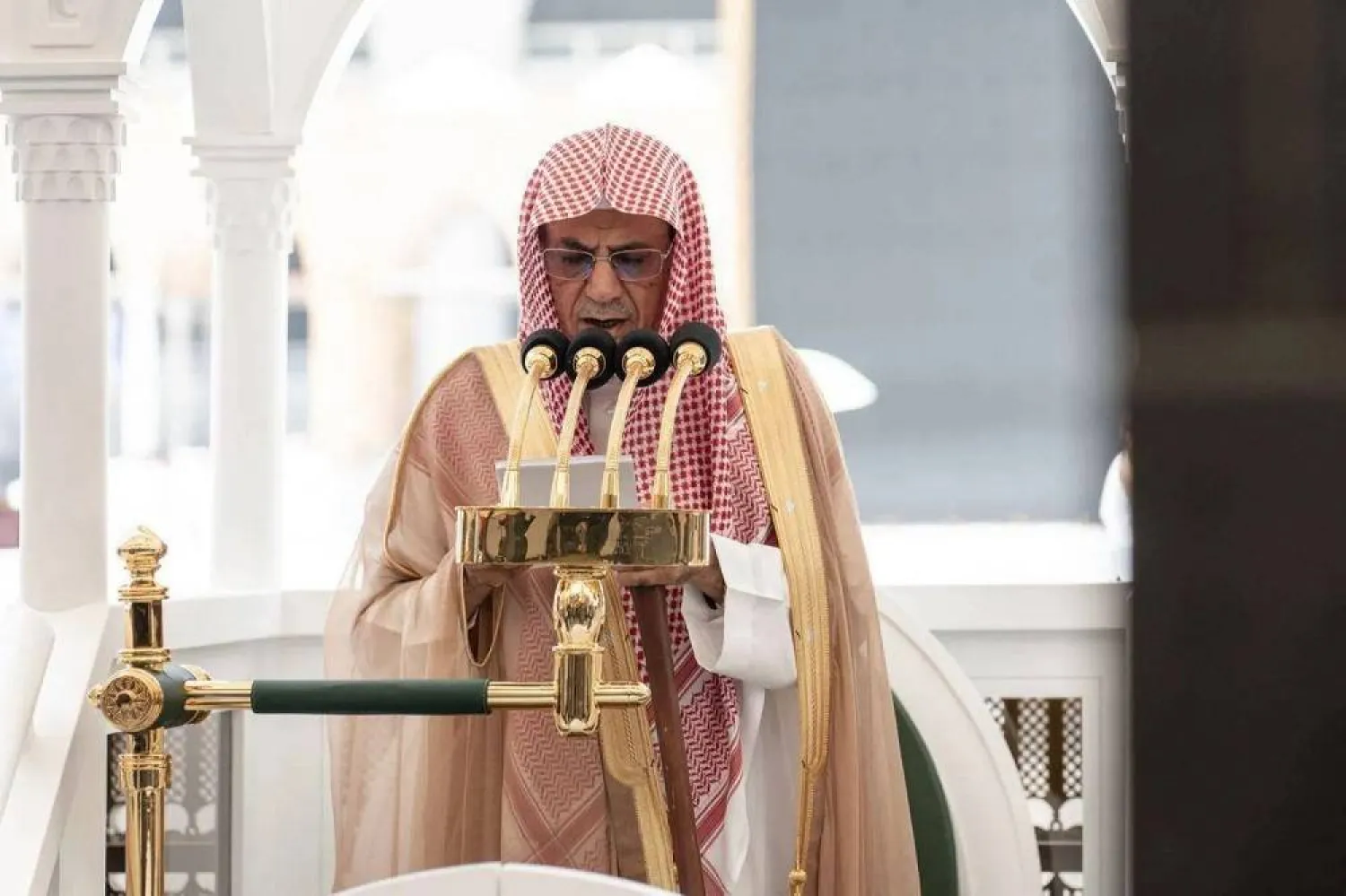

Custodian of the Two Holy Mosques King Salman bin Abdulaziz approved the appointment of Sheikh Dr. Saleh bin Humaid, imam and preacher of the Grand Mosque in Makkah, to deliver this year’s Arafat Day sermon at the Namira Mosque, Saudi Arabia’s Presidency for the Affairs of the Two Holy Mosques said in a statement.
Bin Humaid, a prominent religious and academic figure, was born in 1950 in Buraidah, in the Qassim region. He later moved to Makkah, where he completed his high school education in 1967. He earned his bachelor’s degree in Islamic law from Umm Al-Qura University in 1975, followed by a master’s degree in 1976 and a PhD in Islamic jurisprudence and its principles in 1981, graduating with top honors.
His academic career began at the same university, where he served as a teaching assistant, lecturer, and eventually associate professor. He later became head of the university’s Islamic Economics Department.
Bin Humaid was the first holder of a doctoral degree to be appointed as an imam at the Grand Mosque. Over the years, he held several high-profile positions, including Deputy President for the Affairs of the Two Holy Mosques and member of the Shura Council between 1993 and 2000.
In 2000, he was appointed President of the General Presidency for the Affairs of the Two Holy Mosques.
A royal decree in 2002 named him Chairman of the Shura Council. In 2009, he became President of the Supreme Judicial Council. In 2012, he stepped down from the judiciary role at his request and was appointed a royal adviser with the rank of minister.
The General Authority for the Affairs of the Grand Mosque and the Prophet’s Mosque announced that the Mataf, the circumambulation area around the Kaaba, is fully prepared to receive pilgrims during this year’s Hajj, under comprehensive organizational plans aimed at ensuring the safety, comfort, and well-being of worshippers.
The Mataf’s operational capacity has reached 107,000 pilgrims per hour, across multiple levels, including the ground floor, first floor, two mezzanine levels, and the rooftop, it added. The entire Mataf area can accommodate up to 203,000 worshippers.
Officials confirmed that the entire Mataf area has been made accessible exclusively for pilgrims performing Tawaf.
Multiple main and secondary entrances have been designated to ease access to the area, with certain gates reserved for emergency and service use, all while ensuring full crowd-capacity management.
The measures are part of broader efforts to streamline the performance of Hajj rituals and provide high-quality services to pilgrims, in line with the directives of the Saudi leadership.