


Saudi and Indonesian Leaders Hold Talks on Regional, Global Issues

The Saudi Crown Prince and the Indonesian President during their talks at Al-Salam Palace in Jeddah on Wednesday (SPA) 
TT

Saudi and Indonesian Leaders Hold Talks on Regional, Global Issues

The Saudi Crown Prince and the Indonesian President during their talks at Al-Salam Palace in Jeddah on Wednesday (SPA) 

Saudi Crown Prince and Prime Minister Mohammed bin Salman held official talks on Wednesday with Indonesian President Prabowo Subianto, focusing on the latest regional and international developments, as well as efforts to address them. The leaders also discussed a range of issues of common interest and ways to strengthen bilateral cooperation.

The meeting took place at Al-Salam Palace in Jeddah, where Subianto was welcomed with an official reception ceremony. During their discussions, the two sides reviewed the state of relations between Saudi Arabia and Indonesia and explored opportunities to expand collaboration across various sectors.

The visit also marked the convening of the first session of the Saudi-Indonesian Supreme Coordination Council. Senior officials from both countries attended the meeting, where a number of topics on the council’s agenda were addressed. At the conclusion, the two leaders signed the official record of the proceedings.

President Subianto arrived in Jeddah on Tuesday for a state visit to the Kingdom. He was received at King Abdulaziz International Airport by Prince Saud bin Mishaal, Deputy Governor of the Makkah Region; Minister of Commerce Dr. Majid Al-Qasabi, who served as the accompanying minister; and other senior officials.

The Indonesian president’s visit comes amid significant regional developments, highlighting the importance of close coordination between Riyadh and Jakarta to reinforce regional and global security and stability.

Saudi Arabia and Indonesia share a common vision on resolving conflicts through peaceful, diplomatic means and dialogue. Both countries emphasize the need to create conditions that promote stability and security in the Middle East and beyond.

Ties between Saudi Arabia and Indonesia have steadily grown over nearly eight decades, encompassing political, economic, and cultural cooperation. The two countries are influential members of the Organization of Islamic Cooperation and play important roles within the G20. They are also bound by longstanding and close ties between their peoples.

Formal relations date back to the era of King Abdulaziz bin Abdulrahman, when Saudi Arabia was among the first nations to recognize Indonesia’s independence. This early recognition paved the way for the exchange of diplomatic missions, which later developed into full embassies. Indonesia opened its first embassy in Jeddah in 1948, while Saudi Arabia established its embassy in Jakarta in 1955.

Today, Saudi Arabia is Indonesia’s largest trading partner in the region. Both governments are committed to strengthening and diversifying trade, overcoming obstacles that hinder economic exchange, and fostering deeper engagement between their private sectors. Bilateral trade reached $6.5 billion by the end of 2024.

According to the Saudi Aid Platform, the Kingdom has implemented 113 projects in Indonesia, with a combined value of approximately $670 million. These projects span sectors such as education, transport and logistics, industry, mining, agriculture, forestry, fisheries, healthcare and early recovery, housing, non-food assistance, and a variety of developmental, humanitarian, and charitable initiatives.



2 Dead, 3 Wounded as Missile Intercepted in Abu Dhabi

People walk along the corniche area in Abu Dhabi on March 20, 2026. (Photo by Ryan Lim / AFP)
TT

2 Dead, 3 Wounded as Missile Intercepted in Abu Dhabi

People walk along the corniche area in Abu Dhabi on March 20, 2026. (Photo by Ryan Lim / AFP)

Two people were killed and three were wounded by falling debris after air defenses intercepted a ballistic missile on the outskirts of Abu Dhabi, the government media office said on Thursday.

"The incident resulted in the deaths of two unidentified individuals, three injuries, and damage to a number of cars," the Abu Dhabi Media Office said in a post on X.


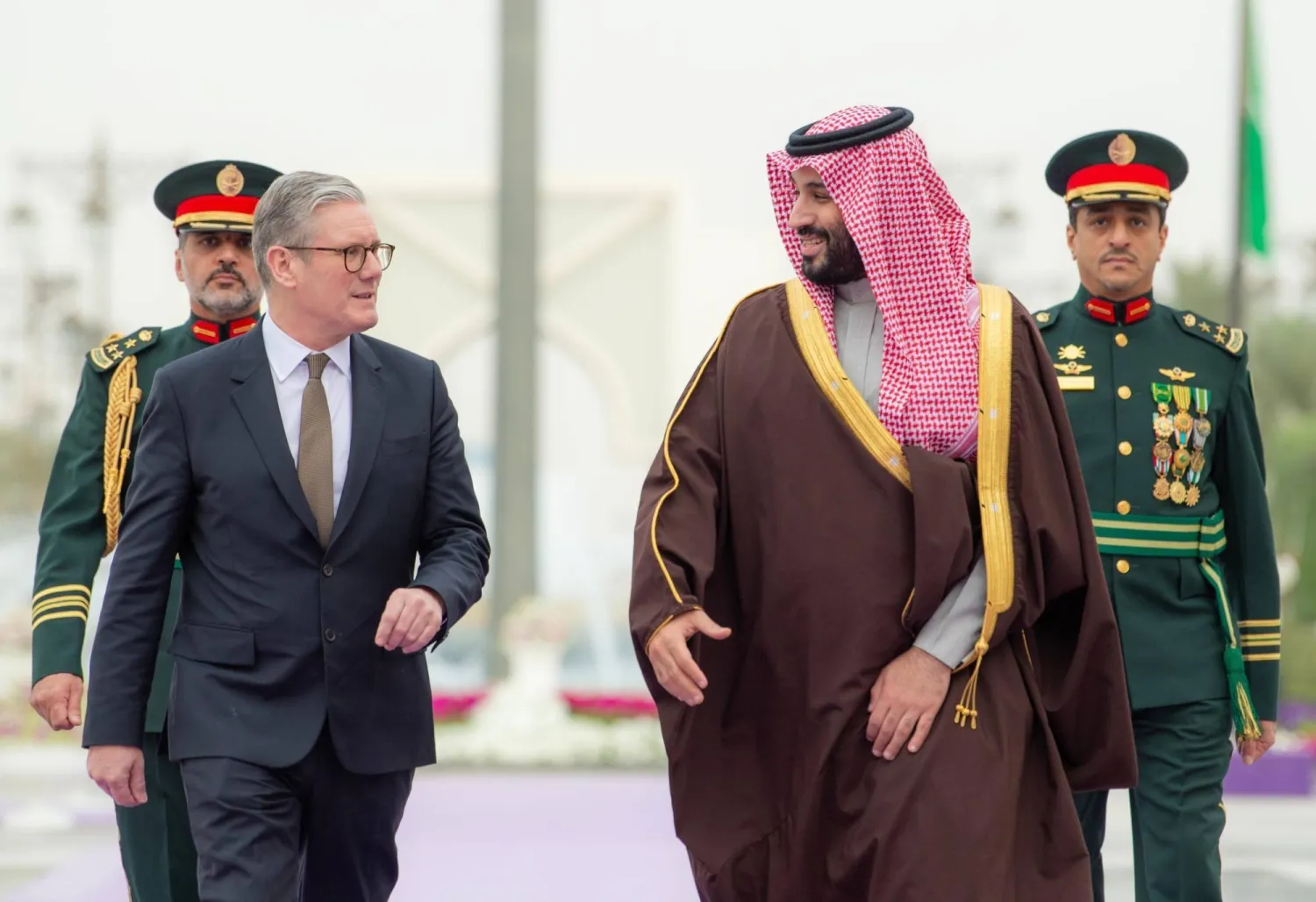
Crown Prince, UK PM Address Global Economic Crisis; Starmer Condemns Iran’s Attacks on Saudi Arabia

Prince Mohammed bin Salman bin Abdulaziz Al Saud, Saudi Crown Prince and Prime Minister, and British Prime Minister Keir Starmer meet in Riyadh in December 2024. (SPA)
TT

Crown Prince, UK PM Address Global Economic Crisis; Starmer Condemns Iran’s Attacks on Saudi Arabia

Prince Mohammed bin Salman bin Abdulaziz Al Saud, Saudi Crown Prince and Prime Minister, and British Prime Minister Keir Starmer meet in Riyadh in December 2024. (SPA)

Saudi Crown Prince and Prime Minister Prince Mohammed bin Salman bin Abdulaziz Al Saud received a phone call on Wednesday from British Prime Minister Keir Starmer, who condemned Iran’s continued assaults against Saudi Arabia.

Starmer expressed his country’s strong condemnation of Iran’s attacks highlighting their threat to security and stability, during the phone call with the Crown Prince.

The two leaders discussed regional security amid the ongoing military escalation, its impact on regional and global stability, and the associated risks to international maritime security and the global economy.


UN Rights Council Slams ‘Egregious’ Iran Strikes on Gulf, Demands Reparation

Smoke rises from Kuwait international airport after a drone strike on fuel storage in Kuwait City, Kuwait, Friday, Wednesday, March 25, 2026. (AP Photo)
TT

UN Rights Council Slams ‘Egregious’ Iran Strikes on Gulf, Demands Reparation

Smoke rises from Kuwait international airport after a drone strike on fuel storage in Kuwait City, Kuwait, Friday, Wednesday, March 25, 2026. (AP Photo)

The UN Human Rights Council on Wednesday condemned Iran's "egregious attacks" on Gulf countries and demanded full "reparation" for all victims of its strikes.

The 47-member council backed a resolution brought by the six Gulf Cooperation Council (GCC) countries and Jordan demanding Iran immediately "cease all unprovoked attacks.”

The resolution was adopted by consensus.

The resolution "condemns in the strongest terms the egregious attacks" by Iran, condemns Tehran's actions aimed at closing the Strait of Hormuz and voices "grave concerns at the Iranian attacks on energy infrastructure.”

It demands Iran "immediately and unconditionally cease all unprovoked attacks" against the GCC states and Jordan and "provide full, effective and prompt reparation to all victims for the damage and injury caused by its attacks.”

Saudi Arabia welcomed the UN Human Rights Council’s unanimous adoption of the resolution, which reflects the international community’s rejection of Iranian attacks and its condemnation of these brutal acts as grave violations of human rights.

In a statement, the Saudi Foreign Ministry said Iranian attacks on the Kingdom and other countries in the region “constitute a flagrant violation of the sovereignty and territorial integrity of states and a clear breach of international conventions and international law.”

“Targeting countries that are not party to the conflict is a blatant act of aggression that cannot be justified or accepted,” it added.
