




Since the early 20th century, the Palestinian cause has become one of the most complex conflicts in the region, significantly impacting the future of the Middle East. Following increased Jewish immigration during the British Mandate, escalating tensions and armed clashes, the United Nations General Assembly issued Resolution No. 181 on November 29, 1947, calling for the partition of Palestine into separate Arab and Jewish states, with Jerusalem internationalized.
Despite support from 33 countries, 13 countries opposed it, while 10 abstained from the vote. The resolution failed to achieve its main goal, leading to successive wars that expanded Israel's control over Palestinian territories. This issue has since become central to the Arab-Israeli conflict, attracting international attention, accompanied by widespread humanitarian repercussions and diverse international stances.
The Kingdom of Saudi Arabia has consistently prioritized the Palestinian cause in its foreign policy, advocating for an international approach that upholds rights and protects civilians, reported the Saudi Press Agency on Monday.
Historical stances of Saudi kings
Saudi Arabia's commitment to the Palestinian cause has been evident throughout its history. Under King Abdulaziz bin Abdulrahman Al Saud’s reign, the Kingdom participated in the 1939 London conference on Palestine and supported Arab forces in the 1948 war to defend Palestine, reaffirming its support for the Palestinian people's rights and its commitment to champion their cause in international forums as the primary issue for Arabs and Muslims.
King Saud bin Abdulaziz visited Palestine in 1935 and provided political and moral support, assisting affected families and offering opportunities for work and residency in Saudi Arabia, in a practical embodiment of the principle of solidarity.
King Faisal bin Abdulaziz elevated the Palestinian issue within an Islamic framework, advocating for the first Islamic summit in Rabat in 1969 after the Al-Aqsa Mosque fire. He emphasized the importance of protecting Jerusalem and its people's rights in international discussions.
King Khalid bin Abdulaziz continued to seek Arab and Islamic unity for a just settlement.
King Fahd bin Abdulaziz introduced a peace initiative in 1981, which evolved into the Arab peace plan at the Fez Summit in 1982, establishing a framework for a settlement based on international legitimacy. He was dedicated to leveraging Saudi and Arab media to advocate for the cause and directed the allocation of financial, humanitarian, and relief aid.
In 2000, King Abdullah bin Abdulaziz, then Crown Prince, proposed the Al-Quds Intifada Fund and the Al-Aqsa Fund, with a value of $1 billion. The Kingdom committed to contributing a quarter of this amount, along with financing projects to preserve Jerusalem's identity and support affected families. He also introduced the Arab Peace Initiative at the 2002 Beirut summit, calling for withdrawal from occupied territories and establishing an independent Palestinian state with East Jerusalem as its capital, in exchange for normal relations between Arab countries and Israel.
Under the reign of Custodian of the Two Holy Mosques King Salman bin Abdulaziz Al Saud, Saudi Arabia's firm stance continued. At the 2018 Jerusalem Summit in Dhahran, he reaffirmed the Palestinian issue's centrality and confirmed the Kingdom's commitment to continuing political and economic support for the Palestinian people. He also announced a pledge of $150 million to support Islamic endowments in Jerusalem and $50 million to the United Nations Relief and Works Agency for Palestine Refugees in the Near East (UNRWA).
The Kingdom consistently advocates for the Palestinian people's right to an independent state along the June 4, 1967, borders, with East Jerusalem as its capital, reaffirming its supportive positions in various international forums, including the UN Security Council and General Assembly.
Launch of the Global Alliance for the Implementation of the Two-State Solution
On September 27, 2024, Minister of Foreign Affairs Prince Faisal bin Farhan bin Abdullah announced the launch of the global alliance for the implementation of the two-state solution on behalf of Arab and Islamic countries and a number of international partners, on the sidelines of the 79th session of the United Nations General Assembly in New York.
Prince Faisal reiterated that the establishment of an independent Palestinian state is a fundamental right of the Palestinian people and a crucial foundation for achieving lasting peace. He called on all countries to recognize Palestine and join the growing international consensus of 149 nations that have officially recognized it.
On September 28, 2024, during a Security Council session on Palestine, the Kingdom once again urged the international community, particularly countries that have yet to recognize the State of Palestine, to take steps toward such recognition in support of the two-state solution.
On September 29, 2024, the Kingdom welcomed the UN General Assembly's resolution granting Palestine eligibility for full membership in the international organization. It also expressed appreciation for the decisions of several European countries to recognize the State of Palestine, emphasizing that these actions strengthen the global efforts to establish an independent Palestinian state.
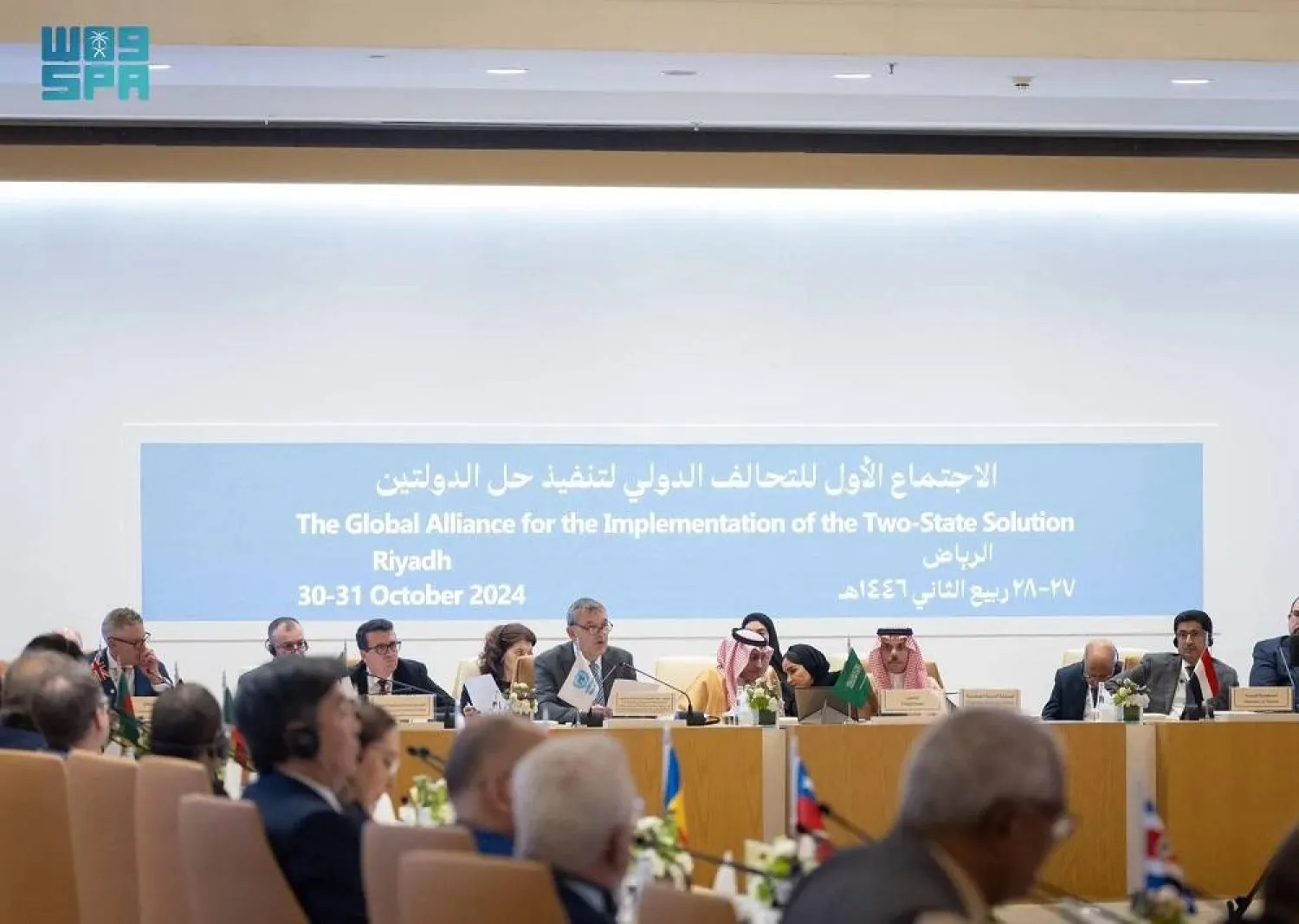
On October 30, 2024, the Kingdom hosted the inaugural meeting of the alliance in cooperation with its partners. At the meeting, it emphasized the need to halt Israeli escalations, activate international accountability mechanisms, and pursue concrete steps and timelines that would lead to the establishment of a Palestinian state.
Saudi Arabia’s efforts were significantly bolstered across multiple international platforms in 2025. During April and May, the Kingdom, in partnership with France, co-chaired preparatory meetings for the High-level International Conference for the Peaceful Settlement of the Question of Palestine at United Nations headquarters. Specialized working groups were formed to pave the way for the conference, focusing on key issues such as security, borders, the economy, refugees, and humanitarian support.
On June 17, a joint statement was issued by the Saudi-French presidency, along with representatives from 19 countries and organizations, expressing deep concern over the escalating situation in Gaza and calling for an immediate restoration of calm and adherence to international law.
On July 28, the conference adopted its final document, which called for an end to the war in Gaza and emphasized the need for a just and lasting resolution based on the two-state solution. The document also outlined the launch of economic and humanitarian support initiatives to ensure the provision of essential services, aid in reconstruction, and empower the institutions of a future Palestinian state to fulfill their responsibilities.
These diplomatic efforts culminated in a historic resolution on September 12, when the United Nations General Assembly adopted the New York Declaration in support of the two-state solution and the establishment of an independent Palestinian state. The resolution passed with the backing of 142 countries.
Saudi Arabia welcomed the resolution as a strong reaffirmation of the international consensus supporting Palestine’s right to establish its state within the 1967 borders, with East Jerusalem as its capital, viewing it as a catalyst for continued collective action.
The Saudi position was clearly articulated by Prince Mohammed bin Salman bin Abdulaziz Al Saud, Crown Prince and Prime Minister, on September 10, during the opening of the second year of the ninth session of the Shura Council, where he underscored that the 2002 Arab Peace Initiative has evolved into a widely recognized international framework for achieving a Palestinian state.
The Crown Prince highlighted that Saudi efforts have led to a significant increase in the number of countries recognizing Palestine and unprecedented international mobilization at the New York conference to implement the two-state solution.
The Kingdom has long maintained that the establishment of an independent Palestinian state is the cornerstone of regional security and stability, and its unwavering support for the two-state solution remains steadfast. Furthermore, Saudi Arabia renewed its call for all peace-loving nations to join the global alliance dedicated to this cause, underlining its historical, humanitarian, and political commitment to the Palestinian people and its continued Arab, Islamic, and international role in securing a just and lasting peace in the Middle East.


