



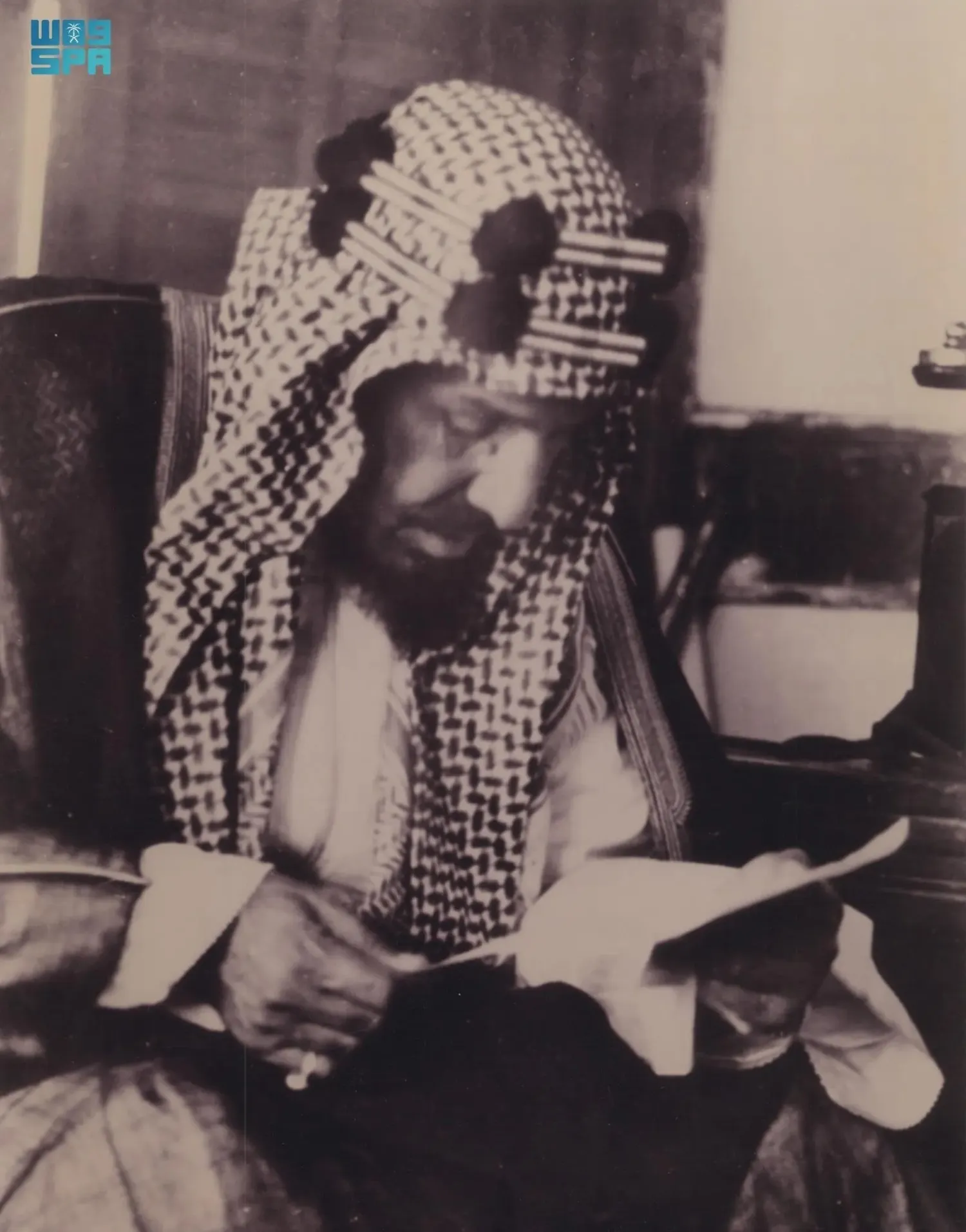

This year marks 95 years since Saudi Arabia’s first National Day was celebrated in 1930, a reminder of the formidable task that faced King Abdulaziz as he forged a modern state out of disparate regions.
One of the founder’s most distinctive traits, historians say, was his insistence on choosing men of talent, regardless of their origin or tribal affiliation. The strategy gave the kingdom a pool of administrators, diplomats and advisers at a time when resources were scarce and few Saudis had access to formal schooling.
The historical record, however, has often highlighted non-Saudi advisers such as Hafez Wahba, Yusuf Yassin, Fuad Hamzah, Khalid al-Qurqani and Rushdi Malhas. Their memoirs and visibility in foreign media have ensured a lasting presence in the narrative. By contrast, many Saudi contemporaries left few writings, rarely gave interviews, and kept state secrets to their graves.
That silence, scholars argue, has led to an incomplete picture of the kingdom’s formative years. A corrective is now underway, aimed at restoring balance by spotlighting Saudi statesmen whose contributions were no less significant.
Asharq Al-Awsat has compiled sketches of some of those men — advisers, ministers, Shura Council members and envoys — whose work helped shape Abdulaziz’s reign from his capture of Riyadh in 1902 until his death in 1953.
Ahmed bin Abdullah bin Thunayan
Born and educated in Türkiye, bin Thunayan spoke Turkish, French and English. He joined Abdulaziz around 1911 as the king’s first political adviser and took part in military campaigns. He supervised the withdrawal of Ottoman troops from al-Ahsa and represented Najd in negotiations with Britain that led to the Treaty of Darin in 1915. He also accompanied Prince Faisal on his first trip to Europe in 1919 and attended the al-Muhammara conference in 1922. He died in Riyadh the following year.
Abdullah bin Mohammed al-Fadl
A native of Unaizah, al-Fadl studied in India, where he absorbed political currents under British rule and mastered Urdu and English. He served as Abdulaziz’s representative in Aden and became one of Prince Faisal’s closest aides in the Hejaz, eventually rising to deputy head of the Shura Council and deputy chairman of the Council of Deputies.
Mohammed Sharaf bin Ahmad Adnan al Ghaleb
Educated in Egypt and Türkiye, Adnan returned to Makkah after its capture by Abdulaziz in 1924. He became an adviser to the viceroy of the Hejaz, served on the Shura Council, and was later appointed its chairman. His career spanned advisory, legislative and oversight roles, including a seat on the inspection and reform committee.
Abdulrahman bin Hassan al-Qusaibi
Born in al-Ahsa, al-Qusaibi learned English and French while trading between Bahrain, India, Europe and Africa. Abdulaziz named him representative in Bahrain and entrusted him with sensitive negotiations. He was later appointed minister plenipotentiary and minister of state.
Ibrahim bin Mohammed bin Muammar
Born in Kuwait, educated in India, al-Muammar spoke English, Urdu and Persian. He entered Abdulaziz’s service in 1912 and became one of his early intelligence chiefs. He led the royal court in 1926, was posted to Iraq in 1933, and earned lasting fame for insisting that the Saudi flag never be lowered in mourning — a principle later enshrined by law.
Hamza bin Ibrahim Gouth
From Medina, Gouth studied under the Rashidis before joining Abdulaziz in 1922. He represented Najd at the Kuwait conference in 1924 and was later posted to Iraq and Iran. Abdulaziz reportedly chose him as ambassador to Tehran because of his lineage, name and origins in Medina — qualities the king believed would resonate in Iran.
Mohammed Sharaf bin Rida al-Yahya
Educated by private tutors and scholars of Makkah, al-Yahya became the first head of the kingdom’s finance administration after the Hejaz was annexed. He served as adviser, Shura member, minister of state and deputy chairman of the Council of Deputies.
Abdulaziz bin Hamoud bin Zaid
A Hail native educated in Istanbul, bin Zaid negotiated unsuccessfully with Abdulaziz on behalf of the Rashidis before later joining the king’s service. He held posts in Amman, Jerusalem, Damascus and Beirut, often leading boundary negotiations with northern tribes. His long career in diplomacy earned him respect for his negotiating skills.
Mohammed bin Abdulqader Mughayribi Ftaih
A graduate of Istanbul’s American University and Lausanne, Mughayribi spoke six languages including English, French and Italian. He advised the Rashidis before joining Abdulaziz after the fall of the Hejaz. He sat on the Shura Council and played roles in education and Islamic endowment committees.
Saleh bin Abu Bakr Shatta
A scholar from a family originally from Makkah, Shatta became the kingdom’s first director of education. He held advisory and Shura posts and was deputy head of the council.
Abdullah bin Abdulaziz bin Uthman
Born in Kuwait, bin Uthman joined Abdulaziz in the 1920s and rose to head the royal court in 1932, coinciding with the proclamation of the Kingdom of Saudi Arabia. He remained in the post until Abdulaziz’s death, overseeing the court’s administrative system and accompanying the king on travels.
Abdulaziz bin Mohammed al-Otaiqi
Educated in Cairo, al-Otaiqi worked in education and media before joining Abdulaziz. He became adviser, Shura member and acting head of foreign affairs.
Abdulwahhab bin Ahmad Nayeb al-Haram
A scholar of Makkah, Nayeb al-Haram studied law in Türkiye before returning to oversee finances in Asir. He became head of Makkah’s municipality, Shura member, and later head of religious endowments.
Mohammed bin Abdulaziz bin Dughaythir
Raised in al-Zubair, bin Dughaythir joined the royal court in 1926 and headed the new telegraph bureau. As Abdulaziz’s communications chief, he became one of the king’s closest confidants and a witness to decades of state-building.
Rashid bin Nasser bin Layla
A Hail native, bin Layla once represented the Rashidis in Istanbul but later joined Abdulaziz, serving as adviser, Shura member, and envoy to Iraq and Syria.
Fawzan bin Sabiq al-Sabiq
From Buraydah, al-Sabiq studied in Najd, Bahrain, Iraq and India. He was Abdulaziz’s representative in Damascus and Cairo during the 1920s, working unofficially when Egyptian authorities withheld recognition. His ties later helped secure American oil exploration after he introduced engineer Karl Twitchell to Abdulaziz. He became minister in Cairo until retiring in 1946.
Abdullah bin Suleiman al-Hamdan
Al-Hamdan rose from clerk in Abdulaziz’s court in 1920 to become the kingdom’s first finance minister in 1932. He negotiated the 1933 concession with Standard Oil of California and later secured higher oil revenues by imposing taxes in 1951. He remained in office until 1954. Historians credit him with keeping the state afloat through the Great Depression and the Second World War.
Restoring balance to history
The careers of these men reflect Abdulaziz’s far-sighted approach: he invested in schools and missions abroad, sought capable aides wherever he could find them, and entrusted them with sensitive responsibilities despite scarce resources.
Historians say preserving their stories is vital to understanding how the kingdom’s institutions were built. For Saudi Arabia, now nearly a century removed from its first National Day, revisiting their legacies offers a fuller picture of how the founder selected his men and laid the groundwork for the state’s transformation.


