
Saudi Arabia and UN Launch Global Cybersecurity Capacity-Building Initiative

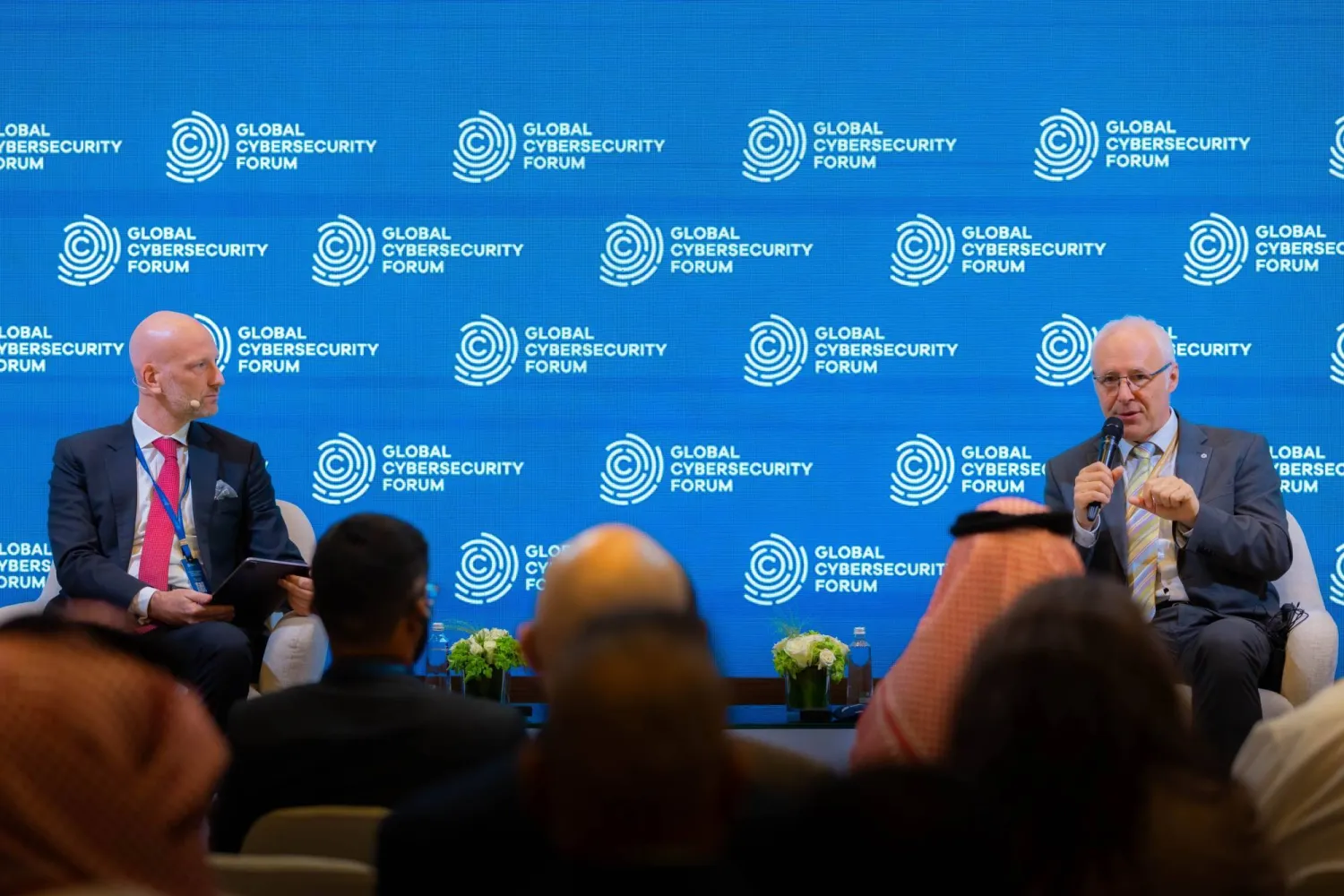
A scene from the Global Cybersecurity Forum in Riyadh on Wednesday (Forum account on X)
TT

Saudi Arabia and UN Launch Global Cybersecurity Capacity-Building Initiative

A scene from the Global Cybersecurity Forum in Riyadh on Wednesday (Forum account on X)

Saudi Arabia, in partnership with the United Nations, has launched a global initiative to strengthen cybersecurity capacity worldwide. The announcement came during the opening of the Global Cybersecurity Forum in Riyadh on Wednesday, inaugurated on behalf of King Salman bin Abdulaziz by Riyadh Governor Prince Faisal bin Bandar bin Abdulaziz.

Prince Faisal stressed that the theme of this year’s fifth edition, Scaling Cohesive Advancement into Cyberspace, builds on the forum’s past achievements in unifying international efforts and promoting joint action. He voiced confidence that experts, policymakers, and industry leaders would share global best practices, contributing to a safer and more trustworthy cyberspace that enables economic growth and prosperity across nations.

Majed Al-Mazyed, Governor of the National Cybersecurity Authority, highlighted the Kingdom’s growing international role in the sector. He noted that Saudi Arabia’s model has become globally recognized for its effectiveness at local, regional, and international levels. The new initiative, he said, aims to accelerate skills development in priority areas by drawing on a broad network of international expertise.

In a video address, UN Secretary-General Antonio Guterres described cyberspace as both a catalyst for innovation and a field of vulnerability. He warned that weaknesses in digital systems could undermine trust, disrupt societies, and threaten peace. He urged collective action to use cyberspace for the public good by investing in people, building digital skills, promoting inclusivity, and forging global partnerships based on solidarity and shared responsibility.

Guterres praised Saudi Arabia’s leadership in cybersecurity capacity-building and welcomed the new initiative. He also commended the forum’s focus on issues such as child protection and women’s empowerment. The Secretary-General reiterated the UN’s commitment to advancing an open, secure, and law-based cyberspace where all countries can maximize opportunities while minimizing risks.

On the forum’s first day, experts and practitioners emphasized the importance of collaboration and knowledge exchange to strengthen global cybersecurity. They noted Saudi Arabia’s rapid growth in the sector, underscoring the economic role of digital security in supporting investment and driving innovation.

The initiative, launched by the National Cybersecurity Authority in cooperation with the Saudi Information Technology Company (SITE) and the Global Cybersecurity Forum Institute, and in partnership with the UN and its specialized agencies, addresses pressing international challenges. Chief among them is the global shortage of cybersecurity professionals, estimated at 2.8 million worldwide, according to the 2024 workforce report.

Since its inception in 2020, the Global Cybersecurity Forum has established itself as a platform for dialogue and cooperation, bringing together governments, private sector leaders, academia, and civil society. Through these efforts, Saudi Arabia continues to advance its strategic vision of fostering global collaboration, enhancing knowledge transfer, and building human capacity to secure the digital future.


Caption: A scene from the Global Cybersecurity Forum in Riyadh on Wednesday (Forum account on X


GCC Denounces Iranian Attacks on UAE as Dangerous Regional Escalation

Secretary-General of the Gulf Cooperation Council (GCC) Jasem Albudaiwi. SPA
TT

GCC Denounces Iranian Attacks on UAE as Dangerous Regional Escalation

Secretary-General of the Gulf Cooperation Council (GCC) Jasem Albudaiwi. SPA

Secretary-General of the Gulf Cooperation Council (GCC) Jasem Albudaiwi expressed the council's strongest condemnation of the flagrant Iranian attacks targeting the United Arab Emirates.

He emphasized that this act of aggression constitutes a blatant violation of the sovereignty of a GCC member state and represents a dangerous escalation that threatens the security and stability of the region, reported the Saudi Press Agency on Tuesday.

He stressed that targeting the UAE is unacceptable and reprehensible behavior by all standards, reflecting an escalatory approach that disregards the rules of international law and the principles of good neighborliness.

Furthermore, he called upon the international community to assume its responsibilities to halt these repeated Iranian attacks and put an immediate end to irresponsible actions that undermine regional and international peace and security.

Albudaiwi underlined the GCC’s full and steadfast solidarity with the UAE, standing as a united front in support of all measures taken to protect its security, safeguard its sovereignty, and preserve the safety of its vital facilities.


MWL Condemns Iranian Aggression against the UAE

The Muslim World League (MWL) logo
TT

MWL Condemns Iranian Aggression against the UAE

The Muslim World League (MWL) logo

The Muslim World League (MWL) condemned Iran’s targeting of civilian and economic facilities in the United Arab Emirates, the Saudi Press Agency reported on Tuesday.

In a statement issued by the MWL General Secretariat, Secretary-General and Chairman of the Organization of Muslim Scholars Dr. Mohammed Al-Issa condemned Iran's attacks, describing them as criminal acts that violate all religious principles as well as international humanitarian law.

He stressed the league’s full solidarity with the UAE in all measures it takes to safeguard its security, sovereignty, and the safety of its citizens and residents.

On Monday, the United Arab Emirates said it came under attack by Iran for the first time since a fragile ceasefire took hold in early April.


Kuwait Renews Egypt Deposit, Reinforcing Bilateral Ties

The Central Bank of Egypt. (Reuters)
TT

Kuwait Renews Egypt Deposit, Reinforcing Bilateral Ties

The Central Bank of Egypt. (Reuters)

Kuwait has renewed its deposit at the Central Bank of Egypt, a move that reinforces ties between the two countries.

Kuwait’s ambassador to Egypt Ghanem Saqr Al-Ghanem told Asharq Al-Awsat the extension followed “a thorough study” and reflects Kuwait’s commitment to supporting Egypt’s economy as “a fundamental pillar of Arab and regional security.”

He added that relations between the two countries are “at their best.”

Al-Ghanem described the decision as “a new step reflecting the strength of the special and strategic relations between the two brotherly countries,” adding it confirms continued Kuwaiti support for Egypt amid regional and international challenges.

He noted that the renewal highlights Kuwait’s commitment to Egypt’s economic stability and reflects “deep-rooted ties, shared interests and solidarity in facing regional challenges.”

An Egyptian banking expert told Asharq Al-Awsat the extension will bolster foreign currency reserves, support the economy and “shut down rumors” that the deposit would not be renewed.

The step underscores strong relations and is likely to enhance future partnership and investment between the two countries, he added.

A report by the Central Bank of Egypt on the country’s external position said Kuwait renewed a $2 billion deposit that had been due to mature in September 2025, extending it to September 2026.

The report, cited by Egyptian media on Sunday, said Kuwaiti deposits consist of two tranches of $2 billion each. One has been extended to next September, while the other matured in April. The report, which covers the first quarter of the current fiscal year, did not specify whether the April tranche was also renewed.

It added that long-term Arab deposits at the central bank stood at $9.3 billion at the end of September 2025, including $5.3 billion from Saudi Arabia and $4 billion from Kuwait, split across two deposits renewed annually in April and September.

In December 2025, Kuwait renewed a separate $2 billion deposit for another year through April 2026 to support Egypt’s foreign currency reserves, according to the same report.

Banking expert Mohamed Abdel Aal said the latest extension will support Egypt’s economy across key indicators, particularly reserves, and could pave the way for deeper cooperation, whether through continued deposits or converting them into investments that strengthen bilateral partnership.