

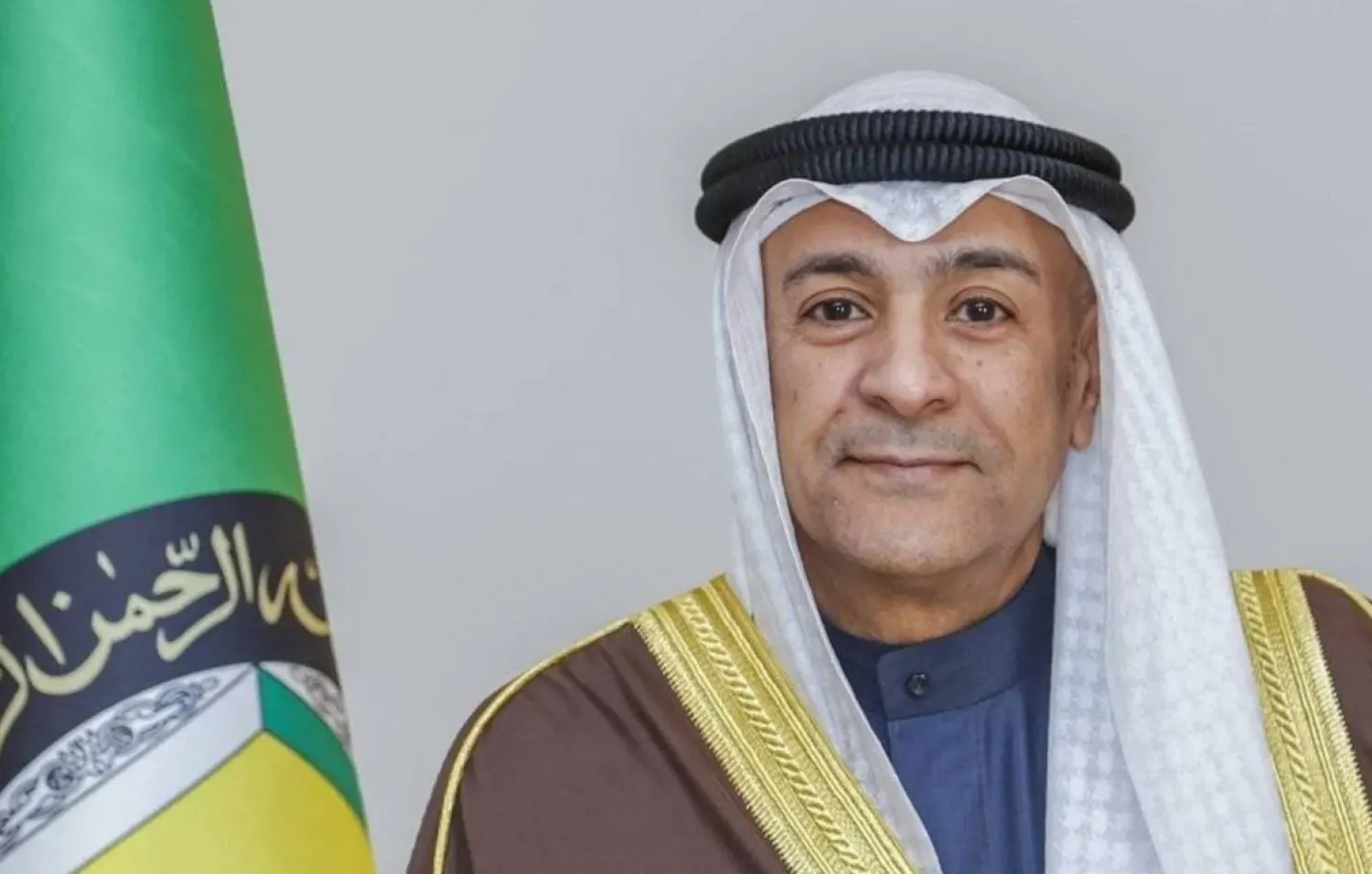

GCC Sec-Gen: GCC States Commit to Economic Unity and Global Hub Status

Secretary General of the Gulf Cooperation Council (GCC) Jasem Mohamed Albudaiwi
TT

GCC Sec-Gen: GCC States Commit to Economic Unity and Global Hub Status

Secretary General of the Gulf Cooperation Council (GCC) Jasem Mohamed Albudaiwi

Secretary-General of the Gulf Cooperation Council (GCC) Jasem Albudaiwi affirmed that the GCC states are exerting significant efforts to enhance economic cooperation and integration, as part of their persistent pursuit of achieving Gulf economic unity and solidifying the GCC’s position as a leading global hub for finance, investment, and the economy.

This statement came during the 69th meeting of the GCC Commercial Cooperation Committee, held today in the State of Kuwait. The meeting was chaired by Minister of Commerce and Industry of Kuwait and president of the current session Khalifa Abdullah Al-Ajeel and was attended by the ministers of commerce from all GCC states, SPA reported.

He stated during the speech that building a strong and sustainable economy can only be achieved through joint cooperation and integration among nations.

He noted that the successes and accomplishments along this path in GCC countries are the fruit of the great and sincere efforts of the esteemed Commercial Cooperation Committee in promoting cooperation and integration among member states.

The secretary-general emphasized that the GCC states, with sincere determination and tireless efforts, seek to embody the visions and goals of their leaders, which aim to enhance the journey of economic cooperation and integration in general, and commercial integration in particular.

This is being pursued by overcoming obstacles, facilitating trade exchange between GCC countries, and improving the flow of goods and services to achieve the desired Gulf economic unity.

This effort places a responsibility on all to implement the vision of the GCC leaders to achieve the intended integration and reach the Gulf Common Market.

He also pointed to several indicators, noting that the total GDP of the GCC states at current prices reached approximately $2.2 trillion in 2023 and about $2.3 trillion in 2024, recording a growth rate of 2.2%.

This ranks the GCC bloc 9th globally by GDP, reflecting the resilience of Gulf economies and their ability to recover and continue on a growth trajectory. Furthermore, the volume of intra-GCC trade (measured by total intra-commodity exports) exceeded $132 billion in 2023 and rose to over $145 billion in 2024, marking an annual growth rate of 9.8% compared to 5.0% in the previous year.

He said that these indicators confirm the growing strength and expanding scope of Gulf trade exchange. On the one hand, they highlight the economic stature of the GCC states, and on the other, they reflect promising opportunities and significant potential that must be optimally invested in to enhance joint Gulf cooperation across various commercial and economic fields.



UAE 'Probably' Won't Join Gaza Stabilization Force, Says Senior Official

Emirati presidential advisor Anwar Gargash (Reuters)
TT

UAE 'Probably' Won't Join Gaza Stabilization Force, Says Senior Official

Emirati presidential advisor Anwar Gargash (Reuters)

The United Arab Emirates is not planning to join the international stabilization force for Gaza because it lacks a clear framework, a senior official said on Monday.

"The UAE does not yet see a clear framework for the stability force, and under such circumstances will probably not participate in such a force," Emirati presidential advisor Anwar Gargash told the Abu Dhabi Strategic Debate forum.

The US-coordinated international force has been seen as likely to include troops from Egypt, Qatar and Türkiye, as well as the UAE, reported AFP.

Last week, US President Donald Trump said he expected the force to be in Gaza "very soon", as a fragile ceasefire holds following two years of war.


Source to Asharq Al-Awsat: Jeddah Platform Still Open to Sudan’s Warring Parties

Sudanese refugees participate in an awareness-raising session at the Tine transit camp in Chad on November 8, 2025. (AFP)
TT

Source to Asharq Al-Awsat: Jeddah Platform Still Open to Sudan’s Warring Parties

Sudanese refugees participate in an awareness-raising session at the Tine transit camp in Chad on November 8, 2025. (AFP)

A source close to the negotiations carried out by members of the international quartet on Sudan said that efforts are ongoing to reach a ceasefire in the war-torn country. The quartet includes Saudi Arabia, the United States, Egypt and United Arab Emirates.

The quartet is also working on delivering humanitarian aid ahead of launching civilian dialogue aimed at reaching a permanent solution to the conflict.

Speaking to Asharq Al-Awsat on condition of anonymity, the source said the quartet is currently proposing a three- to nine-month humanitarian truce during which humanitarian corridors can be opened to deliver aid to those in need. Agricultural production will also resume, allowing civilians to return to normal life.

Throughout this period, the quartet will contact the warring parties to reach an agreement on a permanent ceasefire, revealed the source.

Once reached, intra-civilian Sudanese dialogue will be held to agree on a constitution for the country and mechanisms to establish a parliament and government, as well as the executive agencies that organize the daily lives of the people across Sudan.

The Jeddah Platform still stands and is ready for dialogue with the warring parties, added the source, recalling a Sudanese government statement from a year ago that stressed commitment to it.

The platform was initially agreed to by the warring parties, it stressed.

The quartet is hoping that the parties will positively respond to its efforts, the source told Asharq Al-Awsat.

Moreover, it noted the massive efforts carried out by Saudi Arabia, individually and within the quartet, to reach a ceasefire, stemming from its keenness on Sudan’s unity and territorial integrity.

Before and during the war, the Kingdom has worked with all Sudanese parties to persuade them to work on developing their country and steer clear of disputes, culminating in the Jeddah Agreement that was signed in May 2023, it remarked.

Saudi Arabia has maintained three humanitarian programs in Sudan covering food security and medical assistance, as well as helping in protecting infrastructure.

On the crisis in el-Fasher and Darfur, the source said the Kingdom is offering aid through the King Salman Humanitarian Aid and Relief Center (KSrelief) and international organizations. It is also aiding Sudanese refugees in Chad and South Sudan.


Saudi Navy Leads ‘Red Wave 8’ Drill with Wide Regional Participation

The Red Wave 8 drill kicked off at the King Faisal Naval Base on Sunday. (Saudi Defense Ministry)
TT

Saudi Navy Leads ‘Red Wave 8’ Drill with Wide Regional Participation

The Red Wave 8 drill kicked off at the King Faisal Naval Base on Sunday. (Saudi Defense Ministry)

The Royal Saudi Naval Forces, Royal Saudi Air Force and Border Guards launched on Sunday the “Red Wave 8” joint naval exercise at the King Faisal Naval Base in the Western Fleet.

Several armed forces from countries overlooking the Red Sea are taking part in the drill, including Sudan, Djibouti and Mauritania, as well as Pakistan.

The exercise is part of the joint military cooperation between them and efforts to protect vital waterways.

Military leaders from the participating countries attended the launch on Sunday. The drill will conclude on Thursday with field demonstrations that reflect the level of coordination and preparedness of the forces.

Commander of Saudi Arabia's Western Fleet Rear Admiral Mansour bin Saud Al-Juaid told Asharq Al-Awsat that the drill is part of a series of others carried out by the naval forces with the aim of raising combat readiness and developing capabilities.

He said the Red Sea was chosen for the exercise given its strategic depth and economic importance to regional countries.

The Red Sea is among the world’s most vital waterways and securing it is an Arab and international responsibility, he stressed.

The Red Wave 8 drill includes training in implementing tactical concepts, as well as cyberwarfare and combating attacks by speedboats. Forces will be trained in counter-terrorism; fighting piracy, smuggling and illegal migration; and protecting marine shipping lanes.

Al-Juaid said the Red Wave 8 drill reflects Saudi Arabia’s commitment to bolstering collective naval security through building joint capacities and unifying efforts in confronting any threats to waterways or vital infrastructure in the Red Sea, all in line with Saudi Vision 2030 that places regional security and marine stability as strategic priorities.