




US President Donald Trump’s approval of the sale of F-35 fighter jets to Saudi Arabia, announced on the eve of Crown Prince Mohammed bin Salman’s visit to Washington, underscores a deepening shift in the two countries’ defense partnership.
The move reflects the Kingdom’s accelerating military modernization and its growing role as a strategic security actor and dependable ally for Washington.
This step comes within a broader framework of cooperation that encompasses upgrading weapons systems, expanding local defense production, intelligence coordination, joint training, and participation in multinational security efforts.
Saudi Arabia and the United States have worked together in several major international coalitions, demonstrating the strategic depth of their partnership. The first was the 1991 coalition to liberate Kuwait, formed with the approval of the late King Fahd bin Abdulaziz. In 2014, both countries helped establish the Global Coalition to Counter ISIS, whose inaugural meeting was held in Jeddah under the Saudi leadership.
In September 2019, Riyadh joined the International Maritime Security Construct, a US-supported initiative designed to safeguard commercial shipping and ensure freedom of navigation across critical global trade routes.
Joint Training and Defense Modernization
Military cooperation also includes extensive joint exercises. Over the past five years, 13 bilateral exercises have been publicly announced, reflecting a regular pattern of training across land, air, naval, and missile-defense domains.
The latest of these was the Quincy-1 exercise at Fort Irwin, bringing together Saudi and US ground forces to enhance operational readiness and interoperability.
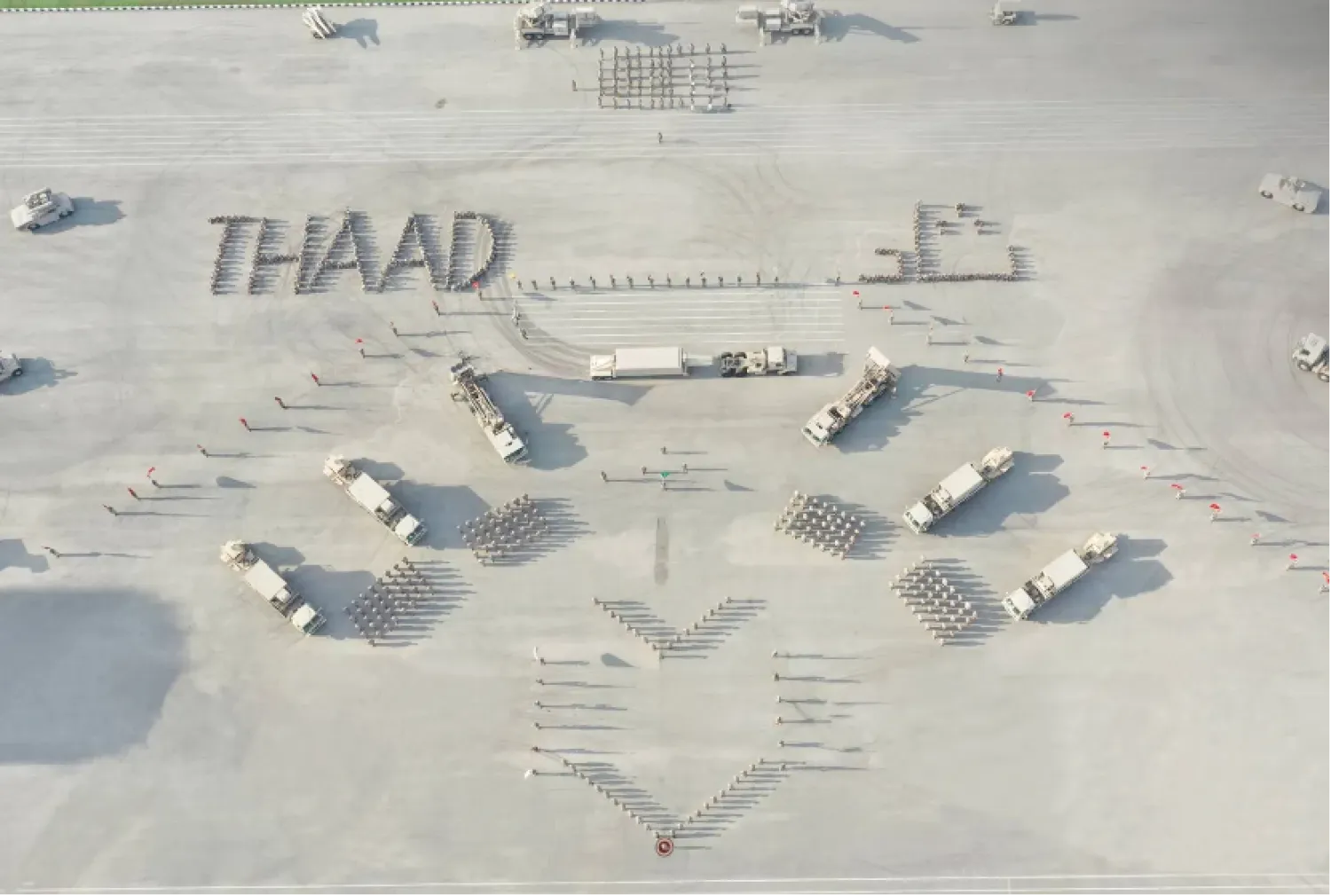
This progress is mirrored by advances in Saudi air-defense capabilities. Earlier this year, the Royal Saudi Air Defense Forces deployed their first operational unit of the THAAD missile-defense system after completing testing and certification.
Strategic Autonomy Through Targeted Defense Deals
Four major US-Saudi defense transactions have been announced this year, reinforcing Saudi Arabia’s evolving military posture.
In January, Washington approved the sale of lightweight torpedoes worth $78.5 million, bolstering Saudi anti-submarine warfare capabilities. In March 2025, the US authorized the sale of Laser-Guided APKWS precision weapons valued at $100 million, followed by a $3.5 billion package of air-to-air missiles approved in May 2025.
These deals culminated during Trump’s visit to Saudi Arabia in May, when he and Crown Prince Mohammed bin Salman unveiled what they described as the largest defense-sales package in history, valued at approximately $142 billion and involving more than a dozen American defense firms.
Together, these agreements underscore Riyadh’s drive to diversify suppliers, invest in advanced capabilities, and expand domestic defense manufacturing - establishing the Kingdom as a technologically capable partner rather than only a traditional purchaser.
A Partnership Rooted in Shared Interests
A recent Atlantic Council analysis described the evolving defense relationship as a “practical partnership rooted in shared interests,” noting that cooperation now extends to intelligence coordination, maritime security, and building internal Saudi defense capacity.
The report argues that an integrated defense framework could bolster regional deterrence and support global energy stability, provided transparency is maintained and external technological influence is carefully managed.
Former Saudi military liaison officer at Naval Air Station Pensacola, Abdul Latif Al-Mulhim, told Asharq Al-Awsat that Saudi Arabia has long been precise in defining its defense needs. He noted that the United States has “never declined a Saudi request for arms” and that American defense officials recognize Riyadh’s ability to determine the technologies and capabilities it requires.
Al-Mulhim highlighted the Royal Saudi Air Force’s longstanding proficiency with advanced aircraft, citing its performance in the Gulf conflicts, the coalition operations in Yemen, and its role in the anti-ISIS coalition. He added that the capabilities shown during these campaigns - particularly under the leadership of Defense Minister Prince Khalid bin Salman have been widely commended by military experts.


