


Omani Foreign Minister: We Support Syria’s Security, Stability

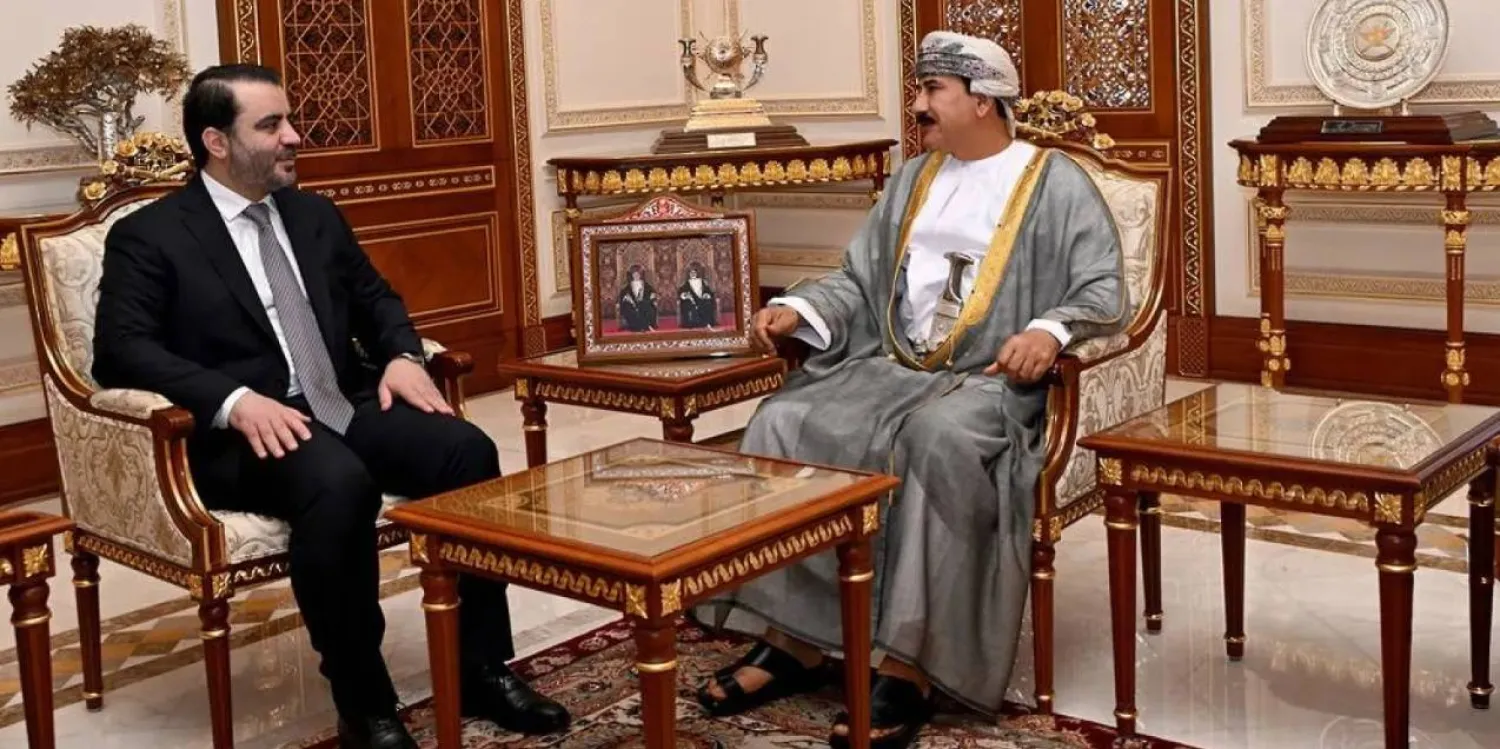
Omani Foreign Minister Badr bin Hamad Al Busaidi during a meeting with his Syrian counterpart, Asaad Hassan Al-Shaibani in Muscat (ONA)
TT

Omani Foreign Minister: We Support Syria’s Security, Stability

Omani Foreign Minister Badr bin Hamad Al Busaidi during a meeting with his Syrian counterpart, Asaad Hassan Al-Shaibani in Muscat (ONA)

Omani Foreign Minister Badr bin Hamad Al Busaidi affirmed on Sunday his country’s support for efforts aimed at achieving security and stability in Syria, and respecting its sovereignty and territorial integrity.

During a meeting in Muscat with his Syrian counterpart, Asaad Hassan Al-Shaibani, Al Busaidi emphasized the strength of the historical relations binding the two countries and the mutual keenness to support and enhance pathways of cooperation in various fields, particularly in political, economic, and cultural aspects.

This is Al-Shaibani’s first official visit to the Sultanate. The two ministers exchanged views on a set of regional and international developments.

Al-Shaibani expressed his country's deep appreciation for the wise approach and balanced policies of Oman, valuing its role in backing the security and stability of Syria.

He said Damascus was keen to broaden the horizons of cooperation and deepen joint coordination with Muscat, in a way that serves the mutual interests of the two countries and strengthens the fraternal bonds between the two peoples.

Al Busaidi told the Oman News Agency (ONA) that the Sultanate supports Syria's promising future in regaining its role and position on the Arab and international stages, considering it an important element within the framework of Oman's foreign relations, given its historical status and civilizational role throughout the ages.

“The meeting with my Syrian counterpart was fruitful during his first official visit to Oman,” he said.

The minister also described the visit as a confirmation of the deep-rooted relations and solid bonds between the Omani and Syrian peoples, expressing his optimism for the future of these relations and the development and growth they will bring.

He added that the meeting falls within the framework of existing structured mechanisms for cooperation between the two countries, noting an agreement to update these frameworks, particularly the resumption of work of the Omani-Syrian Joint Committee, which will hold its meetings in the next stage at the level of foreign ministers.

Al Busaidi said an agreement was reached to review the priorities of bilateral cooperation and to sign several agreements and memoranda of understanding in the next phase and that senior officials from both sides will meet to develop an executive work program for the relations.

For his part, Al-Shaibani told ONA that Syrian-Omani relations are long-standing and historical, based on mutual respect and constructive cooperation.

He noted that deep cultural and civilizational relations link the two countries, forming over decades bridges for continuous communication between the two peoples.

“We look forward to these relations contributing to supporting the reconstruction phase in Syria across various spheres, especially the economic and service sectors where Oman has achieved remarkable progress, including ports, roads and connectivity projects,” he said.



Saudi Arabia Condemns Israeli Violations in the Region

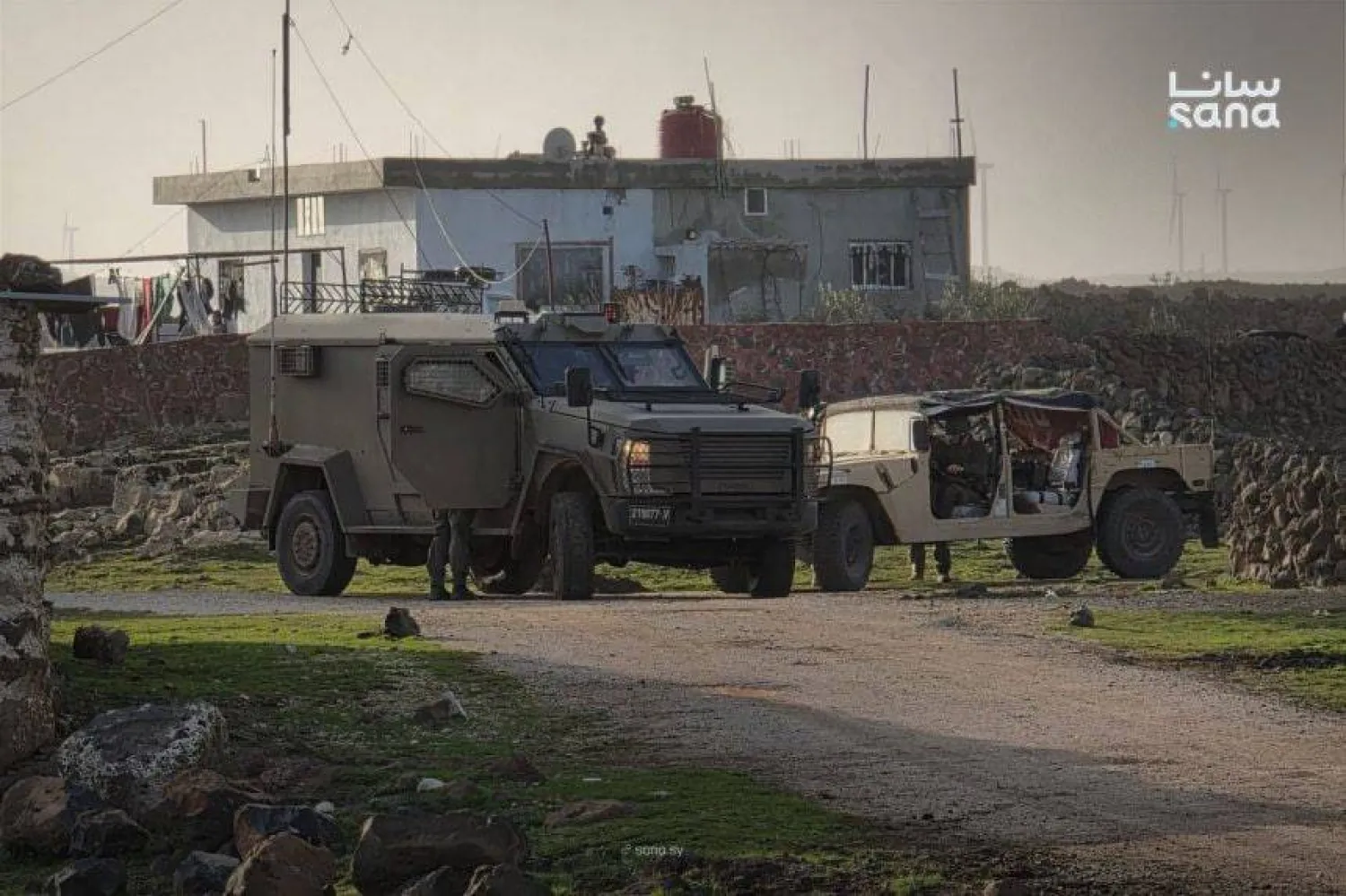
Israeli forces are seen during an incursion in Syria. (SANA file)
TT

Saudi Arabia Condemns Israeli Violations in the Region

Israeli forces are seen during an incursion in Syria. (SANA file)

Saudi Arabia condemned on Wednesday Israel's continued blatant violations in the region, most recently the incursions into the rural areas of Syria's Quneitra and Daraa governorates.

In a statement, the foreign ministry said: "Saudi Arabia expresses its categorical rejection of the Israeli forces' intimidation of peaceful civilians and violations of international laws and norms.”

“It stresses the importance of halting Israeli infringements on the sovereignty of Syrian territory and adhering to the 1974 Disengagement Agreement to preserve security and stability in the region,” it added.

The Kingdom reiterated its support for Syria's sovereignty and territorial integrity.


Saudi Arabia Condemns Iran Attacks on Bahrain, Kuwait, UAE Tanker

Vehicles move on a highway in Kuwait. (AFP)
TT

Saudi Arabia Condemns Iran Attacks on Bahrain, Kuwait, UAE Tanker

Vehicles move on a highway in Kuwait. (AFP)

Saudi Arabia strongly condemned on Wednesday Iran’s attacks on Bahrain, Kuwait and an oil tanker belonging to the United Arab Emirates.

A Foreign Ministry statement underlined Saudi Arabia’s “complete rejection of Iran’s continued aggression against brotherly countries and its threats to freedom of maritime navigation and trade routes.”

It reiterated its call “for an end to such acts of aggression, respect for international law and the principles of good neighborliness, and support for diplomatic efforts aimed at achieving peace and resolving the crisis through negotiations, to safeguard the security and stability of the region and its peoples.”

Secretary-General of the Gulf Cooperation Council (GCC) Jasem Albudaiwi also strongly condemned the attack on Kuwait.

He said Iran’s continuation of its attacks “reflects its persistence in undermining de-escalation efforts, as well as a flagrant disregard for the principles of good neighborliness, the rules of international law, and the United Nations Charter.”

He called on the international community “to assume its responsibilities toward these grave and repeated Iranian assaults and to take effective measures to halt them, ensuring respect for state sovereignty and preserving peace and security in the region.”

Albudaiwi reiterated the GCC states’ “full and steadfast solidarity with Kuwait, standing united by its side and backing all measures it takes to protect its security and stability, safeguard its sovereignty and assets, and ensure the safety of its citizens and residents on its territory.”


UAE State Oil Firm Says One Missing After Ship Hit in Hormuz

Vessels at the Strait of Hormuz, as seen from Musandam, Oman, November 17, 2026. (Reuters)
TT

UAE State Oil Firm Says One Missing After Ship Hit in Hormuz

Vessels at the Strait of Hormuz, as seen from Musandam, Oman, November 17, 2026. (Reuters)

UAE state oil firm ADNOC said Wednesday that a crew member was missing after a ship belonging to the company was struck in the Strait of Hormuz.

"All other crew members have been safely evacuated from the vessel. Eleven sustained injuries and where required are receiving medical care," ADNOC said, adding that search and rescue operations were continuing.

British maritime security agency, UKMTO, said on Wednesday that the tanker had been struck a day earlier by "an unknown projectile" in the Strait of Hormuz, about 13 nautical miles north of Khasab, an Omani town overlooking the strategic waterway.

The agency did not identify the vessel, but confirmed one crew member was missing.

"A fire occurred onboard, which has since been extinguished," UKMTO said, adding that the extent of the damage and any environmental impact remained unknown.

Before the Middle East war triggered by US-Israeli strikes on Iran on February 28, around one-fifth of the world's oil and liquefied natural gas supplies passed through the Strait of Hormuz.

Since the conflict began, Iran has tightened its grip on the Strait of Hormuz, with vessels transiting the strategic chokepoint coming under near-daily attack as Tehran insists they follow routes approved by its authorities.

The US has responded by imposing a blockade on Iranian ports, and its navy escorts tankers through the narrow passage.