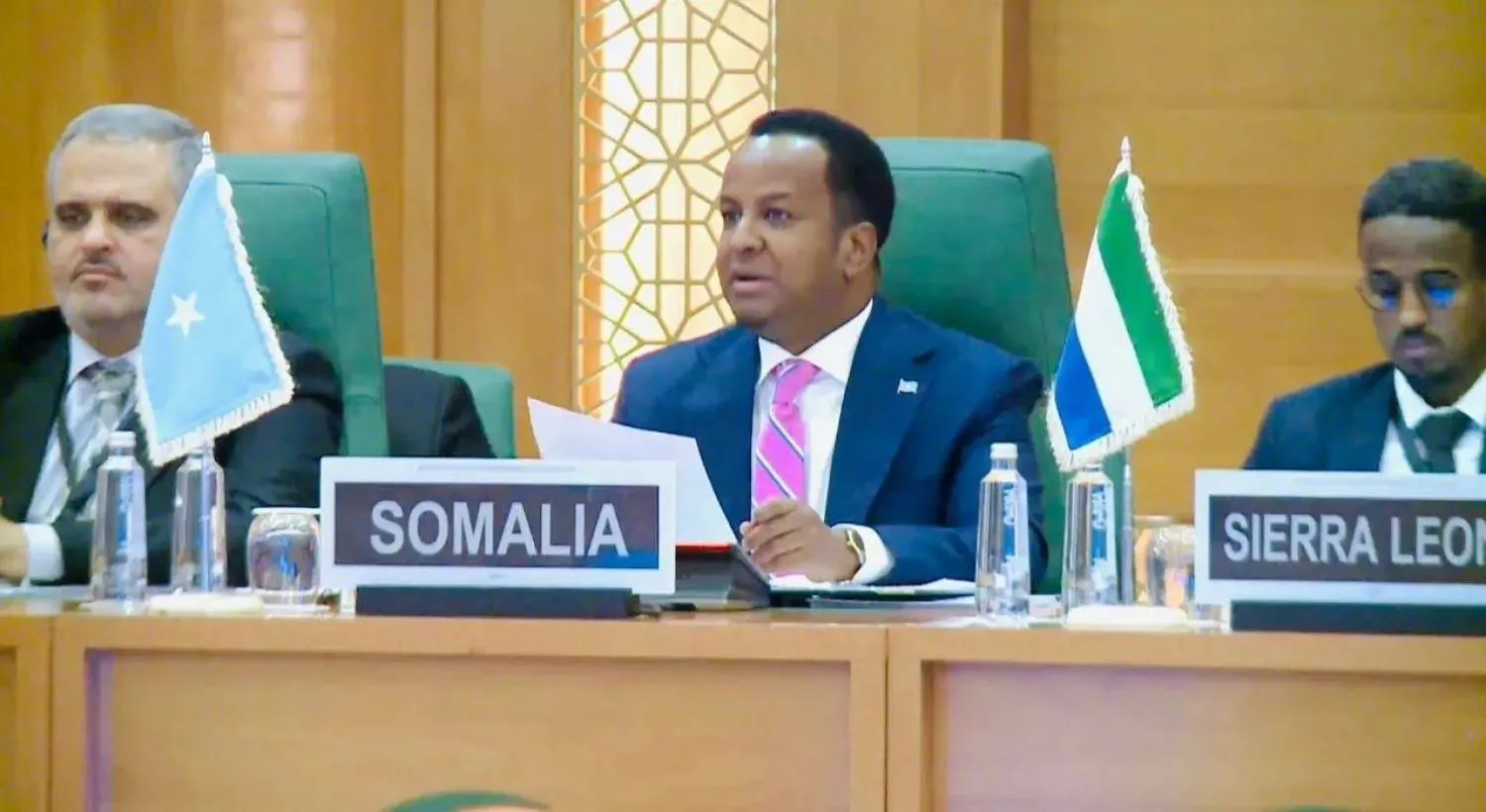

Somali Foreign Minister: Any Unilateral Recognition of Breakaway Regions Is Unviable

Somali Foreign Minister Abdisalam Abdi Ali (Somali Foreign Ministry)
TT

Somali Foreign Minister: Any Unilateral Recognition of Breakaway Regions Is Unviable

Somali Foreign Minister Abdisalam Abdi Ali (Somali Foreign Ministry)

At a highly sensitive regional juncture, Somali Foreign Minister Abdisalam Abdi Ali issued a clear warning against any unilateral recognition of breakaway regions, describing such moves as unviable and politically irresponsible, with negative repercussions for bilateral relations and regional stability.

In an interview with Asharq Al-Awsat, Ali stressed the alignment between Mogadishu and Riyadh on the need to shield the Red Sea and the Gulf of Aden from militarization, illicit activities and geopolitical rivalries.

He said his second visit to Saudi Arabia within two weeks reflects the depth of coordination with the Kingdom amid rapidly evolving regional developments, particularly those related to maritime security and the Horn of Africa.

Objectives of the Saudi visit

Ali said the primary aim of his visit was close consultation with Saudi Arabia on accelerating regional developments, notably those affecting the Red Sea, the Horn of Africa and maritime navigation security.

He added that discussions also focused on strengthening bilateral cooperation across political, economic, security and development fields, while ensuring full coordination on issues touching on Somalia’s sovereignty, unity and stability.

He noted that the visit — his second to Riyadh in less than two weeks — underscored the intensity of engagement with the Kingdom at a delicate moment, saying that his previous meeting with Saudi Foreign Minister Prince Faisal bin Farhan featured frank and constructive talks aimed at preventing escalation, maintaining regional balance and upholding international law.

Ali also highlighted the convening of an emergency meeting of foreign ministers of the Organization of Islamic Cooperation (OIC) to address what he described as the “illegal violation of Somalia’s sovereignty, unity and territorial integrity,” calling it further evidence of Saudi Arabia’s pivotal role in supporting regional stability.

Historic relations

The foreign minister described relations between Somalia and Saudi Arabia as “strong, historic and strategic,” grounded in shared faith, longstanding people-to-people ties and converging regional interests.

He said Somalia views the Kingdom as a key partner in national recovery, security-sector reform, economic stabilization and regional diplomacy, adding that current discussions are focused on translating this partnership into tangible outcomes that benefit both countries and reinforce wider regional stability.

Firm rejection of recognition of “Somaliland”

Ali stressed that the Somali federal government “categorically rejects” any declaration or action aimed at recognizing any part of Somalia as a separate entity. Such steps, he said, lack any legal basis, violate Somalia’s sovereignty and territorial integrity, and contravene international law, the UN Charter, the OIC charter and African Union principles.

He expressed Somalia’s appreciation for Saudi Arabia’s principled stance in support of Somali unity, as well as for regional and international partners that have voiced solidarity with Mogadishu.

He warned that unilateral recognition would not merely be a political position but a “destabilizing precedent” threatening the regional order. He added that Somalia is addressing the issue through balanced diplomacy and close coordination with regional and international partners.

A pivotal and constructive Saudi role

Ali said Saudi Arabia plays a “pivotal and constructive” role in promoting stability and security in the Arab world, the Red Sea region and the Horn of Africa, noting that its leadership in diplomacy, de-escalation and maritime security is widely recognized and appreciated.

Potential repercussions

The foreign minister warned that any unilateral recognition of Somaliland would be “legally and practically null and void,” further exacerbating fragility in a region already facing serious security, humanitarian and climate challenges. He said that such moves encourage fragmentation, fuel proxy conflicts and open the door to external interference, undermining the security of the Horn of Africa and international maritime navigation.

Militarization of the Red Sea

Ali said Mogadishu and Riyadh share a vital interest in protecting one of the world’s most strategic maritime corridors, stressing the need to keep the Red Sea and the Gulf of Aden free from militarization and illegal activities.

“We agree on the necessity of keeping the Red Sea and the Gulf of Aden away from militarization, illicit activities and geopolitical brinkmanship,” he underlined.



Saudi Crown Prince Receives Message on Bilateral Ties from President of Kazakhstan

Prince Mohammed bin Salman bin Abdulaziz Al Saud, Saudi Crown Prince and Prime Minister. (SPA file)
TT

Saudi Crown Prince Receives Message on Bilateral Ties from President of Kazakhstan

Prince Mohammed bin Salman bin Abdulaziz Al Saud, Saudi Crown Prince and Prime Minister. (SPA file)

Prince Mohammed bin Salman bin Abdulaziz Al Saud, Saudi Crown Prince and Prime Minister, received on Tuesday a written message from President of Kazakhstan Kassym-Jomart Tokayev on bilateral relations between their two countries.

The message was received by Minister of Foreign Affairs Prince Faisal bin Farhan bin Abdullah during a meeting with his Kazakh counterpart Yermek Kosherbayev in Riyadh.


Princes and Officials Take Oath Before Custodian of the Two Holy Mosques

Custodian of the Two Holy Mosques King Salman bin Abdulaziz Al Saud and other officials are seen during the ceremony in Riyadh on Tuesday. (SPA)
TT

Princes and Officials Take Oath Before Custodian of the Two Holy Mosques

Custodian of the Two Holy Mosques King Salman bin Abdulaziz Al Saud and other officials are seen during the ceremony in Riyadh on Tuesday. (SPA)

Princes and officials appointed by royal orders to their new positions took the oath of office before Custodian of the Two Holy Mosques King Salman bin Abdulaziz Al Saud in Riyadh on Tuesday.

They included Deputy Governor of Al-Baha Region Prince Fahd bin Saad bin Abdullah bin Abdulaziz bin Turki; Member of the Shura Council Prince Dr. Saad bin Saud bin Mohammed bin Abdulaziz; Deputy Governor of Madinah Region Prince Saud bin Nahar bin Saud; Deputy Governor of Northern Borders Region Prince Mohammed bin Abdullah bin Abdulaziz; and Minister of Investment Fahd Al-Saif.

They swore to be faithful to their religion, then their King and country, not to reveal any of the state’s secrets, to preserve its interests and regulations, and to perform their duties with honesty, trustworthiness, and sincerity.


Saudi Arabia Reiterates Its Categorical Rejection of Israel’s ‘State Land’ Decision in West Bank

Custodian of the Two Holy Mosques King Salman bin Abdulaziz Al Saud chairs the Cabinet meeting in Riyadh. (SPA)
TT

Saudi Arabia Reiterates Its Categorical Rejection of Israel’s ‘State Land’ Decision in West Bank

Custodian of the Two Holy Mosques King Salman bin Abdulaziz Al Saud chairs the Cabinet meeting in Riyadh. (SPA)

The Saudi government condemned on Tuesday Israel’s decision to West Bank lands as "state lands."

Reiterating its absolute rejection of these illegal measures, the Cabinet warned that they undermine peace efforts and violate the Palestinian people's inherent right to establish an independent, sovereign state within the 1967 borders, with East Jerusalem as its capital.

Custodian of the Two Holy Mosques King Salman bin Abdulaziz Al Saud chaired the Cabinet session that was held in Riyadh.

The Cabinet congratulated citizens and Muslims on the advent of the holy month of Ramadan, expressing gratitude for the Kingdom's honor in caring for the two holy mosques and their visitors.

The Cabinet highlighted the success of the Hajj and Umrah seasons, noting that the Kingdom welcomed 19.5 million international pilgrims and Umrah performers in 2025, setting new records that reflect rapid progress toward the goals of Vision 2030 and the Pilgrim Experience Program.

The Cabinet described the Kingdom's Founding Day celebration on February 22 as an expression of pride in the Saudi state's nearly three-century history, underscoring the foundations of justice, unity, and development established by leaders and citizens throughout history to ensure the nation remains a global leader in all fields.

The Cabinet was briefed on recent talks between Saudi Arabia and various nations, which focused on strengthening bilateral and multilateral cooperation and boosting coordination to foster regional and international security, stability, and prosperity.

The session further reviewed the Kingdom's economic, cultural, and social activities, stressing the state's commitment to social solidarity and giving. This includes continued support for the sixth National Campaign for Charitable Work, set to begin on Friday.

The Cabinet commended the success of the third World Defense Show held in Riyadh under the Custodian of the Two Holy Mosques' patronage, during which strategic partnerships, agreements, and memoranda of understanding were signed to localize military technologies and strengthen local supply chains in alignment with Vision 2030 objectives.