


Gulf Ministerial Council: GCC States Retain Right to Respond to Iranian Aggression

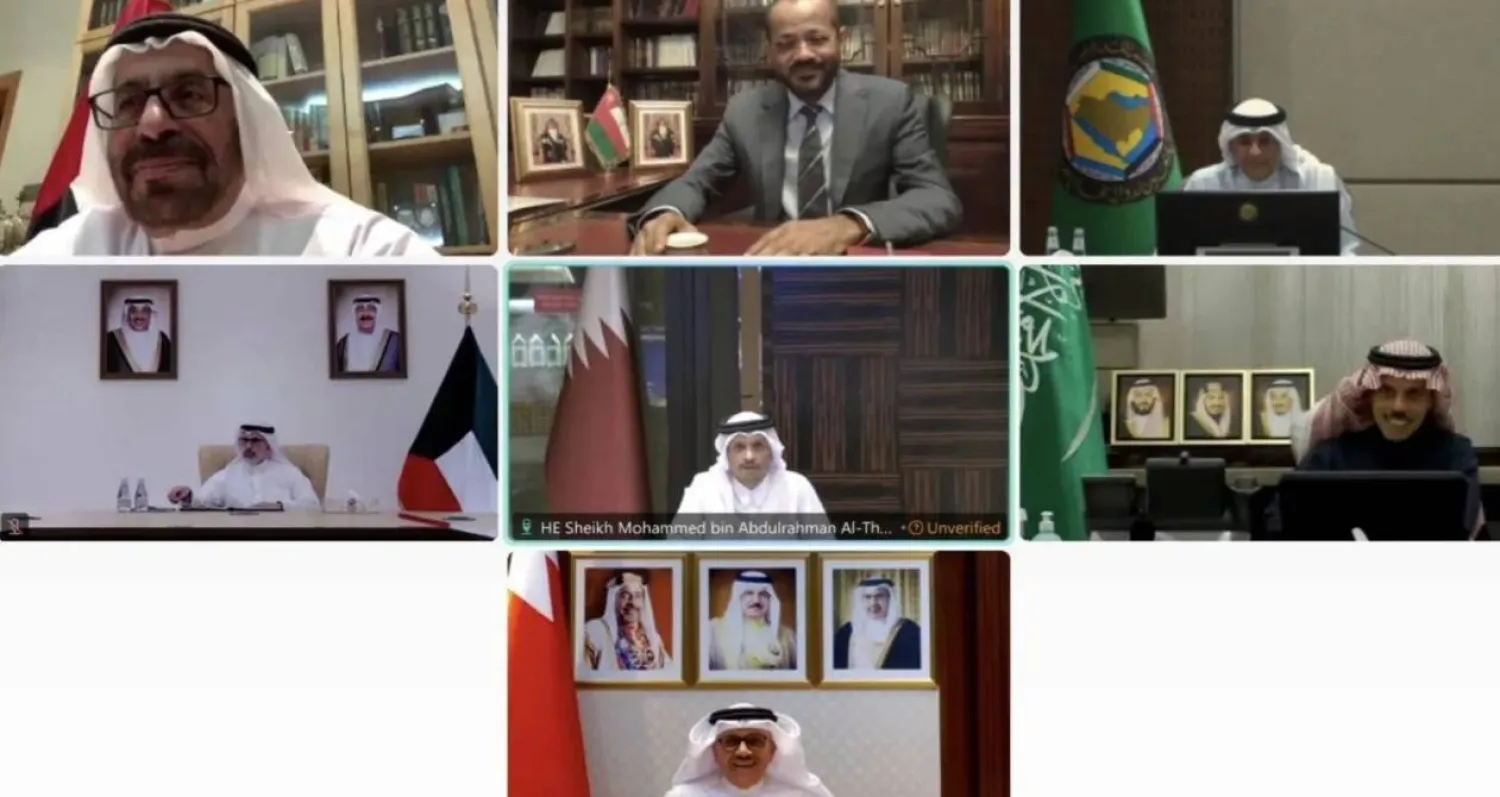
The Council held a virtual meeting on Sunday to discuss the Iranian aggression. Photo: GCC
TT

Gulf Ministerial Council: GCC States Retain Right to Respond to Iranian Aggression

The Council held a virtual meeting on Sunday to discuss the Iranian aggression. Photo: GCC

The Ministerial Council of the Gulf Cooperation Council has expressed its firm rejection and strongest condemnation of “heinous” Iranian attacks targeting GCC states and Jordan, saying they retain their legal right to respond.

The Council held a virtual meeting on Sunday to review “the extensive damage resulting from the treacherous Iranian attacks on these countries, including strikes on civilian facilities, service sites, and residential areas, causing significant material damage, posing threats to the security, safety, and lives of citizens and residents, and terrorizing innocent civilians.”

A statement said that the Council “also discussed the necessary measures and steps to coordinate efforts to restore security and stability and achieve peace in the region.”

It “expressed its firm rejection and strongest condemnation of these heinous attacks targeting GCC states” as well as Jordan, saying they constitute “a serious violation of the sovereignty of these states, the principles of good neighborliness, and a clear breach of international law and the Charter of the United Nations.”

The statement added that the targeting of civilians and civilian objects constitutes a grave violation of the rules of international humanitarian law.

The Council underscored full solidarity among its member states, affirming their united stance in confronting the Iranian attacks, and stressed that the security of each member state is indivisible and that any attack against one member constitutes a direct attack on all.

“The GCC states retain their legal right to respond under Article 51 of the United Nations Charter, which guarantees the right of self-defense, individually or collectively, in the event of aggression, and to take all necessary measures to safeguard their sovereignty, security and stability,” said the statement.

The Council commended the armed forces of the member states, which “successfully intercepted missile and drone attacks with high professionalism, thereby neutralizing the threats, mitigating their effects, and protecting lives, facilities, and critical infrastructure.”

The conferees stressed that “in light of this unjustified Iranian aggression against GCC states, the member countries will take all necessary measures to defend their security and stability and to protect their territories, citizens, and residents, including the option to respond to the aggression.”

The Council also called on the international community to condemn and strongly denounce the Iranian attacks, and urged the UN Security Council to assume its responsibilities by taking an immediate and firm stance to prevent such violations.



Saudi FM: We Welcome Trump's Decision to Allow More Time for Diplomacy to End the War

Saudi Foreign Minister Prince Faisal bin Farhan bin Abdullah. (SPA)
TT

Saudi FM: We Welcome Trump's Decision to Allow More Time for Diplomacy to End the War

Saudi Foreign Minister Prince Faisal bin Farhan bin Abdullah. (SPA)

Saudi Foreign Minister Prince Faisal bin Farhan bin Abdullah expressed on Wednesday the Kingdom's appreciation for US President Donald Trump’s granting negotiations more opportunity to reach an agreement that ends the war on Iran and restores security and freedom of navigation in the Strait of Hormuz

In a statement, the Saudi Foreign Minister underlined the Kingdom's appreciation for diplomatic efforts aimed at containing the escalation.

He added that Saudi Arabia remained supportive of ongoing mediation efforts carried out by Pakistan and urged Iran to seize "the opportunity to avoid the dangerous implications of escalation". 

Prince Faisal stressed the importance of leveraging this opportunity to avoid further tensions, saying Saudi Arabia is awaiting Iran’s response to the efforts that aim to reach an agreement that achieves lasting peace and boosts regional and international security and stability.

Trump announced on Monday that he had postponed an attack on Iran set for Tuesday in response to a request from Gulf leaders.


UAE Demands that Iraq Halt Attacks Launched from its Territories

A handout picture obtained from the media office of the Barakah Nuclear Power Plant on February 13, 2020 shows a general view of the power plant in the western Al Dhafra Region of Abu Dhabi on the Gulf coastline about 50 kilometers west of Ruwais. (Barakah Nuclear Power Plant / AFP)
TT

UAE Demands that Iraq Halt Attacks Launched from its Territories

A handout picture obtained from the media office of the Barakah Nuclear Power Plant on February 13, 2020 shows a general view of the power plant in the western Al Dhafra Region of Abu Dhabi on the Gulf coastline about 50 kilometers west of Ruwais. (Barakah Nuclear Power Plant / AFP)

The United Arab Emirates strongly condemned on Wednesday “the unprovoked terrorist drone attacks launched from Iraqi territory, including an attack targeting the Barakah Nuclear Power Plant on Sunday, which struck an electricity generator located outside the inner perimeter of the plant.”

In a statement, the Ministry of Foreign Affairs stressed the UAE’s “strong condemnation and categorical rejection of the heinous terrorist attacks launched from Iraqi territory against critical civilian institutions across the Gulf Cooperation Council (GCC) countries, in flagrant violation of their sovereignty, airspace, and in clear breach of the principles of international law, international humanitarian law, and the Charter of the United Nations.”

The Ministry underscored the importance of the Iraqi government’s commitment “to immediately and unconditionally halt and prevent all acts of aggression launched from its territory,” stressing the need to address these threats in an immediate and responsible manner, in accordance with relevant international and regional laws and charters.

Furthermore, the Ministry underscored “the importance of Iraq fulfilling its role in strengthening security and stability in the region, thereby preserving its sovereignty and boosting its position as an active and responsible partner within the region.”


UN Security Council Condemns Attack on UAE Nuclear Plant

The Barakah nuclear power plant in Abu Dhabi. (WAM)
TT

UN Security Council Condemns Attack on UAE Nuclear Plant

The Barakah nuclear power plant in Abu Dhabi. (WAM)

Russia joined other UN Security Council members on Tuesday to condemn the drone strike on the UAE's Barakah nuclear power plant, which Abu Dhabi said originated from Iraq where pro-Iranian proxies are active.

The unclaimed drone struck an electrical generator on Sunday near the Arab world's first nuclear power plant in Barakah in the emirate of Abu Dhabi, triggering a fire but causing no injuries nor radiation leak.

"Attacks targeting peaceful nuclear facilities in any country of the world...are categorically unacceptable," said Russia's ambassador to the UN Vassily Nebenzya.

"Against this backdrop, our country categorically condemns the actions of those who carried out the strike targeting the plant on the territory of the UAE, thereby generating risks of escalation," he continued without naming any party.

"We trust that all stakeholders will do everything necessary to avoid a recurrence of such a dangerous incident," he added, noting that the strike likely would not have happened without the US-Israeli operation against Iran, Moscow's long-standing ally.

Abu Dhabi said Tuesday that the drones came from Iraq, where Iran-backed groups have been carrying out attacks against Gulf nations since the Middle East war erupted.

From China to the United States, the other members of the Security Council also condemned the strikes, which have not been claimed by any group.

"What sane nation, either directly or indirectly through proxies, sends drone attacks into an active and ongoing nuclear power plant?" asked US ambassador Mike Waltz, denouncing "outrageous and unacceptable attacks."

"What is the world left to believe? That if Iran...can't achieve a nuclear weapon -- and it can't use it as it has threatened over and over again on its neighbors -- that it's now going to find a clever and dangerous way to weaponize a nuclear power plant?

"I struggle to come to any other conclusion," he said.