New Explosions Heard in Dubai, Doha and Manama

The effects of intercepting an Iranian missile in the skies of Dubai (AFP)
TT

New Explosions Heard in Dubai, Doha and Manama

The effects of intercepting an Iranian missile in the skies of Dubai (AFP)

Loud explosions were heard across the Gulf cities of Dubai, Doha and Manama on Monday as Tehran pressed into a third day of strikes against Gulf neighbors in response to US-Israeli air raids.

AFP reporters said they heard several loud blasts in the Qatari and Bahraini capitals, as well as in the United Arab Emirates' most populous city.

Bahrain’s Ministry of Interior said in a statement that the Iranian strikes resulted in the death of one person.

The ministry added that debris from a missile intercepted by the air defenses sparked a fire aboard a foreign vessel in Salman City, killing one worker and leaving two others critically injured.

The death toll across Gulf states since Saturday has risen to five: one in Kuwait, where 34 others were also wounded, and three in the United Arab Emirates where 58 people were injured, in addition to the fatality in Bahrain.

Iranian strikes across the Gulf since Saturday have targeted airports, ports, hotels and residential buildings, attacks that have drawn widespread condemnation.


Saudi Crown Prince Receives Princes, Scholars, Senior Officials, and Citizens

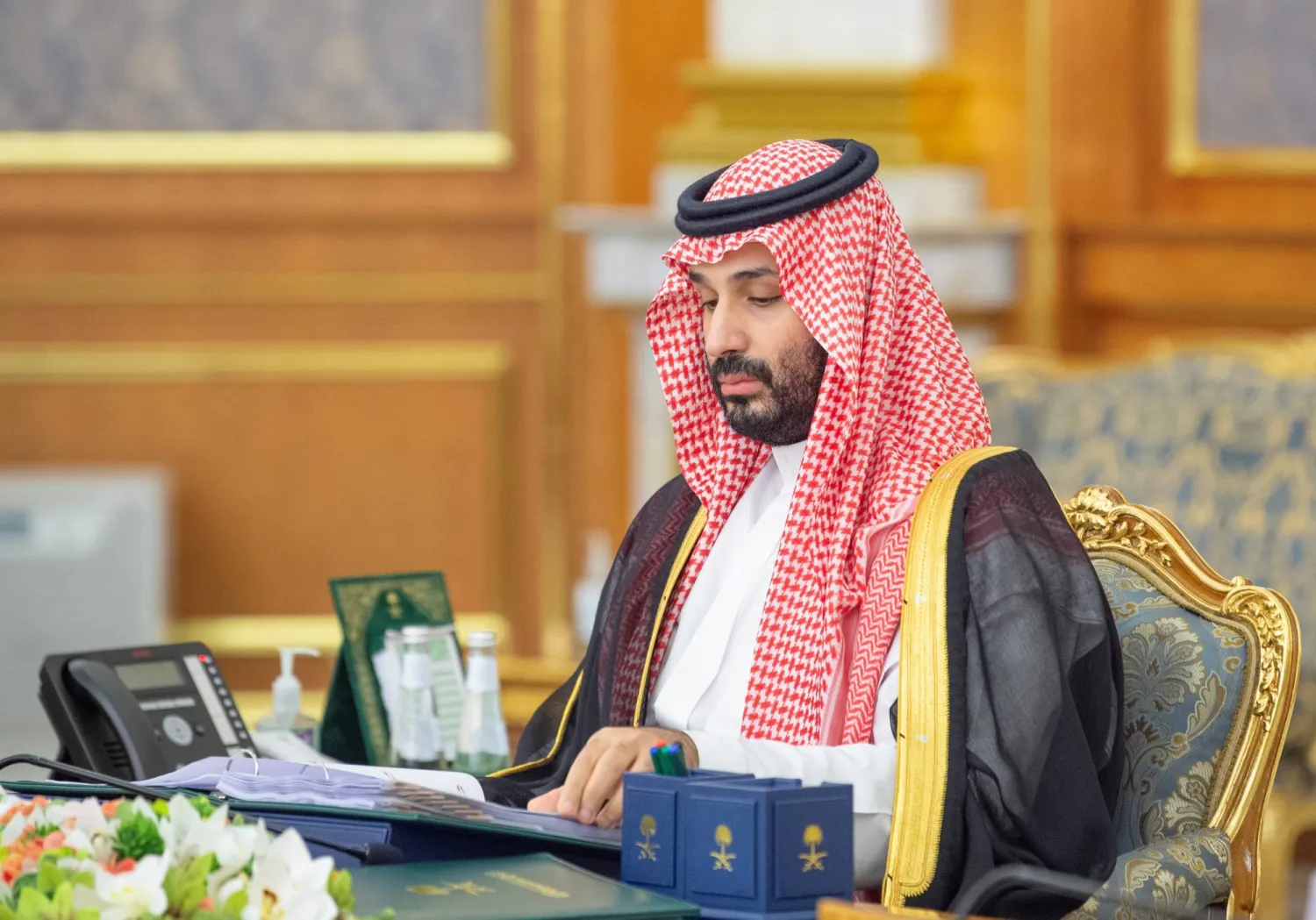
Prince Mohammed bin Salman bin Abdulaziz Al Saud, Crown Prince and Prime Minister, receives princes, scholars, ministers, and citizens at the Al-Salam Palace in Jeddah. (SPA)
TT

Saudi Crown Prince Receives Princes, Scholars, Senior Officials, and Citizens

Prince Mohammed bin Salman bin Abdulaziz Al Saud, Crown Prince and Prime Minister, receives princes, scholars, ministers, and citizens at the Al-Salam Palace in Jeddah. (SPA)

Prince Mohammed bin Salman bin Abdulaziz Al Saud, Crown Prince and Prime Minister, received princes, scholars, senior officials, and a number of citizens who came to greet him at the Al-Salam Palace in Jeddah on Tuesday.

The visitors included Minister of Interior Prince Abdulaziz bin Saud bin Naif bin Abdulaziz, Minister of Sports Prince Abdulaziz bin Turki Al-Faisal, and Minister of the National Guard Prince Abdullah bin Bandar bin Abdulaziz.


Saudi Arabia Stresses it Will Continue to Defend its Sovereignty, Slamming Houthi Criminality

Prince Mohammed bin Salman bin Abdulaziz Al Saud, Crown Prince and Prime Minister, chairs the Cabinet meeting in Jeddah. (SPA)
TT

Saudi Arabia Stresses it Will Continue to Defend its Sovereignty, Slamming Houthi Criminality

Prince Mohammed bin Salman bin Abdulaziz Al Saud, Crown Prince and Prime Minister, chairs the Cabinet meeting in Jeddah. (SPA)

The Saudi government stressed on Tuesday that the Kingdom will continue to defend its sovereignty and security of its citizens and residents and protect its national assets.

It rejected the hostile and criminal behavior adopted by the extremist Houthi militia that is threatening Yemen and its Arab and Islamic surroundings.

Prince Mohammed bin Salman bin Abdulaziz Al Saud, Crown Prince and Prime Minister, chaired the Cabinet meeting that was held in Jeddah.

The Crown Prince briefed the Cabinet on his consultations and talks with Oman’s Sultan Haitham bin Tarik, Egypt’s President Abdel Fattah al-Sisi, and Greek Prime Minister Kyriakos Mitsotakis. The talks focused on Saudi Arabia’s bilateral relations with these countries and ways to further strengthen them across various fields.

After reviewing the latest regional developments, the Cabinet stressed that the terrorist Houthi militia had carried out criminal attacks against civilian and economic facilities in Saudi Arabia’s Abha, Khamis Mushait, Jazan, and Najran, and continued to target commercial vessels in the Red Sea and threaten freedom of international maritime navigation.

The Cabinet stressed that the Kingdom of Saudi Arabia will continue to defend its sovereignty, safeguard the security of its citizens and residents, and protect its national assets.

The Cabinet directed that the highest levels of care and medical attention be provided to those injured in the terrorist attacks, praying to Allah Almighty to grant them a speedy recovery and preserve the Kingdom’s security and stability.

The Cabinet expressed Saudi Arabia’s support for joint Arab efforts to halt Israeli violations and attacks against Jerusalem and the occupied territories, confront Israel’s blatant actions in Palestine, and counter expansionist policies, settlement activities, and displacement, in violation of international law.

The Cabinet reviewed the outcomes of Saudi Arabia’s participation in regional and international meetings, highlighting its continued commitment to strengthening communication with countries and organizations worldwide and enhancing joint coordination. This includes advancing multilateral action to support collective efforts to address global challenges, promote development and economic prosperity, and build a more stable, progressive future.

The Cabinet welcomed the memorandum of understanding signed by the Saudi and German foreign ministers to establish a strategic dialogue, enhance consultation and coordination, and develop bilateral cooperation.

The Cabinet reviewed several reports on international conferences and gatherings hosted by the Kingdom. It commended the success of the 26th Scientific Forum for Hajj, Umrah and Visit Research and its contributions to enhancing integration among entities concerned with the Hajj and Umrah system, raising the level of coordination and partnerships, improving the quality of services provided to pilgrims, and supporting proactive decision-making based on scientific studies.

The Cabinet hailed the outcomes of LEAP 2026, which saw the launch of initiatives and agreements and investments worth nearly $15 billion in the fields of artificial intelligence infrastructure, data centers, cloud computing, technology manufacturing, venture capital, and national capacity development. This further reinforces the Kingdom’s leadership as a global destination for innovation and shaping the future.

The Cabinet considered the launch of new investment projects under the Water Industries and Services Localization Program in the Kingdom a strategic step in the sector’s transition from importing and operating technologies to developing, manufacturing, and exporting them, leveraging accumulated operational and knowledge-based expertise and unique, integrated infrastructure. This aims to build more reliable supply chains and an established industry capable of competing, expanding, and contributing actively to the economy locally and globally.


Analysts to Asharq Al-Awsat: Saudi Coordination, Support to Yemen Govt to Reshape Balance of Power

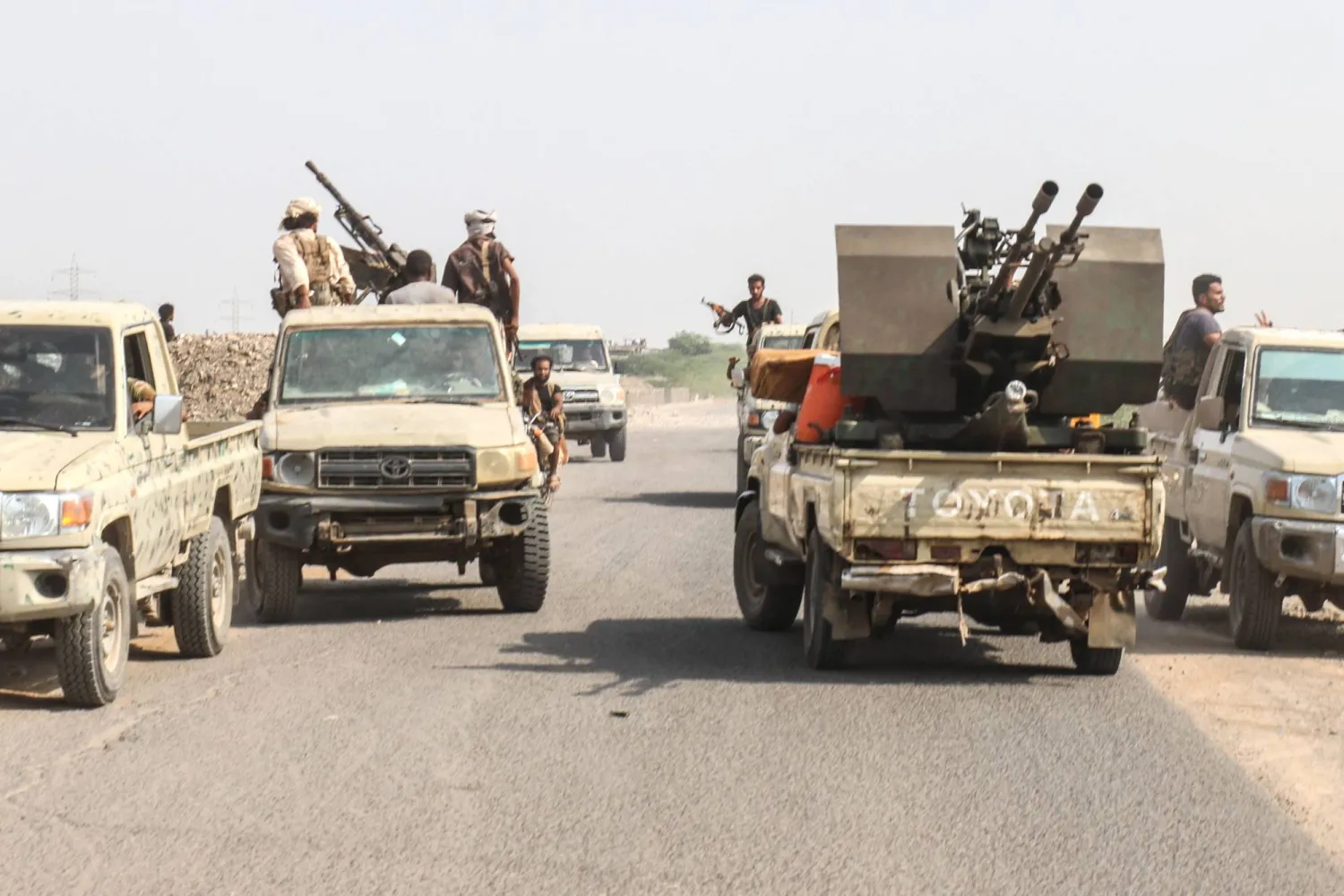
Forces loyal Yemen's legitimate government ride in pick-up trucks along a road in the Hays district, south of Hodeidah on September 5, 2026. (AFP)
TT

Analysts to Asharq Al-Awsat: Saudi Coordination, Support to Yemen Govt to Reshape Balance of Power

Forces loyal Yemen's legitimate government ride in pick-up trucks along a road in the Hays district, south of Hodeidah on September 5, 2026. (AFP)

The latest Houthi attacks have pushed Saudi Arabia toward a tougher strategy of decisive deterrence, political analysts said, warning that Riyadh will not tolerate threats to its citizens or vital infrastructure.

Speaking to Asharq Al-Awsat, analysts said the shift is being reinforced by deeper political, military and security coordination with Yemen’s legitimate government, strengthening its ability to confront threats and reshape the balance of power on the ground.

Saudi Foreign Minister Prince Faisal bin Farhan bin Abdullah said on Tuesday that the Kingdom would not hesitate to defend itself against attacks by the terrorist Houthi militia and would use all available means to protect its interests.

Speaking at a news conference with Russian Foreign Minister Sergei Lavrov in Moscow, Prince Faisal said Saudi Arabia was pursuing diplomatic solutions to avert further suffering for Yemen and its people and would not hesitate to support measures that served the interests of Yemen and the region.

He added that the door to diplomacy in dealing with the Houthis remained open.

Prince Faisal said the Houthis were putting their narrow personal interests ahead of those of Yemen and that Yemen’s legitimate government had given them an opportunity to negotiate responsibly. He described their latest escalation as part of their pattern of provocation.

Limits of Saudi patience

Abdulaziz bin Sager, chairman of the Jeddah-based Gulf Research Center, said Yemen’s legitimate government was fulfilling its responsibility to confront Houthi attacks targeting civilians and vital facilities inside Yemen.

He said the government had mobilized its capabilities and resources and unified its ranks, particularly at the military level.

“The Kingdom will not tolerate any attacks targeting its citizens, residents or vital facilities, and its patience has limits,” bin Sager said.

He expected Riyadh to respond “forcefully and decisively against the sources of fire, in proportion to the intensity of the attacks,” citing what had recently happened in Iraq.

Bin Sager said the Houthis had misread Saudi Arabia’s patience “because they do not act according to reason or logic and are still receiving instructions.”

He added that the group had been given several opportunities over the past few years but had failed to take advantage of them.

More decisive phase

Yemeni writer Saleh al-Baydani said the latest developments pointed to “a shift from managing and containing escalation to a more decisive phase aimed at deterring it.”

“Saudi Arabia offered ample opportunities for de-escalation and a political solution, but the Houthis misread this restraint,” al-Baydani told Asharq Al-Awsat.

“They treated it as a permanent constraint on Saudi action rather than a calculated political choice that could be reconsidered when circumstances changed.”

Al-Baydani said the latest attacks on Saudi territory and facilities had raised the threat to a level at which maintaining the previous approach had become difficult.

“When the Houthis shift from being a party to a Yemeni crisis into an instrument of regional pressure more clearly linked to Iran’s calculations and its conflict in the region, the way they are dealt with necessarily changes,” he said.

According to al-Baydani, the escalation was no longer confined to the Yemen conflict but now affected Saudi national security, Red Sea security, energy supplies and the safety of international shipping lanes.

Saudi-Yemeni coordination

He said coordination between Saudi Arabia and Yemen’s legitimate government had entered a new phase compared with previous years, politically, militarily and in terms of security.

“Saudi Arabia appears more aware of the importance of having a Yemeni partner capable of managing the confrontation on the ground, while the Yemeni government recognizes that any serious action against the Houthis requires regional cover as well as political, military and economic support,” he added.

Al-Baydani stressed that the success of the next phase would depend on the Yemeni side’s ability to unify its military and political decision-making and turn the presence of multiple forces and fronts from a weakness into a source of pressure on the Houthis.

“If that happens, we may be looking not at a temporary round of fighting, but at an attempt to reshape the balance of power that has prevailed over the past few years,” he said.

Yemeni government forces expanded their advances across several fronts on Tuesday, recapturing the al-Yatma area in the al-Jawf province, northeast of Sanaa.

The advance came a day after government forces retook the al-Labanat area in the same province and coincided with the launch of a large-scale military operation in al-Bayda province, southeast of Sanaa.

Fighting also continued along Yemen’s western coast and west of Taiz on the sixth day since the Houthi escalation began.

The advances came after government forces shifted in recent days from containing Houthi ground attacks to regaining the initiative on several fronts, taking advantage of the group’s retreat from some positions.

Army units, resistance forces and the Giants Brigades continued operations on several fronts.