


Second Fire Hits Kuwait’s Mina al-Ahmadi Refinery, Saudi Downs 29 Drones

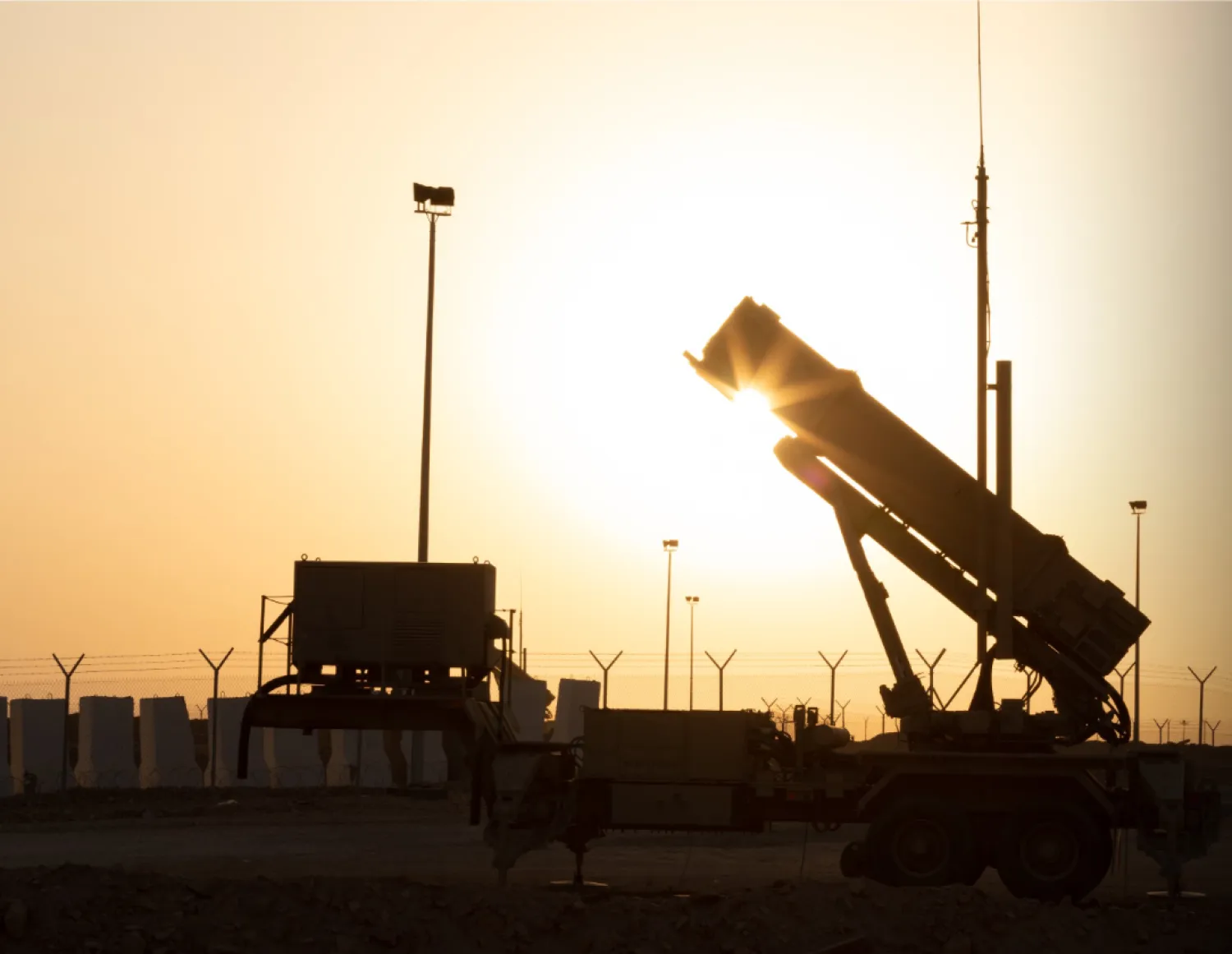
In Saudi Arabia, air defenses downed 29 drones over the Eastern Province and Al Jouf. Photo: Defense Ministry
TT

Second Fire Hits Kuwait’s Mina al-Ahmadi Refinery, Saudi Downs 29 Drones

In Saudi Arabia, air defenses downed 29 drones over the Eastern Province and Al Jouf. Photo: Defense Ministry

Gulf air defenses intercepted and destroyed multiple Iranian missiles and drones targeting civilian sites, energy facilities, and critical infrastructure across the region, officials said Friday, as attacks continued to escalate.

In Saudi Arabia, air defenses downed 29 drones over the Eastern Province and Al Jouf.

Kuwait’s Mina al-Ahmadi refinery, operated by Kuwait Petroleum Corporation, was targeted by drones for a second consecutive day, while Bahrain said it had faced 382 attacks since the start of the war, intercepting 141 missiles and 242 drones.

The United Arab Emirates said it dealt with four ballistic missiles and 26 drones launched from Iran.

The incidents come as Gulf air defense systems continue to repel successive waves of Iranian missiles and drones aimed at civilian objects, private property, energy installations and vital facilities.

Kuwait

Kuwait’s state news agency, citing Kuwait Petroleum Corporation, said drones struck the Mina al-Ahmadi refinery early on Friday, sparking fires in several operational units.

Firefighting and emergency teams quickly moved to contain the blaze, while several refinery units were shut down and precautionary measures were taken to ensure worker safety and secure the facility.

Initial estimates indicated no casualties, as authorities continued to assess the damage and investigate the circumstances.

The Kuwaiti military said it detected one ballistic missile and 25 drones over the past 24 hours.

Colonel Saud Al Atwan, spokesperson for the Ministry of Defense, said air defenses destroyed 15 drones, while two drones struck a refinery unit affiliated with the Kuwait Petroleum Corporation. Eight drones fell outside the threat zone and posed no danger.

Bahrain

Bahrain’s Defense Force General Command said its air defense systems had intercepted and destroyed 141 missiles and 242 drones since Iran began targeting the country.

Civil defense teams extinguished a fire at a company warehouse without injuries, the Interior Ministry said, adding that the blaze was caused by debris from Iranian attacks.

The General Command said in a statement that the use of ballistic missiles and drones against civilian objects and private property constituted a blatant violation of international humanitarian law and the United Nations Charter, warning that such attacks pose a direct threat to regional peace and security.
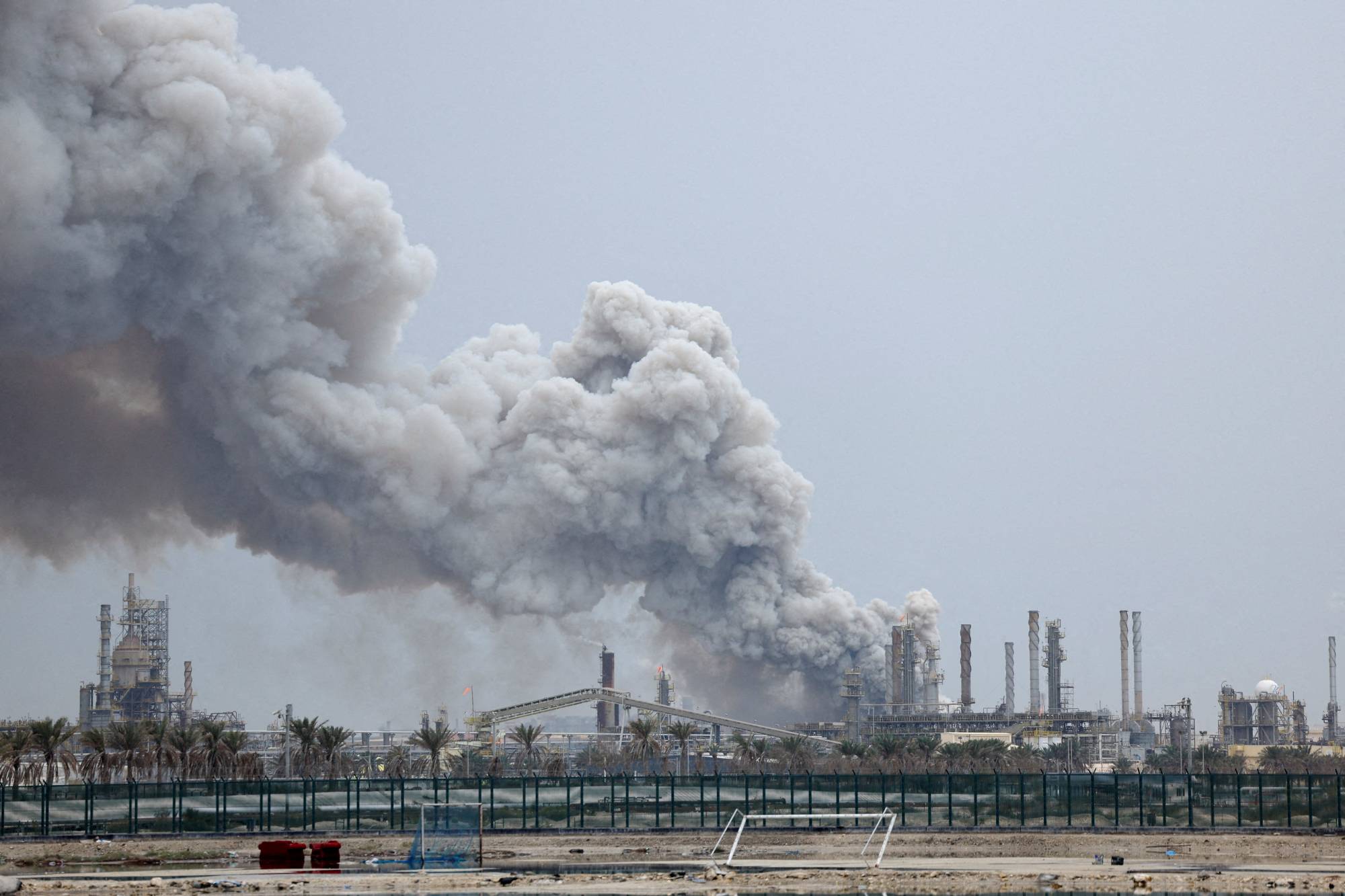
FILE PHOTO: Smoke rises following a strike on the Bapco Oil Refinery, amid the US-Israeli conflict with Iran, on Sitra Island Bahrain, March 9, 2026. REUTERS/Stringer/File Photo

United Arab Emirates

UAE air defenses on Friday intercepted four ballistic missiles and 26 drones launched from Iran, authorities said.

Since the start of the Iranian attacks, UAE air defenses have dealt with 338 ballistic missiles, 15 cruise missiles, and 1,740 drones.

The attacks have killed two members of the armed forces while on duty and six civilians.

The UAE also announced the dismantling of a “terrorist network” financed and run by Lebanon’s Hezbollah and Iran, with members arrested as part of ongoing efforts to safeguard national security and stability.

In a statement, the UAE State Security Apparatus (SSA) said the network had been operating within the country under a fictitious commercial cover and sought to infiltrate the national economy and carry out external schemes threatening the country’s financial stability.

According to state news agency WAM, the SSA explained that the network operated according to a pre-established strategic plan in coordination with external parties linked to Hezbollah and Iran, in violation of economic and legal regulations, to launder money, finance terrorism, and threaten national security.

Qatar

A fire broke out in a warehouse in Qatar without causing injuries, authorities said.

The Interior Ministry, cited by the Qatar News Agency, said civil defense teams were responding to the blaze in the Birkat Al Awamir area, with no casualties reported.

The ministry urged the public to rely only on official updates, avoid rumors and refrain from sharing unverified information, calling on residents to follow guidance calmly and responsibly to support public safety and security.



King Salman: We Thank God for Honoring Us With Serving the Two Holy Mosques and Caring for Pilgrims

Custodian of the Two Holy Mosques King Salman bin Abdulaziz (Asharq Al-Awsat)
TT

King Salman: We Thank God for Honoring Us With Serving the Two Holy Mosques and Caring for Pilgrims

Custodian of the Two Holy Mosques King Salman bin Abdulaziz (Asharq Al-Awsat)

Custodian of the Two Holy Mosques King Salman bin Abdulaziz on Wednesday expressed “gratitude to Almighty God for honoring us with the service of the Two Holy Mosques and the care of pilgrims to His Sacred House.”

King Salman prayed that God accept the pilgrims’ Hajj, rituals and acts of worship.

“With the advent of the blessed Eid al-Adha, we congratulate our people in this blessed homeland and our Islamic nation on this occasion, and pray to Him Almighty to make it an Eid of goodness, peace and stability for our nation and the entire world. May you all be well every year,” the king said.

Since dawn on the first day of Eid al-Adha, pilgrims have begun performing the stoning ritual at Mina, casting seven pebbles at the Grand Jamarat (Jamarat al-Aqaba), amid smooth crowd movement under the prepared dispatching plan.

About 1.7 million pilgrims departed to Muzdalifah after sunset on Tuesday following their standing at Arafat to perform the greatest pillar of Hajj, in safety and dressed in unified white garments.

Security and service teams were deployed across the holy sites to oversee pilgrims’ movement from Arafat to Muzdalifah, where they remained until dawn on Wednesday, the morning of Eid al-Adha, in preparation for proceeding to Mina to perform the stoning of Jamarat al-Aqaba, Tawaf al-Ifadah, the sacrificial offering, and the shaving or trimming of hair, before staying in Mina for the remainder of the Hajj rites.

Saudi Interior Minister Prince Abdulaziz bin Saud bin Naif said the level of security, organizational and service integration across the Hajj system, along with its advanced capabilities and preparations, reflects the scale of care provided to pilgrims and enhances the efficiency of implementing security and operational plans to ensure their safety and enable them to perform their rituals with ease and reassurance.

On Tuesday, the interior minister inspected the Special Security Forces of the Presidency of State Security participating in the Hajj security forces, praising the specialized efforts carried out by the units.


Pilgrims Perform Tawaf Al-Ifadah in Spiritual Atmosphere

The Grand Mosque witnessed a large influx of pilgrims performing Tawaf Al-Ifadah under the direct supervision of the relevant sectors - SPA
TT

Pilgrims Perform Tawaf Al-Ifadah in Spiritual Atmosphere

The Grand Mosque witnessed a large influx of pilgrims performing Tawaf Al-Ifadah under the direct supervision of the relevant sectors - SPA

Pilgrims Wednesday performed Tawaf Al-Ifadah at the Grand Mosque after standing at Arafat, spending the night in Muzdalifah and performing the stoning of Jamrat Al-Aqaba, SPA reported.

This was facilitated through a comprehensive system of organizational, health, and security services provided by the relevant authorities to ensure the smooth movement and safety of pilgrims throughout their rituals.

The Grand Mosque witnessed a large influx of pilgrims performing Tawaf Al-Ifadah under the direct supervision of the relevant sectors, which mobilized their human and technological resources to serve worshippers and facilitate their movement with ease and efficiency.

Pilgrims will continue performing their rituals in Mina during the Days of Tashreeq, where they will stone the three Jamarat. They will then conclude their Hajj with the Farewell Tawaf before departing Makkah.


Pilgrims Perform Stoning Ritual at Jamrat Al-Aqaba in Mina

Muslim pilgrims cast stones at a pillar symbolizing Satan, during the annual hajj pilgrimage in Mina, Saudi Arabia, May 27, 2026. REUTERS/Ibraheem Abu Mustafa
TT

Pilgrims Perform Stoning Ritual at Jamrat Al-Aqaba in Mina

Muslim pilgrims cast stones at a pillar symbolizing Satan, during the annual hajj pilgrimage in Mina, Saudi Arabia, May 27, 2026. REUTERS/Ibraheem Abu Mustafa

Pilgrims arriving from Muzdalifah began at dawn Wednesday performing the stoning ritual at Jamrat Al-Aqaba in Mina on the first day of Eid Al-Adha, amid an integrated system of security, health, and organizational services provided by the relevant Saudi authorities to facilitate the performance of rituals.

The Jamarat facility witnessed smooth crowd movement supported by direct field monitoring and operational plans designed to regulate pedestrian flows and ensure safe mobility between the holy sites.

Authorities were on hand around the facility through the deployment of ambulance and medical teams, guidance and awareness services, and enhanced sanitation and cleaning operations to provide a safe and comfortable environment for pilgrims.

Meanwhile, shuttle buses and Al Mashaaer Al Mugaddassah Metro continued transporting pilgrims between the holy sites according to operational schedules aligned with traffic and crowd-management plans aimed at easing movement and reducing travel time.

Stoning of Jamrat Al-Aqaba marks one of the key Hajj rituals performed by pilgrims following their overnight stay in Muzdalifah, before continuing the remaining rites of the Day of Al-Nahr (Day of Sacrifice), including animal sacrifice, hair shaving or trimming, and Tawaf Al-Ifadah.