


How Gulf States View War Outlook, US-Iran Talks

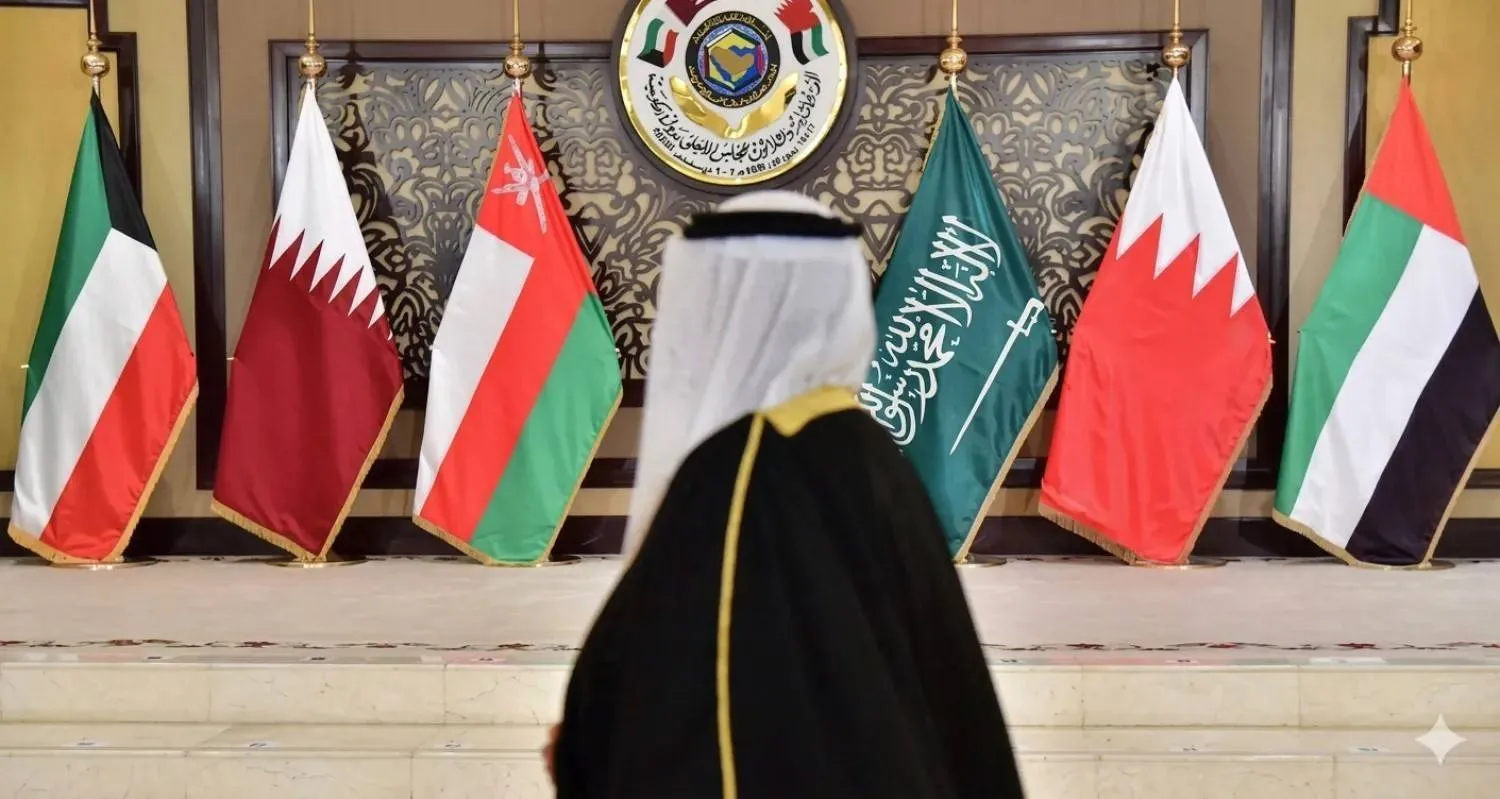
Flags of Gulf Arab states at an event (AFP)
TT

How Gulf States View War Outlook, US-Iran Talks

Flags of Gulf Arab states at an event (AFP)

Gulf Cooperation Council countries, under sustained Iranian attack, are closely tracking indirect US-Iran talks that Pakistan said on Thursday it is facilitating by relaying messages between the two sides.

Data monitored by Asharq Al-Awsat showed that by Wednesday evening, about 83% of Iran’s missile and drone attacks since the war entered its fourth week had targeted Gulf Arab states, compared with 17% aimed at Israel.

The tally recorded 4,391 missiles and drones striking Gulf countries, hitting critical infrastructure and civilian sites, versus 930 launched at Israel, which is leading the war.

Shaping the next phase

Gulf states on Thursday began to outline their stance on any negotiations over the conflict’s future.

Jasem Albudaiwi, Secretary-General of the Gulf Cooperation Council, said the bloc must be included “in any talks or agreements to resolve this crisis,” to safeguard security and prevent further attacks.

He rejected any frameworks, initiatives, or regional arrangements aimed at reshaping the Middle East after this conflict ends, underscoring Gulf insistence on a role in defining the region’s next phase.

Diplomacy first

Albudaiwi said international law allows states multiple options under the UN Charter, but stressed that the most rational and effective option is the diplomatic and political one.

Ahmed Al-Ibrahim, a political analyst specializing in US affairs, said Gulf states view US-Iran talks with cautious realism.

They do not oppose negotiations, but want outcomes that address what they see as the core threat, not only Iran’s nuclear program, but also its ballistic missiles and regional influence in Yemen, Lebanon, and Iraq.

A joint statement by five Gulf states and Jordan on Wednesday condemned attacks by Iran-aligned factions in Iraq on regional countries and infrastructure. It urged Baghdad to act immediately to halt such attacks launched from its territory and avoid further escalation.

Trust frays

Al-Ibrahim said Gulf confidence in both sides is limited. That view was reinforced by remarks from the Saudi foreign minister last week that “trust in Iran has been shattered.”

Al-Budaiwi said GCC states were surprised by US-Israeli strikes on Iran and had made clear they would not take part in military action or allow their territory to be used against Iran.

Despite that, Tehran still carried out what he described as a “treacherous attack” on GCC states.

He expects Gulf countries to pursue a dual track, backing de-escalation while strengthening defenses and expanding security partnerships. The Gulf, he said, rejects “incomplete deals” that fail to change Iran’s behavior or ensure regional security.

Seat at the table

Gulf security specialist Dhafer Al-Ajmi said GCC participation in any US-Iran talks on regional security is a “sovereign right,” not a request.

“We will not accept having our future shaped in our absence. Our seat at the table is the only guarantee for real and lasting peace,” he said.

Al-Ajmi said Gulf states have borne the brunt of the war’s costs and tensions. Their participation, he said, aims to secure binding guarantees to protect livelihoods and stability.

Any deal that ignores sovereignty and non-interference would be “incomplete and doomed to fail.”

Political analyst Ibrahim Raihan said Gulf states, while showing “wisdom” in handling the crisis, support de-escalation in principle. But he said the root problem remains Iran’s conduct, particularly violations of Gulf sovereignty, despite efforts before the war to avert conflict.

Three demands

Raihan said both Iran and Israel are seeking to widen the war. He outlined three priorities for any negotiations: de-escalation, guarantees to protect shipping routes, and a clear Iranian apology to neighboring Arab states for violations of their sovereignty.

Separately, the United Nations Human Rights Council on Wednesday condemned Iranian attacks on Gulf states as “egregious” and called on Tehran to provide swift compensation to those affected.


Shehbaz Sharif, Tamim bin Hamad Support Path of De-escalation

The Emir of Qatar, Sheikh Tamim bin Hamad Al Thani meets Pakistan’s Prime Minister Shehbaz Sharif in Doha, Qatar, April 16, 2026. (QNA)
TT

Shehbaz Sharif, Tamim bin Hamad Support Path of De-escalation

The Emir of Qatar, Sheikh Tamim bin Hamad Al Thani meets Pakistan’s Prime Minister Shehbaz Sharif in Doha, Qatar, April 16, 2026. (QNA)

Following his shuttle tour that kicked off in Saudi Arabia, Pakistan’s Prime Minister Shehbaz Sharif discussed with Qatar’s Emir Sheikh Tamim bin Hamad Al Thani the latest regional and international developments, particularly those in the Middle East, during a meeting held Thursday at the Amiri Diwan.

The Pakistani Prime Minister reiterated his country's condemnation of the attacks targeting Qatar and other countries in the region, affirming Pakistan's full solidarity with Doha and support for the measures it takes to protect its sovereignty and safeguard its security and stability, the Amiri Diwan said in a statement.

During the meeting, Qatar’s Emir expressed his appreciation for Pakistan's role in supporting efforts to deescalate tensions and promote diplomatic dialogue in the service of regional peace and security.

According to official sources, both sides stressed the necessity of supporting the path of deescalation and strengthening international coordination to ensure the security and stability of the region, especially maintaining the smooth flow of energy supply chains through vital maritime routes.

They further discussed the cooperation and friendship relations between the two countries and ways to develop them, aiming to strengthen the partnership and open new horizons for bilateral cooperation.

The Qatari Emir and the Prime Minister also held a bilateral meeting, where they exchanged views on current developments of mutual interest and emphasized the importance of continued coordination and consultation between the two countries, particularly amidst current events and their repercussions on the region's security and stability.

Sharif arrived in Doha on Thursday morning for a working visit to the country. The PM and the accompanying delegation were welcomed upon arrival at Doha International Airport by Minister of State for Foreign Affairs Sultan bin Saad Al Muraikhi.


Sultan of Oman, Qatari Emir Discuss Regional Developments, Means to Contain Escalation

Sultan Haitham bin Tariq of Oman, and Sheikh Tamim bin Hamad Al Thani, Emir of Qatar met at Al Baraka Palace in Muscat on Thursday (Omani News Agency)
TT

Sultan of Oman, Qatari Emir Discuss Regional Developments, Means to Contain Escalation

Sultan Haitham bin Tariq of Oman, and Sheikh Tamim bin Hamad Al Thani, Emir of Qatar met at Al Baraka Palace in Muscat on Thursday (Omani News Agency)

Sultan Haitham bin Tariq of Oman, and Sheikh Tamim bin Hamad Al Thani, Emir of Qatar, discussed in Muscat on Thursday the developments in the region amid rising tensions.

Qatar’s Emir arrived in Muscat in a visit to Oman, where he held talks with Sultan Haitham at Al Baraka Palace.

The two leaders exchanged views on current developments, particularly their implications for regional security and stability, as well as their impact on energy supplies and international shipping, according to a statement from the Qatari Diwan.

They stressed the importance of intensifying regional and international efforts to deescalate tensions and the need to prioritize diplomatic solutions and dialogue to resolve disputes, contributing to regional and international security and stability.

The two leaders also emphasized continued coordination and consultation on issues of mutual interest in addition to the strong fraternal ties between the two countries and ways to further develop them across various fields.

Later, Sultan Haitham and Sheikh Tamim bin Hamad held a private meeting during which they discussed the deep-rooted relations between the two countries and ways to develop them in various domains for the mutual benefit of their peoples.


OIC Lauds US President’s Ceasefire Announcement in Lebanon

OIC Lauds US President’s Ceasefire Announcement in Lebanon
TT

OIC Lauds US President’s Ceasefire Announcement in Lebanon

OIC Lauds US President’s Ceasefire Announcement in Lebanon

The General Secretariat of the Organization of Islamic Cooperation (OIC) commended the diplomatic efforts of US President Donald Trump that led to a 10-day truce in Lebanon, the Saudi Press Agency reported.

The OIC stressed the need that all parties adhere to the ceasefire agreement and refrain from undermining it.

The General Secretariat also expressed its support for and solidarity with the Republic of Lebanon in preserving its unity, sovereignty, and territorial integrity.

Trump announced Thursday evening a 10-day truce in Lebanon that could pause fighting between Israel and Hezbollah, and boost attempts to extend the ceasefire between Iran, the United States and Israel after weeks of devastating war.
