


Oman, Iran Hold Talks on Strait of Hormuz

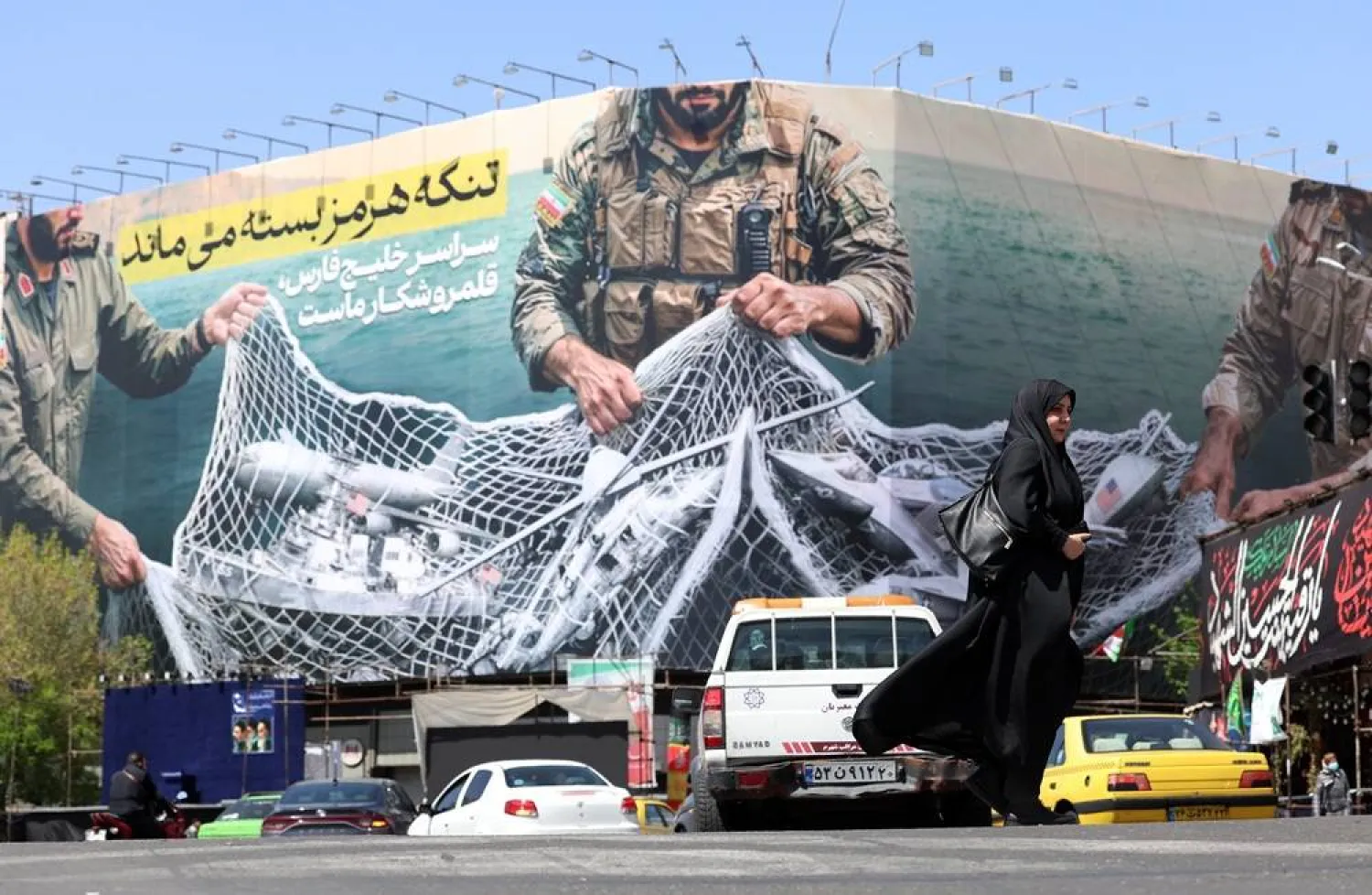
Traffic passing a huge political billboard reading in Persian "The Strait of Hormuz will remain closed", in Enghelb square in Tehran, Iran, 05 April 2026. (EPA)
TT

Oman, Iran Hold Talks on Strait of Hormuz

Traffic passing a huge political billboard reading in Persian "The Strait of Hormuz will remain closed", in Enghelb square in Tehran, Iran, 05 April 2026. (EPA)

Oman and Iran held talks on easing passage through the Strait of Hormuz, the Omani state news agency reported Sunday, with the key shipping chokepoint effectively closed due to war in the Middle East.

"Oman and Iran held a meeting at the deputy ministers level in the foreign ministries of the two countries, with the attendance of specialists from both sides, during which the possible options were discussed regarding ensuring the smooth passage through the Strait of Hormuz," the news agency posted on X.

"The experts from both sides put forward a number of visions and proposals regarding it," it added.


El-Khereiji Holds Talks with UN Sec-Gen's Special Representative for Children and Armed Conflict

The two sides discussed the most prominent regional and international developments of common interest - SPA
TT

El-Khereiji Holds Talks with UN Sec-Gen's Special Representative for Children and Armed Conflict

The two sides discussed the most prominent regional and international developments of common interest - SPA

Saudi Vice Minister of Foreign Affairs Waleed Elkhereiji met with Special Representative of the United Nations Secretary-General for Children and Armed Conflict Vanessa Frazier at the ministry's headquarters in Riyadh.

During the meeting, they discussed the most prominent regional and international developments of common interest and the efforts underway to address them.


Saudi FM Discusses Regional Developments with Iranian, Pakistani Counterparts

Prince Faisal bin Farhan, Saudi Foreign Minister (Asharq Al-Awsat)
TT

Saudi FM Discusses Regional Developments with Iranian, Pakistani Counterparts

Prince Faisal bin Farhan, Saudi Foreign Minister (Asharq Al-Awsat)

Saudi Minister of Foreign Affairs Prince Faisal bin Farhan held separate phone talks on Sunday with his counterparts from Iran and Pakistan during which regional developments were the main focus of their discussions.

With his Iranian counterpart, Abbas Araghchi, the Saudi minister discussed the efforts to preserve regional security and stability.

In a separate call with Pakistan’s Deputy Prime Minister and Foreign Minister Mohammad Ishaq Dar, Prince Faisal discussed developments related to the current crisis and efforts to contain it through dialogue and negotiations, in a bid to ease tensions and preserve regional security and stability.

They also discussed the bilateral relations between Saudi Arabia and Pakistan.


Saudi Arabia, Seven Nations Condemn Israeli Remarks on Forced Displacement of Palestinians

Israeli settlers move around in their off-road vehicles near to the besieged Palestinian houses in Qusra village, south of Nablus, in the occupied West Bank on August 17, 2026. (Photo by Jaafar ASHTIYEH / AFP)
TT

Saudi Arabia, Seven Nations Condemn Israeli Remarks on Forced Displacement of Palestinians

Israeli settlers move around in their off-road vehicles near to the besieged Palestinian houses in Qusra village, south of Nablus, in the occupied West Bank on August 17, 2026. (Photo by Jaafar ASHTIYEH / AFP)

The foreign ministers of Saudi Arabia, Jordan, the United Arab Emirates, Indonesia, Pakistan, Türkiye, Qatar and Egypt on Sunday strongly condemned remarks made by Israeli officials regarding plans to force Palestinians to leave the Gaza Strip.

In a joint statement, the ministers described the remarks and proposals as “incitement” and said they represented a flagrant violation of international law, including international humanitarian law, and a direct threat to the legitimate and inalienable rights of the Palestinian people.

Israeli National Security Minister Itamar Ben-Gvir and Defense Minister Israel Katz on Thursday outlined a seven-year plan for removing Palestinians from the Gaza Strip through what Ben-Gvir described as "voluntary emigration."

The Saudi and Arab statement rejected any forced displacement of Palestinians, whether within or outside the occupied Palestinian territories, under any pretext or guise and warned against making it official policy.

The ministers said the measures directly challenged international peace efforts, including US President Donald Trump’s plan to end the Gaza conflict, which rejects forced displacement, and warned they could undermine regional stability.

The statement stressed that Gaza is an integral part of the occupied Palestinian territories and called for preserving the territorial unity of Gaza and the West Bank, including East Jerusalem.

The ministers said the only path to a just and lasting peace was the implementation of a two-state solution, with an independent Palestinian state based on the 1967 borders and East Jerusalem as its capital, in line with relevant international resolutions.

They called on the international community, particularly the UN Security Council, to oppose any attempts to alter the demographic or geographic status of the occupied Palestinian territories and uphold international law. They reaffirmed support for “steadfast” Palestinians remaining on their land and rejected efforts to undermine their rights or erase the Palestinian cause.