


Jeddah Summit Stresses Importance of Restoring Navigation Security in Hormuz

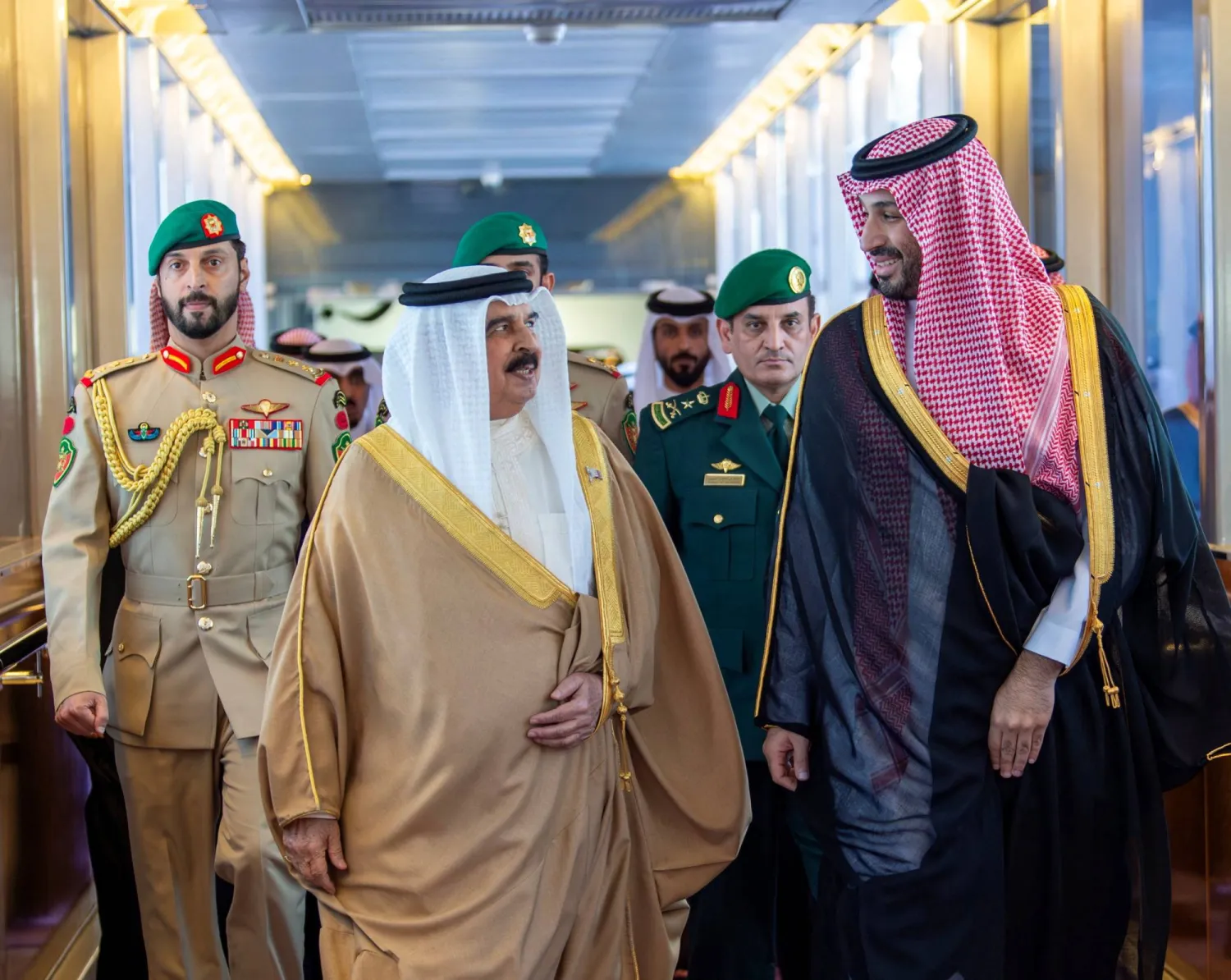
Saudi Crown Prince Mohammed bin Salman receives Bahrain's King Sheikh Hamad bin Isa al-Khalifa ahead of the Gulf Cooperation Council (GCC) meeting in Jeddah, Saudi Arabia, April 28, 2026. Bandar Algaloud/Courtesy of Saudi Royal Court/Handout via REUTERS
TT

Jeddah Summit Stresses Importance of Restoring Navigation Security in Hormuz

Saudi Crown Prince Mohammed bin Salman receives Bahrain's King Sheikh Hamad bin Isa al-Khalifa ahead of the Gulf Cooperation Council (GCC) meeting in Jeddah, Saudi Arabia, April 28, 2026. Bandar Algaloud/Courtesy of Saudi Royal Court/Handout via REUTERS

The Gulf summit, which was chaired on Tuesday by Saudi Crown Prince Mohammed bin Salman, discussed the regional situation.

It affirmed the necessity of restoring navigation security in the Strait of Hormuz and strongly condemned the flagrant Iranian aggressions against the Gulf Cooperation Council (GCC) states and Jordan.

GCC Secretary-General Jasem Albudaiwi affirmed in a statement that the summit was held at the invitation of the Saudi leadership and discussed ways to find a diplomatic path to end the crisis and pave the way for agreements and understandings that address the concerns of the Gulf states and enhance long-term security and stability.

He clarified that the leaders expressed strong condemnation and denunciation of the flagrant Iranian aggressions against the Gulf states and Jordan, emphasizing that these treacherous attacks have led to a sharp loss of confidence by the Gulf states in Iran.

Albudaiwi noted that the leaders praised the ability demonstrated by the Gulf states to deal with the challenges they faced due to this crisis, pointing out that the leaders expressed their categorical rejection of illegal Iranian measures to close the Strait of Hormuz and obstruct navigation in it, affirming the necessity of restoring navigation security and freedom and returning the situation in the Strait to what it was before February 28.

Albudaiwi also highlighted that the leaders of the Gulf states directed the urgency of completing the requirements for achieving access to all joint Gulf projects, including transport and logistics services, along with accelerating the implementation of the GCC railway project.

The Secretary-General of the Council further noted the leaders' affirmation of the importance of promptly taking steps towards establishing an oil and gas pipeline project, a water linkage project between the Gulf states, and moving forward with studying the creation of strategic Gulf reserve areas, in addition to the importance of intensifying military integration among the Council's states and accelerating the completion of the ballistic missile early warning system project.


OIC Hails US-Iran Agreement to End Military Operations and Restore Hormuz Navigation

OIC Hails US-Iran Agreement to End Military Operations and Restore Hormuz Navigation
TT

OIC Hails US-Iran Agreement to End Military Operations and Restore Hormuz Navigation

OIC Hails US-Iran Agreement to End Military Operations and Restore Hormuz Navigation

The General Secretariat of the Organization of Islamic Cooperation (OIC) has welcomed the agreement reached on a memorandum of understanding (MoU) between the United States of America and the Islamic Republic of Iran to end military operations and restore security and freedom of navigation in the Strait of Hormuz to its previous state.

The secretariat expressed appreciation for the efforts of Pakistan and Qatar, as well as other countries that helped facilitate dialogue and narrow differences between the parties, according to SPA.

It expressed hope that the agreement will be fully implemented and that all relevant parties will engage seriously in upcoming rounds of negotiations to address all outstanding issues and preserve security and stability in the region.


Saudi Foreign Minister Receives Phone Call from Iranian Counterpart

Saudi Minister of Foreign Affairs Prince Faisal bin Farhan bin Abdullah. (file photo)
TT

Saudi Foreign Minister Receives Phone Call from Iranian Counterpart

Saudi Minister of Foreign Affairs Prince Faisal bin Farhan bin Abdullah. (file photo)

Saudi Minister of Foreign Affairs Prince Faisal bin Farhan bin Abdullah received a phone call from Minister of Foreign Affairs of the Islamic Republic of Iran Abbas Araghchi.

During the call, Prince Faisal welcomed the agreement reached between the Islamic Republic of Iran and the United States of America to end military operations and commence detailed negotiations to reach a permanent agreement, expressing the Kingdom’s aspiration to achieve peace that enhances the security of the region and the world, SPA reported.

The two ministers also reviewed regional developments and underscored the importance of continuing joint efforts to achieve lasting and sustainable stability in the region.


Saudi Arabia Welcomes US-Iran Deal to End Military Operations

A view of Riyadh, Saudi Arabia. (SPA)
TT

Saudi Arabia Welcomes US-Iran Deal to End Military Operations

A view of Riyadh, Saudi Arabia. (SPA)

Saudi Arabia welcomed on Monday the agreement reached between the United States and Iran to end their military operations and kick off 60-day negotiations to reach a lasting deal.

A Foreign Ministry statement said the Kingdom hailed the mediation led by Pakistan and Qatar, praising at the same time the US and Iran’s receptiveness to those efforts that helped lead to the agreement.

It stressed the importance of restoring security and freedom of navigation in the Strait of Hormuz to the way they were before February 28 when the war erupted, saying they were essential for regional security and ensuring the movement of global trade and energy.

Saudi Arabia hoped the upcoming negotiations would achieve lasting peace that would consolidate regional and global security through understandings that take into account the region’s security interests and consolidate respect for the sovereignty of nations and non-interference in their internal affairs.