


Saudi Source to Asharq Al-Awsat: Kingdom Did Not Allow Use of Its Airspace for Offensive Military Operations

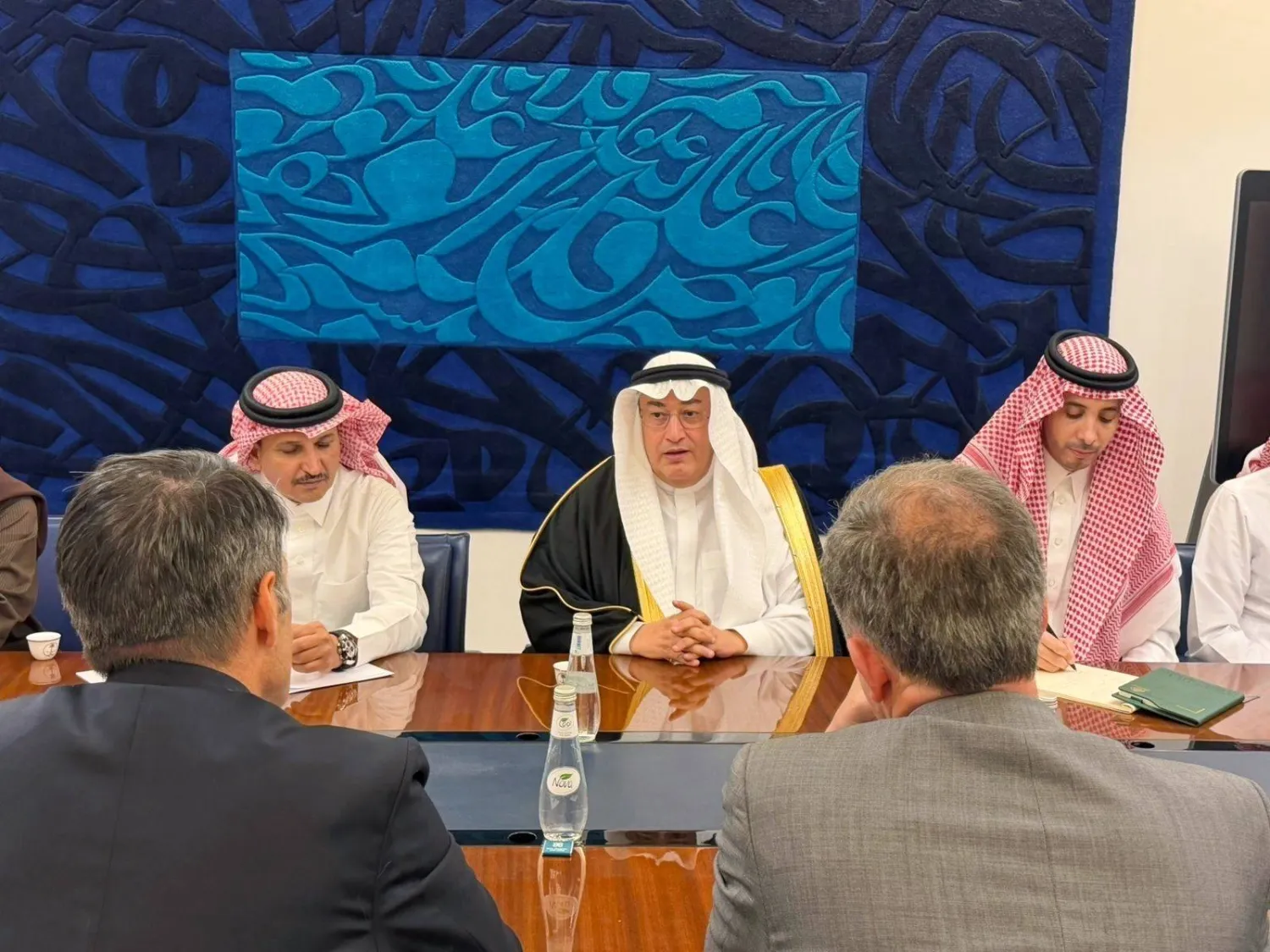
Dr. Rayed Krimly during a recent meeting with a French delegation in Riyadh. (Saudi Foreign Ministry)
TT

Saudi Source to Asharq Al-Awsat: Kingdom Did Not Allow Use of Its Airspace for Offensive Military Operations

Dr. Rayed Krimly during a recent meeting with a French delegation in Riyadh. (Saudi Foreign Ministry)

A Saudi source told Asharq Al-Awsat that the Kingdom has not permitted its airspace to be used in support of any offensive military operations, stressing that Riyadh is seeking de-escalation and supports Pakistan’s efforts to reach an agreement ending the war.

The source said certain parties were attempting to present a misleading picture of the Kingdom’s position for what he described as “suspicious” motives.

Meanwhile, Saudi Deputy Minister for Public Diplomacy Dr. Rayed Krimly reaffirmed the Kingdom’s position calling for de-escalation, avoiding further escalation, and supporting negotiations and efforts aimed at ending the war between Iran on one side and the United States and Israel on the other.

Krimly underscored Riyadh’s consistent position in support of de-escalation and avoiding further escalation, warning in a post on X against "media reports attributed to unnamed sources - some of whom claim to be Saudi - suggesting otherwise."

For his part, Gulf Research Center Chairman Dr. Abdulaziz bin Sager said the Saudi position had been clear from the outset and centered on “avoiding escalation and resolving disputes through political dialogue.”

Bin Sager told Asharq Al-Awsat: “We recall Crown Prince and Prime Minister Prince Mohammed bin Salman’s phone call with Iranian President Masoud Pezeshkian, during which he affirmed that the Kingdom would not allow its territory or airspace to be used in any military operations.”

A senior Saudi Foreign Ministry official had previously told Asharq Al-Awsat on March 24 that the Kingdom had already denied allegations claiming the Saudi leadership preferred prolonging the ongoing war between Iran on one side and the United States and Israel on the other.

The official added that Foreign Minister Prince Faisal bin Farhan had previously stated, during a press conference following a ministerial meeting of Arab and Islamic countries in Riyadh, that Iranian attacks must stop, that the Kingdom’s patience has limits, and that Riyadh reserves the right to respond and deter aggression through political and other measures.

According to bin Sager, Saudi Arabia’s key demands include “halting Iranian attacks, securing guarantees to end the war, preventing Iranian interference in the internal affairs of Gulf and other Arab states, as well as ensuring maritime and energy security.”

He added: “The Kingdom is seeking to lower tensions and create space for negotiations, and believes that any escalation could obstruct talks and affect the Strait of Hormuz.”

Saudi Arabia’s Permanent Representative to the United Nations, Dr. Abdulaziz Al-Wasel, said Thursday that the Strait of Hormuz is one of the world’s most vital maritime corridors for international trade and global energy security.

Al-Wasel made the remarks during a joint press conference in New York between the Gulf Cooperation Council and the United States regarding a draft resolution on freedom of navigation in the Strait of Hormuz.

The Saudi diplomat said any threat to freedom of navigation in the strait would directly affect the stability of global markets and international supply chains. He also warned of the humanitarian and economic repercussions of disruptions to the flow of essential goods, medical supplies, and humanitarian aid.

Al-Wasel stressed the importance of safeguarding maritime security and ensuring the safe and uninterrupted flow of international trade in accordance with international law.

He called for coordinated international action to de-escalate tensions and prevent the crisis from worsening in a way that would preserve regional and international security and stability.

The Saudi diplomat also emphasized the importance of strengthening international cooperation to protect vital maritime corridors and maintain international peace and security.



Arab Parliament, MWL Strongly Condemn Iranian Aggression against Kuwait

Kuwait blamed Iran for the attack, saying it was a dangerous escalation and violation of its sovereignty. (KUNA)
TT

Arab Parliament, MWL Strongly Condemn Iranian Aggression against Kuwait

Kuwait blamed Iran for the attack, saying it was a dangerous escalation and violation of its sovereignty. (KUNA)

Speaker of the Arab Parliament Mohammed Al Yamahi condemned the Iranian attacks targeting Kuwait, stressing that they constitute a violation of international law and the United Nations Charter and represent an escalation that threatens the security and stability of Kuwait and the region.

He reiterated the Arab Parliament’s full solidarity with Kuwait and support for the measures it is taking to protect its security, sovereignty, and territorial integrity.

Al Yamahi emphasized that Kuwait’s security is an integral part of pan-Arab national security, underscoring the Arab Parliament’s rejection of all attacks targeting the sovereignty, security, and stability of Arab states, SPA reported.

He also called on the international community and the United Nations Security Council to assume their responsibilities in stopping these attacks, ensuring respect for international law and preserving regional and international security and stability.


Also, the Muslim World League (MWL) strongly condemned the heinous Iranian aggression against Kuwait.

In a statement, Secretary-General of the Muslim World League and Chairman of the Organization of Muslim Scholars Sheikh Dr. Mohammed bin Abdulkarim Al-Issa renewed his condemnation of the repeated Iranian attacks against the State of Kuwait. He stressed that such criminal acts violate religious values as well as international law, norms, and humanitarian principles.

He reaffirmed the MWL’s full solidarity with the State of Kuwait, its leadership, government, and people. He also expressed support for all measures taken to safeguard the country’s security, sovereignty, and the safety of its citizens and residents.


Saudi Arabia Condemns Israeli Aggression against Lebanon

Saudi Arabia Condemns Israeli Aggression against Lebanon
TT

Saudi Arabia Condemns Israeli Aggression against Lebanon

Saudi Arabia Condemns Israeli Aggression against Lebanon

The Ministry of Foreign Affairs expressed the Kingdom of Saudi Arabia’s condemnation of the Israeli aggression against the territory of the Lebanese Republic and its categorical rejection of the Israeli incursion into Lebanese land and violation of Lebanon’s sovereignty, SPA reported.

The Kingdom called on the international community to uphold its responsibility in halting this aggression and putting an end to Israeli military movements aimed at expanding into Lebanese territory.

It stressed the importance of safeguarding Lebanon’s sovereignty and the security of the Lebanese people in accordance with relevant international agreements.


In this regard, the Kingdom reaffirmed the importance of adhering to the Taif Agreement in a manner that ensures the extension of Lebanese state sovereignty across all its territories, as well as compliance with Lebanese government decisions to restrict arms exclusively to the state and its legitimate institutions, thereby ensuring the restoration of security and stability for Lebanon and its brotherly people.


Saudi Crown Prince Offers Condolences to Nasser Hadi over Death of Former Yemeni President

Saudi Crown Prince and Prime Minister Prince Mohammed bin Salman (SPA)
TT

Saudi Crown Prince Offers Condolences to Nasser Hadi over Death of Former Yemeni President

Saudi Crown Prince and Prime Minister Prince Mohammed bin Salman (SPA)

Prince Mohammed bin Salman bin Abdulaziz Al Saud, Crown Prince and Prime Minister of Saudi Arabia, made a phone call on Monday to Nasser Abdrabbuh Mansur Hadi, during which the Crown Prince expressed his sincere condolences and sympathy over the death of his father, former President of the Republic of Yemen Abdrabbuh Mansur Hadi, SPA reported.

The Crown Prince prayed to Allah Almighty to have mercy on the deceased and admit him into Paradise.

Nasser Hadi expressed his deep thanks to HRH the Crown Prince for his condolences and sympathy.