
Yemen’s Health Ministry has warned that a sharp decline in foreign funding threatens efforts to combat epidemics, most notably measles, polio and diphtheria, in a country whose health infrastructure has been devastated by war and weakened in its ability to confront successive disease outbreaks.
The legitimate Yemeni government, with Saudi backing through the King Salman Humanitarian Aid and Relief Center (KSrelief) and international partners, has, however, managed to restore operations at more than 3,000 health facilities and prevent the collapse of the healthcare sector.
The ministry said that a drop of more than 65 percent in external support this year has undermined the health sector’s capacity to respond to disease outbreaks.
Last year alone, Yemen recorded more than 23,000 confirmed measles cases and 214 deaths, amid concerns that epidemics could spread further in areas with low vaccination coverage.
Ali Al-Walidi, deputy minister of public health and population for primary healthcare, noted that the health sector had faced major challenges over the past 11 years because of the war ignited by the Houthis, which caused healthcare services to deteriorate to below 50 percent after extensive damage to medical facilities.
He said the ministry, with support from KSrelief, the World Bank, the World Health Organization (WHO) and the United Nations Children’s Fund (UNICEF), had succeeded in maintaining the health system and preventing its collapse, while also restoring operations at more than 3,200 health facilities, representing around 60 percent of the country’s total health centers.
Al-Walidi added that the ministry had worked to offset shortages in medical personnel caused by deaths and injuries during the war, as well as the migration of healthcare workers abroad, by training and qualifying new staff, helping ensure the continuation of essential health services in many areas.
Vaccination challenges
The official warned that the Houthi group’s ban on vaccination campaigns in areas under its control had led to the return of polio, with around 30 cases recorded last year, despite Yemen having been certified polio-free by the WHO in 2009.
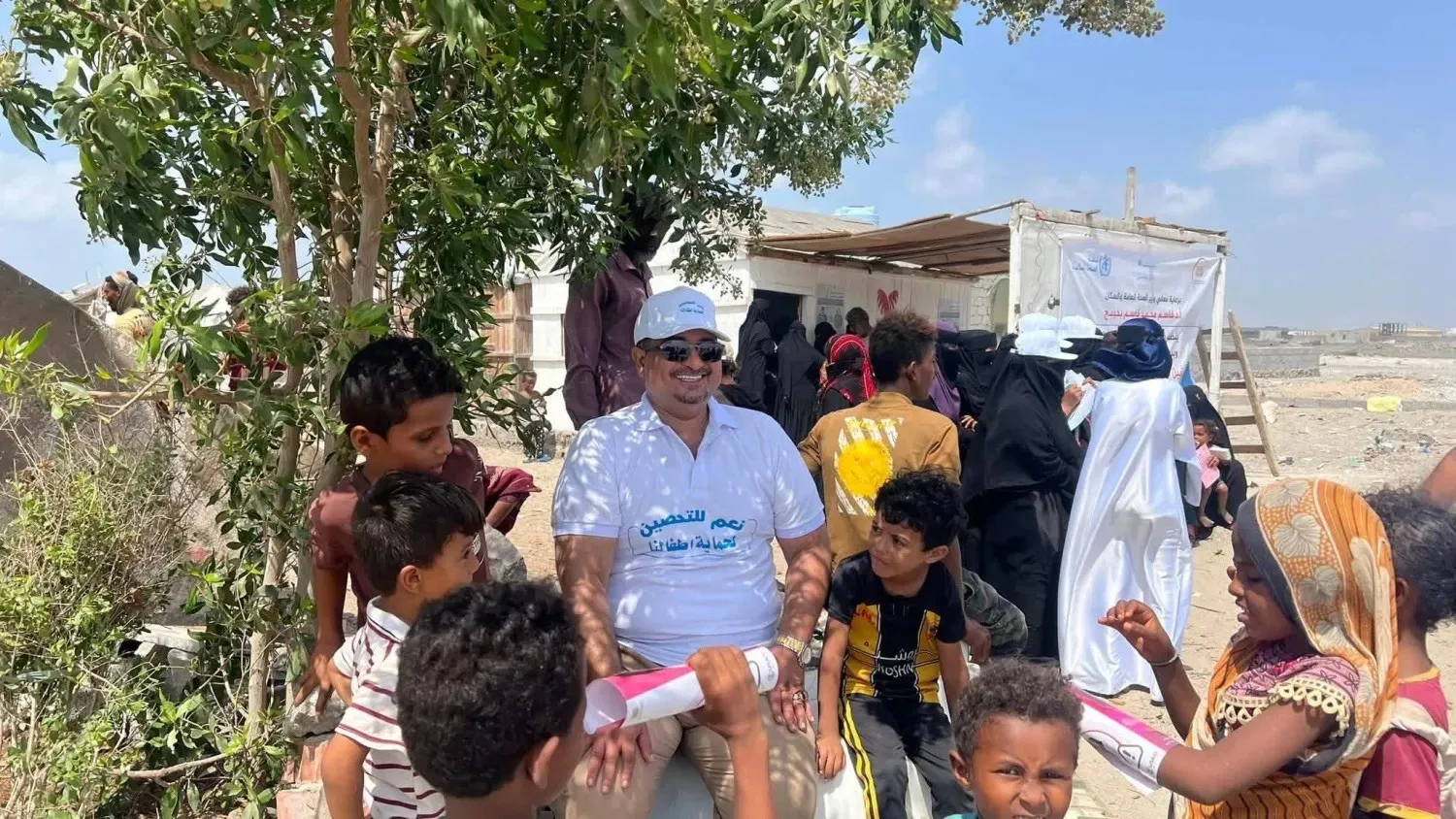
He revealed that the Health Ministry had carried out several polio vaccination campaigns in liberated provinces, where no cases have been recorded this year, while continuing routine immunization programs to reach children across different regions, particularly in remote districts and displacement camps.
With UN reports documenting about 23,000 measles infections and 214 deaths last year, particularly in the provinces of Taiz, Hodeidah, Amran and Saada, Al-Walidi warned of renewed outbreaks of measles, diphtheria and whooping cough due to declining immunization rates in Houthi-controlled provinces, where vaccination campaigns have been suspended since 2023.
The official said the ministry had ensured the availability of routine vaccines at all health facilities and had implemented outreach campaigns to reach remote areas and displacement camps where children struggle to access healthcare centers.
The campaigns covered 121 districts across 15 provinces and involved 8,538 health workers, who provided vaccines and a range of services related to maternal and child health, nutrition and reproductive health.
Funding cuts
Regarding fever outbreaks, the official said the National Malaria and Vector-Borne Disease Control Program had carried out interventions following seasonal rains, with support from KSrelief.
However, he stressed that the 65 percent reduction in external support for the health sector this year would have negative repercussions on the continued supply of medicines and medical equipment to health facilities, in addition to training and capacity-building programs.
On efforts to address the decline, he stressed that the Health Ministry, in cooperation with health sector partners, was implementing a plan to bridge the gap caused by the funding shortfall, while maintaining coordination with KSrelief, the WHO and UNICEF to ensure the continuity of essential health services and prevent disruptions to immunization and epidemic-control programs.
He added that the health strategy for 2026-2030 is expected to be announced next July after being prepared in cooperation with the Geneva Institute and the WHO, with support from the World Bank and participation from the Civil Service Ministry, health offices and universities, as part of efforts to strengthen the health sector’s ability to confront challenges in the coming years.