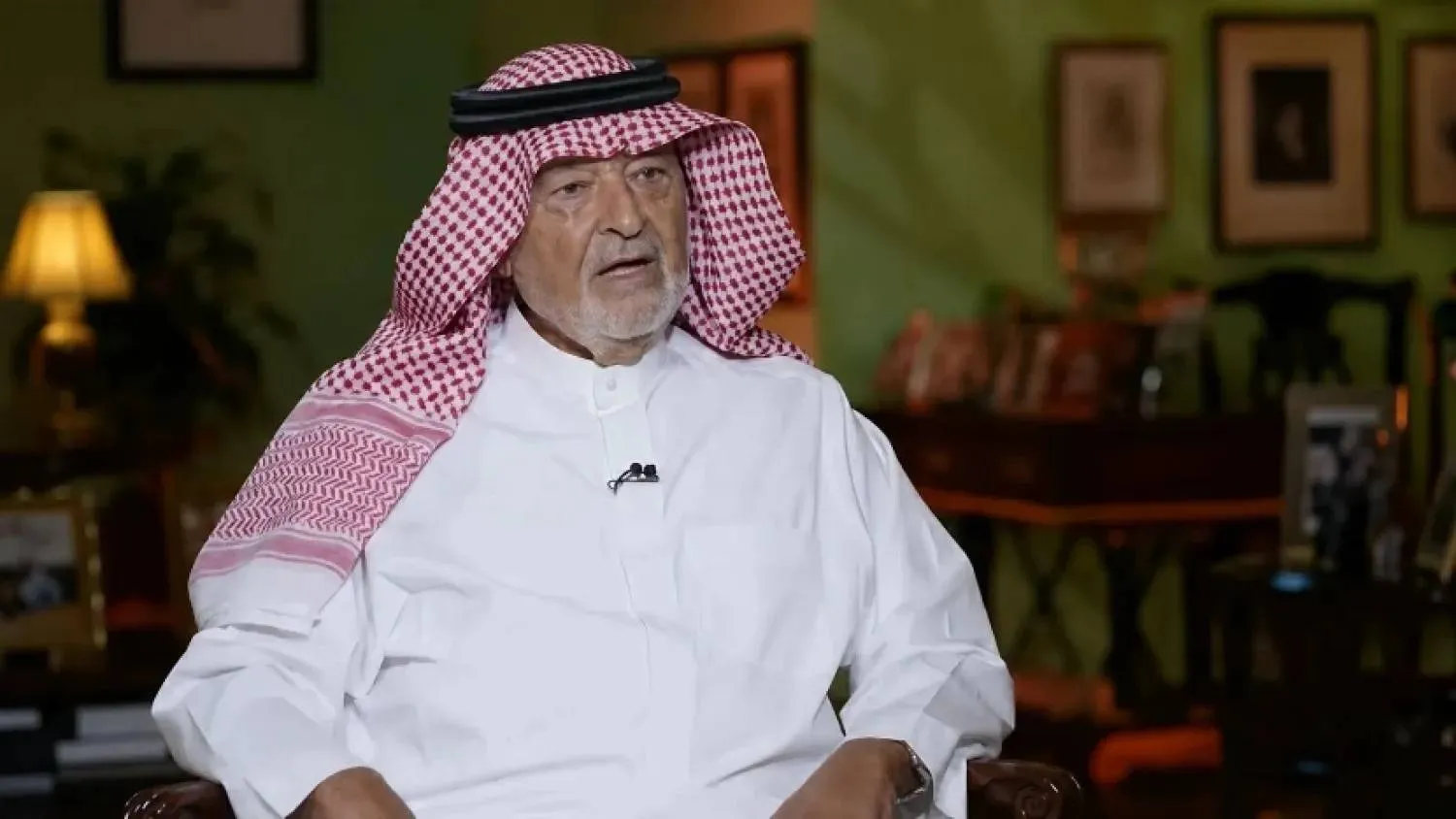

Saudi Adviser Hassan Yassin, Testament to Kingdom’s Modern History, Passes Away

The late Hassan Yassin speaking during a television interview (Rotana TV screen grab) 
TT

Saudi Adviser Hassan Yassin, Testament to Kingdom’s Modern History, Passes Away

The late Hassan Yassin speaking during a television interview (Rotana TV screen grab) 

Saudi adviser Hassan bin Youssef Yassin passed away after a life closely intertwined with the history and development of Saudi Arabia, during which he witnessed the reigns of successive Saudi kings and devoted his life to serving the Kingdom.

He represented the continuation of a family legacy rooted in the career of his father, Sheikh Youssef Yassin, the close political adviser to King Abdulaziz Al Saud, founder of the modern Saudi state, and one of the prominent figures of the Kingdom’s founding political and diplomatic era.

Born in Makkah around 1934, Hassan Yassin began his professional career as director of the office of Saudi Oil Minister Abdullah Tariki before going on to establish the Saudi media office in Washington.

Yassin combined politics, history and media throughout his career, reflecting the broad intellectual outlook that distinguished his father. He was also among the opinion writers for Asharq Al-Awsat newspaper.

He belonged to the first generation of Saudis educated abroad, studying at Brooklyn University in the United States during the 1950s before returning to Saudi Arabia to work in the oil sector.

During the 1960s and 1970s, he lived in Washington, where he founded the Saudi media office and developed extensive relationships with members of the US House of Representatives and Senate, as well as senior American officials.

He invested those ties in support of Saudi positions and policy issues, leaving a notable impression on diplomatic circles in the US capital.

Hassan Yassin received his early education in Makkah and Taif before enrolling at Victoria College in Egypt, one of Alexandria’s oldest and most prestigious English-language schools. There, he studied in the same classroom as Jordan’s late King Hussein.

During his childhood and youth in Riyadh, Yassin became closely connected to the social environment surrounding King Abdulaziz because of his father’s role as adviser to the founder king.

He spent part of his childhood in the mud-brick homes of Al-Murabba district, while leisure during that period often took the form of desert outings to Jabal Abu Makhrouq, Riyadh’s oldest park, rising about 50 meters above the surrounding landscape.

His father, Youssef Yassin, emerged as one of the influential political figures in King Abdulaziz’s inner circle and contributed to both domestic and foreign policy.

He accompanied the founder king on his early journeys to the Hijaz region, witnessed the handover of Jeddah in 1925 and participated, alongside a group of advisers, in administering the city during the early years of Saudi unification.

Against the backdrop of his father’s long public career, Hassan Yassin grew up immersed in the details and inner workings of Saudi politics from an early age.

He became familiar with many of the pivotal moments that shaped the establishment and evolution of the Kingdom, and his role deepened further through his close association with former Saudi Foreign Minister Prince Saud Al Faisal and his involvement in major and sensitive political issues.

Yassin recorded his memories and experiences in memoirs published in English, documenting many of the milestones and events he witnessed throughout his life.

With his passing on Sunday, he left behind the legacy of a long national and professional journey marked by service, dedication and achievement.


GCC Secretary-General Condemns Iranian Attacks on Bahrain, Kuwait, and Jordan

Secretary-General of the Gulf Cooperation Council (GCC) Jasem Albudaiwi. SPA
TT

GCC Secretary-General Condemns Iranian Attacks on Bahrain, Kuwait, and Jordan

Secretary-General of the Gulf Cooperation Council (GCC) Jasem Albudaiwi. SPA

Gulf Cooperation Council (GCC) Secretary-General Jasem Albudaiwi expressed his strongest condemnation of the repeated hostile Iranian attacks targeting the Kingdom of Bahrain, the State of Kuwait, and the Hashemite Kingdom of Jordan.

Albudaiwi stated that Iran's continued targeting of civilian facilities and vital infrastructure undermines international and regional efforts aimed at promoting security and peace and resolving ongoing crises, SPA reported.

He also reaffirmed the GCC’s full support for all measures taken by Bahrain, Kuwait, and Jordan to strengthen their security and protect their territorial integrity.


Saudi Arabia Condemns Iranian Attacks, Calls for Diplomatic Engagement

Firefighters work to extinguish fire in the aftermath of Iranian drone attacks, according to Bahrain's Interior Ministry, at a location given as Bahrain, in this handout image released on June 11, 2026. Ministry of Interior of the Kingdom of Bahrain/Handout via REUTERS
TT

Saudi Arabia Condemns Iranian Attacks, Calls for Diplomatic Engagement

Firefighters work to extinguish fire in the aftermath of Iranian drone attacks, according to Bahrain's Interior Ministry, at a location given as Bahrain, in this handout image released on June 11, 2026. Ministry of Interior of the Kingdom of Bahrain/Handout via REUTERS

Saudi Arabia strongly condemned on Thursday the repeated Iranian attacks on Jordan, Bahrain and Kuwait, and the continued violations of their sovereignty which “escalate tensions in the region.”

A Foreign Ministry statement called for “de-escalation, the avoidance of any further escalation, and the exercise of wisdom by returning to diplomatic engagement and continuing the constructive negotiations” sponsored by Pakistan, along with the efforts exerted by Qatar.

Such a move “spares the region and its people the consequences of the return of war and contributes to the restoration of security and stability in the region and the world,” the statement added.


Saudi Arabia Stresses Centrality of Palestinian Cause for Arab World

The Saudi flag. Asharq Al-Awsat
TT

Saudi Arabia Stresses Centrality of Palestinian Cause for Arab World

The Saudi flag. Asharq Al-Awsat

Permanent Representative of Saudi Arabia to the United Nations Dr. Abdulaziz Alwasil affirmed the centrality of the Palestinian cause for the Arab world, saying achieving a just, comprehensive, and lasting peace in the Middle East requires ending the Israeli occupation and enabling the Palestinian people to exercise their inalienable right to self-determination.

In a statement delivered on behalf of the Arab Group during a high-level Security Council meeting on the Middle East, Alwasil also referred to recent Iranian attacks targeting several Gulf states and Jordan, describing them as violations of the principles of good neighborliness, international law, and the United Nations Charter.

He stressed the need to respect state sovereignty and avoid actions that threaten regional security and stability.

He further condemned the continued Israeli aggression against Lebanon, reaffirming rejection of any violation of Lebanon’s sovereignty or targeting of its army, and stressing the importance of complying with international resolutions and respecting states’ sovereignty and territorial integrity.

Alwasil also denounced repeated Israeli incursions and attacks on Syrian territory, stressing the Arab Group’s rejection of such violations, which undermine Syria’s sovereignty and threaten regional security and stability.

He emphasized the importance of political solutions, dialogue, and mediation as the most effective means of addressing regional crises and resolving conflicts peacefully, thereby contributing to security, stability, and development for the peoples of the Middle East.